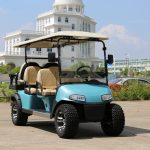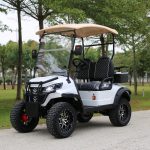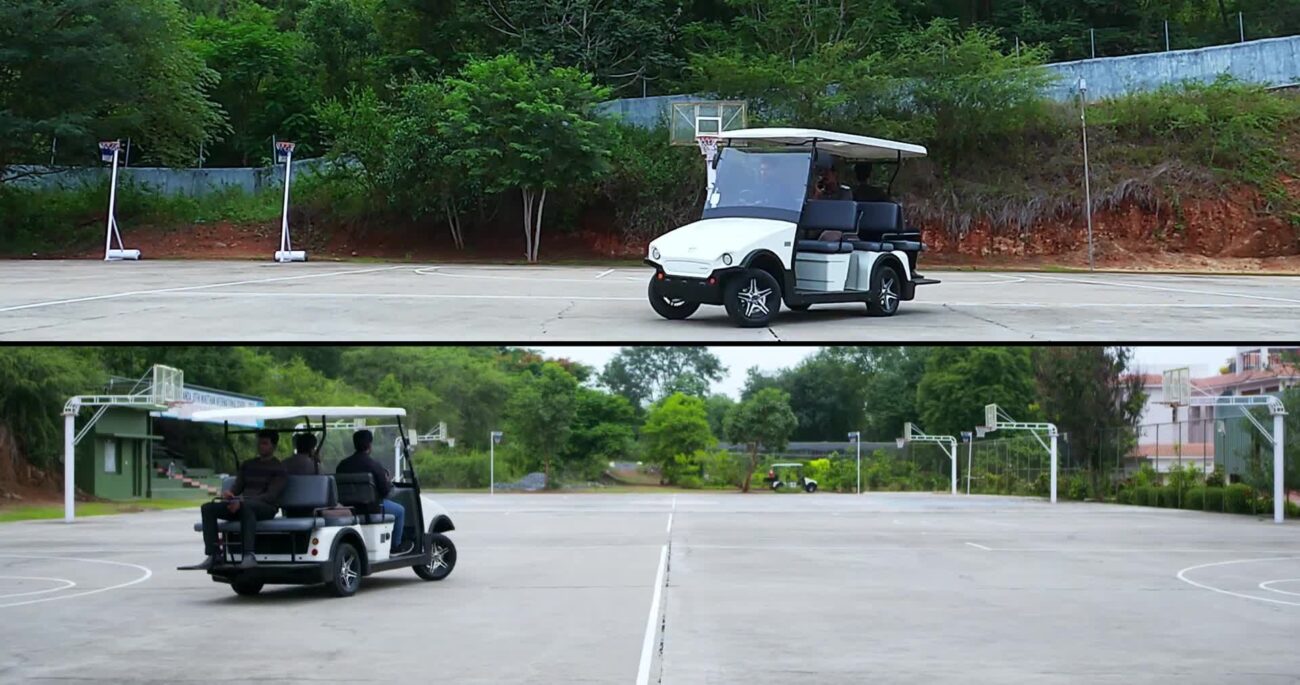
When people search for 4WD golf cart, they are usually looking for more than a standard course vehicle. In most cases, they are dealing with uneven terrain, slopes, loose surfaces, or off-path driving conditions where extra traction becomes important.
However, true 4WD golf carts are not as common as many people expect. Understanding what “4WD” really means in the golf cart world can help you choose the right solution—without overpaying or overcomplicating your setup.
1. What Is a 4WD Golf Cart?
A 4WD golf cart refers to a golf cart where all four wheels receive driving power, improving traction on:
-
Grass and wet turf
-
Gravel paths
-
Sand or loose soil
-
Sloped or uneven terrain
In practice, many products marketed as “4WD golf carts” are actually enhanced traction or all-terrain carts, rather than true full-time 4-wheel-drive systems like those found in off-road vehicles.
2. Are True 4WD Golf Carts Common?
The short answer: No, they are relatively rare.
Most traditional golf carts use:
-
Rear-wheel drive (RWD)
-
Differential-based traction systems
True mechanical 4WD systems add:
-
Complexity
-
Weight
-
Cost
-
Maintenance requirements
As a result, manufacturers often focus on terrain-optimized alternatives rather than full 4WD layouts.
3. 4WD vs Standard Golf Cart: Practical Differences
| Feature | Standard Golf Cart | 4WD / All-Terrain Cart |
|---|---|---|
| Drive wheels | Rear wheels | All wheels (or enhanced traction) |
| Traction | Moderate | High |
| Terrain capability | Flat paths, turf | Slopes, loose surfaces |
| Maintenance | Low | Higher |
| Cost | Lower | Higher |
For many users, improved tires and torque tuning provide enough traction without full 4WD.
4. When Does a 4WD Golf Cart Make Sense?
A 4WD or 4WD-style golf cart is most useful in environments such as:
-
Hilly golf courses with steep slopes
-
Resorts with unpaved paths
-
Farms, vineyards, and estates
-
Industrial or utility sites
-
Large properties with mixed terrain
In these cases, traction and stability matter more than top speed or minimal cost.
5. Alternatives to True 4WD Golf Carts
Because true 4WD systems are complex, many buyers choose alternatives that achieve similar results:
5.1 High-Torque Electric Motors
Provide stronger low-speed pulling power on inclines.
5.2 All-Terrain Tires
Significantly improve grip on grass, dirt, and gravel.
5.3 Limited-Slip or Traction-Assist Differentials
Help reduce wheel spin on uneven ground.
5.4 Lifted Chassis Designs
Increase ground clearance without changing drivetrain layout.
In many real-world scenarios, these options deliver 90% of the benefit of a 4WD system.
6. Example of a Purpose-Built 4WD-Style Golf Cart
One well-known example of a production golf cart designed for challenging terrain is the E-Z-GO Express 4×4, which uses an electric drivetrain optimized for off-road and utility applications rather than traditional course use.
You can review its configuration and intended use here:
(This page explains how traction-focused golf carts are designed for uneven and off-path environments.)
7. Impact of 4WD on Battery Range and Efficiency
Adding traction capability often increases:
-
Vehicle weight
-
Rolling resistance
-
Energy consumption
As a result:
-
Battery range may decrease
-
Charging frequency may increase
For fleet or commercial users, this trade-off should be evaluated carefully.
8. Is a 4WD Golf Cart Suitable for Golf Courses?
For traditional golf courses, full 4WD is usually unnecessary and may even be undesirable due to:
-
Increased turf wear
-
Higher vehicle weight
-
Reduced efficiency
Most courses prefer lightweight carts with controlled traction to protect grass surfaces.
9. FAQ: 4WD Golf Carts
Do golf carts really have 4WD?
Some specialized models do, but most standard golf carts use rear-wheel drive with traction optimization.
Is a 4WD golf cart better than a regular one?
Only if your terrain requires it. On flat paths, 4WD offers little advantage.
Can a standard golf cart be converted to 4WD?
True 4WD conversion is complex and uncommon. Traction upgrades are usually more practical.
Are 4WD golf carts street legal?
That depends on local regulations and whether the cart meets LSV requirements.
Final Thoughts
A 4WD golf cart is not about speed or appearance—it’s about traction, control, and terrain adaptability.
For flat golf courses and paved environments, a standard electric golf cart is usually the better, more efficient choice. But for hilly, uneven, or off-road conditions, a traction-focused or 4WD-style golf cart can dramatically improve usability and safety.
The key is not choosing the most complex drivetrain—but choosing the one that matches your real operating environment.