

Electric golf carts are no longer limited to golf courses. Today they are widely used in resorts, farms, private communities, and recreational off-road environments. Among the many configurations available, lifted golf carts have become especially popular because of their stronger off-road capability, higher ground clearance, and versatile applications.
In recent years, many buyers searching for high-performance carts often look for a 72V electric lifted golf cart with CE manufacturer certification. Higher voltage systems can deliver more power and improved climbing ability, which makes them attractive for demanding environments.
However, when buyers start comparing specifications more closely, they often discover that 48V lifted golf carts remain the most widely used and practical option for many applications. Modern 48V systems can still deliver strong performance while offering lower cost and proven reliability.
In this guide, we’ll explore everything buyers should know about lifted golf carts, including
-
What lifted golf carts are
-
Differences between 72V and 48V electric systems
-
Key specifications buyers should evaluate
-
Why CE certification matters for manufacturers
-
How to choose the right lifted golf cart supplier
If you want to explore available models, you can view a range of lifted golf carts here:
https://gmtlsv.com/product-category/lifted-golf-cart/
What Is a Lifted Golf Cart?
A lifted golf cart is an electric vehicle designed with increased ground clearance and larger tires compared to standard golf carts. These structural modifications allow the vehicle to travel across uneven terrain more easily.
Originally, golf carts were designed only for golf courses, where the terrain is smooth and relatively flat. But as demand grew for versatile electric vehicles, manufacturers began developing lifted versions capable of operating in more challenging environments.
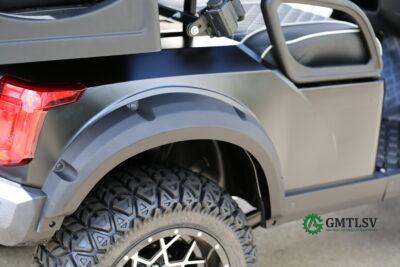
Key Features of Lifted Golf Carts
Lifted golf carts typically include several design improvements.
Increased Ground Clearance
The chassis of the cart is raised higher above the ground, allowing it to pass over rocks, bumps, and uneven terrain.
Larger Off-Road Tires
Most lifted carts are equipped with all-terrain tires, usually between 23 and 25 inches, which provide improved traction on sand, gravel, or dirt roads.
Reinforced Suspension
Heavy-duty suspension systems help absorb shocks and keep the vehicle stable when driving over rough surfaces.
Stronger Frame Structure
Because lifted carts carry larger tires and sometimes heavier passenger loads, their frames are designed to handle greater stress.
These improvements make lifted carts suitable for many environments beyond golf courses.
You can explore different electric lifted golf carts used in these environments here: 👉
Why Buyers Search for 72V Electric Lifted Golf Carts
When researching electric golf carts, one of the most important specifications buyers look at is the battery voltage. Traditional golf carts commonly use 36V or 48V systems, while some high-performance models use 72V electric systems.
A 72V system can provide stronger acceleration and more torque, which may be beneficial for lifted carts operating in demanding conditions.
Typical advantages of a 72V electric lifted golf cart include:
-
Higher torque output
-
Improved hill climbing ability
-
Higher potential top speed
-
Better performance with large off-road tires
Because lifted carts are often heavier than standard carts, some buyers assume that higher voltage automatically means better performance.
While this can be true in certain situations, it is important to understand that voltage alone does not determine performance. Motor power, controller design, and battery technology also play critical roles.
72V vs 48V Lifted Golf Cart: Understanding the Difference
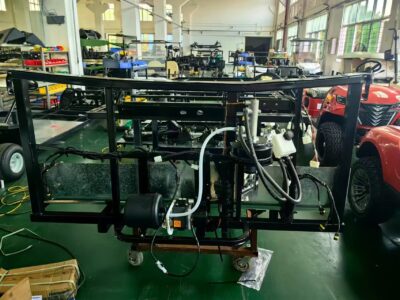
Although 72V carts attract attention for their high performance, the reality is that 48V lifted golf carts dominate the global market. Many resorts, communities, and farms prefer 48V systems because they offer an excellent balance of power, efficiency, and cost.
The comparison below helps illustrate the differences.
| Feature | 48V Lifted Golf Cart | 72V Lifted Golf Cart |
|---|---|---|
| Typical speed | 25–35 km/h | 35–45 km/h |
| Torque | Good | Very high |
| Hill climbing | Good | Excellent |
| Battery cost | Lower | Higher |
| Maintenance | Simple | Slightly more complex |
| Market adoption | Very common | Less common |
For many buyers, a well-engineered 48V lifted golf cart already provides more than enough performance for daily transportation needs.
Why 48V Lifted Golf Carts Are Still the Most Popular Choice
Despite growing interest in higher voltage systems, the majority of lifted golf carts produced worldwide still use 48V electric systems.
There are several reasons for this.
Proven Technology
48V systems have been used in electric carts for many years. The technology is mature and widely supported by service technicians and spare parts suppliers around the world.
Lower Initial Cost
Vehicles built with 48V systems generally have lower manufacturing and battery costs, which makes them more attractive for bulk purchases by resorts or property managers.
Adequate Performance for Most Uses
For most commercial environments, 48V systems provide more than enough power.
Typical performance includes:
-
Top speed: 30–35 km/h
-
Range: 70–100 km per charge
-
Reliable torque for moderate hills
This level of performance is sufficient for most passenger transportation applications.
When a 72V Lifted Golf Cart May Be the Better Choice
Although 48V systems meet the needs of most users, some environments can benefit from the additional power provided by 72V electric lifted golf carts.
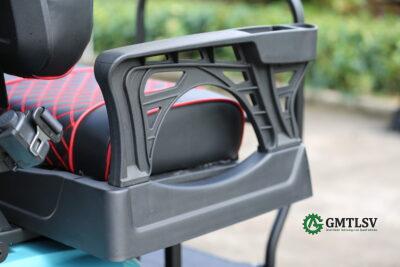
These situations include:
Steep Terrain
Mountain resorts or hillside properties may require additional torque for climbing steep slopes.
Heavy Passenger Loads
Larger carts carrying multiple passengers or cargo may benefit from higher power output.
Higher Speed Requirements
Some private communities or industrial facilities prefer faster vehicles for longer travel distances.
In these situations, a 72V electric lifted golf cart can provide noticeable performance improvements.
Typical Specifications of Modern Lifted Golf Carts
Whether powered by a 48V or 72V system, modern lifted golf carts share many similar design features.
Common specifications include:
Battery system
48V or 72V lithium battery
Motor power
4 kW – 7.5 kW electric motor
Top speed
30 – 45 km/h depending on configuration
Driving range
70 – 120 km per charge
Ground clearance
150 – 200 mm
Tires
23–25 inch all-terrain tires
These features allow lifted golf carts to operate effectively in a variety of environments.
Why CE Certification Matters for Golf Cart Manufacturers
For buyers importing electric vehicles into Europe, working with a CE certified manufacturer is extremely important.
CE certification indicates that a product complies with European Union regulations covering safety, environmental protection, and electrical compatibility.
Without CE compliance, importing electric golf carts into many European countries may not be possible.
Key Areas Covered by CE Certification
CE compliance ensures the product meets standards related to:
Safety
Protecting drivers and passengers during operation.
Electrical reliability
Ensuring battery systems and wiring meet safety standards.
Electromagnetic compatibility
Preventing interference between electronic systems.
Environmental protection
Meeting EU environmental regulations.
Manufacturers exporting to Europe typically prepare technical documentation and testing reports to support CE certification.
Key Features Buyers Should Evaluate
When selecting a lifted golf cart manufacturer, buyers should evaluate several important technical features beyond voltage alone.
Battery Technology
Lithium batteries have become the preferred option for modern electric carts.
Advantages include:
-
Longer service life
-
Faster charging
-
Lower maintenance
-
Lighter weight
Lithium batteries can significantly improve both performance and driving range.
Motor Power
| (Motor Power) | (Application) |
|---|---|
| 4 kW | Standard Passenger Carts |
| 5 kW | Improved Climbing Ability |
| 7.5 kW | High‑Performance Models |
Seating Configuration
Lifted golf carts are available in several seating layouts.
Common configurations include:
Manufacturers may also offer custom configurations for commercial customers.
Suspension and Tires
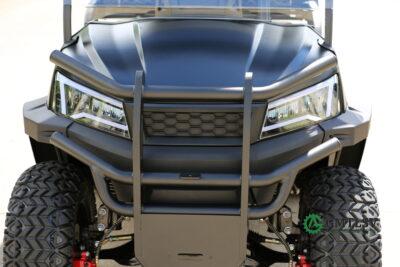
Suspension design affects both ride comfort and stability.
Most lifted carts include:
Independent front suspension
Rear leaf spring suspension
Heavy-duty shock absorbers
Large all-terrain tires provide better traction on sand, gravel, or dirt surfaces.
Common Applications of Lifted Golf Carts
Lifted golf carts are widely used across multiple industries.
Resorts and Hotels
Large resorts often rely on electric carts for guest transportation. Lifted carts allow easy movement across uneven resort landscapes.
Farms and Ranches
Farm operators use electric carts for tasks such as inspecting fields, transporting equipment, or moving between buildings.
Gated Communities
Many residential communities encourage golf cart transportation as a convenient and environmentally friendly way to travel short distances.
Recreational Off-Road Use
Lifted carts are also used for recreational driving on trails, beaches, and large private properties.
How to Choose a Reliable Lifted Golf Cart Manufacturer
Selecting a dependable manufacturer is critical for distributors and importers.
Several factors should be considered.
Manufacturing Experience
A manufacturer with extensive experience typically offers more reliable product quality and better engineering.
Certification and Compliance
Reputable manufacturers should provide certification such as:
CE certification
ISO quality management systems
Customization Capabilities
Many distributors require customized vehicles to match their local market needs. Manufacturers should offer options such as:
Color customization
Seat configuration changes
Battery options
OEM branding
After-Sales Support
Reliable suppliers provide spare parts and technical support for international customers.
Explore Lifted Golf Carts for Your Application
Lifted golf carts have become an essential electric vehicle solution for resorts, farms, communities, and recreational properties.
While some buyers search for 72V electric lifted golf carts to achieve higher performance, modern 48V lifted golf carts continue to offer an excellent balance of power, efficiency, and cost for most applications.
Choosing the right configuration ultimately depends on terrain, passenger capacity, and operating requirements.
If you are looking for a reliable supplier of electric lifted golf carts, you can explore a full range of available models here:
https://gmtlsv.com/product-category/lifted-golf-cart/
These vehicles are designed for durability, flexibility, and efficient electric transportation across a wide range of environments.

