

As a golf enthusiast who hits the course every week, I’ve found myself paying almost as much attention to the golf cart as to my swing. After all, during an 18-hole round, I spend nearly four hours with this little vehicle. Recently, my local golf course planned to update its fleet and asked for my input, which led me to dive deep into the energy secrets behind these seemingly simple vehicles.
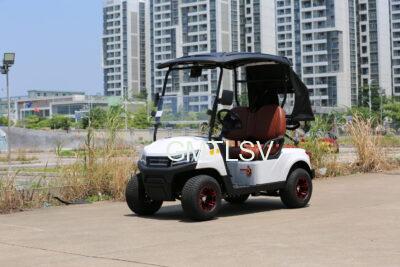
Fig 1. GAH 2
Fuel vs. Electric: A Showdown Between Silence and Power
A few years ago, the roar of gas-powered carts still echoed across the course. Equipped with 10-14 horsepower engines, they certainly performed well on steep slopes, maintaining speeds of 30-35 km/h. But whenever I passed near the green, the 75-decibel noise made me worry about disturbing other players’ concentration. Not to mention the faint smell of gasoline, which felt particularly out of place in the fresh, grassy air.
The arrival of electric carts completely transformed the course atmosphere. They’re remarkably quiet—about 40% quieter than gas carts, with motors that produce only a breeze-like whisper. Acceleration from 0 to 25 km/h takes just 8-10 seconds, offering a smooth start without the jerky motion of gas carts. Most importantly, they produce zero emissions, leaving no trace of pollution on the beautiful course.
From a practical perspective, both have their merits. Gas carts offer worry-free operation—a full tank can last all day, making them ideal for continuous use. Electric carts, on the other hand, can travel 60-80 km on a single charge, which is more than enough for a standard 18-hole round, but requires careful charging planning. The operational cost difference is significant: electric carts cost about $0.05 per kilometer in energy, while gas carts cost around $0.20. Over 1,000 hours of annual use, that 75% cost difference adds up to a substantial amount.
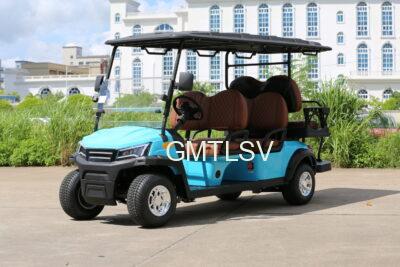
Fig 2. GAH 4+2
The Battery Battle: The Heft of Lead-Acid vs. The Lightness of Lithium
If you choose an electric cart, the next critical decision is: lead-acid or lithium batteries? This isn’t just about price—it fundamentally affects the user experience.
Lead-acid batteries are like a reliable old friend—mature technology with a low upfront cost, around $600–$1,200 for a 48V system. But they’re heavy! A lithium battery pack of similar capacity weighs about 50–60 kg, while lead-acid batteries can tip the scales at 150–200 kg. This weight not only affects acceleration and hill-climbing performance but also leaves deeper ruts on soft turf, increasing course maintenance challenges.
Maintenance is another headache. Lead-acid batteries require monthly electrolyte checks and terminal cleaning, costing about $120 annually in upkeep. Charging takes 8–10 hours, meaning if you find the battery low in the morning, your round might be in jeopardy. They’re also high-maintenance—only 50% of their capacity is practically usable. Their lifespan is typically 4–6 years, with 500–800 charge cycles.
Lithium batteries, in contrast, are products of modern technology. Although the upfront cost is 2–3 times higher ($1,500–$3,000), the improvement in experience is revolutionary. They’re 70% lighter, making the cart more agile. Charging time drops to 2–4 hours, allowing for quick top-ups during lunch breaks. Most impressively, they offer 80%–100% usable capacity, meaning a lithium battery with the same nominal capacity can deliver nearly double the practical energy.
Lithium batteries are almost maintenance-free—no watering, no acid corrosion risks. Their lifespan stretches to 8–10 years, with 2,000–5,000 charge cycles. They also perform better in cold weather: at -20°C, lithium batteries retain 70% of their capacity, while lead-acid batteries drop to just 30%.
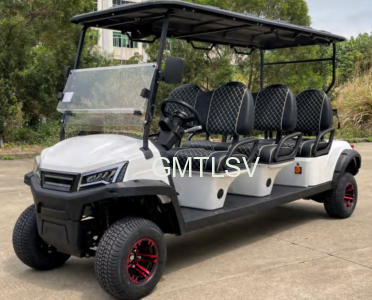
Fig 3. GAH 6
The Customer‘s Perspective: Total Cost of Ownership
Comparing only purchase prices can be misleading. Let’s look at the long-term math:
A 48V lithium battery system costs about $3,500 and lasts over 10 years. A lead-acid system may have a lower upfront cost, but with battery replacements every 3–4 years (each costing $400–$600), the total 10-year cost could exceed $5,000. More importantly, lithium batteries operate at 95% efficiency, while lead-acid batteries manage only 70%–80%, meaning less energy waste.
For golf course operators, lithium batteries offer even clearer advantages. Fast charging significantly increases daily vehicle utilization, potentially reducing the need for backup carts by 30%–50%. The reduced maintenance frees up staff for higher-value tasks like scheduling optimization.
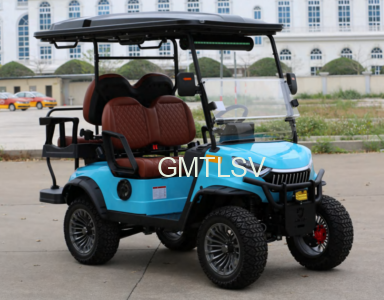
Fig 4. GHC 2+2
My Choice and Recommendation
After thorough research, I recommended electric carts with lithium batteries to the course. While the initial investment is higher, consider these factors:
- Environmental Image: Zero emissions align with modern golf‘s sustainability ethos.
- User Experience: Quiet running preserves the focus required for the game.
- Long-Term Economics: Lower total cost over 10 years.
- Operational Efficiency: Fast charging improves fleet turnover.
- Turf Protection: Lighter design minimizes damage to grass roots.
Golf cart like the GAH, GHC, and GF equipped with Lithium Iron Phosphate batteries, combine stylish design, a lightweight body, and environmental friendliness, making them the premier choice.
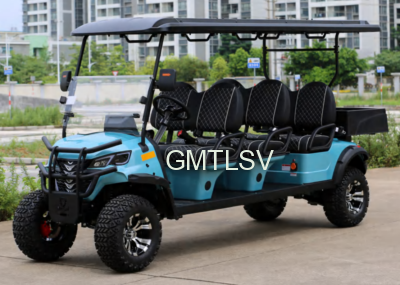
Fig 5. GF 6
Of course, if your needs are specific—extremely rugged terrain, long uninterrupted operation, or lack of reliable charging facilities—gas carts remain a valid choice. But for most golf course environments, electric carts with lithium batteries demonstrate clear advantages.
Industry data shows that electric golf carts accounted for over 90% of the market in 2025, with lithium batteries penetrating 65% of that share. This isn’t just a trend—it’s the market voting with its wallet.
The next time you’re in a cart, feeling the smooth acceleration of the motor and enjoying the unique tranquility of the course, you might silently thank the engineers behind battery technology. They’ve made our golf experience purer and more focused. After all, in a sport that demands extreme concentration, every bit of peace and quiet is worth cherishing.


