

Golf carts are widely used not only on golf courses but also in many beach towns, retirement communities, resorts, zoos, and parks for their convenience and eco – friendliness. If you own a golf cart or are considering getting one, you might have wondered, “Can you use car batteries in a golf cart?” This article will delve into this question, explore the differences between car and golf cart batteries, and help you make an informed decision when choosing the right battery for your golf cart.
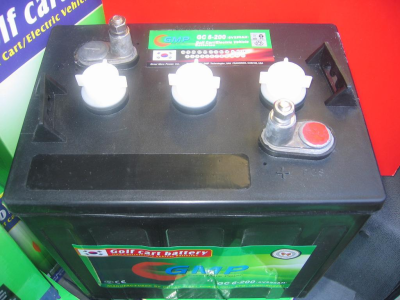
The Basics of Golf Cart Batteries
Electric golf motors typically operate at 36 or 48 volts. While cruising at around 15 miles per hour, they draw between 50 – 70 amps of current. It’s important to note that during acceleration or when going uphill, the current draw is much higher. Golf cart batteries need to supply a steady high – current flow for extended periods to prevent you from getting stranded.
Moreover, golf cart batteries usually go through full charge and discharge cycles daily. Draining them below 50% can significantly shorten their lifespan and reduce performance. These batteries are deep – cycle batteries, designed and built with extra durability to endure prolonged current draw and frequent deep discharging. They are available in 6, 8, and 12 – volt configurations and can be wired in series to reach the required voltage. For example, connecting six 6 – volt batteries in series will give you 36 volts, and four 12 – volt batteries will provide 48 volts.
Can You Use Regular Car Batteries in a Golf Cart?
Technically, yes, you can use regular car batteries in a golf cart. Standard car batteries are 12 – volts, and you could connect three or four of them in series to achieve the 36 or 48 volts needed for your golf cart motor. However, this is not an ideal solution.
Car batteries are designed to provide a huge surge of current for a short time, mainly to start the engine of a vehicle. Once the engine starts, the alternator takes over to power the vehicle’s electronics. Repeatedly draining a standard car battery below 50% will quickly ruin it. In contrast, deep – cycle batteries for golf carts are optimized to provide a steady current output over long periods and can be repeatedly deeply discharged. So, while it’s possible to use car batteries in a golf cart, they likely won’t last long, and you may end up spending more on frequent replacements.
Types of Golf Cart Batteries
Lead – Acid Batteries
Lead – acid batteries are the most common and lowest – cost deep – cycle batteries for golf carts. They consist of lead plates suspended in a sulfuric acid solution, which creates a chemical reaction for energy storage.
- Advantages: The main advantage of lead – acid batteries is their low upfront cost. They are also relatively easy to find and maintain. In cold weather, they can provide a stable performance for starting the cart.
- Disadvantages: However, they have the shortest lifespan among golf cart battery types. They are heavy, which can affect the cart’s performance and handling. They also require regular maintenance, such as checking and refilling the electrolyte levels. And their charging efficiency is relatively low, meaning longer charging times.
Absorbed Glass Mat (AGM) Batteries
AGM batteries are a sealed variation of lead – acid batteries. In an AGM battery, the lead plates are placed between electrolyte – saturated fiberglass mats.
- Advantages: AGM batteries require less maintenance than traditional lead – acid batteries as they are sealed and do not need the fluid to be refilled. They are also leak – free, making them suitable for various environments, especially those where exposure to wet conditions is common.
- Disadvantages: Unfortunately, AGM batteries are significantly more expensive than lead – acid batteries, and they may not offer a substantial increase in capacity.
Lithium – Ion Batteries
Golf carts often use deep – cycle lithium iron phosphate (LiFePO4) batteries. These are different from the lithium batteries in small electronics. LiFePO4 batteries are optimized for a steady current output.
- Advantages: Lithium – ion batteries offer an extended lifespan, often up to 10 years or more. They are much lighter than lead – acid batteries, which can improve the cart’s efficiency and handling. They also have faster charging times and higher energy efficiency. In the long run, they can be more cost – effective despite the higher upfront cost.
- Disadvantages: One drawback is that as lithium batteries discharge, their voltage doesn’t drop significantly until they are almost dead. This means there is no clear warning that the battery is about to die. To address this, it’s recommended to install a battery monitor. Also, converting your golf cart to run on lithium batteries may require some additional modifications, such as replacing the charger with one optimized for lithium batteries.
Choosing the Right Battery for Your Golf Cart
Consider the Voltage Requirement
First, you need to know the voltage requirement of your golf cart. As mentioned, most golf carts use either 36 – volt or 48 – volt systems. Make sure the battery you choose matches this requirement. Using a battery with the wrong voltage can lead to poor performance, damage to the cart’s motor, or even safety issues.
Check Battery Capacity
The battery capacity, measured in amp – hours (Ah), determines how long your golf cart can run before needing a recharge. If you frequently drive long distances or use your golf cart for extended periods, opting for a battery with a higher Ah rating is beneficial. A higher capacity battery will provide a longer runtime, reducing the frequency of charging.
Determine Your Budget
Golf cart batteries come at different price points. Lead – acid batteries are the most affordable, while lithium – ion batteries offer the best performance but are more expensive upfront. Consider your budget and how much you’re willing to invest in the long – term. If you plan to use the golf cart for many years, the higher – cost but longer – lasting lithium – ion batteries may be a more cost – effective choice in the long run. However, if you’re on a tight budget and don’t mind more frequent replacements and maintenance, lead – acid batteries could be a suitable option.
In conclusion, while it is possible to use car batteries in a golf cart, it is not the best choice due to differences in design and performance requirements. Understanding the types of golf cart batteries available and their respective advantages and disadvantages, as well as considering factors like voltage, capacity, and budget, will help you select the battery that best suits your golf cart and your usage needs.


