

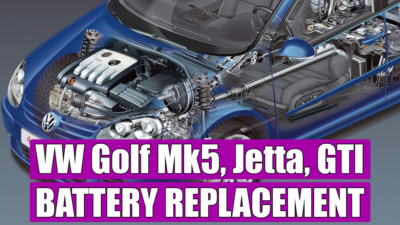
Changing the battery in a VW Golf is a straightforward task, but there are key steps to follow—especially if your car has start-stop technology or advanced electronics. Here’s a complete guide to safely replace your Golf’s battery.
🔧 Tools & Materials Needed
✔ New battery (Check specs: 12V, 60Ah, 280A CCA for most Golfs; AGM/EFB if equipped with start-stop, new battery should match with old battery specification)
✔ 10mm socket wrench (or spanner)
✔ Insulated gloves (to prevent short circuits)
✔ Wire brush or sandpaper (to clean terminals)
✔ Battery terminal protector spray (optional)
✔ Memory saver device (optional, to prevent ECU reset)
📌 Step-by-Step Battery Replacement
1️⃣ Safety First
Turn off the engine and remove the key. Make sure electricity was cut off.
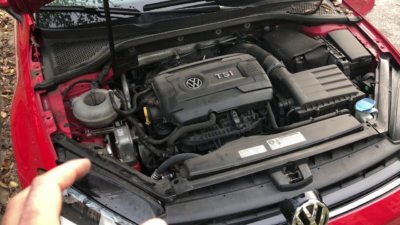
Open the hood and locate the battery (usually on the right side of the engine bay).
2️⃣ Disconnect the Old Battery
⚠ Critical: Always disconnect NEGATIVE (–) first! Then disconnect POSIVITE (+).
Loosen the negative terminal (Black, marked “–”) with a 10mm wrench.
Remove the negative cable and secure it away from the battery.
Repeat for the positive terminal (Red, marked “+”).
Remove the battery hold-down clamp (some models have a plastic cover to disassemble).
3️⃣ Remove the Old Battery
Carefully lift out the old battery (it’s heavy—around 15-20kg).
Avoid tilting it to prevent acid leaks.
4️⃣ Install the New Battery
Clean the terminals with a wire brush (remove corrosion).
Place the new battery in the tray and secure it with the hold-down clamp.
Reconnect terminals in reverse order:
Positive (+) first, tighten securely.
Negative (–) last, tighten firmly.
Apply terminal protector spray (optional, prevents corrosion).
5️⃣ Post-Installation Checks
Start the car—check if electronics (radio, lights, windows, AC air conditioner) work.
Reset systems if needed (some Golfs require adaptation with a VCDS/ODIS scanner).
⚠️ Important Notes
The power-off sequence must be strictly followed: negative first and then positive to avoid short circuit damage to the ECU.
🔹 Start-stop models require AGM/EFB batteries(such as VARTA E39)—using a standard battery can damage the system.
🔹 Disconnecting the battery may reset:
Radio codes (keep your PIN handy).
Power windows (relearn by holding switches up/down for 5 sec).
Clock & trip computer settings.
🔹 If your Golf has a battery management system (BMS):
The new battery must be registered with a diagnostic tool (VCDS, OBDeleven, or dealer scan tool).
🔍 Frequently Asked Questions
❓ Why won’t my start-stop work after battery replacement?
→ The car needs to relearn battery parameters—drive for ~30 mins or use a diagnostic tool.
❓ Can I change the battery myself?
→ Yes, but if your Golf has start-stop or BMS, a professional scan tool may be needed.
❓ How long does a VW Golf battery last?
→ Standard battery: 3-5 years | AGM/EFB battery: 4-6 years (depends on usage).
💡 Pro Tips
✔ Buy the right battery—check your owner’s manual or existing battery label.
✔ Keep memory power—use a memory saver if you don’t want to lose settings.
✔ Disconnect the negative first—prevents accidental short circuits.
Done! Your VW Golf should now start smoothly.
Are These Battery Replacement Steps Suitable for Other VW Cars?
The battery replacement process for a Volkswagen Golf is generally similar across most VW models, but there are some important variations depending on the vehicle type, engine, and features. Here’s what you need to know:
✅ Similarities Across Most VW Models
✔ Battery Location – Most VWs (Golf, Jetta, Passat, Tiguan) have the battery in the engine bay (right side).
✔ Disconnection Order – Always remove negative (–) first, then positive (+).
✔ Basic Tools Needed – 10mm wrench/socket for terminals, battery hold-down clamp.
✔ Potential Resets – Radio, clock, and window settings may need reinitialization.
⚠️ Key Differences in Other VW Models
- Battery Location Variations
Some VW models (e.g., Touareg, Arteon, CC) may have the battery in the trunk or under the rear seat (to improve weight distribution).
Electric/Hybrid VWs (e.g., ID.4, Golf GTE) have high-voltage batteries—DO NOT attempt replacement yourself!
- Start-Stop & Battery Management System (BMS)
Most modern VWs (2015+) have AGM/EFB batteries if equipped with start-stop.
Battery registration is required (using VCDS, OBDeleven, or dealer tools) to avoid:
Start-stop malfunction
Charging system errors
3. Special Cases
| Model | Battery Notes |
| VW Tiguan | Similar to Golf, but check if under hood or in cargo area. |
| VW Passat (B8) | May have battery in trunk (right side). |
| VW Touareg | Often has battery under the driver’s seat (requires trim removal). |
| VW ID.4 (EV) | 12V battery is still present (for electronics), but high-voltage battery requires specialist. |
💡 Pro Tips for All VW Battery Changes
✔ Use the correct battery type (EFB/AGM for start-stop, standard for older models).
✔ Keep memory settings with a memory saver (or be ready to reset radio/windows).
✔ If unsure, consult a VW specialist—especially for newer models with BMS.
Final Verdict
✅ Works for most gas/diesel VWs (Golf, Jetta, Passat, Tiguan).
⚠ Check location & BMS requirements for SUVs (Touareg) and luxury models (Arteon).
🚫 Do NOT attempt on hybrids/EVs (ID.4, Golf GTE).
Need help with your specific VW? Ask in the comments!


