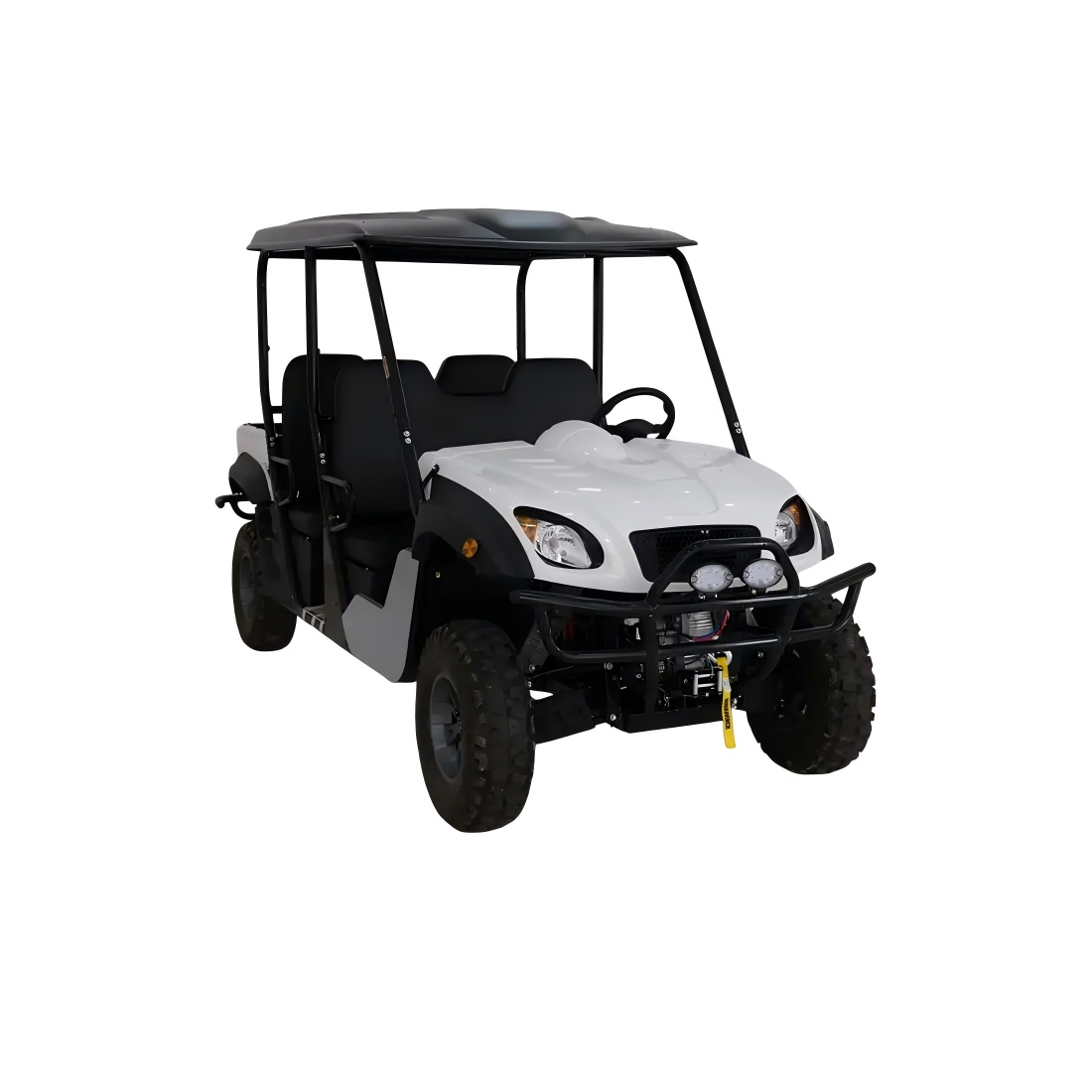
The electric utility vehicle market has revolutionized off-road transportation, offering powerful, quiet, and environmentally friendly alternatives to traditional gas-powered UTVs. Electric 4WD UTVs combine the rugged capability of four-wheel drive with the instant torque and efficiency of electric motors, making them ideal for work, recreation, and everything in between.
Whether you're a farmer looking for a reliable work vehicle, an outdoor enthusiast seeking adventure, or a business owner needing efficient transportation, choosing the best electric 4WD UTV requires understanding the key features, performance capabilities, and practical considerations that matter most.
This comprehensive guide examines the top electric 4WD UTVs available today, analyzing their specifications, performance, value, and real-world applications to help you make an informed decision.
Why Choose Electric 4WD UTVs?
Electric 4WD UTVs offer compelling advantages over their gas-powered counterparts, making them increasingly popular among both commercial and recreational users. Understanding these benefits helps explain why electric UTVs represent the future of utility vehicle technology.
Instant Torque
Electric motors deliver maximum torque from zero RPM, providing superior acceleration and climbing ability compared to gas engines.
Quiet Operation
Nearly silent operation makes electric UTVs perfect for early morning work, wildlife observation, and noise-sensitive environments.
Zero Emissions
No exhaust emissions contribute to cleaner air and make indoor use possible in warehouses and enclosed facilities.
Lower Operating Costs
Electricity costs significantly less than gasoline, and electric motors require minimal maintenance compared to gas engines.
Reduced Maintenance
No oil changes, spark plugs, or complex engine maintenance means more uptime and lower service costs.
Precise Control
Electric drive systems offer precise speed and torque control, making them ideal for delicate operations and tight spaces.
Top Electric 4WD UTV Models for 2025
After extensive research and testing, we've identified the leading electric 4WD UTVs that offer the best combination of performance, reliability, and value. Each model excels in different areas, making them suitable for various applications and budgets.
Polaris Ranger EV
Best Overall Performance
The Polaris Ranger EV sets the standard for electric utility vehicles with its robust 30 HP AC motor and proven 4WD system. With a 50-mile range and 1,500-pound payload capacity, it handles both work and recreation with ease.
- 30 HP AC electric motor
- 50-mile range per charge
- 1,500 lb payload capacity
- 2,000 lb towing capacity
- On-demand 4WD system
Best For: Commercial operations, farms, and users who need maximum capability and reliability.
John Deere Gator XUV865M
Best for Heavy-Duty Work
Built for serious work applications, the Gator XUV865M combines John Deere's legendary durability with efficient electric power. Its 48V system provides consistent performance throughout the workday.
- 48V electric drive system
- 40-mile range per charge
- 1,400 lb payload capacity
- 1,800 lb towing capacity
- Selectable 4WD with differential lock
Best For: Agricultural operations, landscaping, and heavy-duty commercial use.
Kubota RTV-XG850 Sidekick
Best Value for Money
The Kubota Sidekick offers excellent value with reliable performance and competitive pricing. Its efficient electric system provides good range and capability for most applications.
- 25 HP electric motor
- 45-mile range per charge
- 1,200 lb payload capacity
- 1,500 lb towing capacity
- Variable 4WD system
Best For: Budget-conscious buyers, small farms, and recreational users.
Can-Am Defender Electric
Best for Recreation
The Can-Am Defender Electric combines recreational capability with work functionality. Its advanced suspension and comfortable seating make it ideal for trail riding and outdoor adventures.
- 35 HP electric motor
- 55-mile range per charge
- 1,300 lb payload capacity
- 2,500 lb towing capacity
- Intelligent 4WD system
Best For: Recreational users, hunting, and mixed work/play applications.
Textron Prowler EV
Best Technology Integration
The Textron Prowler EV features advanced technology including smartphone connectivity, GPS tracking, and sophisticated battery management systems for optimal performance and monitoring.
- 28 HP electric motor
- 48-mile range per charge
- 1,250 lb payload capacity
- 1,750 lb towing capacity
- Smart 4WD with traction control
Best For: Tech-savvy users, fleet management, and precision applications.
Mahindra eMAX 25L
Best Compact Option
The Mahindra eMAX 25L proves that good things come in small packages. This compact electric UTV offers surprising capability in a maneuverable platform perfect for tight spaces.
- 20 HP electric motor
- 35-mile range per charge
- 1,000 lb payload capacity
- 1,200 lb towing capacity
- Compact 4WD system
Best For: Urban applications, greenhouse work, and space-constrained operations.
Key Features Comparison
When evaluating the best electric 4WD UTV for your needs, several key specifications and features should guide your decision. This comparison table highlights the most important factors to consider.
| Model | Motor Power | Range (Miles) | Payload (lbs) | Towing (lbs) | Top Speed (mph) | Price Range |
|---|---|---|---|---|---|---|
| Polaris Ranger EV | 30 HP | 50 | 1,500 | 2,000 | 25 | $18,000-$22,000 |
| John Deere Gator XUV865M | 25 HP | 40 | 1,400 | 1,800 | 23 | $16,500-$20,000 |
| Kubota RTV-XG850 | 25 HP | 45 | 1,200 | 1,500 | 22 | $14,000-$17,500 |
| Can-Am Defender Electric | 35 HP | 55 | 1,300 | 2,500 | 28 | $19,500-$24,000 |
| Textron Prowler EV | 28 HP | 48 | 1,250 | 1,750 | 25 | $17,000-$21,000 |
| Mahindra eMAX 25L | 20 HP | 35 | 1,000 | 1,200 | 20 | $12,000-$15,000 |

Electric 4WD UTV Buying Guide
Selecting the best electric 4WD UTV requires careful consideration of your specific needs, operating conditions, and budget. This comprehensive buying guide covers the essential factors that will help you make the right choice.
1. Determine Your Primary Use Case
The intended application significantly influences which electric UTV will serve you best:
- Agricultural Work: Prioritize payload capacity, range, and durability
- Recreational Use: Focus on comfort, speed, and trail capability
- Commercial Operations: Consider reliability, service support, and total cost of ownership
- Property Maintenance: Balance capability with maneuverability and ease of use
2. Evaluate Power and Performance Requirements
Electric motor power directly affects performance capabilities:
Power Guidelines:
- 20-25 HP: Suitable for light work, flat terrain, and basic transportation
- 25-30 HP: Good for moderate work loads, hills, and mixed terrain
- 30+ HP: Best for heavy work, steep terrain, and maximum capability
3. Consider Range and Battery Technology
Range requirements depend on your typical usage patterns and charging infrastructure:
- Short Range (20-35 miles): Adequate for property maintenance and short work sessions
- Medium Range (35-50 miles): Suitable for full workdays and recreational outings
- Long Range (50+ miles): Ideal for extended operations and remote locations
4. Assess Payload and Towing Needs
Match the UTV's capacity to your hauling requirements:
| Application | Recommended Payload | Recommended Towing |
|---|---|---|
| Light Property Work | 800-1,000 lbs | 1,000-1,200 lbs |
| Farm Operations | 1,200-1,500 lbs | 1,500-2,000 lbs |
| Commercial Use | 1,300-1,500 lbs | 1,800-2,500 lbs |
| Recreation | 1,000-1,300 lbs | 1,200-1,800 lbs |
Electric 4WD UTV Pros and Cons
Advantages
- Instant torque delivery for superior acceleration
- Quiet operation suitable for any time of day
- Zero emissions for environmental responsibility
- Lower operating costs compared to gas models
- Minimal maintenance requirements
- Precise speed and torque control
- Can operate indoors safely
- Consistent performance regardless of altitude
- No warm-up time required
- Regenerative braking extends range
Considerations
- Higher initial purchase price
- Limited range compared to gas models
- Charging time requirements
- Battery replacement costs after 5-8 years
- Cold weather reduces battery performance
- Limited charging infrastructure in remote areas
- Payload capacity may be reduced by battery weight
- Fewer service locations for specialized repairs
Maintenance and Care Tips
Proper maintenance ensures your electric 4WD UTV delivers reliable performance and maximum lifespan. While electric UTVs require less maintenance than gas models, following these guidelines will optimize your investment.
Battery Care
- Charge batteries regularly, avoiding complete discharge
- Store in moderate temperatures when possible
- Use manufacturer-approved chargers only
- Monitor battery health through diagnostic systems
- Keep battery terminals clean and corrosion-free
Regular Maintenance Tasks
- Check tire pressure and tread wear monthly
- Inspect suspension components for wear
- Clean and lubricate drive components as specified
- Test brake system performance regularly
- Keep electrical connections clean and tight
- Wash and protect the vehicle from corrosion
Safety Note: Always follow manufacturer guidelines for maintenance and repairs. High-voltage electrical systems require specialized knowledge and tools for safe service.
Total Cost of Ownership Analysis
While electric 4WD UTVs typically cost more upfront than gas models, the total cost of ownership often favors electric vehicles due to lower operating and maintenance costs.
Initial Investment
- Electric UTVs: $12,000 - $24,000
- Comparable gas UTVs: $8,000 - $18,000
- Premium for electric: $3,000 - $6,000
Operating Cost Comparison (Annual)
| Cost Category | Electric UTV | Gas UTV | Annual Savings |
|---|---|---|---|
| Fuel/Electricity | $200 | $800 | $600 |
| Maintenance | $150 | $400 | $250 |
| Repairs | $100 | $300 | $200 |
| Total Annual | $450 | $1,500 | $1,050 |
Payback Period: Based on typical usage, the higher initial cost of an electric UTV is typically recovered within 3-5 years through operating cost savings.
Ready to Go Electric?
Discover the perfect electric 4WD UTV for your needs. Compare models, get quotes, and find authorized dealers in your area.
Find Dealers Near You Compare ModelsThe Future of Electric UTVs
The electric UTV market continues to evolve rapidly, with manufacturers investing heavily in battery technology, motor efficiency, and smart features. Understanding these trends helps predict what's coming next.
Emerging Technologies
- Solid-State Batteries: Promise longer range, faster charging, and improved safety
- Wireless Charging: Convenient charging without plugging in
- Vehicle-to-Grid Technology: UTVs that can power your home or tools
- Autonomous Features: Self-driving capabilities for repetitive tasks
- Advanced Materials: Lighter, stronger construction materials
Market Predictions
Industry experts predict significant growth in the electric UTV market, driven by:
- Decreasing battery costs making electric UTVs more affordable
- Stricter emissions regulations favoring electric vehicles
- Improved charging infrastructure in rural areas
- Growing environmental consciousness among consumers
- Technological advances improving performance and reliability
Conclusion
The best electric 4WD UTV for your needs depends on your specific requirements, budget, and intended use. Whether you choose the powerful Polaris Ranger EV for maximum capability, the reliable John Deere Gator for heavy-duty work, or the value-oriented Kubota Sidekick for budget-conscious buyers, electric UTVs offer compelling advantages over traditional gas-powered models.
Electric 4WD UTVs represent the future of utility vehicle technology, combining environmental responsibility with practical performance. As battery technology continues to improve and costs decrease, electric UTVs will become even more attractive to a broader range of users.
Consider your specific needs, evaluate the total cost of ownership, and test drive multiple models before making your decision. The investment in an electric 4WD UTV will pay dividends in reduced operating costs, improved reliability, and environmental benefits for years to come.
Frequently Asked Questions
Most electric 4WD UTVs offer a range between 35-55 miles per charge under normal operating conditions. Factors affecting range include payload weight, terrain difficulty, driving style, temperature, and battery age. Heavy work loads and steep terrain will reduce range, while flat terrain and moderate loads can extend it.
Charging times vary by battery size and charger type. Standard 110V charging typically takes 8-12 hours for a full charge, while 220V charging reduces this to 4-6 hours. Some models offer fast-charging options that can achieve 80% charge in 2-3 hours. Most users charge overnight for daily use.
No, electric UTVs are significantly less expensive to maintain. They don't require oil changes, spark plug replacements, air filter changes, or complex engine maintenance. The main maintenance involves checking tire pressure, brake systems, and keeping electrical connections clean. Annual maintenance costs are typically 60-70% lower than gas UTVs.
Yes, electric motors actually provide advantages on steep terrain due to instant torque delivery. Electric 4WD UTVs can climb grades that challenge gas models, and the precise torque control helps maintain traction on difficult surfaces. The low center of gravity from battery placement also improves stability on slopes.
Most electric UTVs have battery management systems that provide low-charge warnings well before complete depletion. If the battery does become completely discharged, you'll need to charge it before operation or use a portable generator with the onboard charger. Some users keep a backup battery or portable charging solution for extended remote operations.
Cold weather reduces battery capacity and range by 15-25% in most electric UTVs. However, they start instantly regardless of temperature, unlike gas engines that may struggle in cold conditions. Many models include battery heating systems to minimize cold weather effects. Storing the UTV in a heated garage helps maintain optimal battery performance.
Most electric UTV batteries are designed to last 5-8 years or 1,000-2,000 charge cycles with proper care. Battery life depends on usage patterns, charging habits, storage conditions, and maintenance. Many manufacturers offer warranties of 3-5 years on battery systems. Replacement costs typically range from $3,000-$6,000 depending on the model.
Electric UTVs are excellent for commercial use, especially in applications requiring quiet operation, indoor use, or environmental compliance. They're popular in agriculture, landscaping, facilities maintenance, and industrial operations. The lower operating costs and reduced maintenance make them cost-effective for commercial fleets.
Yes, most dealers offer financing options for electric UTVs, including traditional loans, leasing programs, and seasonal payment plans. Some manufacturers provide special financing rates for electric models. Additionally, certain regions offer rebates or tax incentives for electric vehicle purchases, which can help offset the higher initial cost.
Key safety features include: rollover protection structures (ROPS), seat belts, emergency shut-off switches, battery protection systems, thermal management, and proper electrical insulation. Look for models with traction control, hill descent control, and speed limiting features. Always ensure the UTV meets relevant safety standards and includes proper safety equipment.