
Why Dimensions Matter More Than Seat Count
A six-seater golf cart looks like a simple extension of a four-seater, but in practice the difference is significant. Most six-passenger models use a stretched chassis or a rear-facing seat configuration, which adds length and changes the turning behavior. Buyers often focus on passenger capacity while overlooking how the extra size affects parking, storage, and maneuverability.
If you plan to use your cart in a neighborhood, resort, or private road setting, these factors matter just as much as horsepower or battery type.
Typical 6 Seater Golf Cart Dimensions
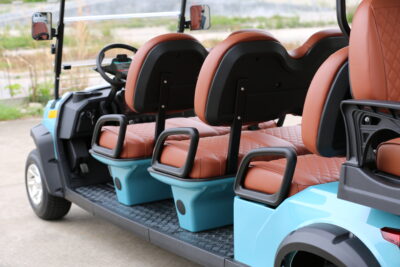
While exact measurements vary by manufacturer and configuration, most 6 passenger golf carts fall within a relatively consistent size range.
A standard six-seater golf cart is typically around 145 to 165 inches in length, noticeably longer than a four-seater. Width usually stays between 48 and 55 inches, which allows the cart to remain compatible with standard golf cart paths and residential lanes. Height, including roof, generally falls between 70 and 80 inches, depending on canopy style and suspension setup.
These dimensions make six-seaters well-suited for transporting families or small groups, but they also introduce space considerations that buyers should think through carefully.
Will a 6 Seater Golf Cart Fit in a Garage?
This is one of the most common concerns—and one of the most overlooked before purchase.
Most residential garages are designed to accommodate vehicles around 16 feet long. A six-seater golf cart often pushes close to that limit. While many single-car garages can handle the width, the length is where problems arise. In some cases, the cart may fit only if shelves or storage cabinets are removed, or if the garage door opening is tall enough to clear the roof.
If garage storage is essential, measuring both the interior length and door height before buying a six-seater is strongly recommended.
How 6 Seater Dimensions Affect Street and Community Use
In neighborhoods and gated communities, a longer golf cart changes how you interact with the environment. Turning radius increases slightly, which may require wider turns at intersections or when navigating tight parking areas. This becomes especially relevant if the cart is configured as a street-legal LSV.
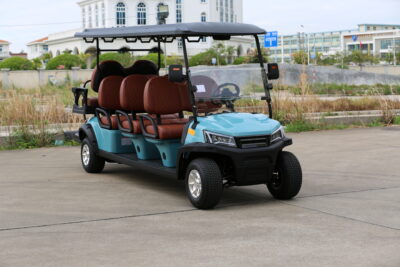
Street-legal six-seater golf carts often include additional equipment such as lights, mirrors, seat belts, and reinforced bumpers. These additions can slightly increase overall length and height, making dimensional awareness even more important for daily driving.
For buyers planning road use, understanding how the cart fits within local lane widths and parking spaces is just as important as meeting regulatory requirements.
Comfort and Passenger Space in a 6 Seater Golf Cart
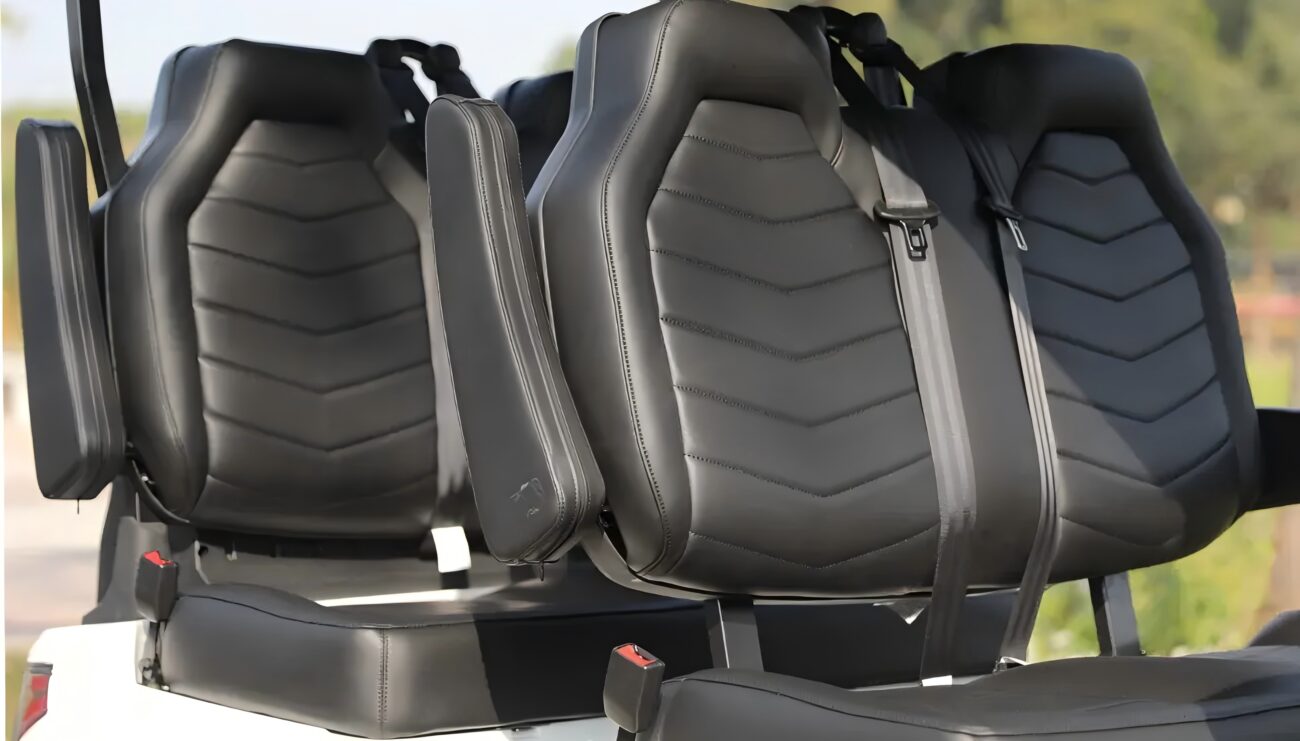
One of the biggest advantages of a six-seater is passenger comfort—when the dimensions are designed properly.
The extended wheelbase allows for more legroom and better weight distribution, which translates to a smoother ride on paved surfaces. Rear-facing seats are common and provide flexibility, though forward-facing layouts are increasingly popular for street use.
If comfort is a priority, especially for family use or commercial transport, the added length of a six-seater becomes an asset rather than a drawback.
Is a 6 Seater Golf Cart the Right Size for You?
A six-seater golf cart is an excellent choice for families, communities, resorts, and commercial environments—but only when the size fits your lifestyle.
If you have sufficient storage space, frequently carry multiple passengers, and primarily drive on paved roads, a six-seater offers unmatched convenience and comfort. On the other hand, if storage or maneuverability is a concern, understanding the exact dimensions before buying can save time, money, and frustration.
Searching for 6 seater golf cart dimensions is a smart step in the buying process. Size affects everything—from where you store the cart to how comfortable it feels in daily use.
By understanding real-world dimensions and how they impact storage, street use, and passenger comfort, you can make a confident decision that fits your space and your needs, not just your seating requirements.