

Golf cart batteries aren’t cheap. And nobody wants to replace them more often than necessary.
Here’s the thing. Lifespan varies wildly depending on what type of battery you’re running. We’re talking anywhere from 2 years to 20 years. That’s not a small difference. That’s thousands of dollars either saved or wasted depending on your choice.
Lead-acid, AGM, gel, lithium. Each one has different longevity, different maintenance needs, different costs. Understanding these differences matters for your wallet and your sanity.
This guide breaks down every battery type, what affects how long they actually last, and what you can do to squeeze maximum life out of whatever you’re running. Because choosing the right battery upfront—and maintaining it properly—can genuinely save you thousands over the life of your cart.
Understanding Golf Cart Battery Basics
Golf cart batteries aren’t the same as car batteries. Different job entirely.
Your car battery cranks the engine for a few seconds, then the alternator takes over. Quick burst of power, then it recharges while you drive. Easy life, honestly.
Golf cart batteries work constantly. They power everything. Motor, lights, accessories. They discharge deeply, recharge, discharge again. Over and over. That’s a much harder job.
This is why golf carts use deep-cycle batteries. Built for repeated discharge and recharge cycles rather than quick bursts.
Most carts run 36V, 48V, or 72V systems. You get there by combining multiple smaller batteries. Six 6-volt batteries make 36 volts. Six 8-volt batteries make 48 volts. Different configurations for different power needs.
Four main battery types dominate the market. Lead-acid flooded, AGM, gel, and lithium-ion. Each handles the deep-cycle job differently. Each lasts a different amount of time.
What are deep-cycle batteries?
Deep-cycle batteries are designed to be discharged significantly and recharged repeatedly. That’s their whole purpose.
Regular car batteries—starter batteries—hate being discharged deeply. Do it a few times and they’re toast. They’re built for short, intense bursts of power.
Deep-cycle batteries handle the opposite situation. Steady power output over extended periods, then full recharge, then do it again. Hundreds or thousands of times ideally.
Golf carts require this because they’re constantly drawing power. Not just to start, but to move, to climb hills, to run accessories. The battery works the whole time you’re using the cart.
Discharge depth matters a lot here. Lead-acid deep-cycle batteries typically handle 50-80% discharge safely. Lithium can go 80-100% without damage. Going deeper than designed shortens lifespan dramatically.
Common voltage configurations in golf carts
Golf carts run on 36V, 48V, or 72V systems. The voltage affects power, speed, and hill-climbing ability.
36V systems use six 6-volt batteries wired in series. Common in older carts and lighter-duty applications. Fine for flat terrain and casual use.
48V systems use six 8-volt batteries or four 12-volt batteries. More power than 36V. Better hill climbing. Higher top speeds. The most common configuration in modern carts.
72V systems provide even more power. Six 12-volt batteries. Serious hill-climbing ability. Higher speeds. Popular in demanding terrain or when you’ve added heavy accessories like lift kits.
You can’t mix and match voltages. Your cart’s electrical system expects a specific voltage. Running the wrong setup damages the controller and motor.
GMT works with all these voltage configurations. Whether you’re replacing a basic 36V fleet cart or upgrading a 72V lifted personal cart, the voltage system determines which battery options fit.
How Long Do Different Golf Cart Batteries Last?
Battery lifespan ranges from 2 years to 20 years depending on type. That’s not a typo. The gap really is that big.
Two measurements matter here. Calendar years and cycle life. A battery might last 5 years on the calendar or 500 charge/discharge cycles—whichever comes first.
Fleet carts hit cycle limits faster. Private carts often hit calendar limits first. Depends entirely on how much you use it.
Let me break down each battery type with real numbers.
1. Lead-Acid (Flooded) Golf Cart Batteries
Lifespan: 2-5 years or 300-1,000 cycles
Flooded lead-acid batteries are the old standard. Most common type out there. Also the cheapest upfront.
These require real maintenance. Checking water levels monthly. Adding distilled water when needed. Cleaning terminals regularly. Removing corrosion buildup. Skip this stuff and they die early.
They’re heavy too. Six 6-volt lead-acid batteries weigh around 350-400 pounds total. That weight affects cart performance, range, and handling.
Pros: Lowest upfront cost ($800-$1,500 for a full set). Widely available everywhere. Easy to service if you know what you’re doing. Familiar technology.
Cons: Shortest lifespan of all options. Heavy. Maintenance-intensive. Sensitive to deep discharge—drain them too low and they sulfate permanently. Need proper ventilation due to hydrogen gas during charging.
Best for: Budget-conscious buyers who don’t mind maintenance. Infrequent use situations. People comfortable getting their hands dirty monthly.
Maintenance requirements: Check water levels monthly with distilled water only. Clean terminals regularly with a wire brush. Avoid discharging below 50% state of charge. Charge after every single use. Keep tops clean and dry.
2. AGM (Absorbed Glass Mat) Golf Cart Batteries
Lifespan: 4-6 years or 500-800 cycles
AGM batteries are sealed lead-acid with a twist. Fiberglass mats absorb the electrolyte, so nothing sloshes around.
No maintenance. No water checks. No acid spills. Just install and go.
Pros: Zero water maintenance. Charges up to 5x faster than flooded lead-acid. Completely leak-proof. Better vibration resistance. Can mount in different positions. Safer overall—no acid exposure.
Cons: Higher cost than flooded lead-acid ($1,200-$2,000 for a set). Still relatively heavy. Limited cycle life compared to lithium. Sensitive to overcharging.
Best for: Users who want low maintenance without paying lithium prices. Fleet operations that can’t deal with constant maintenance. Anyone tired of checking water levels.
Performance notes: AGM sits in the middle ground. Better than basic lead-acid. Not as good as lithium. For many users, it’s the right balance of price and convenience.
3. Gel Lead-Acid Golf Cart Batteries
Lifespan: 4-6 years (similar to AGM)
Gel batteries use gelled electrolyte instead of liquid. The gel doesn’t flow or spill.
Here’s the honest truth though. These are exceedingly rare in golf cart applications. You almost never see them. Most customers choose AGM or lithium instead.
Pros: Excellent performance in extreme temperatures, especially cold weather. Completely leak-proof. Minimal maintenance. Handles deep discharges better than standard lead-acid. Good for harsh environmental conditions.
Cons: Most expensive lead-acid option. Slower charging than AGM—very sensitive to charge rates. Rarely available specifically for golf carts. Extremely sensitive to overcharging—wrong charger ruins them fast.
Best for: Very specific applications with extreme climate conditions. Honestly, if you’re not in a severe climate situation, gel batteries don’t make sense for golf carts.
Note: I rarely recommend gel for golf carts. The price premium doesn’t justify the benefits for most users. AGM gives you similar maintenance-free operation. Lithium gives you better everything.
4. Lithium-Ion (LiFePO4) Golf Cart Batteries
Lifespan: 8-12 years (some exceeding 20 years) or 3,000-5,000 cycles
Lithium is rapidly replacing lead-acid across the industry. There’s a reason.
The specific chemistry used in quality golf cart batteries is Lithium Iron Phosphate—LiFePO4. Safer and more stable than other lithium chemistries. Industry standard for a reason.
Pros: Longest lifespan by far—2-3x longer than any lead-acid variant. 60-70% lighter weight improves handling, range, and reduces wear on cart components. Fastest charging (2-5 hours versus 8-12 hours for lead-acid). Completely maintenance-free. Consistent voltage output throughout discharge—no power fade as battery depletes. Can safely discharge 80-100% of capacity without damage. Very low self-discharge rate—holds charge for months. Best total cost of ownership when calculated over time.
Cons: Higher upfront cost ($1,800-$3,500+ for quality packs). Requires lithium-specific chargers—lead-acid chargers damage lithium batteries.
Best for: Daily use. Commercial fleets. Performance-focused users. Anyone planning to keep their cart long-term. People who hate maintenance.
GMT advantage: GMT’s lithium batteries feature built-in BMS (Battery Management System) with Bluetooth monitoring capabilities. Check your state of charge, temperature, and cell balance from your phone. Extended warranties back up the quality. Available in 36V and 48V configurations with drop-in replacement options for most popular carts.
Battery Lifespan Comparison Table
Here’s everything side by side:
Lead-Acid Flooded:
- Years of service: 2-5
- Cycle life: 300-1,000
- Maintenance: High (monthly water checks)
- Weight: Heavy (350-400 lbs for 48V)
- Charging time: 8-12 hours
- Safe discharge depth: 50%
- 10-year cost: $3,000-$5,500
AGM:
- Years of service: 4-6
- Cycle life: 500-800
- Maintenance: Low (occasional terminal cleaning)
- Weight: Heavy (similar to flooded)
- Charging time: 4-8 hours
- Safe discharge depth: 50%
- 10-year cost: $2,800-$4,500
Gel:
- Years of service: 4-6
- Cycle life: 500-800
- Maintenance: Low
- Weight: Heavy
- Charging time: 8-10 hours (slow charging required)
- Safe discharge depth: 60%
- 10-year cost: $3,500-$5,000
Lithium (LiFePO4):
- Years of service: 8-12+
- Cycle life: 3,000-5,000
- Maintenance: None
- Weight: Light (100-130 lbs for 48V)
- Charging time: 2-5 hours
- Safe discharge depth: 80-100%
- 10-year cost: $1,800-$4,000
The 10-year numbers tell the real story. Lithium’s higher upfront cost gets offset by not needing replacements. Plus zero maintenance. Plus lower electricity costs due to higher efficiency.
What Factors Affect Golf Cart Battery Lifespan?
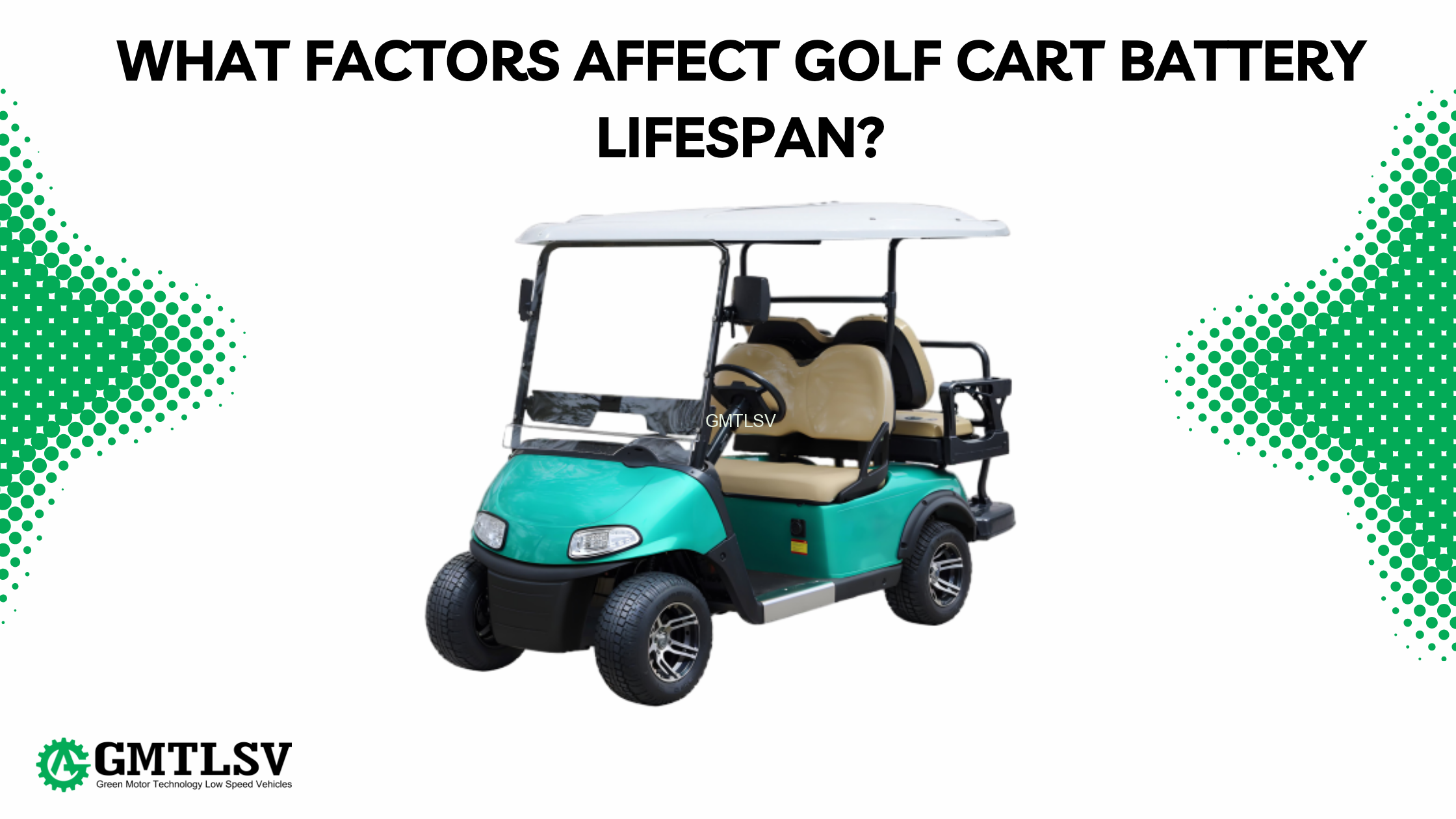
Battery type sets the baseline. But actual lifespan depends on how you treat them.
Proper care can push batteries to the upper range of their lifespan. Neglect cuts that lifespan in half. Sometimes worse.
Six main factors determine whether your batteries last 2 years or hit their maximum potential.
1. Charging habits and practices
Charging properly is the single biggest factor in battery longevity.
Charge after every use. Even short trips. Don’t let batteries sit discharged overnight. Lead-acid batteries sulfate when left discharged—permanent damage that reduces capacity.
Avoid overcharging. Lead-acid batteries shouldn’t charge more than 8-10 hours. Lithium batteries typically finish in 2-5 hours. Use chargers with automatic shutoff.
Never leave batteries fully discharged. A fully dead battery is a damaged battery. Especially lead-acid. Recovery might be possible but capacity is permanently reduced.
Use the correct charger for your battery type. This is critical for lithium. Lead-acid chargers will damage lithium batteries. Lithium chargers have specific charge profiles that prevent damage.
Smart chargers with automatic shutoff are worth the investment. They stop charging when batteries are full. Maintenance modes keep batteries topped off without overcharging.
For lead-acid, shallow discharges are better than deep discharges. Using 30% then recharging beats using 70% then recharging.
Lithium batteries are more forgiving but still benefit from proper charging habits.
2. Depth of discharge (DoD)
Depth of discharge means how much capacity you use before recharging.
Using 80% of your battery capacity means 80% depth of discharge. Using 30% means 30% DoD.
Repeatedly draining batteries too deeply damages them. This matters more for lead-acid than lithium, but matters for both.
Lead-acid, AGM, and Gel: Should not discharge below 50% regularly. Ideally keep 20-30% remaining charge before recharging. Going below 50% frequently accelerates degradation. Going below 20% causes serious damage.
Lithium: Can safely discharge to 80-100% capacity without damage. Much more forgiving.
Here’s the math that matters. One 80% discharge damages lead-acid more than four 20% discharges. Deep discharge cycles count more heavily against total cycle life than shallow ones.
3. Usage frequency and patterns
How often you use your cart affects lifespan in non-obvious ways.
Fleet carts run 2-3 rounds daily. Heavy use. They might see 300-500 cycles per year. A lead-acid battery rated for 500 cycles might only last 1-2 years in this application. Lithium still handles it because 3,000+ cycle rating absorbs heavy use.
Private carts used 3-5 rounds weekly see maybe 150-250 cycles per year. Same lead-acid battery lasts 3-4 years. Lithium could last 15+ years at this rate.
Moderate regular use is actually better than extremes. Sporadic heavy use stresses batteries. Long idle periods allow self-discharge and sulfation (in lead-acid).
Accessories draw matters too. Lights, stereo systems, lifted carts, larger tires—all draw extra power. Reduce runtime per charge. Increase discharge depth per use. Both shorten battery life.
Terrain affects everything. Hilly courses strain batteries more than flat terrain. Constant hill climbing draws heavy current, heats batteries, and increases wear.
4. Maintenance quality
This is where owners control their destiny.
Lead-acid flooded batteries:
- Check water levels monthly. Low water exposes plates and causes permanent damage.
- Use distilled water only. Tap water minerals contaminate cells.
- Clean terminals regularly. Corrosion increases resistance and reduces charging efficiency.
- Keep tops clean and dry. Dirt and moisture cause discharge across terminals.
- Inspect for cracks or bulging.
AGM and Gel batteries:
- Minimal maintenance needed.
- Terminals still need periodic cleaning and inspection.
- Check for physical damage or swelling.
- Ensure connections stay tight.
Lithium batteries:
- Virtually maintenance-free.
- Monitor BMS alerts if Bluetooth equipped.
- Keep terminals clean.
- Check connections annually.
Neglected maintenance can cut battery lifespan in half. Seen it many times. Someone skips water checks for a few months, plates are exposed, capacity drops 30% permanently. Expensive lesson.
5. Temperature and climate conditions
Batteries hate extreme temperatures. Both directions.
Heat accelerates degradation. Chemical reactions happen faster. Internal resistance increases. For lead-acid, water evaporates faster—meaning more frequent checks required. Heat can reduce lifespan by 20-40%.
Park in shade when possible. Avoid leaving carts in direct sun during hot months. Consider covered storage.
Cold reduces available capacity. Batteries might show 10-30% less range in cold weather. Normal—capacity returns when batteries warm up.
Cold also slows charging. And lithium batteries should never be charged below freezing without low-temperature protection. Quality BMS systems prevent charging in dangerous conditions. Cheap batteries might not.
Storage location matters. Climate-controlled storage extends battery life. Garage beats outdoor parking. Temperature swings stress batteries.
Gel batteries actually perform best in extreme temperatures. That’s their one advantage. Lithium handles temperature extremes better than standard lead-acid but has limits on the cold side for charging.
6. Storage practices
Long-term storage—like off-season for northern climates—requires specific care.
Charge to proper level before storage:
- Lithium: 40-60% state of charge is ideal for long-term storage
- Lead-acid: Fully charged, then maintained
Store in cool, dry, climate-controlled location. Consistent temperatures beat fluctuating temperatures.
Disconnect batteries from cart if storing for months. Parasitic drain from electronics slowly depletes batteries.
Use battery maintainer for lead-acid. Trickle chargers keep batteries topped off without overcharging. Prevents sulfation during storage.
Lithium holds charge better. Low self-discharge rate means lithium batteries can sit for months and maintain charge. Still should check periodically.
Never store batteries fully discharged. Lead-acid will sulfate and possibly die permanently. Lithium can enter deep discharge protection mode.
Check batteries monthly during storage periods. Quick voltage check catches problems before they become expensive.
How to Maximize Your Golf Cart Battery Life
Understanding what affects lifespan is step one. Acting on it is step two.
Here’s how to actually extend battery life and get maximum value from your investment.
Implement proper charging routines
Charge after every use. Every time. Even if you only drove around the block.
Use manufacturer-recommended chargers. This matters more than people realize. Wrong charger profiles damage batteries slowly over time.
Set a consistent charging schedule. Overnight charging works well—plenty of time for full charge before morning use.
Never interrupt charge cycles on lead-acid batteries. Starting and stopping prevents full charge and promotes sulfation. Let it finish.
Avoid fast charging unless your battery specifically supports it. Most lead-acid batteries don’t. Lithium handles faster charging better but check ratings.
For lithium, the 20-80% rule optimizes health when possible. Keep state of charge between 20% and 80% for maximum cycle count. Not always practical, but helpful when you can do it.
Invest in smart chargers. Automatic shutoff prevents overcharging. Maintenance modes keep batteries healthy during storage. Multi-stage charging optimizes for battery chemistry. Worth the extra cost.
Perform regular battery inspections
Create an inspection schedule. Weekly for fleet use. Monthly for private carts.
Visual checks:
- Look for cracks in battery cases
- Check for bulging or swelling—dangerous sign
- Spot leaks or moisture
- Identify corrosion on terminals
Physical checks:
- Ensure connections are tight and secure
- Wiggle cables to check for looseness
- Remove corrosion with wire brush and baking soda solution
Test voltage regularly. A basic multimeter costs $20. Check each battery individually. Significant voltage differences between batteries indicate problems.
Monitor performance trends. Reduced range compared to normal. Slower acceleration. Longer charging times. These signal degradation happening.
For lead-acid specifically: Check water levels and electrolyte color. Clear to light yellow is normal. Brown or murky indicates problems.
Keep a maintenance log. Track readings over time. Gradual decline is normal. Sudden drops indicate issues to address.
Use appropriate chargers and accessories
Match charger voltage to your battery system. 36V cart needs 36V charger. 48V needs 48V. Sounds obvious but mismatches happen.
Use battery-chemistry-specific chargers. Lead-acid and lithium require different charging profiles. Using a lead-acid charger on lithium batteries damages the lithium. Using a lithium charger on lead-acid won’t properly charge them.
Consider battery monitoring systems. Bluetooth monitors provide real-time state of charge, temperature tracking, and cell-level information. GMT lithium batteries include this capability built-in.
Never use automotive chargers on golf cart batteries. Different voltage, different current, wrong charging profile. Doesn’t end well.
Optimize cart usage and load management
Don’t overload the cart beyond rated capacity. Check manufacturer specs. Most carts rate for 800-1,200 pounds including passengers and cargo. Exceed that and you stress batteries, motors, and drivetrain.
Remove unnecessary weight when not in use. That cooler full of drinks you left in the back? Extra weight that reduces range.
Drive smoothly. Aggressive acceleration draws heavy current spikes. Hard braking wastes energy. Smooth driving extends range and reduces battery wear.
Plan routes to minimize steep hills when possible. If you have multiple route options, the flatter one extends battery life over time.
Limit accessory usage when battery is low. Running the stereo, lights, and heater while battery is at 30% pushes you into damaging deep discharge territory.
Consider regenerative braking on lithium setups. Some controllers recapture braking energy and return it to batteries. Extends range and reduces wear on mechanical brakes.
For commercial fleets: Implement battery rotation schedules. Equal usage across fleet prevents some carts from wearing out faster than others.
Signs Your Golf Cart Battery Needs Replacement
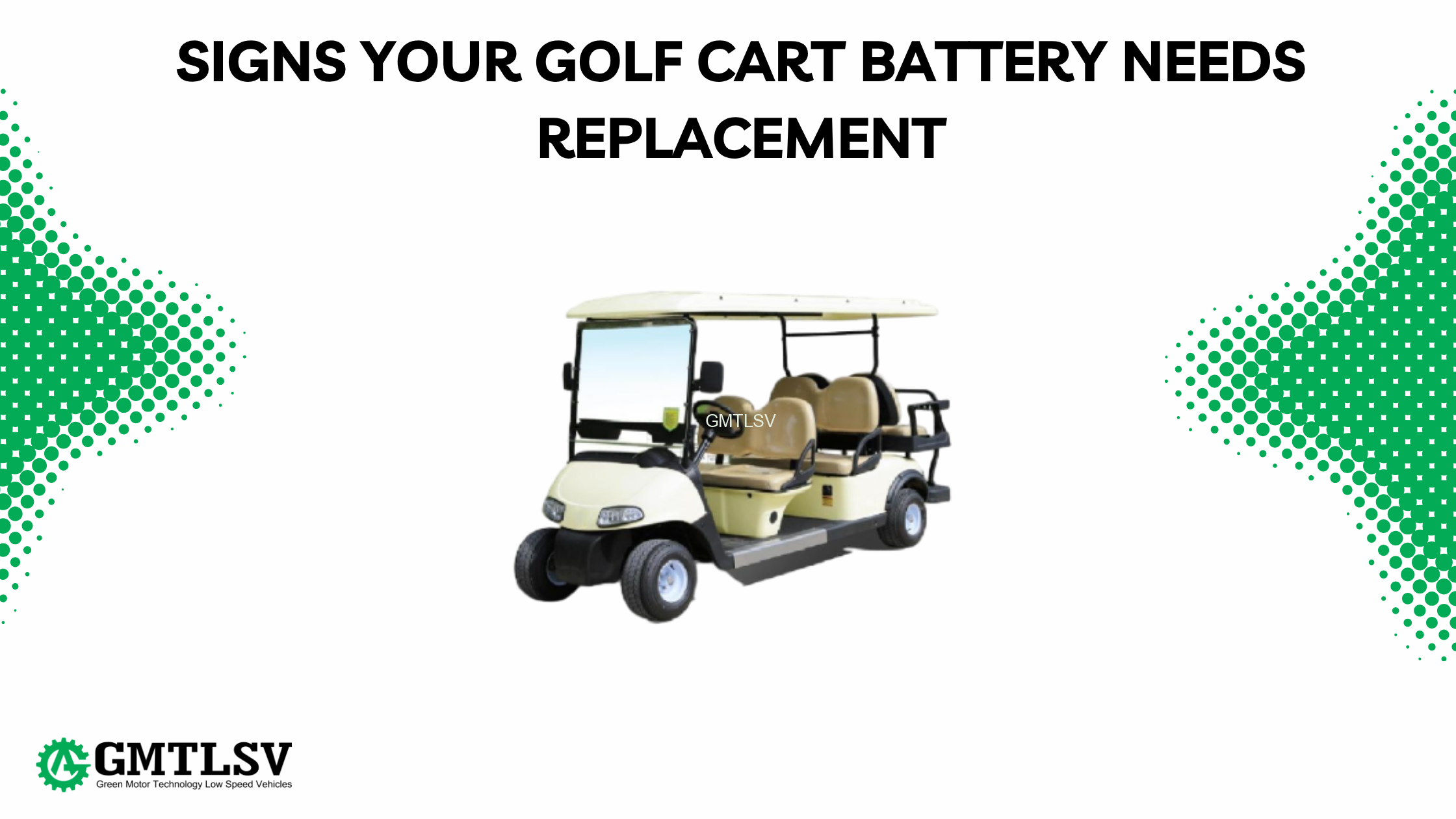
Batteries don’t last forever. Recognizing replacement signs early prevents getting stranded and protects your cart’s electrical system from damage.
Watch for these warning signs.
1. Reduced driving range and runtime
This is usually the first sign.
Battery can’t complete routes that used to be easy. Used to do 36 holes no problem, now you’re limping home after 18.
Noticeable decrease in miles per charge. If you tracked range before, comparison tells the story clearly.
Getting 15-20 miles when you used to get 30+? That’s significant capacity loss.
2. Longer charging times
Batteries taking significantly longer to reach full charge signals internal degradation.
Lead-acid normally takes 8-10 hours. If it’s stretching to 12-14 hours, something’s wrong.
Lithium normally finishes in 2-5 hours. Approaching 6-8 hours indicates degradation.
Charger running hot during extended charge sessions is concerning. Charger error codes definitely indicate problems.
What’s happening internally is increased resistance. Damaged cells can’t accept current efficiently.
3. Physical damage or swelling
This is the safety-critical category.
Visible bulging, swelling, or distortion of battery cases means gases are building up internally. Bad sign. Stop using it immediately.
Acid leaks from lead-acid batteries—discontinue use immediately. Safety hazard. Chemical burns possible. Environmental contamination.
Corrosion around terminals that returns quickly after cleaning suggests the battery is venting gases. Internal problems.
Physical damage requires immediate replacement. Don’t wait. Don’t try to get a few more months out of damaged batteries.
4. Decreased power and performance
Performance degradation happens gradually, then suddenly seems obvious.
Sluggish acceleration compared to what you remember. Cart feels tired.
Difficulty climbing hills that were previously no problem. Motor laboring more than usual.
Voltage drops quickly under load. Start climbing a hill and voltage sags dramatically.
Cart struggles to maintain speed. Starts out fine then gradually slows.
Motor sounds strained or different than usual. Higher pitch, more laboring.
5. Age of the battery
Even without obvious issues, batteries have lifespan limits.
Lead-acid: 3-5 years regardless of condition AGM: 4-6 years Lithium: 8-10 years minimum, though often longer
Check manufacturing date on the battery label. Usually stamped into the case or printed on a sticker.
Proactive replacement beats unexpected failure. Nobody wants to be stranded on the 14th hole when batteries finally give up.
Note: Well-maintained batteries often exceed these ranges. But calendar age catches up eventually regardless of care.
Total Cost of Ownership: Which Battery Type Saves Money?
Upfront cost isn’t total cost. The cheapest battery initially often costs the most over time.
Let me show you real numbers.
Why Choose GMT’s Lithium Golf Cart Batteries?
Not all lithium batteries are equal. Quality varies dramatically. GMT builds batteries that justify the lithium investment.
Advanced LiFePO4 technology with built-in BMS
GMT uses Lithium Iron Phosphate chemistry—LiFePO4. This is the industry gold standard for golf cart applications. More stable than other lithium chemistries. Better safety profile. Longer lifespan.
Built-in Battery Management System handles everything:
- Overcharge protection: Prevents damage from excessive charging
- Over-discharge protection: Cuts power before cells damage
- Temperature monitoring: Prevents operation outside safe ranges
- Cell balancing: Keeps individual cells matched for maximum life
- Short-circuit protection: Safety shutdown if something goes wrong
- Bluetooth connectivity: Real-time monitoring from your phone
The BMS isn’t optional on quality lithium batteries. It’s essential. GMT builds it into every pack.
Thermal stability allows operation from -20°F to 120°F. The BMS prevents charging in dangerous temperature ranges while allowing discharge in extreme conditions.
Proven performance and reliability
Numbers that matter:
- 4,000+ full charge/discharge cycles. That’s potentially 10+ years of use even with heavy daily riding.
- Retains 80% capacity after 3,000 cycles. Compare to lead-acid retaining 80% for maybe 300-500 cycles.
- 60% lighter than equivalent lead-acid. A 48V lithium pack weighs 100-130 pounds versus 350-400 pounds for lead-acid. That’s 200+ pounds off your cart.
- Consistent voltage output throughout discharge. No power fade as battery depletes. Same power at 80% charge as at 20% charge.
IP65-IP67 waterproof ratings. Protected against dust and water intrusion. Built for outdoor use.

