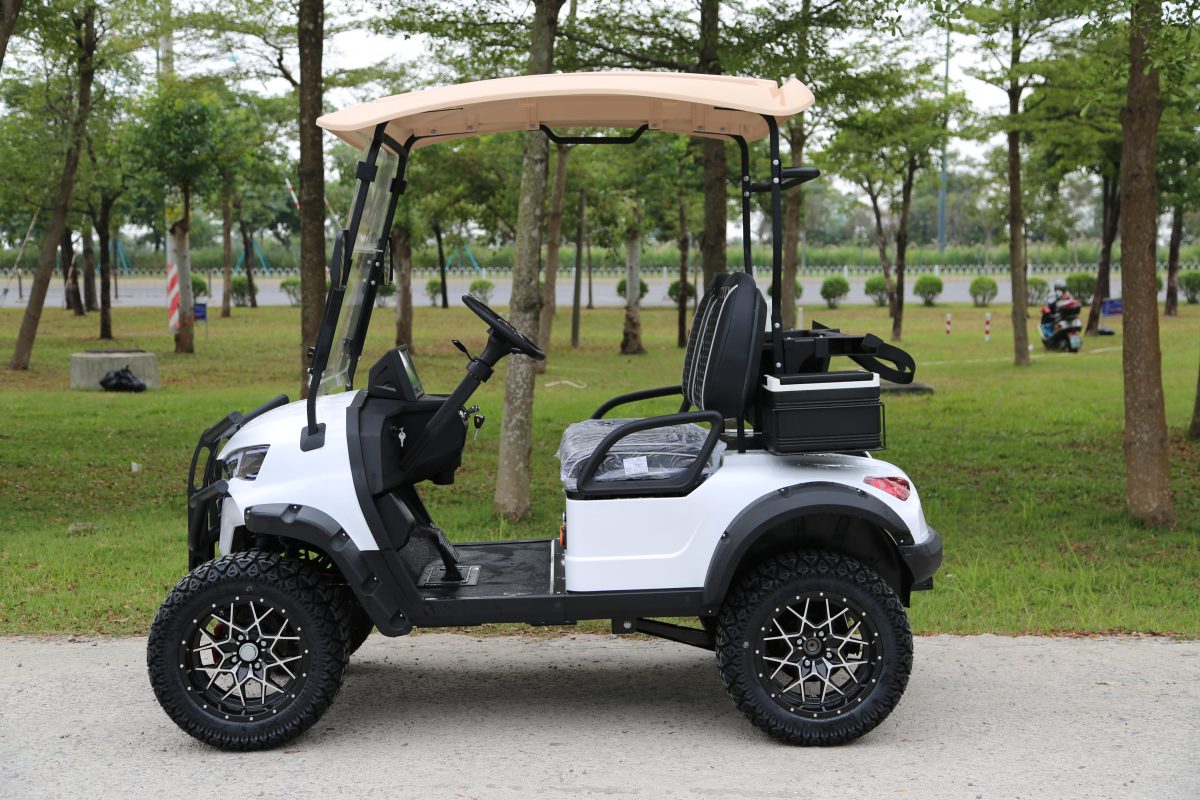
When searching for golf cart cost, many buyers quickly realize that there is no single fixed price. The cost of a golf cart can vary widely depending on its type, powertrain, configuration, usage scenario, and regional compliance requirements.
Whether you are a golf course operator, resort manager, property developer, or distributor, understanding the real cost structure of golf carts helps you make a smarter long-term investment rather than focusing only on the initial purchase price.
This guide breaks down golf cart costs in a practical, transparent way—based on real-world industry standards and typical configurations used across golf courses, resorts, gated communities, and commercial facilities.
1. Average Golf Cart Cost at a Glance
Before diving into details, here is a general price overview:
| Golf Cart Type | Typical Cost Range (USD) |
|---|---|
| Basic 2-Seater Electric Golf Cart | $4,000 – $6,000 |
| 4-Seater Golf Cart | $5,500 – $8,000 |
| 6–8 Seater Shuttle Golf Cart | $7,500 – $12,000 |
| Utility / Cargo Golf Cart | $6,000 – $10,000 |
| Street-Legal LSV Golf Cart | $8,500 – $15,000+ |
These ranges reflect new golf carts, not used or refurbished units.
For general background on golf cart categories and uses, the National Golf Foundation provides useful industry context:
2. Key Factors That Affect Golf Cart Cost
2.1 Electric vs Gas Golf Carts
Electric golf carts dominate modern golf courses and commercial environments due to lower operating costs and quieter operation.
| Power Type | Initial Cost | Operating Cost | Maintenance |
|---|---|---|---|
| Electric | Slightly higher | Very low | Minimal |
| Gas | Lower upfront | Higher (fuel) | More frequent |
Most professional buyers now prefer electric models, especially lithium-powered systems, due to environmental regulations and long-term savings.
You can also explore electric vehicle efficiency insights from the U.S. Department of Energy:
2.2 Battery Type: Lead-Acid vs Lithium
Battery choice significantly impacts total golf cart cost over time.
-
Lead-Acid Batteries
-
Lower upfront cost
-
Shorter lifespan (3–5 years)
-
Requires regular maintenance
-
-
Lithium Batteries
-
Higher initial price
-
2–3x longer lifespan
-
Faster charging, zero maintenance
-
Lower total cost of ownership
-
In many commercial fleets, lithium batteries reduce operating costs by 30–40% over 5–7 years.
2.3 Seating Capacity and Configuration
The more seats and features a cart has, the higher the cost:
-
2-seater: Entry-level, golf course use
-
4-seater: Resorts, communities
-
6–8 seater: Shuttle service, hotels, campuses
-
Rear-facing vs forward-facing seating affects price
Additional reinforcements are often required for larger carts, increasing manufacturing cost.
3. Golf Cart Cost by Usage Scenario
3.1 Golf Course Use
Golf carts used strictly on courses usually prioritize:
-
Lightweight chassis
-
Turf-friendly tires
-
Basic seating
-
Simple dashboard
Typical cost: $4,000 – $6,500
These carts are optimized for efficiency and durability rather than luxury.
3.2 Resorts, Hotels, and Parks
Resort applications require more comfort and aesthetics:
-
Upholstered seating
-
Roof extensions
-
Smooth suspension
-
Optional weather enclosures
Typical cost: $6,500 – $10,000
For hospitality environments, comfort often outweighs minimal pricing.
3.3 Street-Legal Golf Carts (LSV)
Street-legal Low-Speed Vehicles must comply with local regulations, such as:
-
Headlights, taillights, turn signals
-
Seat belts
-
Windshield
-
Speed limits (typically ≤25 mph)
You can review U.S. LSV standards here:
Typical cost: $8,500 – $15,000+
4. New vs Used Golf Cart Cost
New Golf Carts
Pros
-
Warranty
-
Latest technology
-
Custom configuration
Cons
-
Higher upfront cost
Used Golf Carts
Pros
-
Lower purchase price
-
Quick availability
Cons
-
Battery replacement risk
-
Shorter remaining lifespan
-
Limited customization
For fleet operators and long-term projects, new carts often deliver better ROI despite higher initial cost.
5. Hidden Costs Many Buyers Overlook
When calculating golf cart cost, many buyers focus only on purchase price. However, hidden costs matter:
-
Battery replacement
-
Charging infrastructure
-
Spare parts availability
-
Downtime due to maintenance
-
Regulatory upgrades (for LSV compliance)
According to industry data from Golf Course Superintendents Association of America:
operating cost efficiency is a top factor for course managers when upgrading fleets.
6. Cost Comparison: Golf Cart vs Other Small EVs
| Vehicle Type | Avg Cost | Operating Cost |
|---|---|---|
| Golf Cart | $4,000 – $10,000 | Very Low |
| UTV | $10,000 – $18,000 | Medium |
| Compact EV | $18,000+ | Higher |
Golf carts remain the most cost-effective solution for controlled environments and short-distance transport.
7. How to Optimize Golf Cart Cost for Your Project
To control your budget without sacrificing performance:
-
Define exact usage scenarios
-
Choose lithium battery where possible
-
Avoid unnecessary luxury features
-
Standardize fleet configurations
-
Work with experienced manufacturers familiar with export standards
A well-matched configuration can save thousands over the lifecycle of a golf cart.
8. FAQ: Golf Cart Cost
How much does a golf cart cost on average?
Most new electric golf carts cost between $4,000 and $10,000, depending on configuration.
Is a lithium golf cart worth the extra cost?
Yes. While lithium batteries increase upfront cost, they significantly reduce long-term maintenance and replacement expenses.
What is the lifespan of a golf cart?
With proper maintenance, a golf cart can last 8–12 years or longer in commercial use.
Are street-legal golf carts more expensive?
Yes. Compliance features increase cost, but allow broader usage beyond private property.
Final Thoughts
Understanding golf cart cost means looking beyond the sticker price. Powertrain, battery type, seating capacity, and compliance requirements all influence the true investment value.
For professional buyers, resorts, golf courses, and distributors, a well-configured electric golf cart offers one of the lowest total costs of ownership among short-distance transport solutions.
By evaluating cost from a lifecycle perspective rather than a single purchase moment, buyers can make decisions that deliver both operational efficiency and long-term reliability.