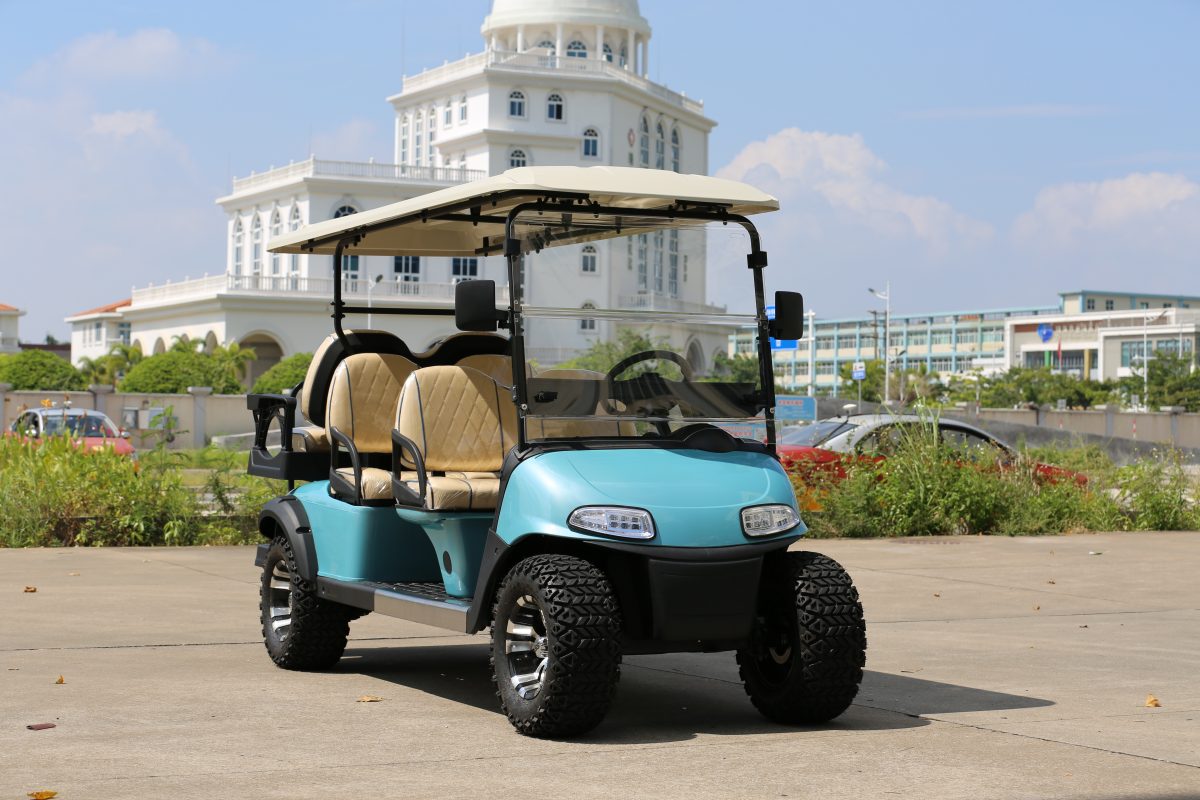
When people search how fast do golf carts go, they are usually asking more than just a number. In real-world use, speed affects safety, legality, battery range, and overall suitability for different environments.
Golf carts are designed primarily for short-distance transport, not high-speed driving. However, their actual speed varies depending on configuration, usage scenario, and local regulations.
This article explains typical golf cart speeds, what influences them, and how to choose the right speed for your application.
1. Average Golf Cart Speed: The Short Answer
Most standard golf carts travel at:
-
12–15 mph (19–24 km/h) for traditional golf course use
-
15–20 mph (24–32 km/h) for upgraded or commercial-use carts
-
Up to 25 mph (40 km/h) for street-legal LSV golf carts
These speeds are intentional, prioritizing control and safety over acceleration.
2. Why Golf Carts Are Not Designed to Go Faster
Golf carts operate in environments such as:
-
Golf courses
-
Resorts and hotels
-
Campuses and gated communities
-
Industrial parks and facilities
In these settings, higher speeds would:
-
Increase braking distance
-
Raise rollover risk
-
Cause excessive wear on tires and suspension
-
Reduce battery efficiency
A “good” golf cart speed is one that matches the environment, not the highest possible number.
3. Factors That Affect How Fast a Golf Cart Goes
3.1 Electric Motor and Controller
Most modern golf carts use electric motors with speed controllers tuned for:
-
Smooth acceleration
-
Load handling
-
Energy efficiency
Higher-performance controllers can increase speed slightly, but always within safe limits.
3.2 Battery Type and Voltage
Battery configuration plays a major role:
-
Lead-acid systems: Stable but heavier, moderate top speed
-
Lithium systems: Lighter, more efficient, better sustained speed
Lithium-powered carts often maintain consistent speed even under load.
3.3 Load and Terrain
Speed is also affected by:
-
Number of passengers
-
Cargo weight
-
Inclines and surface conditions
A fully loaded cart will naturally travel slower than an unloaded one.
4. Golf Cart Speed by Application
| Application | Typical Speed |
|---|---|
| Golf course | 12–15 mph |
| Resort / hotel | 15–18 mph |
| Gated community | 15–20 mph |
| Industrial site | 10–15 mph |
| Street-legal LSV | Up to 25 mph |
Matching speed to environment improves safety and user comfort.
5. Street-Legal Golf Carts (LSVs) and Speed Limits
Street-legal golf carts—often classified as Low-Speed Vehicles (LSVs)—are legally limited in speed.
In the United States, federal regulations define LSVs as vehicles with a top speed of 20–25 mph, along with mandatory safety equipment such as seat belts, lighting, and mirrors.
You can review the official definition and speed requirements here:
(This page explains what qualifies as an LSV and where these vehicles are legally permitted to operate.)
6. Can You Make a Golf Cart Go Faster?
While it is technically possible to modify golf carts for higher speeds, this is not recommended for most users.
Potential downsides include:
-
Reduced braking effectiveness
-
Increased rollover risk
-
Shortened component lifespan
-
Loss of warranty
-
Non-compliance with local laws
For commercial and fleet users, reliability and compliance matter far more than top speed.
7. Speed vs Battery Range: The Trade-Off
Higher speeds consume more energy.
In practice:
-
Moderate speeds = longer driving range
-
Maximum speed = faster battery drain
Most professional users prefer slightly lower speeds to maximize uptime and reduce charging frequency.
8. Choosing the Right Golf Cart Speed for Your Needs
Before selecting a golf cart, consider:
-
Where will the cart be used?
-
Are there pedestrians or guests nearby?
-
Does local regulation limit speed?
-
Is comfort more important than travel time?
-
Will the cart carry passengers or cargo regularly?
A properly configured golf cart delivers safe, predictable performance rather than unnecessary speed.
9. FAQ: How Fast Do Golf Carts Go?
How fast does a standard golf cart go?
Most standard golf carts travel at 12–15 mph.
How fast do street-legal golf carts go?
Street-legal LSV golf carts can reach up to 25 mph, depending on regulations.
Does a lithium battery make a golf cart faster?
It improves efficiency and consistency, but speed is still limited by design and safety settings.
Is a faster golf cart better?
Not always. The best speed is one that matches the environment and ensures safety.
Final Thoughts
So, how fast do golf carts go?
Fast enough to move people comfortably and safely—but not so fast that control, reliability, or compliance are compromised.
For golf courses, resorts, communities, and commercial facilities, the ideal golf cart speed balances safety, efficiency, and usability.
Rather than asking how fast a golf cart can go, professional buyers focus on how fast it should go for long-term, real-world use.