An in-depth guide from a professional electric golf cart assembly manufacturer – GREEN MOTOR TECH
Introduction: How Are Electric Golf Carts Made?
Electric golf carts may look simple on the outside, but behind every reliable, durable cart is a systematic manufacturing and assembly process, strict quality control, and years of engineering experience.
At GREEN MOTOR TECH, we have specialized in electric vehicle motors, drivetrains, and complete low-speed electric vehicles since 1995. In this article, we take you inside a professional electric golf cart assembly factory, explaining:
- The full assembly process, step by step
- Required equipment, tooling, and testing systems
- Typical production capacity of a golf cart factory
- Quality control points that responsible manufacturers prioritize
- Common shortcuts taken by unreliable assemblers—and why they matter
1.Electric Golf Cart Assembly Process: From Frame to Finished Vehicle
Step 1: Frame Fabrication & Welding
The frame (chassis) is the foundation of the golf cart.
Process includes:
- Steel tube cutting and bending
- MIG or robotic welding
- Welding sequence control to avoid deformation
- Anti-rust treatment (phosphating or e-coating)
Key equipment:
- Welding machines / robotic welders
- Frame welding jigs & fixtures (critical)
- Frame alignment inspection gauges
Quality focus:
- Weld penetration and consistency
- Frame flatness and symmetry
- Corrosion resistance
Low-end factories often skip proper jigs or anti-rust treatment, leading to frame cracks or rust within 1–2 years.
Step 2: Chassis & Drivetrain Assembly
Once the frame passes inspection, it moves to the chassis assembly line.
Main assemblies:
- Front & rear suspension
- Steering system
- Brake system (mechanical or hydraulic)
- Electric motor & rear axle
Required equipment:
- Torque-controlled electric tools
- Axle assembly fixtures
- Brake testing bench
Quality focus:
- Steering accuracy
- Brake balance and response
- Noise and vibration control
Step 3: Power System Installation (Motor, Controller & Battery)
The power system defines performance, reliability, and lifespan.
Installed components:
- Electric motor (AC or DC)
- Motor controller
- Battery system (Lead-acid or Lithium)
- Wiring harness
Key equipment:
- Controller programming tools
- Electrical safety test equipment
- Insulation resistance testers
Quality focus:
- Cable routing & protection
- Heat dissipation
- Waterproofing (IP ratings)
At GREEN MOTOR TECH, drivetrain systems are tested and matched before installation to ensure efficiency and durability.
Step 4: Body Assembly & Interior Installation
Golf cart bodies are usually injection-molded plastic or composite materials.
Assembly includes:
- Front cowl, rear body, roof
- Seats & seat frames
- Windshield, dashboard, accessories
Tooling involved:
- Injection molds (high initial investment)
- Body assembly fixtures
- Interior fitment gauges
Quality focus:
- Panel gaps and alignment
- UV resistance of plastic parts
- Seat comfort and durability
Step 5: Final Assembly, Inspection & Testing
Before shipment, every cart undergoes functional and safety testing.
Standard tests include:
- Driving test (acceleration, braking, turning)
- Electrical system test
- Noise and vibration check
- Load simulation
Testing equipment:
- Chassis dynamometer (optional)
- Brake test bench
- Water spray test equipment
2. Typical Production Capacity of a Golf Cart Assembly Factory
As a reference:
A 100-person professional assembly factory
With structured assembly lines and trained workers
Can typically produce:
800–1,200 electric golf carts per month
Depending on customization level and testing depth
Factories claiming extremely high output with minimal manpower often compromise on testing and quality checks.
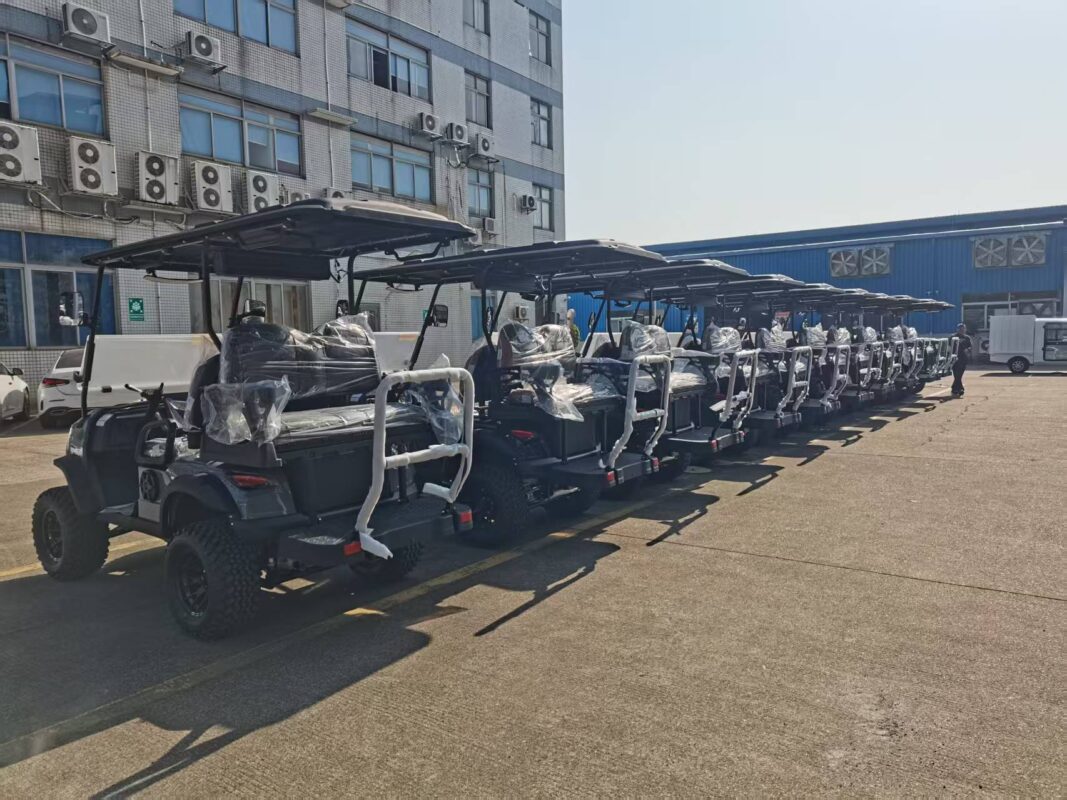
3.Visualizing the Assembly Line: From 0 to Finished Cart
On a professional assembly line like GREEN MOTOR TECH’s, a golf cart goes through clearly defined stages:
- Bare welded frame
- Rolling chassis (wheels + suspension)
- Power system installed
- Body & interior fitted
- Fully tested finished vehicle
4. Quality Control: Responsible Manufacturers vs Short-Term Assemblers
What Responsible Golf Cart Manufacturers Focus On
- Frame anti-corrosion treatment
- Torque-controlled assembly
- Electrical safety and insulation tests
- Component traceability
- Long-term durability testing
- Spare parts continuity & after-sales support
- What Unreliable Assemblers Often Ignore
- Welding jigs and alignment checks
- Waterproofing of electrical parts
- Heat management of controllers
- Brake performance consistency
- Real road testing
These shortcuts may reduce cost initially—but result in higher failure rates, customer complaints, and unsafe vehicles.
5. Why GREEN MOTOR TECH Is Different
At GREEN MOTOR TECH, we do not see ourselves as a short-term assembler, but as a long-term electric vehicle partner. Our advantages include:
- Over 30 years of EV motor & drivetrain experience
- In-house engineering team with real-world application knowledge
- Continuous product improvement based on customer feedback
- Strong focus on after-sales support and durability
- One-stop EV solutions: motors, controllers, batteries, and complete vehicles
- We build golf carts that are designed to be used daily, not just sold once.
Please contact us freely if you want to communicate with us:
Maggie, maggie@greenmotortech.com, whatsapp/wechat/cell:+8618123589096