

Hey, fellow low-speed electric vehicle (LSEV) friends! Today, let’s talk about something you might have overlooked, yet it directly affects your daily riding comfort—the suspension system. Yep, that’s the mysterious setup that saves your backside from suffering over speed bumps and keeps you from feeling floaty when taking turns.
Imagine this: you just bought a brand-new low-speed electric vehicle, happily hit the road, only to find that going over a small pothole feels like a roller coaster ride, and taking a turn makes you feel like you’re about to flip over… At that point, you might start questioning your life choices: ‘Did I buy a fake car?‘ Don’t worry—the problem might just lie in the suspension!
What Is Suspension, and Why Is It So Important?
Simply put, the suspension is the bridge connecting the wheels to the vehicle body. It has three main tasks:
- Cushioning and Shock Absorption:Eats up bumps from the road so you ride comfortably.
- Maintaining Stability:Prevents excessive body roll during turns for a steadier drive.
- Controlling the Wheels: Keeps the tires firmly planted on the ground for safety and handling.
For low-speed electric vehicles, even though we’re not going very fast (usually between 65–110 km/h), the importance of the suspension is no less than that of big cars. After all, who wants to be jolted around like a ragdoll during their daily commute, right?
Two Major Schools of Suspension: Independent vs. Non-Independent
Before diving into specific types, let’s clarify the two main camps of suspension:
- Independent Suspension:The left and right wheels operate independently; bumps on one side don’t affect the other. It’s like two people sitting on separate chairs—if one stands up, the other isn’t disturbed. Offers good comfort but has a complex structure and higher cost.
- Non-Independent (Dependent) Suspension:The left and right wheels are connected by a solid beam; when one moves, the other follows. It’s like two people sitting on a bench—if one stands, the other is affected. Simple structure, low cost, but comfort is somewhat compromised.
So, the question is: which type do low-speed electric vehicles use? The answer is—both! Let’s take a look at the specific contenders.
The Family Portrait of Low-Speed EV Suspensions
- MacPherson Strut Independent Suspension—The Budget-Friendly Choice
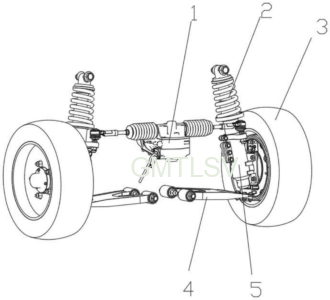
Features: The structure is as simple as building blocks—a shock absorber strut plus an A-shaped lower control arm. Takes up little space, low cost, and cheap to repair.
Performance in LSEVs:
- Pros:Performs decently on smooth city roads, with acceptable small-bump absorption. Most importantly, it leaves precious space for the engine (or motor) compartment, allowing LSEVs to be designed more compactly.
- Cons:Noticeable dive over speed bumps and stronger body roll during turns. If you often drive on rough roads or like taking corners quickly, you might find it lacking support.
Suitable For: The front suspension of the vast majority of LSEVs uses the MacPherson strut, especially in models emphasizing value for money, like the GF 2+2 and GW 2+2.
- Torsion Beam Non-Independent Suspension—The Space Magician
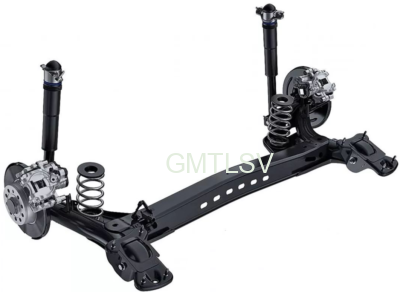
Features: Connects the left and right wheels with a U-shaped or V-shaped beam—simplicity to the extreme. Low cost, minimal space usage, and frees up more room for rear passengers and the trunk.
Performance in LSEVs:
- Pros:Affordable and low maintenance costs. A good choice for those who mainly use it for city commuting on a budget. Plus, its simple structure makes it very durable.
- Cons: Rear passengers feel noticeable bouncing over speed bumps; the left and right wheels affect each other. If one wheel hits a pothole, the other shudders
Suitable For: Many economy-class LSEVs use a torsion beam for the rear suspension, like some entry-level models. If you mostly drive alone and rarely carry rear passengers, it’s perfectly adequate.
- Multi-Link Independent Suspension—The Comfort King
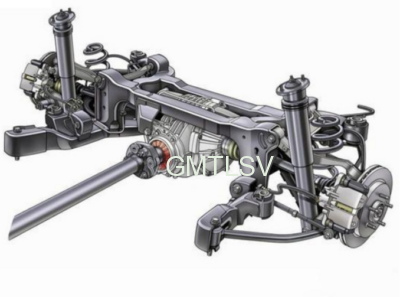
Features: Uses 3–5 links to precisely control wheel movement, like giving the wheels mechanical arms. Can independently adjust various wheel angles, keeping the tires firmly on the ground.
Performance in LSEVs:
- Pros: Excellent vibration filtering—glides over bumps and potholes as if on flat ground. Stable body during turns, with good handling. If you often travel with family or prioritize comfort, multi-link is the top choice.
- Cons: Expensive! Complex structure, high repair costs, and takes up a lot of underbody space. Rare in LSEVs, usually only found in high-end models.
Suitable For: A few premium-positioned LSEVs might use multi-link for the rear suspension, offering near-passenger-car levels of comfort.
- Double Wishbone Independent Suspension—The Performance Champion
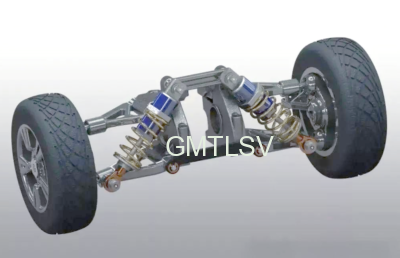
Features: Uses upper and lower A-shaped wishbones to control the wheels, with extremely high lateral rigidity. During turns, the tires feel glued to the ground, offering top-notch handling.
Performance in LSEVs:
- Pros: If you seek driving pleasure and enjoy the feeling of taking corners quickly, double wishbone can bring surprises. Performs steadily on complex road surfaces.
- Cons:High cost, bulky, structure is complex, making the frame/vehicle chassis difficult to design.
Suitable For:More commonly found in newer models of low-speed electric vehicles. Like the G1A\GAH 2\GS023.
- Solid Axle Non-Independent Suspension—The Tough Guy Special
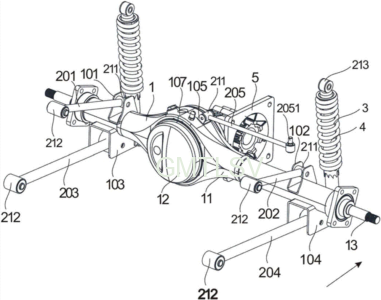
Features: Connects the left and right wheels directly with a solid axle—simple and brutal. Extremely high load capacity and impact resistance.
Performance in LSEVs:
- Pros: If you frequently carry loads or drive on rough roads, the durability of a solid axle is unmatched. It hardly ever breaks, and if it does, it’s easy to fix.
- Cons:Comfort? Nonexistent. Noticeable wobbling on paved roads; your backside will ache after a while.
Suitable For: Some LSEVs or models that often carry heavy loads might use this.
The Unique Aspects of LSEV Suspensions
You might ask: How are LSEV suspensions different from regular car suspensions? Great question! LSEV suspensions have a few unique characteristics:
- Simpler Design:Due to lower speeds (generally not exceeding 45km/h) and less impact force, the suspension doesn’t need to be as complex as in high-speed vehicles. Many LSEVs use a front MacPherson + rear torsion beam combo, balancing cost control with basic comfort.
- Tuned for Comfort:The primary use cases for LSEVs are relatively smooth surfaces like city roads and residential areas. Springs and shock absorbers are tuned softer, focusing on filtering out minor bumps to make low-speed driving feel steadier.
- Easier Maintenance: Simple structure means easier repairs when problems arise. For users who aren’t very car-savvy (especially many elderly users), this is a big advantage.
- Strict Cost Control:LSEVs are affordably priced, so the suspension system must balance cost and performance. That’s why torsion beams are so prevalent in LSEVs—they offer decent comfort at the lowest cost.
How to Choose Based on Your Needs?
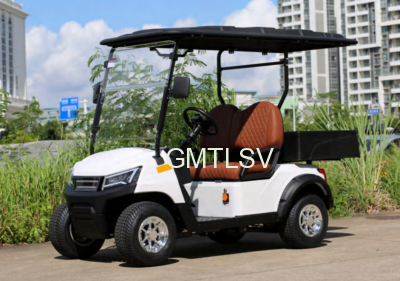
Now that you know the features of each suspension type, let’s see how to choose:
- If you mainly commute in the city on a budget:
Recommend the front MacPherson + rear axle non-independent suspension. This configuration is most common in LSEVs, offering good value for money and space efficiency. For example, the GF 2+2 and GW 2+2 uses this setup. Although the rear might feel bumpy over speed bumps, it’s perfectly adequate for daily commuting.
- If you often travel with family and prioritize comfort:
Look for models with independent suspension on both front and rear, especially those with multi-link rear suspension. Although such models are rare and more expensive, comfort is significantly improved. Your family won’t complain about being ‘jolted to death’ over bumps and potholes.
- If you frequently carry loads or drive on rough roads:
Solid axle non-independent suspension might suit you better. Although comfort is poor, load capacity and durability are excellent. But honestly, this configuration is rare in LSEVs and more typical of commercial models.
A Little Secret: Suspension tuning matters more than the structure! The same MacPherson suspension can be tuned soft and boat-like or stiff like a bench. So, always test drive! Letting your backside feel it is worth more than reading a hundred technical articles.
What to Pay Attention to During a Test Drive?
Choosing a car isn’t just about specs; test driving is key. When test driving an LSEV, focus on these points:
- Over Speed Bumps:Go over a few speed bumps at 20–30 km/h. Feel the degree of body shake and after-shake. A good suspension should quickly absorb impacts without excessive wobbling.
- On Rough Roads:Find a slightly uneven road (like a side road with minor potholes) and feel the suspension’s ability to filter small bumps.
- Taking Turns:Take a corner at an appropriate speed and feel the degree of body roll. Less roll means better suspension support.
- Emergency Lane Change: Perform an emergency lane change safely and feel the vehicle’s responsiveness and stability.
Remember, what suits you is best. No matter how highly others praise a suspension, if it doesn’t feel comfortable to you, it’s not the one.
Future Trends: Where Are LSEV Suspensions Headed?
With technological advances and rising consumer expectations, LSEV suspensions are quietly upgrading:
- Electronically Controlled Suspensions Are Emerging:Some high-end LSEVs are starting to feature simple electronically controlled suspensions that automatically adjust stiffness based on road conditions. Though not yet common, this may become a trend.
- Lighter, Stronger Materials:To extend range, suspension components are also using lighter materials like aluminum alloys, reducing weight while maintaining strength.
- Higher Integration with the Vehicle:The suspension system is no longer an independent component but deeply integrated with the electric drive system, battery management system, etc., for a more coordinated driving experience.
Final Tips
- Don‘t Be Fooled by Jargon:Salespeople might boast about using multi-link independent suspension, but the actual performance might not match a well-tuned torsion beam. Focus on the actual experience.
- Consider Your Usage Scenario: If you drive on smooth city roads 99% of the time, there’s no need to pay extra for the 1% of rough-road performance.
- Look at the Overall Balance:Suspension is just one part of the vehicle’s performance. Also consider motor power, battery range, seat comfort, etc. How comfortable a car feels to drive is the result of multiple systems working together.
- Maintenance Costs:More complex suspensions are costlier to repair. If you plan to keep the vehicle for many years, factor this in.
Alright, that’s all for today’s chat about low-speed EV suspensions. Hopefully, this suspension crash course helps you choose your dream ride. Remember, buying a car is like finding a partner—looks matter, but what’s inside matters more. And the suspension is that inner key determining whether you’ll harmonize together.
Next time you test drive, don’t forget to feel the suspension’s performance with your heart. After all, what accompanies you daily on your commute isn’t just four wheels but also that hardworking suspension system. Choose right, and every day is a comfortable journey; choose wrong, and every day is a bumpy life.
Wishing you the perfect low-speed electric vehicle for yourself, and a comfortable, economical, green travel life ahead.

