
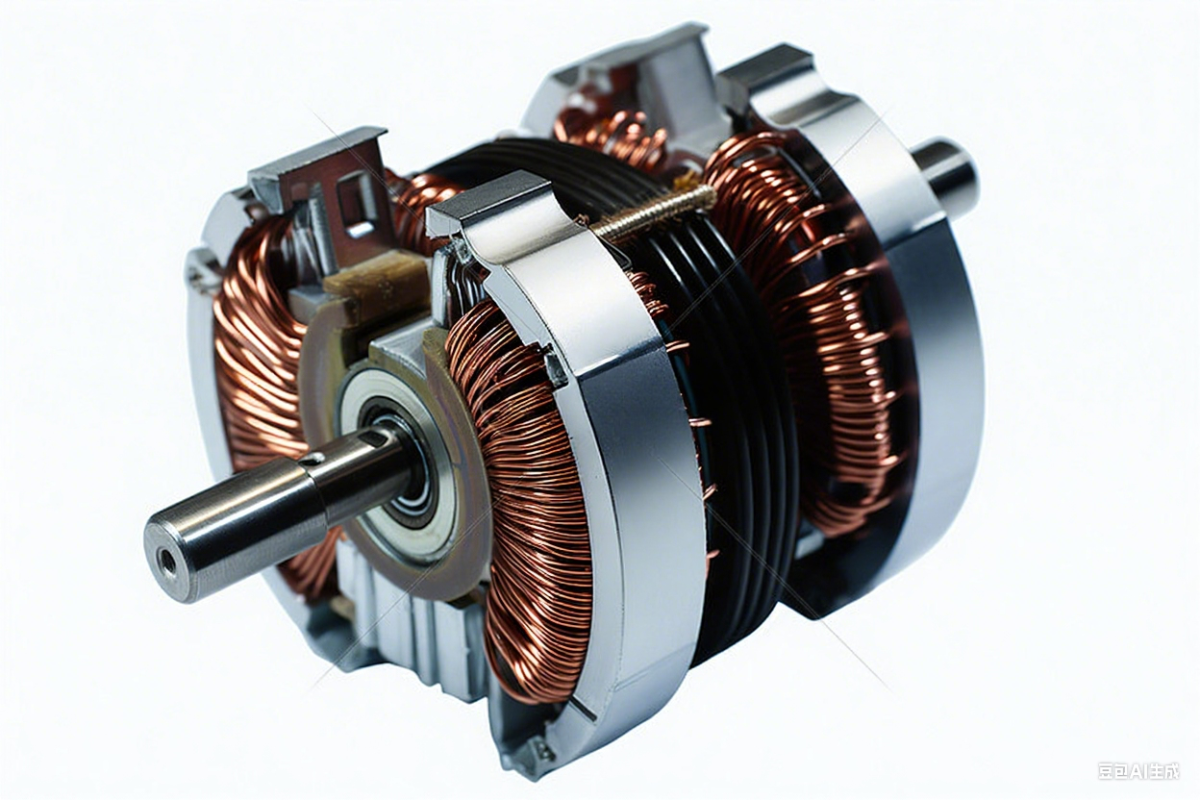
As technology advances, motors play an increasingly vital role in our daily lives. Among various motor operating modes, S9 duty cycle is one of the most important. But what exactly does it mean? In this article, we will explain the meaning of the S9 motor duty cycle in detail and provide valuable insights.
Part 1: What is the S9 Motor Duty Cycle?
The S9 motor duty cycle refers to an operating mode where the motor runs under rated load without exceeding a specified temperature limit. This limit applies to the motor’s winding temperature, which determines its operational heat levels. Under this mode, the motor can operate continuously without overheating, ensuring both safety and reliability.
Part 2: The Meaning of S9 Motor Duty Cycle
The S9 duty cycle means that when a motor operates at its rated load, its winding temperature stays within a safe threshold. This mode acts as a protective mechanism, preventing excessive heat buildup and ensuring long-term operational stability.
Part 3: Advantages of the S9 Motor Duty Cycle
The benefits of the S9 duty cycle are significant:
Enhanced Safety & Reliability – Prevents overheating, reducing the risk of motor burnout.
Extended Motor Lifespan – Running at lower temperatures minimizes wear and tear while reducing energy consumption.
Improved Efficiency – Lower heat losses translate to better energy efficiency and performance.
Part 4: Applications of S9 Motor Duty Cycle
The S9 duty cycle is widely used in various industries, including:
Machinery & Equipment (fans, pumps, compressors)
HVAC Systems (air conditioners, refrigerators)
Power Systems (generators, transformers)
This mode ensures safe and stable operation, making it ideal for both industrial and consumer applications.
Part 5: How to Achieve the S9 Motor Duty Cycle
Implementing the S9 duty cycle requires:
Selecting the Right Motor – Proper power rating, voltage, frequency, and speed.
Installing Efficient Cooling Systems – Using fans, liquid cooling, or oil cooling.
Applying Smart Control Strategies – Adjusting current, voltage, and frequency for optimal performance.
Conclusion
The S9 motor duty cycle is a crucial operating mode that ensures safety, reliability, and efficiency in motors. It is widely used in industrial machinery, HVAC systems, and power generation equipment. By choosing the right motor, implementing cooling solutions, and optimizing control methods, the S9 duty cycle can be effectively achieved.
Why Are S9 Duty Cycle Motors Widely Used in New Energy Applications?
New energy motors (particularly in electric vehicles and renewable energy systems) predominantly adopt the S9 duty cycle, and here’s why:
1. Application Requirements: Continuous & Stable Power Output
Electric Vehicles (EVs):
Motors must operate continuously for extended periods (e.g., highway cruising, urban commuting).
S9 (continuous duty) ensures stable power delivery without overheating.
Industrial Equipment (Wind Turbines, Pumps):
S9 avoids efficiency losses caused by frequent start-stop cycles (common in intermittent duty modes like S3).
2. Energy Efficiency & Thermal Management
Optimal Efficiency:
S9 allows motors to run at rated load continuously, minimizing energy loss from repeated thermal cycling (a drawback of intermittent modes like S3).
Advanced Cooling Systems:
S9 motors often integrate liquid/oil cooling, maintaining stable temperatures during prolonged operation.
3. Compatibility with Battery Systems
Battery Discharge Characteristics:
Batteries supply steady energy, making them better suited for continuous operation (S9) than handling frequent peak loads (required in short-time duty S2).
4. Reliability & Longevity
Reduced Mechanical Stress:
Continuous operation minimizes wear from start-stop cycles, extending motor lifespan.
Simplified Control:
No complex load-cycling logic is needed, reducing system complexity.
5. Industry Standards & Cost Benefits
Global Standards (IEC 60034):
S9 is the most widely recognized duty cycle, simplifying performance benchmarking.
Cost-Effectiveness:
Mass production of S9 motors is more economical, ideal for high-volume EV and renewable applications.
Exceptions: When Other Duty Cycles Are Used
While S9 dominates, some scenarios require alternatives:
S2 (Short-Time Duty): For brief high-load tasks (e.g., electric forklifts).
S6 (Continuous Operation with Periodic Loading): Used in hybrid vehicles where motors assist engines intermittently.
Conclusion
The S9 duty cycle is the preferred choice for new energy motors due to its efficiency, stability, and durability. It aligns perfectly with EVs and renewable systems, which demand uninterrupted power, low maintenance, and high reliability, while synergizing seamlessly with battery technology and thermal management.