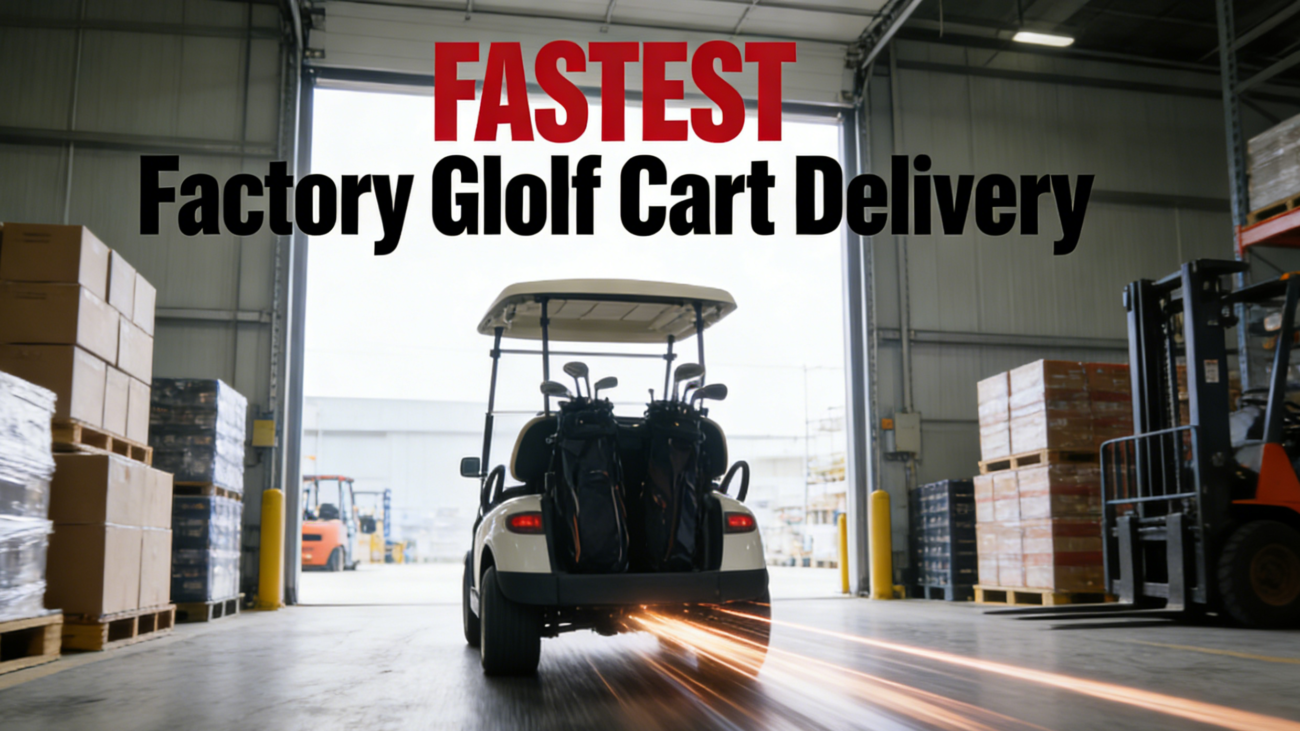
When buyers search for the fastest factory golf cart, they are rarely talking about top speed on the course. In most cases, “fastest” means something far more practical: how quickly golf carts can be produced, cleared, and shipped to meet a tight project deadline.
This situation is common for golf courses preparing for peak season, resorts opening on fixed dates, or real estate projects facing last-minute operational pressure. This guide is written for buyers who need reliable fast delivery, not marketing promises. It explains how fast factory delivery actually works in China, which suppliers can truly support urgent orders, and how buyers can avoid delays that often happen on their own side.
By the end of this article, you will understand how to identify genuinely fast suppliers, what questions to ask, and how to optimize the entire process from order confirmation to port departure.
What “Fastest Factory Delivery” Really Means (And What It Doesn’t)
practice, delivery speed is not a single number. It is the result of several linked stages: production lead time, quality inspection and pre-installation, inland logistics, export documentation, and international shipping.
A factory claiming “fast delivery” may only be referring to one of these steps. For example, production might be quick, but export documents take weeks. Or inventory exists, but inland transport and port scheduling slow everything down.
It is also important to understand that “fastest” rarely means cheapest. Expedited production slots, priority assembly, or premium shipping options often involve additional cost. Buyers who treat speed as a free add-on are usually disappointed.
The fastest factory golf cart delivery comes from alignment, not shortcuts.
The Three Types of “Fast” Chinese Golf Cart Suppliers
Not all fast suppliers operate in the same way. In China, they generally fall into three distinct categories.
The Inventory Holder (The Fastest Option)
Some large factories or major exporters keep stock of their most popular golf cart models. These are typically standard four-seaters or six-seaters with common specifications.
The advantage is speed. If inventory is available, shipment preparation can begin almost immediately, with minimal production delay. Processes are standardized, and lead times are predictable.
The trade-off is flexibility. Custom colors, special battery configurations, or accessory changes are usually limited or unavailable.
When contacting this type of supplier, buyers should ask directly:
“Do you have this model in stock and ready for immediate shipment?”
The Flexible Production Specialist (Balanced Speed and Customization)
Mid-sized factories with flexible production lines often offer the best balance between speed and customization. They do not hold large inventories, but they can reorganize production schedules to accommodate urgent orders, especially for small to medium quantities.
These suppliers are often more responsive and open to direct technical discussion. Moderate customization—such as battery upgrades or seating adjustments—is usually possible without significantly extending lead time.
However, capacity is not unlimited. Once production slots are filled, even flexible factories slow down.
A useful verification question is:
“What is your current lead time for a 50-unit order of your standard four-seater, and can it be expedited?”
The Integrated Trading Company (For Complex or Mixed Orders)
When orders involve multiple models, small quantities, or mixed specifications, integrated trading companies can sometimes deliver faster than a single factory. They coordinate sourcing from multiple manufacturers and manage consolidation, documentation, and logistics centrally.
This approach can significantly reduce coordination time for buyers, especially under tight deadlines. The downside is cost and the need to carefully vet the partner’s reliability.
Buyers should request proof of experience, such as references from clients who required expedited, multi-model shipments.
A Step-by-Step Guide to Securing Fast Delivery
Fast delivery starts with preparation, not negotiation.
The first step is sending a fast-track inquiry. Clear, specific questions save days of back-and-forth communication. Buyers should state required quantities, target delivery date, acceptable configurations, and destination port upfront.
When discussing pricing, it is important to clarify whether an expedite fee applies. This fee typically reflects priority production or overtime labor and should be discussed transparently rather than discovered later.
Shipping method selection also plays a major role. Air freight is suitable only for extreme emergencies and very small quantities. Express sea freight offers a balance of speed and cost for partial containers, while full container shipping is often the most efficient option for larger orders where production speed is the main constraint.
Finally, buyers must ensure their own readiness. Delays caused by late payments, incomplete import documents, or unclear consignee information are surprisingly common—and entirely avoidable.

Critical FAQs on Fast Golf Cart Sourcing
Is fast delivery more risky for quality?
Fast delivery does not automatically mean poor quality, but it increases the importance of inspection. Pre-shipment checks and clear quality standards help ensure that speed does not compromise performance.
Can buyers get both fast delivery and heavy customization?
In most cases, no. Speed and customization involve trade-offs. Buyers should prioritize which factors matter most for the specific project.
What is the most common mistake when requesting fast quotes?
The number one mistake is unclear requirements. Vague specifications lead to delays, incorrect quotations, and mismatched expectations.
Final Thoughts
The fastest factory golf cart delivery is not about finding the loudest promise—it is about understanding how suppliers operate and where real bottlenecks occur. Buyers who approach sourcing with clarity, realistic expectations, and structured communication are far more likely to meet their deadlines.
Fast delivery is achievable, but only when both sides of the supply chain are prepared.
For buyers continuing their research, understanding supplier types and sourcing strategies is often more valuable than chasing a single “fastest” claim.