With the in-depth practice of the global low-carbon travel concept, a silent transportation revolution is quietly unfolding in the capillaries of the city.
As the core carrier of new urban micro-transportation, street legal golf carts are breaking through the limitations of traditional venues and redefining the layout of short-distance travel. This practical and interesting mini-vehicle not only effectively fills the gap at the end of the public transport system, but also becomes an important grasp of energy saving and emission reduction in the construction of smart cities.
From the sunny planned communities in the United States to the ancient streets and alleys in Europe, from the resort islands in Southeast Asia to the emerging industrial parks in China, the innovation of this mode of travel contains innovative breakthroughs in traffic regulations, continuous iteration of new energy technologies and profound transformation of urban planning concepts.
- What is a street-legal golf cart?
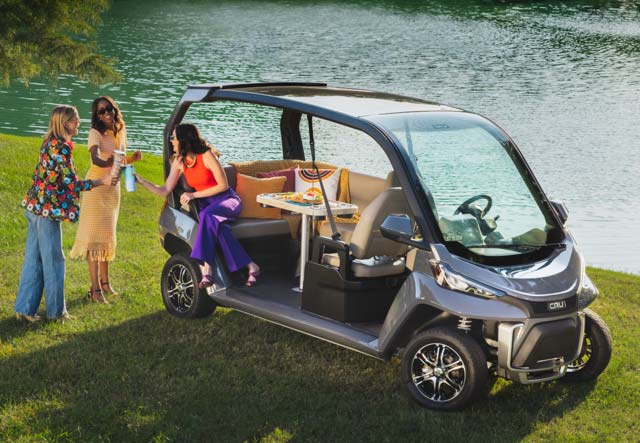
A street-legal golf cart is a low-speed electric or hybrid vehicle that is certified by specific regulations to operate on public roads.
These vehicles are required to meet national or regional road safety standards, such as headlights, turn signals, seat belts, windshields and other necessary safety features, and have a limited maximum speed (usually 25-35 mph, or 40-56 km/H).
Unlike traditional golf carts, which are limited to closed venues, the street-legal version expands its application scenarios through technical modifications and compliance certification.
- Countries and typical models that allow legal street driving
America
The United States is a major market for street-legal golf carts, with more than 30 States allowing them on public roads with speed limits ≤ 35 mph, such as Florida, Texas, and California.
Common models include
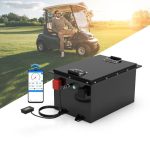
4-seat base model: suitable for short-distance travel in the community, with a range of about 30-50 miles, equipped with lead-acid or lithium batteries.
6-seat off-road model: enhanced chassis design, suitable for complex terrain such as beaches and campsites, with a load of up to 800 pounds.
8-seat multi-functional model: It is used for sightseeing in scenic spots or connecting large communities, and supports customized configurations such as solar charging.
Europe
Britain, Germany and other countries classify such vehicles as L6e/L7e light four-wheeled vehicles, which are allowed to drive on low-speed roads. The European market prefers compact electric vehicles, such as two-seater minicars and enclosed city commuters.
- Application Scenario
Community travel
In planned communities in the United States, golf carts have become a daily commuting tool for residents, replacing traditional cars for short-distance trips such as supermarket purchases and children’s transportation.
Tourism and Business Services
Its low noise and environmental protection characteristics are very popular in scenic spots, resort shuttle buses, hotel internal transportation and other scenes. Some models can also be converted into mobile dining cars or logistics vehicles.
Campus and industrial park
In university campuses and industrial parks, golf carts have become the preferred means of patrol and material transportation because of their flexibility and low cost.
Supplementary traffic in the city
In urban areas with traffic congestion, low-speed electric vehicles are used as a “last kilometer” solution to ease parking pressure and reduce carbon emissions.
- Differences from traditional golf carts
Advantage:
Environmental protection: Zero emission electric drive is in line with the trend of carbon neutrality.
Economy: The purchase cost is only 1/4 of the traditional car, and the maintenance cost is low.
Flexibility: The narrow road has strong trafficability and small demand for parking space.
Shortcoming:
Endurance limit: The range is generally within 50 miles, which is not suitable for long-distance travel.
Speed constraints: unable to adapt to highways or high traffic arteries.
Differences in regional regulations: Some States require drivers to hold a driver’s license, limiting popularity.
- Positive impact on the ground
Promote low-carbon transformation: Electric vehicles reduce dependence on fossil energy and help communities achieve sustainable development goals.
Alleviate traffic pressure: replace short-distance car trips and reduce congestion and accident rates.
Promote industrial upgrading: drive the research and development of lithium batteries, intelligent driving and other technologies, and create employment opportunities.
Improve the convenience of life: The elderly and people without a driver’s license can get the freedom to travel through compliant vehicles.
- Development prospects and future scenarios
Technology trends
Intelligence: It is equipped with automatic driving module to realize fixed-point connection and automatic obstacle avoidance in the park.
Energy innovation: Solar roof is combined with wireless charging technology to achieve zero external energy dependence.
Emerging application scenarios
Shared travel network: Establish a “micro-transportation” system in specific areas of the city and rent golf carts on demand.
Emergency response: convert to mobile medical stations or fire patrol vehicles to reach narrow blocks quickly.
Unmanned distribution: integrate the container and navigation system to solve the “last mile” logistics problem.
The Street legal golf cart on the street is not only an innovation of transportation, but also a microcosm of urban wisdom and sustainable development. With technology iteration and policy improvement, this field is expected to upgrade from a “niche market” to an important part of the global low-carbon travel ecosystem, redefining the future of short-distance travel.