Introduction: Who is the real industry benchmark When Golf courses need a “mobile partner”?
Imagine this: The golf course you’re in charge of needs upgraded equipment, and your boss asks
you to recommend a few reliable golf cart manufacturers. You open a search engine and find a
jumble of information, including century-old factories, emerging brands, and even a lot of
advertisements… How can you quickly screen out companies that are truly worth working with?
This article will sort out the top ten golf cart manufacturers in the world, from industry giants to
innovators, covering brand history, core products, technological advantages and customer
reviews to help you find the “best partner” precisely!
1.The “Big Four” of global golf cart manufacturers: A synonym for classic and strength
1.1 E-Z-GO (USA) : The “century-old store” in the golf cart world
Brand history: Founded in 1954 and owned by Textron, the creator of the world’s first electric golf
cart;
Core products: RXV series (electric), TXT series (fuel), 2Five series (low-speed electric vehicle);
Technical highlights: Exclusive AC drive system, 30% increase in range; The smart dashboard
supports GPS navigation;
Customer review: Excellent durability, 80% of the world’s top stadiums use its products, but the
price is high.
1.2 Club Car (USA) : The perfect combination of precision and technology
Brand history: Founded in 1958, now part of the Ingersoll Rand Group, known for “precise
handling”;
Core products: Onward series (personalized customization), Precedent series (classic models),
Villager series (multi-purpose vehicles);
Technology highlights: Lithium-ion battery technology, 50% faster charging; Connected vehicle
systems monitor vehicle status in real time;
Customer review: Excellent handling, global after-sales service network, but high customization
cost.
1.3 Yamaha Golf Car (Japan) : The course version of Speed and Passion
Brand history: The first golf cart was launched in 1975 and is affiliated with the Yamaha Motor
Group.
Core products: Drive2 series (fuel/electric), The DRIVE series (premium), Adventurer series
(four-seater);
Technical highlights: Silent fuel engine, powerful; The electric version is equipped with “fast
charging” technology;
Customer review: Excellent power performance, suitable for mountain courts, but the fuel model
has higher maintenance costs.
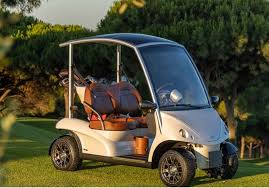
1.4 Garia (Denmark) : The ultimate pursuit of luxury and environmental protection
Brand history: Founded in 2005, focused on high-end electric golf carts, known as the
“Rolls-Royce of golf carts”;
Core products: Luxury series (leather seats, in-car refrigerators), Street Legal series (legally
roadable), Currus series (solar charging);
Technology highlights: Carbon fiber body, 40% lighter weight; Solar roof for 20 kilometers more range;
Customer review: The design is luxurious and suitable for high-end resorts, but the price is 3 to 5
times that of a regular golf cart.

2.The “Three Musketeers” of Asian golf cart manufacturers: Value for money and localization
advantages
2.1 Starlight Power (China) : The “Hidden Champion” of electrification transformation
Brand history: Founded in 2003 as a battery supplier for electric bicycles, entering the golf cart
market in 2015;
Core products: XH-EV series (electric golf carts), XH-Hybrid series (oil-electric hybrid);
Technical highlights: Lithium iron phosphate battery, cycle life over 2000 times; Performance
degradation of less than 10% in low-temperature environments;
Customer review: Excellent value for money, suitable for courts with limited budgets, but brand
awareness needs to be enhanced.
2.2 Greenway Technology (China) : A comeback from contract manufacturing to self-owned brand
Brand history: Established in 2004, it initially produced for European and American brands. In
2010, it launched its own brand “LVTONG”.
Core products: GT series (electric ball car), GT-PRO series (smart model), GT-Tour series
(sightseeing car);
Technical highlights: Self-developed motor controller, 15% higher energy efficiency ratio; Support
for remote locking via APP;
Customer review: The product is stable and the after-sales service responds quickly, but lacks
competitiveness in the high-end market.
2.3 Hyundai Motor (Korea) : A “demotion Strike” by a crossover player
Brand history: Launched golf cart business in 2017, relying on the technology reserves of the
Hyundai Motor Group;
Core products: H-Golf series (electric), H-Golf Pro series (autonomous driving);
Technology highlights: Hydrogen fuel cell technology, up to 300 km range; L4-level autonomous
driving capabilities;
Customer review: Highly advanced technology, suitable for tech-savvy stadiums, but expensive
and limited production capacity
3.The two European golf cart manufacturers: A synonym for design and quality
3.1 Garia Europe (Denmark) : The ultimate interpretation of Nordic simplicity
Brand History: Founded in 2010, focused on the European market, emphasizing the concept of
“mobile living space”;
Core products: Golf & Utility series (multi-purpose vehicle), Garia Monaco series (luxury model);
Technical highlights: Modular design for quick battery pack replacement; Body water resistance
rating IP67;
Customer review: Strong design, suitable for high-end resorts, but dependent on imported repair
parts.
3.2 Melex (Poland) : The best value for money in Eastern Europe
Brand history: Established in 1971, it was originally a manufacturer of military vehicles and
transformed into a golf cart manufacturer in the 1990s.Core products: Classic series (traditional model), Eco series (electric), Cargo series (cargo vehicle);
Technology highlights: Lead-acid battery recycling technology reduces environmental costs by
30%; The body structure is highly impact-resistant;
Customer review: Strong durability, suitable for harsh environments, but less intelligent features.
4.Emerging Market manufacturers’ potential stocks’ : A combination of innovation and
localization
4.1 Tomberlin (USA) : The “dark Horse” in the low-speed electric vehicle sector
Brand history: Founded in 2004, focused early on community electric vehicles, launched golf carts
in 2015;
Core products: E-Merge series (electric), Anvil series (heavy vehicle), Crossfire series (four-wheel
drive);
Technical highlights: Four-wheel independent suspension, outstanding off-road performance;
Supports solar charging;
Customer review: Good value for money, suitable for multi-terrain courts, but low brand
awareness.
4.2 BYD (China) : A cross-industry attempt by a new energy giant
Brand history: Launched golf cart business in 2020, relying on BYD’s Blade battery technology;
Core products: BYD Golf series (electric), BYD Tour series (sightseeing vehicle);
Technical highlights: High safety of Blade battery, no fire in needle-puncture test; Fast charging
technology to 80% in 30 minutes;
Customer review: The technology is strong and suitable for courts that prioritize safety, but the
product line is not yet complete.
5.How to choose the right golf cart manufacturer for you?
5.1 Screen according to requirements: From “Basic Model” to “Black Technology”
Limited budget: Choose Chinese manufacturers (such as Starlight Power, Greenway Technology)
for good value for money;
High-end requirements: Choose brands like Garia, Club Car, which are luxurious in design and rich
in functionality;
Tech-savvy: Focus on crossover players like Hyundai and BYD, with autonomous driving and
hydrogen fuel cells being the highlights.
5.2 Examine the “soft power” of suppliers
After-sales service: Does it offer global warranty and quick repair response?
Customization ability: Can you adjust the configuration according to your needs (such as body
color, seat material)?
Environmental certification: Does the product comply with standards such as EU ROHS and US
UL?
5.3 Beware of the “low price trap” : 3 Details that matter More than price
Battery life: Poor quality batteries have a fast decline in battery life and high replacement costs
later on;
Accessory compatibility: Non-standard accessories are difficult to repair, it is recommended to
choose a model with strong versatility;
Warranty policy: Specify the warranty period (recommended at least 2 years), repair scope and spare parts supply.
6.Future Trends” for Global Golf Cart Manufacturers
6.1 Electrification and intelligence
Lithium-ion batteries and hydrogen fuel cells will gradually replace lead-acid batteries;
Internet of Vehicles and autonomous driving technology will become standard.
6.2 Customization and Personalization
Customers can choose the body color, interior material, and functional configuration according to
their needs;
Some brands offer “private customization” services (such as LOGO printing, exclusive paint job).
6.3 Sharing and leasing
Manufacturers introduce the “time-sharing rental” model to reduce the initial investment in the
stadium;
Work with hotels and resorts to create a “mobile service ecosystem”.
7.Global Golf cart manufacturers’ Guide to avoiding Pitfalls
7.1 Beware of “OEM production”
Some brands do not have their own factories, and their products are manufactured by small
workshops, making it difficult to guarantee quality;
It is recommended to visit the supplier’s production line in person to confirm their R&D and
production capabilities.
7.2 Verify “Certification qualifications”
Require suppliers to provide ISO, CE, UL and other certification documents;
Avoid choosing brands that are uncertified or whose certifications have expired.
7.3 Focus on ‘user word-of-mouth’
Get real user reviews through industry forums and social media;
Give priority to brands with stable word-of-mouth and low complaint rates.
Conclusion: Choosing a manufacturer is choosing a future partner
From the century-old legacy of the E-Z-GO to the luxurious design of Garia, from the
cost-effectiveness of Chinese manufacturers to the hydrogen fuel black technology of Hyundai
cars, golf cart manufacturers around the world are driving industry transformation in their own
ways.
The next time a course needs to upgrade its equipment, you can confidently say, “I recommend
these manufacturers, which not only have excellent products but also bring long-term value to
the course!”