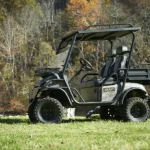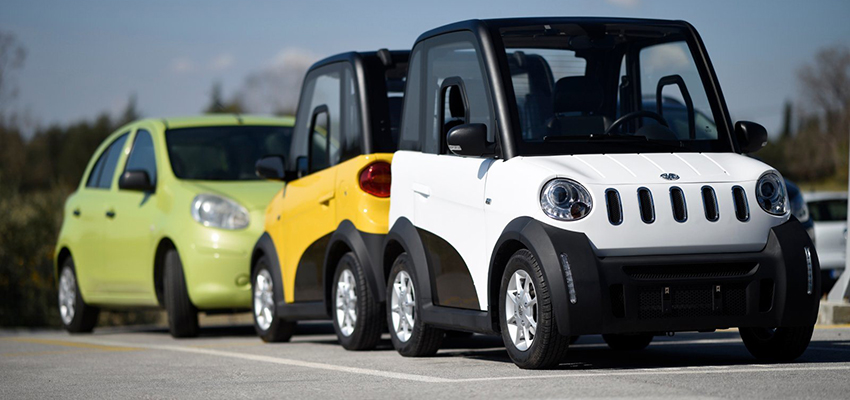
In recent years, with the rapid expansion of the electric vehicle market, low-speed electric vehicles (LSEVs) have become a widely popular and important category. Beyond traditional two- or three-wheelers, four-wheel low-speed electric vehicles also hold significant market potential. From a global perspective, European and American markets are major consumption areas for LSEVs, accounting for a significant share of the global market, reflecting real local demand and highlighting the enormous development potential of low-speed electric vehicles, despite some regional markets possibly being affected by local policies. The European and American markets are expected to continue growing, demonstrating the global appeal of these versatile vehicles.
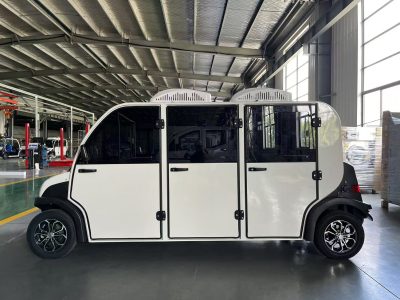
1. Application Scenarios for Low-Speed Electric Vehicles (LSEVs)
Low-speed electric vehicles play important roles in numerous fields due to their flexibility, economy, and environmental friendliness:
Commercial Operations
Meter reading, site maintenance, construction sites, industrial park internal transportation.
Tourism & Hospitality
Scenic area sightseeing, airport shuttles, hotel shuttle services.
Security Patrol
Campus security, community patrols, large event security.
Utility & Special Operations
Warehouse logistics, landscaping, agricultural applications, and customized functional vehicles (such as aerial work platforms, sweepers).
In recent years, significant price fluctuations in the new vehicle market have impacted the used low-speed electric vehicle market, creating both challenges and opportunities. The growing demand for low-speed vehicles in various regions has triggered chain reactions, making the used vehicle market an ideal choice for budget-conscious individual consumers and businesses.

2. Understanding Low-Speed Electric Vehicles: Types and Definitions
2.1 Basic Definition
Low-speed four-wheel electric vehicles are typically not built on traditional automotive platforms but often originate from chassis similar to golf carts. Since many countries have not yet established completely unified regulations for such vehicles, manufacturers often refer to standards from regions such as the European Union and Japan. Their main characteristics are compact body, light weight, and maximum speed typically limited to 20-40 km/h (12-25 mph).
2.2 Main Types and Uses
- Golf Carts & Modified Vehicles: Used on golf courses, for company warehouse goods transfer, construction sites, and family transportation. Can be equipped with various attachments to meet specific task requirements.
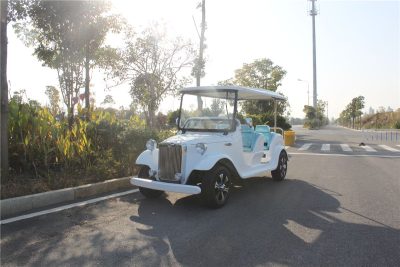
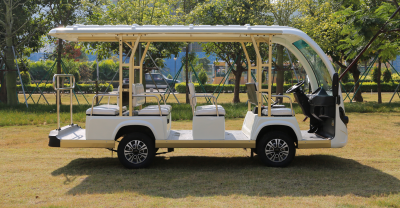
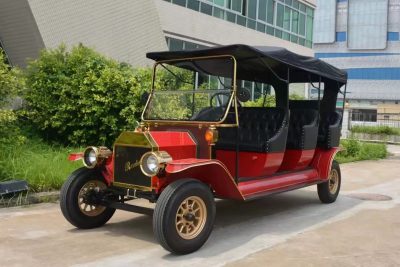
- Sightseeing Cars & Vintage Style Cars: Designed specifically for low-speed sightseeing (20-30 km/h), residential area security patrols, and historical district traffic, with their vintage appearance favored by tourist areas and retirement communities.
- Hunting & Off-Road Vehicles: Electric vehicles can provide high torque at low speeds, with climbing ability superior to some internal combustion engine vehicles, and operate quietly, making them very suitable for hunting and field observation.
- Special Purpose Vehicles: Including aerial work vehicles, sweepers, garbage trucks, etc., designed for specific municipal and industrial applications.
- Police Patrol Vehicles: Used for community policing, campus security, and large event patrols, more practical and economical than traditional vehicles.
- Two-Wheel Electric Vehicles: Electric bicycles, scooters, and motorcycles, effectively solving urban short-distance travel problems while reducing environmental impact.
3. Core Advantages of Choosing Used Low-Speed Electric Vehicles
3.1 Excellent Cost-Effectiveness
Used low-speed electric vehicles offer significant price advantages while being technologically mature with great market potential. Compared to similarly configured new vehicles, the purchase cost of used vehicles can be substantially reduced, typically only about 50% of the price of new vehicles. This enables more consumers, such as students, small business owners, and budget-conscious families, to easily enter the field of electric mobility.
For example, well-maintained recent models of reputable brands (such as EZGO, YAMAHA) may be priced at only about half the cost of the same new model.
3.2 Significant Environmental Value
In the context of the global transition to low-carbon transportation, electric vehicle solutions need to adapt to different market demands. In countries like India, two- and three-wheelers are the main means of transportation, and promoting electrification is crucial for improving urban air quality, reducing dependence on oil imports, and promoting industrial development. The electrification process is likely to be driven by two-wheel private vehicles and three-wheel public transportation.
Adopting rechargeable battery models can not only reduce initial vehicle purchase costs but also effectively extend commercial operating time for commercial fields (typically operating multiple shifts daily). Even vintage-style sightseeing cars are popular in markets like India for hotels and specific venues, providing high-quality tourism experiences.
3.3 Reliable Performance
As electric vehicles, batteries are the most consumable components. However, motors, controllers, and mechanical components typically have long service lives under normal maintenance. Well-maintained used low-speed electric vehicles often achieve performance close to that of new vehicles at a much lower cost.
4. How to Choose the Right Used Low-Speed Electric Vehicle
4.1 Vehicle Inspection and Test Drive
- Understand Basic Information: Research brand/model reputation, common faults, and maintenance costs. Verify key information such as model and vehicle identification number (VIN) matches the seller's description.
- Exterior and Interior Inspection: Carefully check for scratches, dents, or repair marks. Check if paint is uniform and if glass has cracks. Test all function buttons and lighting systems.
- Mechanical Performance Test: Start the motor and listen for unusual sounds. Test tire condition, steering precision, brake sensitivity, and suspension components.
- Battery and Charging System Assessment: Evaluate battery life, cycle count, and range. Confirm if the battery is original or has been properly replaced. Test charging port function and observe for abnormal heating during charging.
- Personal Test Drive Experience: Test vehicle acceleration, handling, and comfort under different road conditions to comprehensively evaluate stability and performance.
4.2 Understand Vehicle History Records
Obtain detailed vehicle maintenance history whenever possible, including replaced components and any accident records. Querying the Vehicle Identification Number (VIN) or requesting maintenance records from the seller helps accurately assess vehicle condition and remaining service life. Vehicles with complete historical records usually imply higher long-term reliability.
5. Effective Maintenance Guide for Used Low-Speed Electric Vehicles
5.1 Battery Maintenance
- Check batteries at least once a month to ensure connections are secure and free from corrosion.
- For lead-acid batteries, watch for electrolyte leaks; for lithium batteries, monitor capacity degradation.
- Use original chargers, avoid using mismatched or poor-quality charging equipment.
- Even if long-distance driving isn't needed, develop a habit of daily shallow charging and discharging, avoiding deep battery discharge. Regular full charge-discharge cycles help activate batteries and maintain capacity.
5.2 Mechanical Component Maintenance
- Regularly check brake pads, brake discs, and brake fluid levels.
- Monitor tire wear and replace in a timely manner.
- Check steering mechanism flexibility and power steering fluid quality to ensure no sticking or unusual sounds.
- Lubricate moving parts as recommended by the manufacturer.
5.3 Electrical System Maintenance
- Regularly check all lighting systems (headlights, turn signals, brake lights) for proper operation.
- Pay attention to dashboard indicator light status; if abnormal, promptly check wiring or sensors.
- Keep electrical interfaces clean and dry to prevent moisture ingress.
5.4 Cultivate Good Driving Habits
- Avoid overloaded driving.
- Reduce aggressive driving behaviors such as sudden acceleration, hard braking, and sharp turns.
- Develop a plan for comprehensive inspections and maintenance to keep the vehicle in optimal condition at all times. This is especially important for used vehicles that already have some signs of use.
Conclusion
As important members of the electric vehicle field, low-speed electric vehicles are gradually becoming new favorites of modern urban green mobility with their unique advantages. They are not only environmentally friendly and energy-saving, effectively reducing carbon emissions and air pollution, but also economical, allowing more people to easily own and enjoy the convenience brought by green mobility.
Choosing a used low-speed electric vehicle is a wise decision that improves personal quality of life while practicing environmental responsibility. If you're looking for a cost-effective electric mobility solution, a well-maintained used low-speed electric vehicle might be your ideal choice!
Of course, fully understanding the purchasing knowledge and maintenance techniques for used electric vehicles is crucial, ensuring you obtain the optimal user experience and cost control. By contacting professional suppliers (such as GMT), you can obtain the latest product information, professional maintenance advice, and personalized service support. We look forward to helping you start a smoother, more pleasant green mobility journey! Start exploring now to find the used low-speed electric vehicle that suits you.
Find Your Perfect Used Low-Speed EV
Ready to explore high-quality used low-speed electric vehicles? Contact our experts for personalized recommendations and professional inspection services.
Contact us for supportFrequently Asked Questions
How much can I expect to save by buying a used low-speed EV versus a new one?
Savings typically range from 30-60% compared to new models, depending on age, condition, and brand. For example: 1) **1-2 year old models** save 30-40%, 2) **3-5 year old models** save 40-50%, and 3) **5+ year old well-maintained models** can save 50-60%. High-quality used LSEVs from reputable brands like Club Car, E-Z-GO, and Yamaha often retain value well while offering substantial savings. The most significant savings come from avoiding initial depreciation which is steepest in the first 1-3 years.
What's the typical lifespan of a low-speed electric vehicle?
With proper maintenance, LSEVs can last 10-15+ years. Key components have different lifespans: 1) **Lead-acid batteries** last 3-5 years (500-800 cycles), 2) **Lithium batteries** last 8-12+ years (2000+ cycles), 3) **Motors and controllers** often last 15+ years with basic maintenance, and 4) **Chassis and body** can last 20+ years if protected from corrosion. The main factor is battery replacement costs, which typically occur 2-3 times over the vehicle's life. Regular maintenance extends all component lifespans significantly.
Are there specific certifications or inspections I should look for when buying used?
Yes, look for these important certifications and inspections: 1) **Battery health certification** showing remaining capacity, 2) **Safety inspection certificate** verifying brakes, lights, and steering, 3) **Charging system verification**, 4) **Frame inspection** for rust or damage, and 5) **Service history documentation**. Reputable dealers should provide these. For private sales, consider hiring a specialized EV technician for a pre-purchase inspection ($100-200) which can identify issues costing thousands to repair later.
What maintenance costs should I budget for with a used LSEV?
Annual maintenance costs typically range from $200-800 depending on vehicle type and usage: 1) **Battery replacement** is the largest expense ($800-2500 every 3-8 years), 2) **Tires** ($200-400 every 2-4 years), 3) **Brake service** ($100-300 annually), 4) **General maintenance** ($100-200 annually), and 5) **Charger replacement** ($200-500 every 5-7 years). Lead-acid battery vehicles have higher ongoing costs than lithium models. Setting aside $300-600 annually covers most routine needs for typical recreational use.
Can used low-speed EVs be modified or upgraded?
Yes, many LSEVs are highly modifiable: 1) **Performance upgrades** like higher-capacity batteries, more powerful controllers, or upgraded motors, 2) **Functional modifications** like cargo beds, enclosures, lighting packages, or specialized attachments, 3) **Comfort upgrades** like better seats, sound systems, or climate control, and 4) **Cosmetic changes** like custom paint, wheels, or upholstery. However, check local regulations as some modifications (especially speed increases) may affect vehicle classification, insurance, or road legality. Always use reputable parts and professional installers.