

Here’s the thing nobody tells you when you start shopping for a golf cart. Size matters way more than you’d think. And I mean way more.
You’d think it’s simple. Count the people. Buy the cart. Done.
But it’s not that easy.
I’ve seen people buy two-seaters and regret it within months because suddenly they’re hosting grandkids every weekend. I’ve also seen folks buy six-seaters they barely use, and now it’s just taking up half their garage.
At GMTLSV, we carry all three configurations. Two-seaters, four-seaters, six-seaters. So this isn’t a sales pitch for one over the other. They all have their place.
What actually matters is how you’ll use it. Where you’ll drive it. Who’s riding with you. How much space you have. And yeah, what you’re willing to spend.
This guide breaks down all of that. Real differences. Real trade-offs. By the end, you’ll know exactly which size makes sense for your situation.
Let’s get into it.
What Are Two-Seater Golf Carts?
Two-seaters are the original. The classic. When most people picture a golf cart, this is what they’re imagining.
One bench seat up front. Two people. That’s it.
These are what you’ll see on basically every golf course in America. They’ve been around forever because they work. Simple design. Does what it’s supposed to do.
Dimensions run about 8 feet long and 4 feet wide on most models. Compact. Easy to maneuver. Easy to park.
They’re built for the golf course first. Everything else second. And honestly, for a lot of people, that’s exactly what they need.
Key Features of Two-Seater Golf Carts
Two-seaters pack a lot of value into a small footprint. Here’s what you’re getting:
- Compact design — Fits in tighter spaces, smaller garages, narrower paths
- Easy maneuverability — Tight turning radius means you can navigate almost anywhere
- Standard golf bag capacity — Room for two bags on the back, which covers most golfers
- Better battery life/fuel efficiency — Less weight to move means less power consumption
- Lower price point — Entry-level pricing across the board
- Narrow turning radius — Typically around 10-12 feet, which is tight
- Perfect for golf courses — Designed to fit cart paths and not tear up turf
Nothing fancy here. That’s kind of the point.
Best Uses for Two-Seater Golf Carts
Two-seaters shine in specific situations. If you’re:
Playing golf regularly — This is literally what they were built for. You and a buddy, your clubs, and 18 holes. Perfect.
A couple in a retirement community — Tons of couples use two-seaters to get around. Grocery runs. Visiting friends. Quick trips. It handles all of that.
Managing a smaller property — If you’ve got a few acres and just need to get from point A to point B, a two-seater does the job without taking up much space.
Living somewhere with tight spaces — Narrow streets, crowded parking areas, small garages. A two-seater fits where bigger carts can’t.
Think about it like this. If it’s usually just you, or just you and one other person, a two-seater makes a lot of sense.
Pros and Cons of Two-Seater Golf Carts
Pros:
- Most affordable option
- Easy to park and store
- Best for tight spaces and narrow paths
- Lower maintenance costs
- Classic look that never goes out of style
Cons:
- Limited to two passengers, obviously
- Less versatile for different uses
- Fewer customization options on most models
- Not great if you have a family or frequently have guests
The biggest con is pretty obvious. If a third person shows up, someone’s not riding.
What Are Four-Seater Golf Carts?
Four-seaters are the sweet spot for most buyers. And I’m not just saying that.
They give you more capacity without going overboard on size. You’re looking at either two forward-facing bench seats, or a front bench with a rear flip seat.
The flip seat configuration is popular because it folds down into a flat cargo area when you don’t need the extra seats. Versatility is the whole point here.
Four-seaters have gotten way more popular over the past decade or so. More families using golf carts for recreation. More neighborhoods allowing them on streets. More use cases beyond just golf.
That’s why you see them everywhere now.
Key Features of Four-Seater Golf Carts
Here’s what sets four-seaters apart:
- Dual bench seating — Either fixed or with flip seat option for cargo conversion
- Extended chassis — About 2 feet longer than two-seaters, roughly 10 feet total
- Increased weight capacity — Usually 800+ lbs, sometimes more
- Additional storage — More room for gear, groceries, equipment
- Rear flip seat options — Convert passenger space to cargo when needed
- Versatile configuration — Works for personal use, rental fleets, light commercial
- Family-ready — Room for parents and a couple kids
The rear flip seat is honestly one of the best features. People use it every day. Full of groceries on Monday, full of grandkids on Saturday.
Best Uses for Four-Seater Golf Carts
This is where four-seaters really shine:
Family golf outings — Mom, Dad, two kids. Everybody fits. Nobody has to wait or take a separate cart.
Resort and hotel transportation — Hotels love these for shuttling guests. Enough capacity without being huge.
Larger properties — Ranches, farms, estates. When you’re hauling more than one person regularly.
Neighborhood cruising — This is probably the biggest use case I see. Families driving around their community, going to the pool, visiting neighbors.
Small business operations — Security rounds, campus tours, maintenance crews that travel in pairs.
If your life involves two to four people on a regular basis, four-seaters cover 90% of situations.
Pros and Cons of Four-Seater Golf Carts
Pros:
- Family-friendly without being oversized
- Works for tons of different applications
- Good resale value because demand is high
- Balance of size and functionality
- Popular rental option if you’re buying for business
Cons:
- Larger footprint than two-seaters
- Higher initial cost (obviously)
- Slightly reduced maneuverability
- May still be too small if you have larger groups
The “cons” here are pretty mild honestly. Four-seaters are popular for a reason.
What Are Six-Seater Golf Carts?
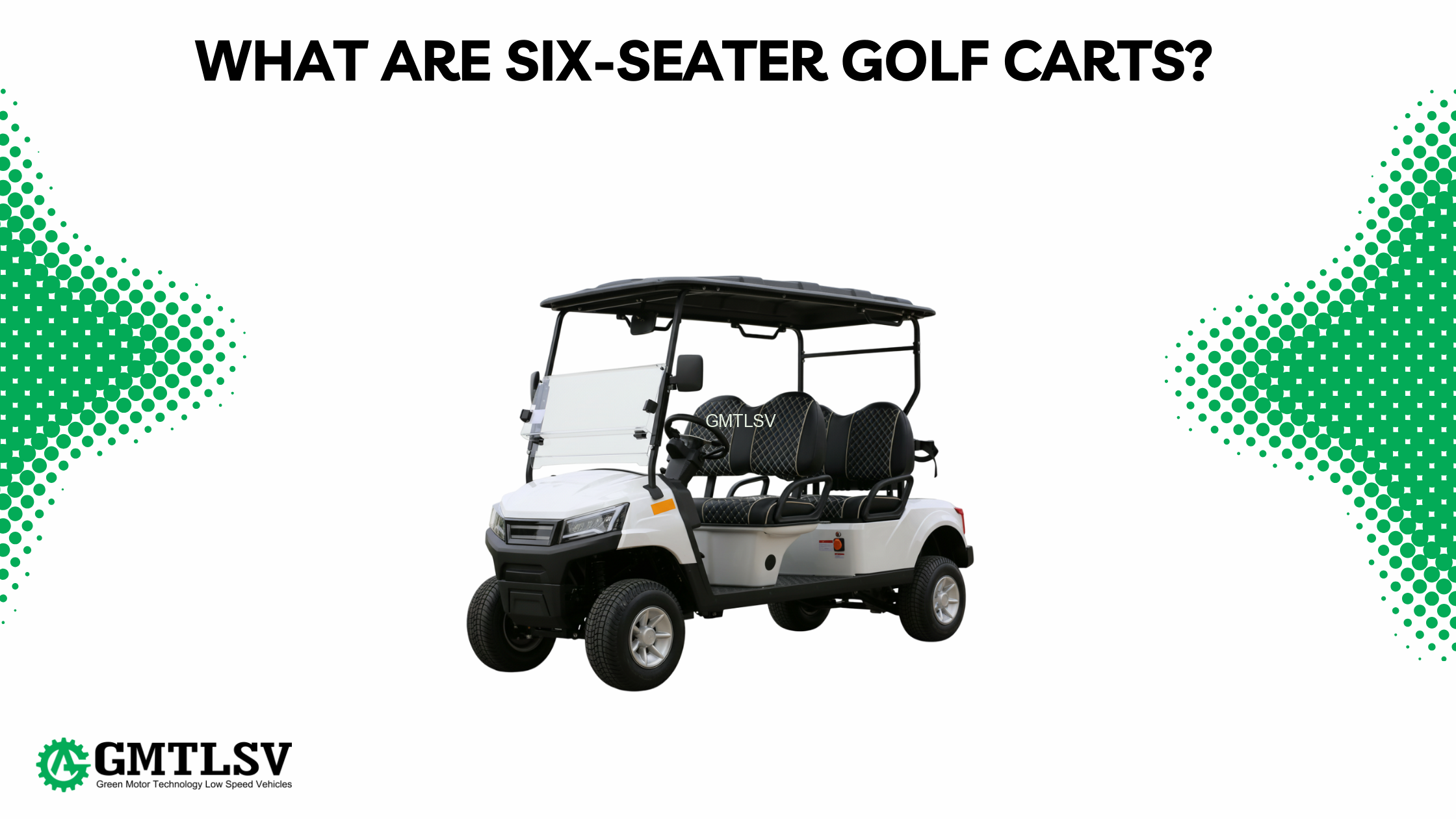
Now we’re talking about the big ones.
Six-seaters are built for capacity. Usually configured with three rows of seating, or a front bench with rear-facing seats for four.
These are commercial-grade carts in most cases. You see them at resorts, theme parks, airports, large corporate campuses. Places that need to move groups of people efficiently.
But they’ve also become popular with large families. If you’ve got four kids, or the grandparents are always around, or you’re just the type who hosts a lot, six seats suddenly seems reasonable.
The build quality on these is typically heavier duty too. They’re designed for constant use, heavier loads, and longer service life.
Key Features of Six-Seater Golf Carts
Six-seaters bring the heavy specs:
- Extended wheelbase — Around 12 feet long on most models
- Heavy-duty suspension — Built to handle more passengers
- High weight capacity — Typically 1,000-1,200+ lbs
- Multiple seating configurations — 2+2+2 or 2+4 arrangements
- Enhanced safety features — Better brakes, sturdier frames
- Powerful motors/engines — More power to move more weight
- Premium comfort options — Padded seats, armrests, cup holders everywhere
- Commercial-grade materials — Built to last under heavy use
These aren’t just stretched-out golf carts. The frame, suspension, brakes, motor — everything is beefed up.
Best Uses for Six-Seater Golf Carts
Six-seaters make sense for:
Resorts and hotels — Moving guests from parking to lobby to pool to restaurant. All day, every day.
Golf course tournaments — Shuttling players, staff, and equipment around during events.
Corporate campuses — Large tech campuses, manufacturing facilities, distribution centers. Getting people from building to building.
Large estates and ranches — When your property is measured in acres, not square feet.
Tour operations — Winery tours, nature tours, historical tours. Any time you’re moving groups of paying customers.
Airport shuttles — Internal passenger transport in smaller terminals.
Theme parks — Staff transportation, VIP tours, accessibility needs.
Large family gatherings — Sunday dinners, holiday weekends, any time you’ve got a crew together.
If you’re running a business or you have a big family, six-seaters earn their keep.
Pros and Cons of Six-Seater Golf Carts
Pros:
- Maximum passenger capacity
- Excellent for commercial operations
- Strong ROI for businesses
- Ultimate versatility for group transport
- Built to last under heavy use
Cons:
- Highest price point
- Requires more storage space
- Less maneuverable in tight areas
- Higher operating costs (tires, batteries, maintenance)
- Some areas have regulatory restrictions on larger carts
The biggest issue is space. You need room to drive it. You need room to store it. Not everyone has that.
Head-to-Head Comparison: Two-Seater vs Four-Seater vs Six-Seater
Alright. Let’s compare these side by side.
Because honestly, the “right” golf cart depends entirely on your situation. What works for a retired couple in Arizona is completely different from what works for a resort in South Carolina.
So let’s look at the real differences. Not marketing stuff. Actual, practical differences that affect your daily use.
Size and Dimensions Comparison
This is where it gets real. Actual measurements you need to think about:
| Cart Type | Approximate Length | Approximate Width | Turning Radius |
| Two-Seater | 8 feet | 4 feet | 10-12 feet |
| Four-Seater | 10 feet | 4 feet | 12-14 feet |
| Six-Seater | 12 feet | 4.5 feet | 14-16 feet |
What does this mean in practice?
Two-seaters fit in most standard single-car garages without any issue. Four-seaters fit too, but tighter. Six-seaters? You might need a larger garage, or you’re storing it outside or in a shed.
Cart paths on golf courses are built for two-seaters. Four-seaters work on most of them. Six-seaters often can’t even use standard golf course paths.
Measure your garage. Measure your storage space. Do it before you buy.
Passenger Capacity and Comfort
This seems obvious. Two seats. Four seats. Six seats. But there’s more to it.
Two-seaters are comfortable for two adults. No cramping. Plenty of room.
Four-seaters are comfortable for three to four adults. The rear bench can get tight if everyone’s on the larger side. Kids fit great back there though.
Six-seaters are comfortable for four to five adults. Yeah, they seat six. But with six full-sized adults? It’s snug. It’s better with a mix of adults and kids, or just not fully loaded.
Entry and exit also matters. Front seats are always easiest. Rear seats on four-seaters are fine. The third row on six-seaters can be awkward, especially for older folks with mobility issues.
Also worth noting — ride quality changes when you’re loaded up. A six-seater with six people handles differently than one with two people.
Performance and Maneuverability
Smaller is more agile. Larger is more stable. That’s the basic trade-off.
Speed: Most golf carts top out around 15-25 mph regardless of size. Street-legal LSVs can go 25+. Size doesn’t change top speed much.
Hill climbing: Bigger carts have more powerful motors, but they’re also heavier. When loaded, larger carts may struggle more on steep inclines than you’d expect.
Handling: Two-seaters turn sharper and feel nimbler. Six-seaters feel more like driving a small truck. Four-seaters are somewhere in between.
Acceleration: Lighter carts accelerate faster. Simple physics.
Braking: Larger carts need more distance to stop, especially when loaded. Something to think about if you’re driving around kids, crowds, or near traffic.
If you’re navigating tight spaces — narrow paths, crowded parking, busy neighborhoods — a smaller cart is easier to handle. If you’re on open roads or large properties, it matters less.
Price Comparison and Value
Here’s the honest breakdown on pricing:
- Two-seaters: $5,000 – $10,000
- Four-seaters: $7,000 – $14,000
- Six-seaters: $10,000 – $18,000+
These are general ranges. Price varies a lot based on:
- Electric vs. gas
- Brand reputation
- Features and upgrades
- New vs. used
- Dealer vs. private sale
At GMTLSV, we try to keep pricing competitive across all sizes. But yeah, bigger costs more. That’s just how it goes.
Is a bigger cart worth it? Depends on use. If you actually need six seats regularly, the extra cost makes sense. If you’re buying six seats “just in case,” you might be wasting money.
Four-seaters hold value well because demand stays high. They’re the most versatile, so resale is easier. Two-seaters and six-seaters have narrower buyer pools.
Maintenance and Operating Costs
Bigger carts cost more to maintain. No way around it.
Tires: A six-seater has the same number of tires as a two-seater (usually four), but they’re often larger and wear faster under heavier loads. Budget $200-$500 for a full set replacement depending on quality.
Batteries: Electric carts use battery packs. Two-seaters might run on 4-6 batteries. Six-seaters often need 6-8 larger batteries. Battery replacement costs $600-$1,500+ depending on type and size.
Fuel (gas carts): Bigger carts burn more gas when working harder. You’ll notice it if you’re running a loaded six-seater up hills all day.
Insurance: Larger carts cost slightly more to insure. Not a huge difference, but it adds up.
General maintenance: More parts, more potential issues. More suspension components. More weight on brakes.
Estimated annual costs:
- Two-seater: $200-$400
- Four-seater: $300-$500
- Six-seater: $400-$700
These are rough numbers. Your actual costs depend on how much you drive, how well you maintain it, and whether anything breaks.
Storage and Parking Requirements
Storage is where a lot of people get tripped up.
A two-seater needs about 8 feet by 4 feet of floor space minimum. Plus room to get in and out, access the back, plug it in if electric.
A four-seater needs 10+ feet.
A six-seater needs 12+ feet, and they’re often wider too.
Standard single-car garage dimensions are about 10 feet by 20 feet. A two-seater fits easily. A four-seater fits with room to spare. A six-seater might not fit alongside your lawn equipment, bikes, and whatever else is in there.
If you have a two-car garage and one bay is empty, any of these work. If you’re trying to squeeze into a tight space, measure first.
Seasonal storage matters too. If you’re somewhere with harsh winters and you’re storing the cart for months, make sure you have a dry, protected spot. Outdoor covers work but aren’t ideal.
Customization and Accessory Options
All three sizes can be customized. But the options vary.
Two-seaters: Most accessories are available, but fewer “versions” of each. Lift kits, wheel upgrades, lights, enclosures, basic stuff. Limited bed options since there’s not much room in back.
Four-seaters: The most options overall. You’ve got rear flip seats that become cargo beds, utility bed conversions, storage racks, sound systems, full enclosures, heaters, everything. This is where aftermarket support is strongest.
Six-seaters: Plenty of commercial-grade options — enclosures for weather, premium seating, heavy-duty tires, upgraded suspensions. But fewer “fun” accessories comparatively. It’s more about function than customization.
If you want to build out a really personalized cart with all the bells and whistles, four-seaters probably have the most options. Two-seaters have good support too. Six-seaters are more about capability than style, usually.
Which Golf Cart Size Is Right for You?
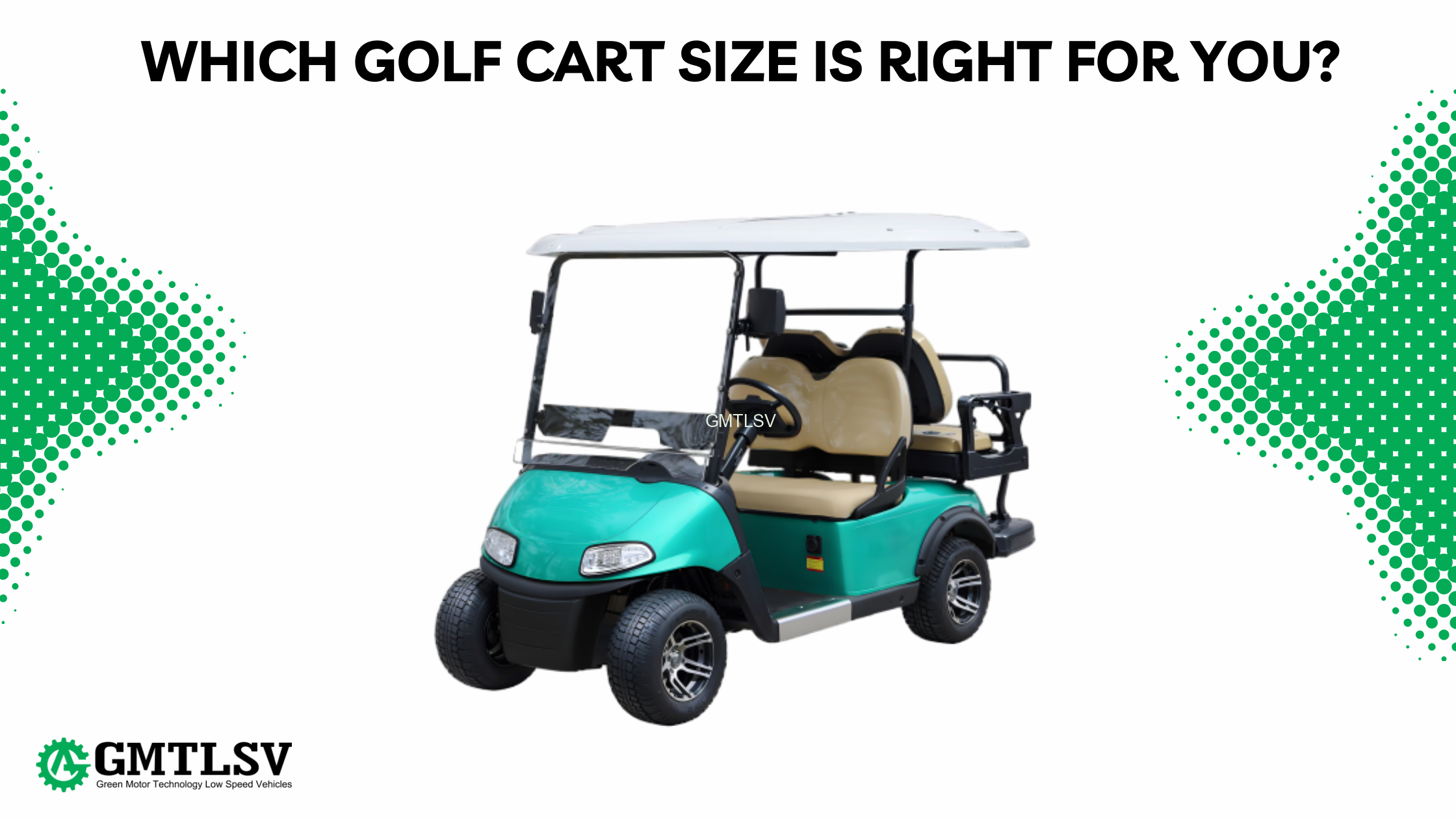
There’s no universal answer here. Sorry if you wanted one.
The right cart depends on your situation. Your space. Your budget. Who’s riding with you. What you’re using it for.
But I can help narrow it down.
Choose a Two-Seater Golf Cart If…
- You primarily golf alone or with one partner
- You have limited storage space — small garage, tight shed
- You’re on a tight budget and want the lowest upfront cost
- You navigate tight spaces regularly — narrow paths, crowded areas
- You want the lowest maintenance costs possible
- You’re a first-time golf cart buyer testing the waters
- You live in a smaller retirement community with short distances
- You don’t anticipate frequently hauling more than one other person
Two-seaters are ideal when simplicity is the priority. If your needs are straightforward, your cart can be too.
Choose a Four-Seater Golf Cart If…
- You have a family of 3-4 people
- You frequently host guests or visitors
- You want a cart that does multiple things well
- You need moderate cargo capacity and passenger space
- Resale value matters to you
- You use it for both recreation and light work
- You want a balance between affordability and capability
- You operate a small rental property, B&B, or similar business
- You’re not sure exactly how you’ll use it and want flexibility
Four-seaters work for most people in most situations. That’s why they’re the bestsellers.
Choose a Six-Seater Golf Cart If…
- You run a commercial operation — resort, hotel, tour company
- You have a large family with 5+ people
- You regularly transport groups
- You need shuttle service for events or tours
- You manage a large property where staff moves in groups
- You want maximum passenger capacity above all else
- ROI from moving more people matters to your business
- You have the storage space and budget to support a larger cart
Six-seaters are specialty vehicles. If you need the capacity, nothing else will do.
GMTLSV Golf Cart Options
Quick word about what we offer at GMTLSV.
We carry all three configurations — two-seater, four-seater, six-seater. Electric and gas options across the board. We’ve been in this business long enough to know what works and what doesn’t.
What sets us apart? Honest guidance. Quality builds. Actual customer service after the sale.
We’re not trying to upsell you into a bigger cart than you need. We want you to get the right cart so you’re happy with it years from now.
Here’s a quick look at our lineup.
GMTLSV Two-Seater Models
Our two-seater lineup focuses on reliability and value.
You’re getting quality construction without extra fluff. Standard features cover what most people need — good battery life, comfortable seating, basic weather protection options.
Customization is available. Lift kits, upgraded wheels, enclosures, whatever you need. But the base models are solid on their own.
Pricing is competitive. Warranty is standard. Support is local.
If a two-seater makes sense for you, we’ll set you up right.
GMTLSV Four-Seater Models
This is our most popular category, and we’ve put a lot of effort into it.
Multiple configurations available. Fixed rear seats. Flip seats. Different color options. Different feature packages.
These are built for families. For neighborhoods. For light commercial use. They handle daily abuse and still look good.
Customization options are wide open here. We can build out exactly what you want.
Talk to us about what you’re looking for. We probably have it or can get it.
GMTLSV Six-Seater Models
Our six-seaters are commercial-grade machines.
Built for resorts, tour operators, large properties, fleet use. Heavy-duty frames. Enhanced suspension. Powerful motors. Designed for constant operation.
If you’re buying multiple units for a business, we offer fleet pricing and support.
Durability is the priority here. These carts need to work every day, carry full loads, and last for years. That’s what we build.
Can you convert a two-seater to a four-seater or six-seater?
Short answer? Generally not recommended.
The frame, suspension, and braking systems are all designed for specific weights and loads. A two-seater frame isn’t built to handle four passengers safely.
I’ve seen people try. Sometimes it works for a while. But it’s sketchy. The cart handles weird. The brakes work harder. Something eventually goes wrong.
If you need occasional extra seating, look at rear flip seat options instead. They’re designed for it and maintain safety standards.
If you genuinely need more capacity, buy the right size from the start. It’s cheaper than converting, and safer too.
What is the most popular golf cart size?
Four-seaters. Not close.
They dominate sales across personal, commercial, and rental markets. The versatility is the reason. They work for couples who want extra room, families with kids, small businesses, rental fleets.
Market trends confirm it. Four-seaters have been the bestselling configuration for years.
That said, two-seaters still sell heavily in golf-course-focused markets. And six-seaters dominate commercial applications where capacity matters.
But overall? Four-seaters.
Are six-seater golf carts street legal?
Depends where you live.
Street legality for golf carts varies by state and even by municipality. Generally, to be street-legal, a cart needs:
- Headlights and taillights
- Turn signals
- Mirrors
- Seat belts
- A minimum top speed (usually 20-25 mph)
- Registration and insurance
Carts meeting these requirements are usually classified as Low-Speed Vehicles (LSVs). Size doesn’t disqualify you. A six-seater can be an LSV if it has the required equipment.
Check your local regulations. Some towns allow golf carts on certain roads. Some don’t. Some have speed limits or time-of-day restrictions.
How much does seating capacity affect battery life or fuel consumption?
More capacity means more potential weight, which means more energy used.
But here’s the thing — actual passenger load matters more than the cart’s size. A six-seater with two people in it might use less energy than a four-seater with four heavy adults.
Factors that actually affect efficiency:
- Total passenger weight
- Terrain (hills kill battery)
- Driving habits (lots of stops and starts drain faster)
- Tire pressure
- Battery condition/maintenance
- Temperature (extreme cold hurts batteries)
A larger cart does have bigger motors and batteries, so base consumption is higher. But it’s not dramatically different in most real-world use.
Can I use a six-seater golf cart on a standard golf course?
Most golf courses won’t allow it.
Cart paths are built for two-seater widths. Six-seaters are wider and longer. They don’t fit as well, and courses worry about turf damage and pace of play.
Some exceptions:
- Private courses with wide paths
- Special events and tournaments
- Courses you own yourself
For regular golf play, stick with two or four-seaters. That’s what courses expect.
Six-seaters are great off the course though.
What’s the resale value difference between sizes?
Four-seaters generally hold value best.
Higher demand means easier resale. More buyers are looking for four-seaters than any other size. So when it’s time to sell, you find buyers faster and get closer to asking price.
Two-seaters hold value well too, especially in golf-heavy markets.
Six-seaters can be harder to sell privately because the buyer pool is smaller. Most six-seater buyers are commercial operators, and they often buy new or from dealers.
Factors affecting resale across all sizes:
- Condition (obviously)
- Brand reputation
- Age and mileage
- Battery/engine condition
- Features and upgrades
- Local market demand
Keep your cart maintained and clean, and you’ll hold value regardless of size.
How long do golf cart batteries last in different sizes?
Battery lifespan is mostly about quality and maintenance, not cart size.
Average lifespan for lead-acid batteries: 4-6 years. Lithium batteries: 8-10 years or more.
How to maximize battery life:
- Keep batteries charged (don’t let them die completely)
- Top off water levels in lead-acid batteries
- Clean terminals regularly
- Store properly in extreme temperatures
- Don’t overload the cart constantly
Larger carts do work their batteries harder when fully loaded. That’s real. But if you’re comparing a well-maintained six-seater to a neglected two-seater, the six-seater batteries might last longer.
Replacement costs do scale with size. A six-seater with 8 batteries costs more to replace than a two-seater with 4 batteries. Plan for that.

