

Here’s the thing. People argue about this way more than they should.
Golf buggy. Golf cart. Golf car. They’re all talking about the same basic vehicle. A small, slow, usually electric thing that moves people around a golf course. Or a neighborhood. Or a resort.
But there are some differences. Mostly regional. Sometimes technical. And if you’re about to buy one, knowing the terminology actually helps. You’ll search better. Talk to dealers better. Understand spec sheets better.
At GMT LSV, we manufacture these vehicles. So we hear all three terms constantly. Customers from different countries use different words. Industry people use different words than everyday buyers. It gets confusing.
Let me break it down.
What is a Golf Cart?
Golf cart is the term you hear most in North America. It’s what Americans call it. Canadians too.
It’s a small vehicle. Designed originally for golf courses. Gets players and their clubs from hole to hole without walking. Pretty simple concept.
Most golf carts are electric now. Some still run on gas. They seat 2 to 4 people usually. Sometimes more. They’re slow on purpose. We’re talking 12-20 mph tops.
The design hasn’t changed dramatically in decades. Steering wheel. Accelerator pedal. Brake. Open sides usually. Roof for shade and rain.
What has changed is where people use them. Golf carts aren’t just for golf anymore. Not even close.
Standard Features of Golf Carts
Let me give you the basics. What you’d find on a typical golf cart off the lot.
Speed caps out around 12-20 mph. Electric models run on batteries, usually 36V or 48V systems. Gas models use small engines, similar to lawnmowers or ATVs.
Seating for 2 is standard. 4-seaters are common. You can get 6 or more for commercial stuff.
You’ve got a steering wheel. Accelerator and brake pedals. Some have headlights and taillights. Some don’t. Depends on the model and what it’s built for.
Basic safety features include parking brakes. Some have seat belts. Newer models definitely have more safety built in.
Accessories vary. Cup holders. Bag racks. Windshields. Enclosures for weather. Mirrors. Turn signals. All available, not always standard.
Common Uses of Golf Carts Today
Golf courses are still the obvious one. But honestly? That’s a shrinking percentage of the market.
Gated communities. Huge market. People don’t want to drive their car to the clubhouse or pool. Golf cart makes sense.
Airports use them. Hotels. Resorts. Hospitals. You’ve seen staff members zipping around on these things.
Warehouses and factories use them for moving people and small loads around. Faster than walking, safer than forklifts for light stuff.
College campuses. Security patrols. Maintenance crews. Event staff at concerts and festivals.
And just… personal transportation. In certain areas. Retirement communities especially. Some beach towns. Places where the whole infrastructure supports low-speed vehicles.
The golf cart has become way more than a golf thing.
What is a Golf Buggy?
Same vehicle. Different name.
Golf buggy is what people say in the UK. Australia too. New Zealand. Parts of Europe.
It’s not a different product. It’s just the word. If you’re British and you call it a buggy, you’re talking about the exact same machine an American calls a cart.
Language is weird like that.
Regional Terminology Differences
This trips people up when they’re shopping internationally. Or when they’re reading forums and reviews from different countries.
Commonwealth countries lean toward “buggy.” North America says “cart.” Neither is wrong. Neither is more correct.
Manufacturers like GMT LSV use both terms. We have to. Our customers are global. If someone searches “golf buggy,” they need to find us. Same with “golf cart.”
It’s marketing reality. You use the words your customers use.
Are Golf Buggies Different from Golf Carts?
No.
I mean, technically no. Functionally no.
Some people try to argue there are subtle differences. Maybe some aesthetic preferences in certain markets. Maybe some features are more popular in one region than another. But that’s not because of the name. That’s because of local demand and regulations.
A golf buggy in London is the same as a golf cart in Florida. Same batteries. Same motors. Same frame. Same everything that matters.
Don’t overthink this one.
What is a Golf Car?
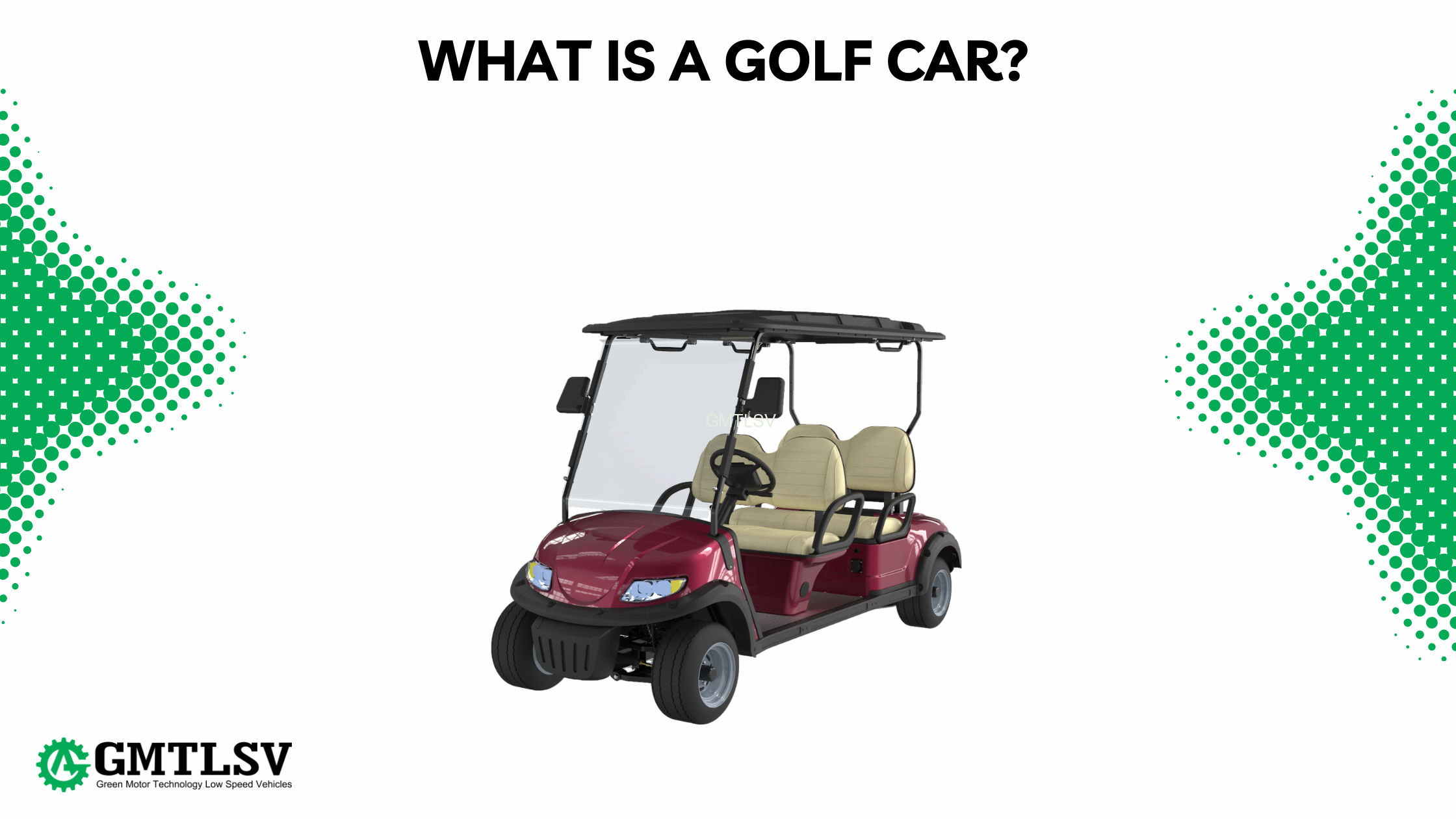
Now here’s where it gets slightly interesting.
Golf car is the industry term. The formal term. What you’ll see in technical documentation. Regulatory paperwork. Manufacturer specs.
It emphasizes that this is a vehicle. A car. Not just a utility cart you push around.
The industry takes itself seriously. And “car” sounds more serious than “cart.”
Industry Standard Terminology
If you’re dealing with manufacturers directly, you’ll see “golf car” a lot.
Dealership paperwork. Certification documents. Industry associations use it.
There’s actually a National Golf Cart Manufacturers Association. But they’ll use “golf car” and “golf cart” interchangeably too. Because even at that level, people recognize both terms.
The point is, when things get official, “car” tends to appear more.
Golf Car vs Golf Cart: Technical Distinction
Here’s a subtle thing I’ve noticed.
Premium models get called “cars” more often. They’re marketed that way. A high-end vehicle with luxury features? That’s a golf car.
Basic utility models? Those are carts.
It’s a marketing distinction mostly. Psychological. “Car” implies something more sophisticated. Actual vehicle features. Nice seats. Dashboard displays. Sound systems maybe.
“Cart” implies simpler. More utilitarian. Gets the job done but nothing fancy.
This isn’t a hard rule. But if you look at how companies market their product lines, you’ll see this pattern.
Key Differences: Usage and Context
So we’ve established they’re basically the same thing. But the words matter depending on context.
Here’s when you’d use each.
Geographic Preferences
United States: Golf cart. That’s what people say. That’s what they search. That’s what they understand.
Canada: Golf cart too. Same deal.
United Kingdom: Golf buggy. Almost always.
Australia: Golf buggy.
Industry and technical contexts: Golf car.
If you’re selling internationally, you optimize for all three. If you’re buying, you search for all three.
Commercial vs Residential Context
Commercial buyers sometimes lean toward “golf car.” It sounds more professional. More serious. Like actual fleet purchasing.
Residential buyers usually say “cart” or “buggy” depending on where they live. More casual. It’s for fun, for convenience.
This isn’t a strict rule either. Just a tendency I’ve seen over the years.
Manufacturer and Dealer Language
Companies like GMT LSV use all three terms in marketing materials. Because we want to be found by everyone.
Product catalogs might say “golf car” in the spec section and “golf cart” in the description. It’s intentional.
When you’re researching, don’t get confused if you see different terms on the same website. It’s just comprehensive marketing.
Types and Variations Across All Categories
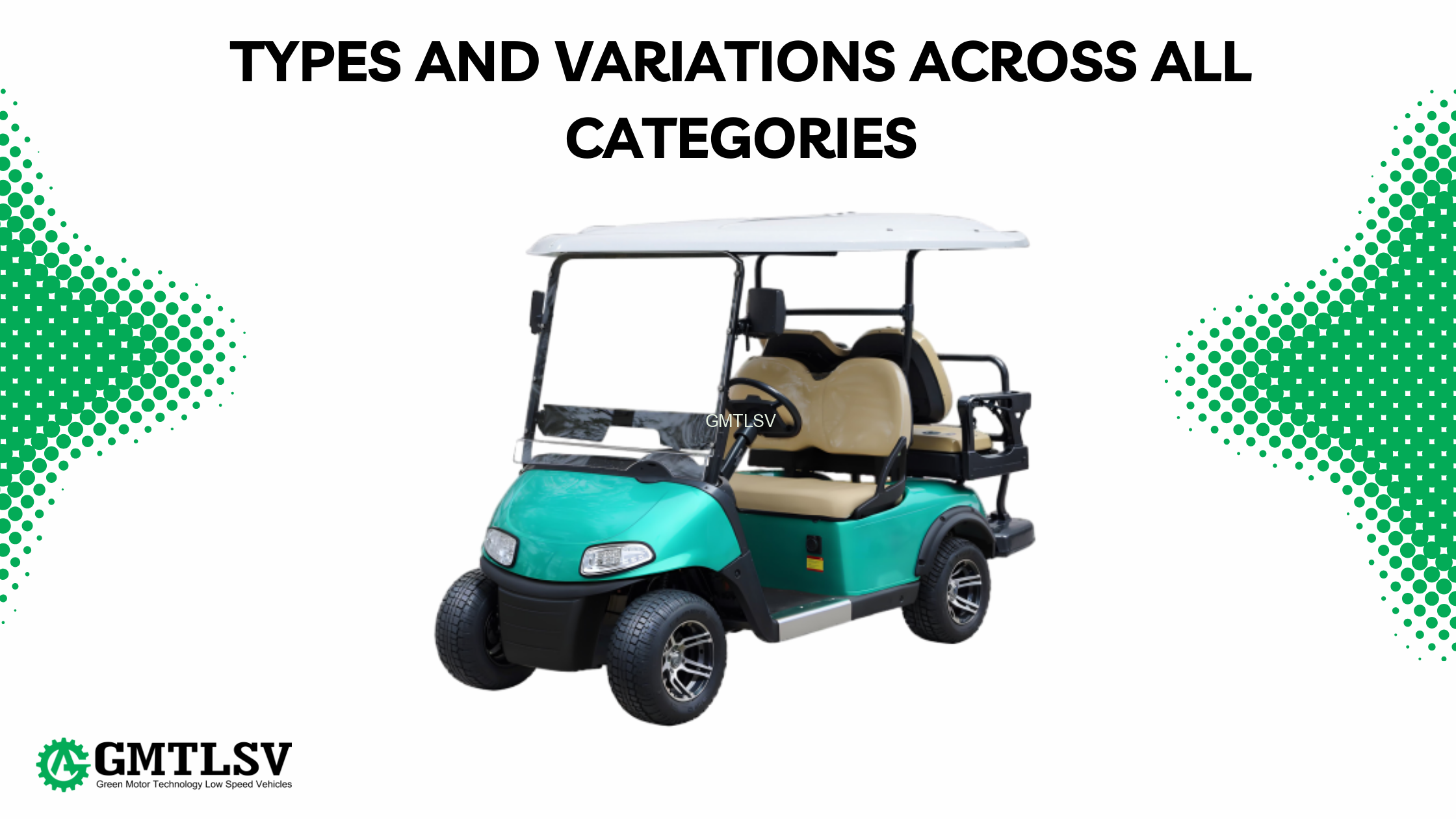
Whatever you call them, there are different types. This is where actual differences exist.
Electric vs Gas-Powered Models
Electric is the dominant choice now. Has been for a while.
Battery powered. Usually lead-acid or lithium. Lithium costs more upfront but lasts longer and weighs less. Lead-acid is cheaper but heavier and needs more maintenance.
Electric is quiet. Like, really quiet. Good for neighborhoods. Good for golf courses where noise matters.
Lower maintenance too. No oil changes. No spark plugs. Fewer moving parts overall.
Gas powered still has its place. More power typically. Longer range. Faster refueling—just add gas.
If you’re using it hard, all day, in a commercial setting? Gas might make sense. If you’ve got long distances and no time for charging.
For most residential and light commercial use? Electric wins. Not even close.
2-Seater vs 4-Seater vs 6-Seater Options
2-seater is classic. Personal use. Golf course. One driver, one passenger. Simple.
4-seater is popular for families. Small groups. Neighborhood use where you’re hauling kids around.
6-seater and beyond. That’s commercial territory. Hotels moving guests. Resorts. Event transport. Airport shuttles.
GMT LSV makes all these sizes. The demand varies by use case obviously.
More seats means bigger vehicle. Bigger battery or engine. Higher price. More space needed to park and store.
Match the size to what you actually need.
Street-Legal Golf Cars (LSVs)
This is a specific category. Low-Speed Vehicles. LSVs.
It’s a golf car modified to meet street-legal requirements. Federal and state regulations.
What does that mean? Headlights. Taillights. Turn signals. Mirrors. Seat belts. Windshield. Reflectors. VIN number.
Speed is capped at 25 mph to qualify as an LSV. Otherwise it’s something else legally.
You can drive these on public roads with speed limits of 35 mph or less. Usually. Depends on your state and local laws. Some places are more restrictive.
Registration required. Insurance sometimes. License plate.
This is literally what GMT LSV specializes in. It’s in the name. Low-Speed Vehicles that are street legal.
Different states have different rules. Florida is very LSV-friendly. California has regulations. Arizona. It varies.
Check your local laws before assuming you can drive one on streets.
Utility and Lifted Models
Beyond the standard golf course look, there are specialty builds.
Utility carts have cargo beds instead of rear seats. Like a tiny pickup truck. For hauling tools, supplies, whatever.
Lifted models sit higher. Bigger tires. Better ground clearance. For rough terrain. Hunting. Farms. Off-road stuff.
You can also get hunting carts in camo. With gun racks. Specific to that use case.
Customization is huge in this market. People want their vehicle to match their use. And their personality honestly.
Choosing the Right Vehicle: What Should You Call It?
Practically speaking. You’re shopping. What word should you use?
When Searching Online
Use all three terms.
“Golf cart” gives you the most results in the US. Biggest market. Most content.
“Golf buggy” finds international options. UK dealers. Australian products. If you want that perspective.
“Golf car” tends to surface more technical information. Industry publications. Spec comparisons.
Vary your searches. You’ll find different things.
When Talking to Dealers and Manufacturers
Honestly? Any term works. We know what you mean.
At GMT LSV, if you say buggy, we’re not confused. If you say cart, we’re not confused. Golf car, same thing.
Focus on what matters. Your use case. Your features. Your budget. Your timeline.
Don’t stress about terminology. Dealers deal with customers from everywhere. They’ve heard it all.
Regional Considerations
When in Rome.
If you’re in Australia, say buggy. Locals will connect better. You’ll communicate more smoothly.
If you’re in Texas, say cart.
If you’re at an industry trade show, golf car sounds right.
Match your audience. Basic communication stuff.
Popular Brands and Manufacturers
The market has major players. Here’s the landscape.
GMT LSV: Leading Golf Cart Manufacturer
This is who I work with, so I’m biased. But I’ll tell you why we stand out.
GMT LSV focuses specifically on street-legal vehicles. LSVs are our thing. Not an afterthought. The core product.
Range covers everything from basic 2-seaters to 6-seaters. Electric primarily. Different trim levels. Different customization options.
Quality standards are high. We export internationally. That means meeting regulations across multiple countries.
Customization is big for us. People want specific features. Specific looks. We can do that.
Price-wise, we’re competitive. Not the absolute cheapest, because quality costs money. But not overpriced either.
If you’re looking at street-legal golf cars, GMT LSV should be on your list.
Other Notable Manufacturers
Club Car is major. Owned by Ingersoll Rand. Long history. Popular on golf courses and beyond.
EZGO. Textron brand. Another huge name. You see these everywhere.
Yamaha makes golf cars too. Good reputation. Reliable.
These are the big three that most people think of.
There are smaller manufacturers too. Chinese manufacturers have entered the market. Price competition has increased.
How does GMT LSV compare? We compete on quality and customization. And specifically on the LSV segment. That’s our niche.
Is there any real difference between a golf buggy, golf cart, and golf car?
No.
It’s the same vehicle with different names.
Regional preferences. Industry formality. That’s it.
A golf buggy in Sydney functions identically to a golf cart in San Diego functions identically to a golf car in a manufacturer’s brochure.
Don’t let terminology confuse you.
Which term should I use when searching for one to buy?
All three.
Search “golf cart” first. Most results. Most options. Especially if you’re in North America.
Search “golf buggy” to find international content. Different perspectives. Sometimes different deals.
Search “golf car” when you want technical specs. Industry information. Formal comparisons.
Cover your bases. Different searches find different things.
Can I drive my golf cart on public roads?
Maybe. Depends on a lot of things.
If it’s a standard golf cart? Probably not legally.
If it’s a street-legal LSV? Yes, within restrictions.
Requirements for LSV status: headlights, taillights, turn signals, mirrors, seat belts, windshield, reflectors, VIN. Maximum 25 mph speed.
Then you need registration. Insurance in some places. Driver’s license.
Where can you drive? Roads with 35 mph speed limits or less. Usually. But local laws vary hugely.
Florida allows it widely. Some states are stricter. Some cities have their own rules.
Check. Your. Local. Laws. Don’t assume.
What’s better: electric or gas-powered?
Depends on your situation.
Electric wins for:
- Residential use
- Quiet neighborhoods
- Golf courses
- Short to medium distances
- Lower maintenance preference
- Environmental concerns
Gas wins for:
- Heavy commercial use
- All-day operation
- Long distances
- Quick refueling needs
- Remote areas without easy charging
Most people should go electric. The exceptions are specific use cases where gas advantages actually matter.
How much does a golf cart/buggy/car cost?
Wide range.
Used, basic: $2,000-$5,000. Condition varies a lot.
New, basic: $5,000-$8,000.
New, mid-range: $8,000-$12,000.
New, premium/LSV: $12,000-$20,000+.
Electric tends to cost more upfront than gas. But lower operating costs over time.
Customization adds up fast. Lift kits. Wheels. Seats. Enclosures. Sound systems. Every add-on costs money.
GMT LSV offers various price points. There’s something for different budgets. But don’t expect premium features at entry-level prices.
Get quotes. Compare specs. Know what you actually need versus what looks cool.


