

Here’s something that surprises most people. Golf carts aren’t just for golf anymore.
They’re everywhere now. Retirement communities. Beach towns. Large properties. Resorts. Warehouses. College campuses. I see them cruising through neighborhoods where I live, and honestly, it makes sense. They’re practical. They’re efficient. And for short distances, they just work.
But here’s the thing. A decent golf cart costs somewhere between $5,000 and $20,000. The really nice ones? Custom builds with all the features? You’re looking at even more. That’s not pocket change.
Most people don’t have that kind of cash sitting around. And even if they do, spending it all at once might not be smart.
That’s where financing comes in.
You’ve got three main paths to explore. Loans give you ownership. Leases let you use the cart without committing forever. Payment plans offer flexibility, especially through dealers who get creative with their terms.
I’m going to break down each option. What works for who. What to watch out for. And how to actually qualify. By the end of this, you’ll know exactly which direction makes sense for your situation.
Why Finance a Golf Cart?
I get this question a lot. Why not just pay cash?
Fair point. If you’ve got the money, paying outright seems simpler. No monthly payments. No interest. Done and done.
But financing actually makes sense for most people. Here’s why.
First, cash flow matters. Dropping $10,000 or $15,000 all at once hurts. Even if you can do it. That’s money you can’t use for emergencies, investments, or other stuff that comes up. Spreading payments over time keeps your bank account healthier.
Second, you might be able to afford a better cart by financing. The one you really want. Not the one you’re settling for because it’s cheaper upfront.
There are other benefits too:
- Building credit. Making regular payments on a financed cart improves your credit score over time. That helps with future purchases.
- Tax advantages. If you’re using the cart for business, you might be able to deduct interest payments or depreciation. Talk to your accountant about this one.
- Flexibility. Some financing lets you upgrade or trade in before you’ve paid everything off. That’s harder to do when you’ve paid cash.
Look, I’m not saying financing is always the right move. If you hate debt, pay cash. But don’t assume it’s the only smart option.
Understanding Golf Cart Financing Basics
Before you start filling out applications, you need to understand a few things about how this works.
Golf carts get classified differently depending on what they are. A standard golf cart that tops out at 15 mph is basically a recreational vehicle. But a Low Speed Vehicle (LSV) that goes 20-25 mph and has headlights, turn signals, seat belts—that’s a different category entirely. LSVs can be street legal.
Why does this matter? Because lenders treat them differently.
Some lenders won’t touch recreational vehicles at all. Others specialize in them. LSVs sometimes qualify for regular auto loans since they’re more like actual vehicles.
Credit score requirements vary too. Most lenders want to see at least a 600. Some are stricter. Others, especially specialized dealers, work with lower scores but charge higher rates.
What do lenders look for? Pretty standard stuff:
Your credit score. Your income. Your debt-to-income ratio. Employment history. Sometimes they want to see a down payment to know you’re serious.
Specialized dealers like GMT LSV often have advantages here. They know the right lenders. They understand the product. They can sometimes get deals done that regular banks won’t touch.
What Factors Affect Golf Cart Financing?
A bunch of things influence your rates and options:
- Credit score — Higher score, better rates. Simple.
- Down payment amount — More money down usually means lower payments and better approval odds.
- Loan term length — Longer terms mean smaller monthly payments but more interest paid overall.
- New vs. used cart — New carts often get better rates. Used carts are sometimes harder to finance.
- Cart type — Gas vs. electric, standard vs. LSV. Different lenders have different preferences.
- Intended use — Personal vs. commercial makes a difference for some financing options.
- Lender type — Banks, credit unions, dealers, manufacturers. Each has different criteria and rates.
Golf Cart Loan Options
Loans are the most common way to finance a golf cart. They’re straightforward. You borrow money, pay it back over time, and own the cart outright when you’re done.
Two main types exist. Secured loans use the cart as collateral—if you stop paying, they take the cart. Unsecured loans don’t require collateral, but they’re riskier for the lender, so rates are higher.
Let’s look at specific options.
1. Traditional Auto Loans for Golf Carts
This is what most people think of first. Standard auto loan, but for a golf cart.
Here’s how it works. Terms usually run 24 to 84 months. Interest rates range from around 3% to 15%, depending mostly on your credit. Down payment requirements vary—sometimes nothing, sometimes up to 20%.
The good news? You’re building equity. You own something at the end. And monthly payments might be lower than you expect with longer terms.
The bad news? Golf carts depreciate. Fast. You might owe more than the cart’s worth for a while, especially with longer loans.
Here’s the catch though. Not every auto lender finances golf carts. Some won’t touch them. You’ll need to ask upfront before wasting time on applications.
2. Personal Loans for Golf Cart Purchases
Personal loans work differently. They’re unsecured, meaning the cart isn’t collateral. You get money, you buy the cart, you pay back the loan.
Terms are usually shorter. Rates are typically higher. But approval can be faster, and there’s more flexibility.
This option makes sense in certain situations:
- You’re buying from a private seller who only takes cash
- The cart is older and traditional lenders won’t finance it
- You need a smaller amount that doesn’t justify a formal auto loan
- You want to close quickly without all the paperwork
Just watch those interest rates. They can eat you up if you’re not careful.
3. Home Equity Loans and HELOCs
Okay, this one’s a bigger decision.
If you own a home with equity, you can borrow against it. Rates are usually lower than other options. Interest might even be tax-deductible (ask your tax person, not me).
Makes sense for expensive custom carts. Or buying multiple carts for a business. The loan amounts can be much higher.
But here’s the reality check. You’re putting your home on the line. For a golf cart. If something goes wrong and you can’t pay, that’s serious. I’ve seen people do this and it works out fine. But you need to really think it through.
4. Manufacturer and Dealer Financing Programs
This is often the easiest path.
Dealers like GMT LSV work with lenders all the time. They know who approves what. They can shop your application to multiple sources. Sometimes they have promotional rates—0% for 12 months, reduced rates on certain models, that kind of thing.
Benefits include:
- One-stop shopping. Pick your cart, handle financing, drive home.
- Relationships with specialized lenders who understand golf carts.
- Potentially better approval odds, even with lower credit scores.
- Access to deals that aren’t available anywhere else.
GMT LSV specifically focuses on low-speed vehicles. That specialization matters. They’re not trying to fit golf cart financing into a system designed for regular cars. They know the product and the financing landscape around it.
Flexible Payment Plans for Golf Carts
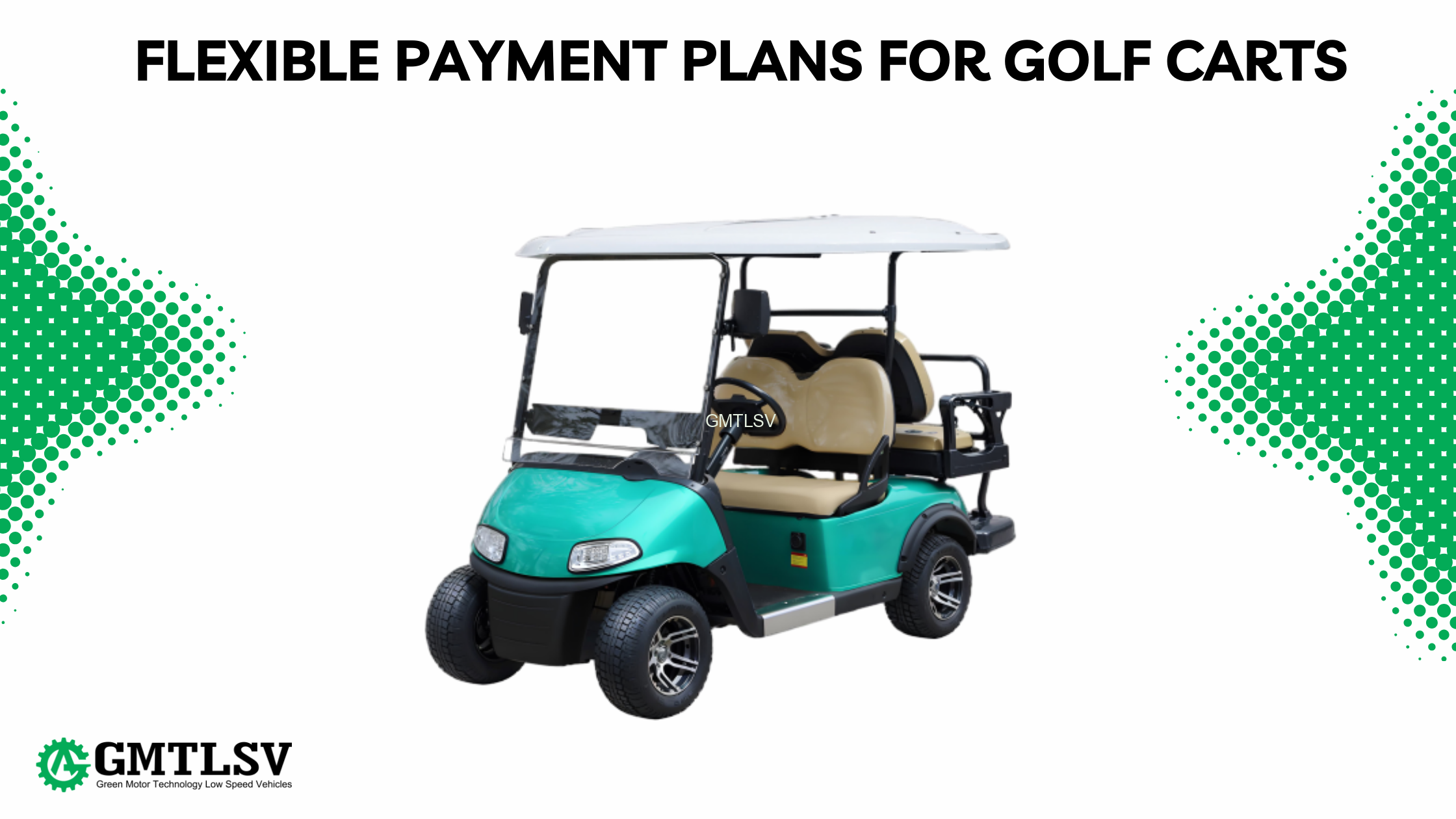
Beyond traditional loans and leases, there’s a whole category of alternatives. These often come through dealers directly. They’re less standardized but more flexible.
This includes in-house financing, rent-to-own setups, installment agreements, and even layaway options. Dealers like GMT LSV often offer these because they understand that not everyone fits into a traditional financing box.
In-House Dealer Financing
Some dealers handle financing themselves. No bank involved. They’re the lender.
What does this mean for you?
- More flexible credit requirements. They make their own rules.
- Customized payment schedules. Maybe you need lower payments during slow months if you’re seasonal.
- Relationship-based decisions. They’re looking at the whole picture, not just a credit score.
The downside? Rates might be higher. They’re taking on more risk by lending directly, and they need to account for that.
But if you’ve been turned down elsewhere, or your situation is unusual, in-house financing might be your best shot.
Rent-to-Own Golf Cart Programs
Rent-to-own works like it sounds. You make regular payments—weekly or monthly. Part of each payment goes toward eventually owning the cart.
Approval is usually easier. Sometimes way easier. And you get the cart immediately.
But—and this is important—you’ll pay more over time. Significantly more in some cases. Rent-to-own is convenient but expensive.
Who should consider it?
- People rebuilding credit who need to demonstrate payment history
- Buyers who want a trial period before fully committing
- Anyone who needs a cart right now and can’t wait for traditional financing
Installment Payment Agreements
These are simpler arrangements. You agree to pay a fixed amount on a set schedule until the cart is paid off.
Sometimes these are interest-free. Especially on lower-priced carts or used inventory the dealer wants to move. Short terms usually—maybe 6 to 12 months.
It’s basically a structured way to pay over time without formal financing. Less paperwork. Faster to set up. But typically requires decent credit or a solid relationship with the dealer.
Comparing Golf Cart Financing Options
Let me put everything side by side so you can see how these options stack up.
Interest Rates and Terms Comparison
Rates vary wildly depending on the option:
- Traditional loans: 3% to 12% for good credit. Higher for lower scores.
- Personal loans: Often 8% to 20%+. They’re riskier for lenders.
- Leases: Work differently (money factor), but effective rates are usually competitive with loans.
- Dealer payment plans: 0% to 20%+. Really depends on the program.
- Rent-to-own: Often equivalent to 20%+ when you calculate it out.
Longer terms mean smaller payments but more interest over time. A 36-month loan at 6% costs way less in total than a 72-month loan at the same rate. The math matters here.
Down Payment Requirements
Down payments vary by financing type:
- Traditional auto loans: Usually 10% to 20%
- Dealer financing: Often 0% to 15%, sometimes zero-down specials
- Leases: First payment plus fees (sometimes equivalent to one month)
- Payment plans: All over the place—could be nothing, could be significant
Bigger down payments help in a few ways. Lower monthly payments. Better approval odds. Sometimes better rates too. If you can swing it, putting money down is usually smart.
Total Cost of Ownership Analysis
Monthly payment isn’t everything. You need to think about total cost.
Consider:
- Interest over the life of financing. A $10,000 cart at 10% over 60 months costs almost $2,750 in interest alone.
- Maintenance. Owned carts are your responsibility. Leased carts might have coverage, might not.
- Insurance. Required by most lenders. Adds to monthly costs.
- Registration and licensing. Especially for LSVs that are street legal.
- Depreciation. Doesn’t cost you cash directly, but affects what you can sell for later.
Do the full math. Not just the monthly payment.
Golf Cart Financing at GMT LSV
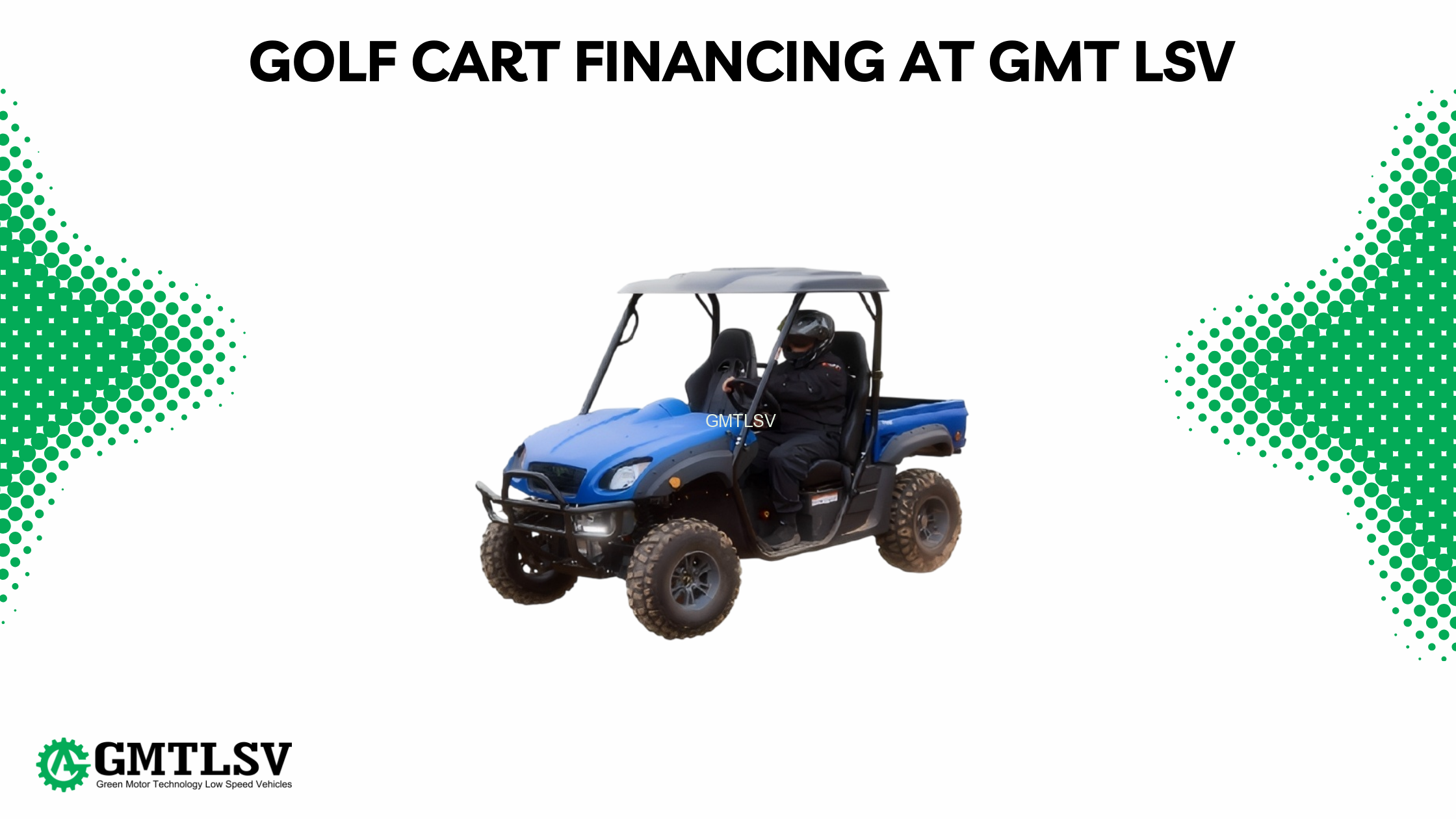
Let me talk specifically about what GMT LSV brings to the table. Because financing through a specialized dealer is genuinely different than going through a random bank.
Why Choose GMT LSV for Your Golf Cart Financing
GMT LSV focuses on low-speed vehicles. That’s what they do. This specialization matters for financing in a few ways.
They have relationships with lenders who understand this market. Not generic auto lenders trying to figure out how to classify a golf cart. Actual lenders who finance these vehicles regularly.
Their team knows the products inside and out. They can help match you with the right cart AND the right financing. It’s a package deal.
What you get:
- Access to multiple lenders through one application
- Competitive rates because they’re dealing with appropriate lenders
- Flexible options for different credit situations
- Streamlined process—pick your cart, handle financing, done
- People who actually know what they’re talking about
It’s just simpler. You’re not calling banks trying to explain what an LSV is.
GMT LSV’s Financing Application Process
Here’s how it typically works:
- Browse inventory. Online or in person. Figure out what you want.
- Talk to a financing specialist. They’ll ask about your situation and explain options.
- Complete the application. Usually quick—basic info, credit authorization.
- Get a decision. Often same day.
- Review terms. Make sure you understand everything before signing.
- Finalize paperwork. Sign, handle down payment if applicable.
- Take your cart home.
The whole thing can happen in a day. Not weeks of back-and-forth.
Financing Options Available Through GMT LSV
GMT LSV offers multiple paths:
- Manufacturer financing partnerships with promotional rates
- Network of multiple lenders to find the best fit
- Special promotions on specific models or during certain periods
- Trade-in programs that can reduce what you finance
- Solutions for credit-challenged buyers
Best way to find out what you qualify for? Just ask. Their financing team can run through your options without any obligation.
What credit score do I need to finance a golf cart?
Generally, 600 or above gives you decent options. But it’s not a hard line. Every lender is different.
Lower than 600? You still have options, just fewer of them and usually at higher rates. Specialized dealers like GMT LSV work with multiple lenders, so they can often find solutions when others can’t.
Your credit score isn’t the whole picture anyway. Income, down payment, and debt-to-income ratio all factor in.
Can I finance a golf cart with no down payment?
Yes. Zero-down financing exists, especially during promotional periods or for buyers with strong credit.
But understand the trade-offs. No down payment means higher monthly payments. Possibly higher rates too. And you’ll be “upside down” on the cart longer—owing more than it’s worth.
If you can put something down, it usually helps. But don’t assume you have to.
How long are typical golf cart loan terms?
Most common range is 24 to 72 months. The sweet spot for most people is 36 to 48 months.
Shorter terms mean higher monthly payments but less interest overall. Longer terms reduce monthly payments but cost more in the long run.
Find the balance that fits your budget without dragging payments out forever.
Is golf cart financing different from auto financing?
Similar concepts, some differences in practice.
Not every auto lender will finance golf carts. They’re classified as recreational vehicles by some, which some banks avoid. Loan amounts are typically smaller, which some lenders don’t like.
Can I pay off my golf cart loan early?
Usually, yes. Most loans allow early payoff.
But check for prepayment penalties. Some lenders charge a fee if you pay off too soon—they want their interest.
Paying off early saves money on interest. If there’s no penalty, and you have extra cash, it’s usually smart.
What happens if I default on my golf cart loan?
Nothing good.
The lender can repossess the cart. Your credit takes a serious hit. And if the cart sells for less than you owed, you might still owe the difference—called a deficiency balance.
They might offer options like refinancing, payment deferment, or modified terms. Lenders would rather work with you than deal with repossession. Usually.


