

The golf cart market got complicated. Like, really complicated.
Ten years ago you had maybe a dozen brands and one real option: find a dealer. Now? Over 50 brands. Factory-direct websites. Big box stores stocking carts next to lawn mowers. Facebook Marketplace flooded with listings. Distributors offering wholesale partnerships.
More choices should be good. Sometimes it just creates confusion.
Here’s what actually matters. The channel you buy through affects your warranty coverage, your service options, what you pay, and honestly whether you’re happy with this purchase three years from now. A $10,000 golf cart from Costco and a $10,000 cart from an authorized dealer are not the same purchase. Not even close.
I’ve watched buyers save $2,000 upfront then spend $3,000 chasing service. I’ve seen others pay dealer markup and get decades of reliable ownership. The buying channel shapes everything that comes after.
What is a Golf Cart Dealer?
An authorized golf cart dealer has a formal relationship with one or more manufacturers. Club Car, E-Z-GO, Yamaha, GMTLSV, others. The manufacturer grants them territory rights. They become the official source for that brand in their area.
This isn’t just about selling carts. Authorized dealers operate service centers with technicians trained by the manufacturer. They stock OEM parts. They honor and process warranty claims directly. When something breaks, they fix it with factory-approved methods and components.
The business model involves exclusive territories. A Club Car dealer in Tampa doesn’t compete with another Club Car dealer next door. They have their zone. This creates accountability. That dealer isn’t disappearing next month.
Important distinction: authorized dealers versus “street flippers.” Flippers buy wholesale from auctions, slap on some cosmetic fixes, and resell quickly. They might operate from a parking lot or garage. They can’t sell new carts from major brands. They don’t have service departments. They often don’t know the history of what they’re selling.
If someone claims to be a dealer, ask if they sell new carts from major manufacturers. Ask about their service department. Ask how long they’ve been at that location. Real dealers have verifiable answers.
What is Direct-to-Consumer (DTC) Golf Cart Sales?
Direct-to-consumer means the manufacturer sells straight to you. No dealer in between. No middleman markup.
You browse their website. Configure your cart. Pay online. They ship it to your driveway. Maybe fully assembled, maybe requiring some setup. Customer service happens through phone, email, or chat rather than walking into a local showroom.
EA Carts operates this way. Backyard Escapism too. Whisper carts through Golfcarts.com. These brands built their entire business around factory-direct sales.
GMTLSV does something slightly different. They offer distributor partnerships, creating a hybrid model. More on that later.
The DTC landscape has expanded dramatically. By 2026, there are 90+ factory-direct retail locations and countless online ordering options. The infrastructure exists now in ways it didn’t five years ago.
Pricing transparency is the big selling point. What you see is what you pay. No wondering if you negotiated well enough. No dealer adding mystery fees at signing.
The Complete Buying Channels Breakdown
Six major ways to buy a golf cart exist right now. Each has legitimate use cases. Each has serious drawbacks depending on your situation.
This section breaks down all six: authorized dealerships, direct-to-consumer online brands, big box retailers, private sellers, street flippers versus real dealers, and manufacturer distributor models like GMTLSV.
Pros, cons, pricing, and who each channel actually works for.
1. Authorized Golf Cart Dealerships
Full-service authorized dealers represent major brands within exclusive territories. They’re the traditional buying channel and still the dominant one for premium purchases.
Pros:
Manufacturer-backed warranties that actually get honored without fighting. When something fails, you bring it to the dealer, they process the claim, you get it fixed. No shipping your cart across the country.
Certified technicians matter more than people realize. These folks train specifically on the brands they service. They know the common failure points. They diagnose correctly the first time.
OEM parts sit on their shelves. No waiting weeks for a component to ship from overseas. No wondering if an aftermarket part will actually fit.
Financing options exist. Not everyone has $12,000 cash available. Dealers work with lenders and offer payment plans.
Trade-in opportunities help when upgrading. Your old cart has value. Dealers give you credit toward the new purchase.
Long-term relationship means something. The dealer who sold you this cart wants to sell you the next one. They’re incentivized to keep you satisfied for years.
Test drives let you actually sit in and operate the cart before committing thousands of dollars. Wild concept, but you can’t do this buying online.
Annual maintenance programs keep your cart running properly. Scheduled service prevents expensive failures.
Cons:
Higher prices. Period. Dealer markup exists because dealers have overhead. Buildings, staff, inventory, service equipment. That gets built into pricing.
Limited negotiation room on new models. Manufacturers often set pricing. The dealer can’t go below certain thresholds without losing their authorization.
Accessory pushing happens. Dealers make margin on lift kits, custom seats, upgraded wheels. Expect the upsell attempt.
Service requires appointments. You can’t just show up and demand immediate attention. Popular dealers book out weeks.
Best For:
First-time buyers who don’t know what questions to ask. Anyone prioritizing warranty and service support above price. Buyers who need financing. Commercial fleet buyers requiring maintenance contracts. People who want a relationship, not just a transaction.
Price Range:
New carts typically $8,000-$15,000 and up depending on features. Certified pre-owned from $4,000-$8,000.
2. Direct-to-Consumer (Online Manufacturers)
Brands selling factory-direct through their websites with shipping to your location.
Pros:
Lower prices. Real savings of 20-30% compared to dealer equivalents. That $10,000 dealer cart might be $7,500 factory-direct. The math adds up.
No dealer markup because there’s no dealer. The savings get passed to you or kept by the manufacturer or split somewhere in between. Either way, you pay less.
Full warranty coverage still included. DTC brands stand behind their products. Coverage varies, but it exists.
Delivery and setup services handle logistics. They bring the cart to you. Some brands include assembly. Others require minor setup on your end.
Easy comparison shopping online. Open three tabs, compare specs and prices, make an informed decision. No driving between dealerships.
Modern features at competitive prices. DTC brands often pack in lithium batteries, touchscreen displays, upgraded suspensions, and premium seats at prices below dealer equivalents.
Transparent pricing means no surprises. The website shows the cost. Maybe delivery adds a bit. But you’re not discovering hidden fees at checkout.
Return policies provide some safety net. Not universal, but many DTC brands allow returns within specified windows.
Cons:
No test drive before purchase. You’re committing thousands of dollars based on photos, specs, and reviews. Hope you chose right.
Limited local service network. When something breaks, you might not have anywhere nearby to take it. Warranty service could require shipping components or the entire cart.
Delivery times extend 2-4 months sometimes. Popular models and supply chain issues mean waiting. If you need a cart next week, DTC probably won’t work.
Assembly and setup may be required. Depending on the brand, your cart might arrive requiring some work before it’s rideable.
Quality inspection before buying is impossible. You see it when it shows up. If something’s wrong, you’re dealing with returns and exchanges rather than just walking away.
Examples:
EA Carts, Backyard Escapism, Whisper carts, and the GMTLSV distributor model.
Best For:
Tech-savvy buyers comfortable with online purchases. Budget-conscious shoppers willing to trade convenience for savings. Buyers who’ve done extensive research and know exactly what they want. People living in areas without local dealers. Those who can wait for delivery.
Price Range:
$7,000-$13,000 for lithium-powered carts with modern features.
3. Big Box Retailers (Walmart, Costco, Lowe’s, Home Depot)
Large retail chains now stock golf carts alongside riding mowers and patio furniture. Brands like Coleman, Kandi, and Massimo show up in these stores.
Pros:
See the cart in person before buying. Walk around it. Sit in it. Get a feel for size and quality. More than you can do buying online.
Store financing and credit card options make purchasing convenient. Use your Costco card. Apply for Lowe’s financing. Familiar processes.
Easy return policies if something’s immediately wrong. Big box stores generally handle returns without drama.
Lower prices than dealerships on similar-looking carts. That $9,000 Costco cart might superficially compare to a $12,000 dealer model.
Immediate availability matters for some buyers. Cart’s on the floor. Pay today, take it home today.
Cons:
NO service department. This is the critical issue. The store sells golf carts but cannot service golf carts. There’s no technician in back who understands these machines.
Staff cannot answer technical questions. The employee in that section also covers grills, generators, and outdoor furniture. They read the same spec sheet you can read.
Here’s the real problem. Dealers often refuse to service big box store carts. You buy a Coleman from Costco. Something fails. You call the local Club Car dealer. They say no. You call the Yamaha dealer. They say no. You call the E-Z-GO dealer. They say no.
After-sale support is essentially non-existent. Costco’s customer service can process a return within their window. Beyond that? You’re on your own.
Limited brand and model selection. Maybe three options on the floor. Not the extensive inventory of a dedicated dealer.
Quality concerns with some brands are legitimate. Not all golf cart manufacturers are equal. Some brands sold through big box channels have reliability issues documented extensively in owner forums.
Critical Warning:
Buyers are often told they can get service locally. “Oh, any golf cart shop will work on it.” This is frequently false. I’ve heard from buyers who spent $10,000-$13,000 and discovered no service options within a three-hour drive. Every dealer they contacted refused. They’re stuck doing their own maintenance or paying to ship the cart somewhere.
Verify service availability BEFORE buying. Call local shops. Ask specifically if they’ll work on that brand. Get it in writing if possible.
Best For:
ONLY buyers who can perform their own maintenance. Mechanically inclined owners who won’t need professional service. Those with very limited budgets who fully understand the service risks and accept them.
Price Range:
$3,999-$12,000
4. Private Sellers (Facebook Marketplace, Craigslist, eBay)
Individual owners selling their used golf carts directly. The peer-to-peer market.
Pros:
Lowest prices available. 30-50% below dealer prices for comparable carts. A four-year-old Club Car that a dealer lists at $6,000 might be $3,500 from a private seller.
Negotiation flexibility. Private sellers aren’t bound by corporate pricing. They want to sell. You want to buy. Find the middle.
Large selection on Facebook Marketplace. Thousands of listings. Every brand, every configuration, every price point. More options than any single dealer inventory.
Good deals on Big 3 brands. Club Car, Yamaha, E-Z-GO from private sellers represent excellent value when you know what you’re looking at.
Can inspect before buying. Unlike online DTC purchases, you see exactly what you’re getting. Bring your flashlight. Check everything.
Cons:
No warranty whatsoever. It’s yours when you hand over cash. If it breaks driving home, that’s your problem.
Unknown cart history. Was it maintained? Abused? Flooded? Rebuilt after an accident? The seller might not know. Or might not tell you.
Cash-only typically. Private sellers don’t run credit cards or offer financing. Bring money.
No financing options means the full purchase price upfront.
Must inspect battery health yourself. Batteries are the most expensive component. Bad batteries mean immediate $1,000-$4,000 expense. Sellers won’t tell you the batteries are dying.
Risk of scams or misrepresentation exists. Not everyone selling on Facebook is honest. Fake listings, stolen carts, deceptive photos, undisclosed problems.
No after-sale support. Something wrong? Too bad. The seller has your money and no obligation to help.
“As-is” condition is the standard. What you see is what you get. No implied warranties. No guarantees.
Best For:
Experienced golf cart owners who know what to look for. Mechanically-inclined buyers comfortable with repairs. Those with tight budgets who accept the risks. Buyers seeking specific older models no longer manufactured.
Price Range:
$2,000-$8,000 depending on age, condition, and brand.
Inspection Tips:
Bring a voltmeter. Check each battery individually. Test all electrical systems including lights, horn, turn signals if equipped. Verify the VIN matches documentation. Examine frame and body for rust, collision damage, or repair evidence. Test brakes thoroughly. Listen for unusual sounds. Check tire condition and age.
5. Street Flippers vs Authorized Dealers
Understanding this distinction saves buyers from expensive mistakes.
Street Flippers Characteristics:
They buy from multiple unknown sources. Auctions, trade-ins, repo lots, wherever carts are cheap. They don’t know where your specific cart came from.
They don’t know cart history or maintenance records. Can’t tell you when batteries were replaced, what service was done, whether it was in an accident.
Quick cosmetic fixes only. Fresh paint. New seat covers. Shiny wheels. The stuff that photographs well. Underlying mechanical issues remain.
They disappear after the sale. Operate from temporary locations. Change business names. No long-term presence to return to with problems.
No service capabilities. They sell carts. They don’t fix carts. When yours breaks, they shrug.
May use cheap aftermarket parts. That “new” component might be the lowest-cost replacement available, not the right replacement.
How to Identify Authorized Dealers:
They can sell NEW golf carts from major brands. This is the key test. If they only have used inventory, they’re not authorized.
They have manufacturer-assigned territories. Ask which brands they represent and their territory coverage.
Service departments with dedicated technicians and equipment. Not just a parking lot.
They source quality used carts from known origins. Many get carts from the Midwest with documented low hours and known history.
They perform annual maintenance and reconditioning. Real work, not just detailing.
They use OEM parts only. Ask specifically. Authorized dealers won’t compromise their manufacturer relationship with aftermarket junk.
Full reconditioning processes are documented. They can tell you exactly what was inspected, replaced, and serviced.
Long-term business presence. Years at the same location. Verifiable reputation. Reviews from real customers.
Best For:
AVOID street flippers. Period. The savings aren’t worth the risk. Choose authorized dealers for any used cart purchase where you want reliability.
6. Manufacturer Distributors (GMTLSV Model)
A B2B model where manufacturers sell to dealers and distributors who then serve end consumers. Also includes opportunities to become an authorized distributor yourself.
GMTLSV Example:
Founded in 2012, GMTLSV (Green Motor Technology Low Speed Vehicles) specializes in electric low-speed vehicles. They’ve built a business around distributor partnerships rather than pure direct-to-consumer sales.
They offer distributor partnership opportunities for entrepreneurs wanting to enter the golf cart business. Buy wholesale, sell retail, build a local business.
Wholesale pricing makes the economics work for partners. Buy at distributor cost, sell at market rates, keep the margin.
Product range covers residential golf carts, commercial utility vehicles, and everything between. 2-seat personal carts to 23-seat people movers.
Global distribution network means they’ve figured out logistics at scale.
Co-branded promotional materials help partners market locally without creating everything from scratch.
Technical support for distributors ensures partners can actually support what they sell.
Benefits:
Competitive wholesale pricing enables profitable local businesses.
Strong brand backing provides credibility that independent operations lack.
Marketing support reduces the burden on individual distributors.
Diverse product range from 2 to 23 seats means distributors can serve various customer needs.
Accessories and upgrade revenue streams add profitability beyond just cart sales.
Best For:
Entrepreneurs wanting to become golf cart dealers. Existing dealers seeking new brands to represent. B2B buyers purchasing for fleet or commercial use. International distributors building regional presence.
Dealer vs Direct-to-Consumer: Head-to-Head Comparison
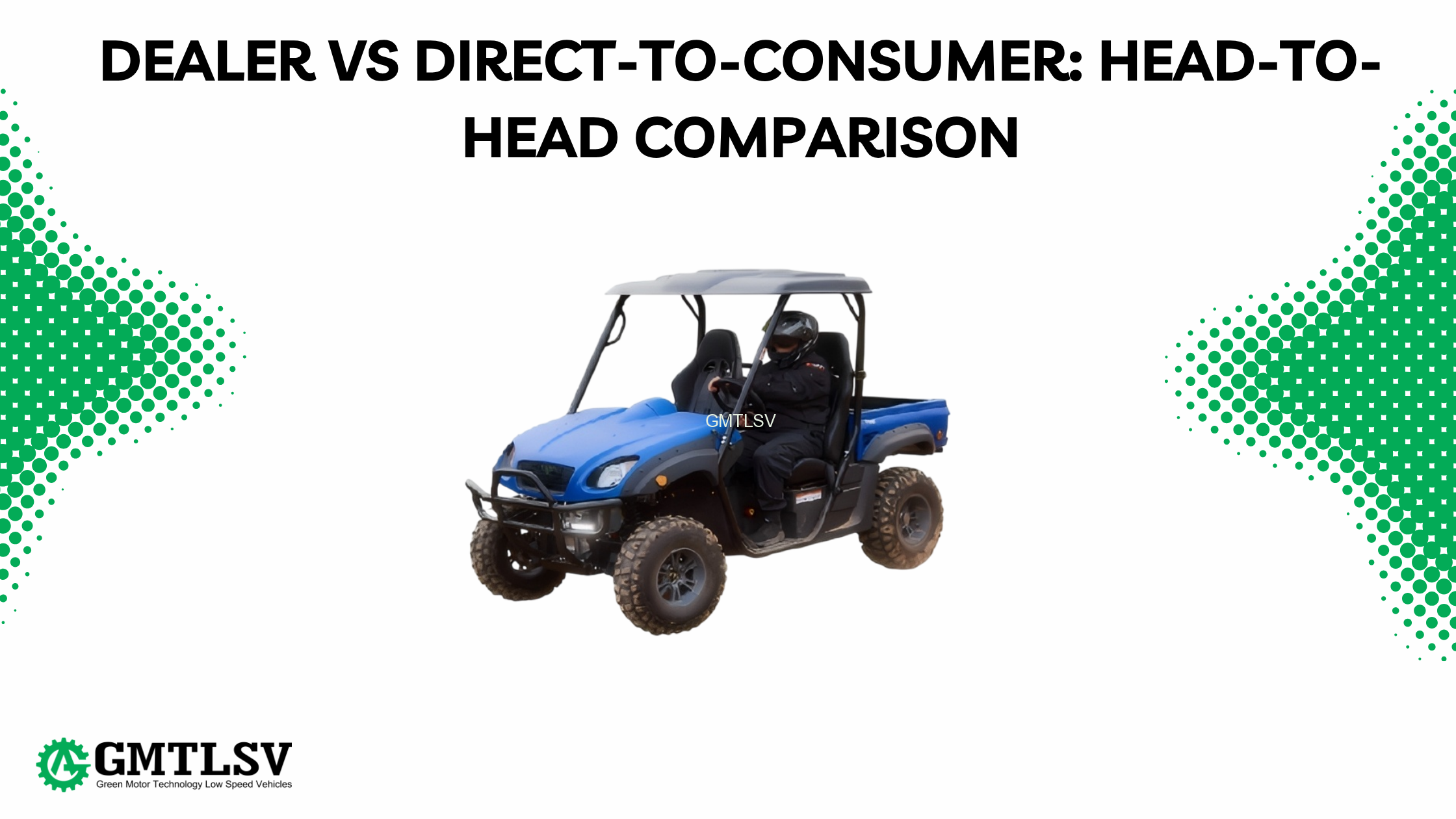
For buyers purchasing new carts, these two channels dominate. The traditional dealer model versus the emerging DTC model. Both legitimate. Both with distinct advantages.
When to Choose an Authorized Dealer
You’re a first-time golf cart buyer. You don’t know the difference between series and parallel battery configurations. You’ve never thought about controller programming. You need someone to explain what you actually need rather than what looks cool online.
Dealers guide you through it. They ask questions about your intended use. They recommend appropriate models. They prevent you from buying the wrong cart.
You prioritize a long-term service relationship. Your golf cart will need maintenance. Things will break eventually. Having a place to take it matters. Knowing the technicians by name matters. Building history matters.
You want test drives before committing. This is a substantial purchase. Sitting in it, driving it around the lot, getting a feel for acceleration and braking and turning radius—these things influence smart decisions.
You need immediate availability. DTC means waiting months. Dealers have inventory on the floor. Pay today, drive home today.
You prefer in-person transactions. Looking someone in the eye. Shaking hands. Signing papers together. Some buyers want that.
Commercial and fleet buyers requiring maintenance contracts need dealer relationships. Managing ten carts for a resort differs from owning one personal cart. Dealers handle fleet service agreements.
You live in a golf cart-friendly community with local dealers. If there’s a quality dealer ten minutes away, the convenience factor outweighs online savings.
You want trade-in options. Your current cart has value. Dealers apply that toward your new purchase.
You prefer established brand reputation. Club Car, Yamaha, E-Z-GO have decades of history. You trust that over newer DTC brands.
Example Buyer Profile:
Retired couple in a Florida golf cart community. First cart purchase. Want something reliable for trips to the clubhouse and grocery store. Not mechanically inclined. Value convenience over maximizing savings. Perfect dealer customers.
When to Choose Direct-to-Consumer
Budget matters significantly. That 20-30% savings represents real money. On a $10,000 cart, you’re keeping $2,000-$3,000 in your pocket. For many buyers, that’s the deciding factor.
You’re comfortable with online purchasing. Buying a $10,000 item based on website descriptions, specifications, and reviews doesn’t stress you. You’ve done it before with other products.
You can wait 2-4 months for delivery. No immediate need. Planning ahead. Patient.
You live in an area without dealer access. Rural locations. Places where the nearest authorized dealer is hours away. DTC puts quality carts in areas dealers don’t serve.
You want modern features without paying dealer markup for them. Lithium batteries, touchscreen displays, premium sound systems, custom upholstery—DTC brands pack these in at competitive prices.
You prefer transparent pricing. What you see is what you pay. No negotiation anxiety. No wondering if you got a fair deal.
You’re mechanically competent for basic maintenance. Comfortable checking batteries, tightening bolts, basic troubleshooting. Don’t need a dealer for routine stuff.
You’ve researched extensively online. Read reviews. Compared models. Watched YouTube videos. Asked questions on forums. You know what you want and why.
Example Buyer Profile:
Tech professional in suburban Texas. Second golf cart. Uses it for neighborhood transportation and light utility work. Comfortable with online research and purchases. Has basic mechanical skills. Prioritizes features and value over dealer relationship.
GMTLSV’s distributor model offers a hybrid option here. Some areas have local distributors who provide dealer-like support at closer to DTC pricing. Worth investigating.
The GMTLSV Distributor Model: A Hybrid Approach
GMTLSV bridges the gap between traditional dealers and pure direct-to-consumer sales.
The manufacturer offers distributor partnerships. Independent business owners buy at wholesale pricing and establish local presence. They’re not corporate dealerships. They’re entrepreneurs backed by manufacturer support.
Distributors get wholesale pricing that makes local retail profitable. They set their own prices within reasonable ranges.
This creates local dealer presence in areas that might not support a traditional authorized dealership. Smaller markets get service options.
The model delivers benefits of both channels. Competitive pricing because distribution costs are lower. Local service because your distributor is nearby. Brand support because GMTLSV backs their partners.
For entrepreneurs, this represents entry into the golf cart business without building everything from scratch. Brand recognition exists. Products are proven. Marketing materials are provided. Technical training is available.
The hybrid approach addresses common pain points from both pure dealer and pure DTC channels. Price concerns from dealer buyers get addressed through competitive wholesale structures. Service concerns from DTC buyers get addressed through local distributor presence.
If you’re exploring buying a golf cart and there’s a GMTLSV distributor in your area, they’re worth contacting. You might get DTC-style pricing with dealer-style support.
Is it better to buy a golf cart from a dealer or online?
Depends entirely on your priorities. Neither is universally better.
Dealers offer service support that extends across years of ownership. They provide test drives so you know what you’re buying. They have inventory available immediately. When something goes wrong, you have somewhere to take it.
Online and DTC offers lower prices. Sometimes significantly lower. They provide convenience of shopping from home. Transparent pricing removes negotiation stress.
First-time buyers should generally prioritize dealer support. The guidance through selection and the safety net of local service outweigh the price premium. Learning curve is real with golf carts.
Experienced buyers can leverage online savings more effectively. You already know what you need. You can handle basic maintenance. You’ve owned carts before and understand what to expect.
Match the channel to your specific needs. There’s no universal right answer.
How much cheaper are direct-to-consumer golf carts?
Typically 20-30% less than equivalent dealer prices.
A cart selling for $10,000 at a dealer might be $7,000-$8,000 from a DTC brand with similar features. That’s real money.
However, factor in the complete picture. Delivery costs add $200-$500 or more depending on distance. Setup fees apply with some brands. Assembly time has value if you’re doing it yourself.
Also consider what dealer services are worth. Warranty processing locally. Test drives before purchase. Trade-in credit. Immediate availability. Ongoing service relationship.
The headline savings number is accurate. The true total cost comparison requires looking at everything.
Can I get my online-purchased golf cart serviced at a local dealer?
Maybe. Depends on the brand and the specific dealer.
Authorized dealers for major brands typically only service what they sell. Club Car dealers service Club Car. Yamaha dealers service Yamaha. They’re not set up for random brands they don’t carry.
If you buy a DTC brand that no local dealer represents, you may have limited options.
Some independent shops service multiple brands. Not authorized dealers, but experienced technicians who’ll work on various carts. These exist but aren’t everywhere.
ALWAYS verify service availability before buying online. Call local shops. Name the specific brand and model. Ask directly: “Will you service this cart?” Get a clear answer before committing.
Some DTC brands have established partner service networks. They’ve identified shops in various regions willing to handle their products. Ask the manufacturer about service options in your area.
What warranty do I get from different buying channels?
Varies significantly by channel.
Authorized Dealers: Manufacturer warranty, typically 2-5 years depending on brand and components. Plus dealer support processing claims. This is the smoothest warranty experience available.
DTC Brands: Factory warranty included, ranging from 1-5 years. The catch is service logistics. You might ship components back to the factory or work with a designated service partner. Varies by brand.
Big Box Stores: Limited manufacturer warranty on the cart itself. The store provides no service support. Processing claims means dealing directly with the manufacturer, often overseas.
Private Sellers: No warranty. Full stop. As-is condition. What you see is what you get.
Always read warranty details before purchasing. Coverage periods, what’s included, what’s excluded, how service is handled, who pays shipping for warranty repairs. The headline “3-year warranty” means nothing without understanding the fine print.
Are big box store golf carts a good deal?
Honest answer: Usually not for most buyers.
The initial price looks attractive. A golf cart for $5,000 at Costco when dealers want $8,000? Seems like a no-brainer.
Here’s the problem. That $3,000 savings disappears fast when you need service and nobody will work on it.
Many buyers have discovered this the hard way. They call around. Every dealer refuses. Independent shops are skeptical or also refuse. The only option is a shop three hours away that charges premium rates because they know you’re desperate.
Now you’re either doing all maintenance yourself, paying to transport the cart for service, or owning an expensive lawn ornament.
The brands sold through big box channels also have mixed reputations. Some are fine. Others have documented reliability issues, component failures, and poor build quality. Research specific brands thoroughly.
Only consider big box store carts if you can genuinely do all maintenance yourself. And you’ve verified in advance that someone local will work on it. And you understand you’re trading long-term service access for short-term savings.
Should I buy a used golf cart from a private seller?
Can be an excellent option under the right circumstances.
Good idea if: You know golf carts well enough to inspect properly. You can evaluate battery health with a voltmeter. You understand mechanical condition indicators. You meet sellers in person and inspect thoroughly. You accept that you’re buying as-is with zero recourse.
Best deals are Big 3 brands—Club Car, Yamaha, E-Z-GO—from private sellers. These carts hold value because the brands have proven reliability. Parts are available. Any shop can work on them.
Budget for battery replacement. Seriously. Assume the batteries are at end of life unless proven otherwise. $800-$4,000 depending on battery type and configuration. Factor that into your purchase price calculation.
Bring a voltmeter. Test each battery individually. Batteries should show consistent voltage across the pack. Wide variations indicate problems.
Check all electrical systems. Lights. Horn. Turn signals. Anything that draws power. Electrical gremlins are common in older carts.
Verify VIN matches documentation. Ensure the cart isn’t stolen. Confirm the model year is accurate.
Meet in person. Walk away from sellers who won’t. Test drive on their property or neighborhood. Never buy sight unseen.
What is GMTLSV and how is their model different?
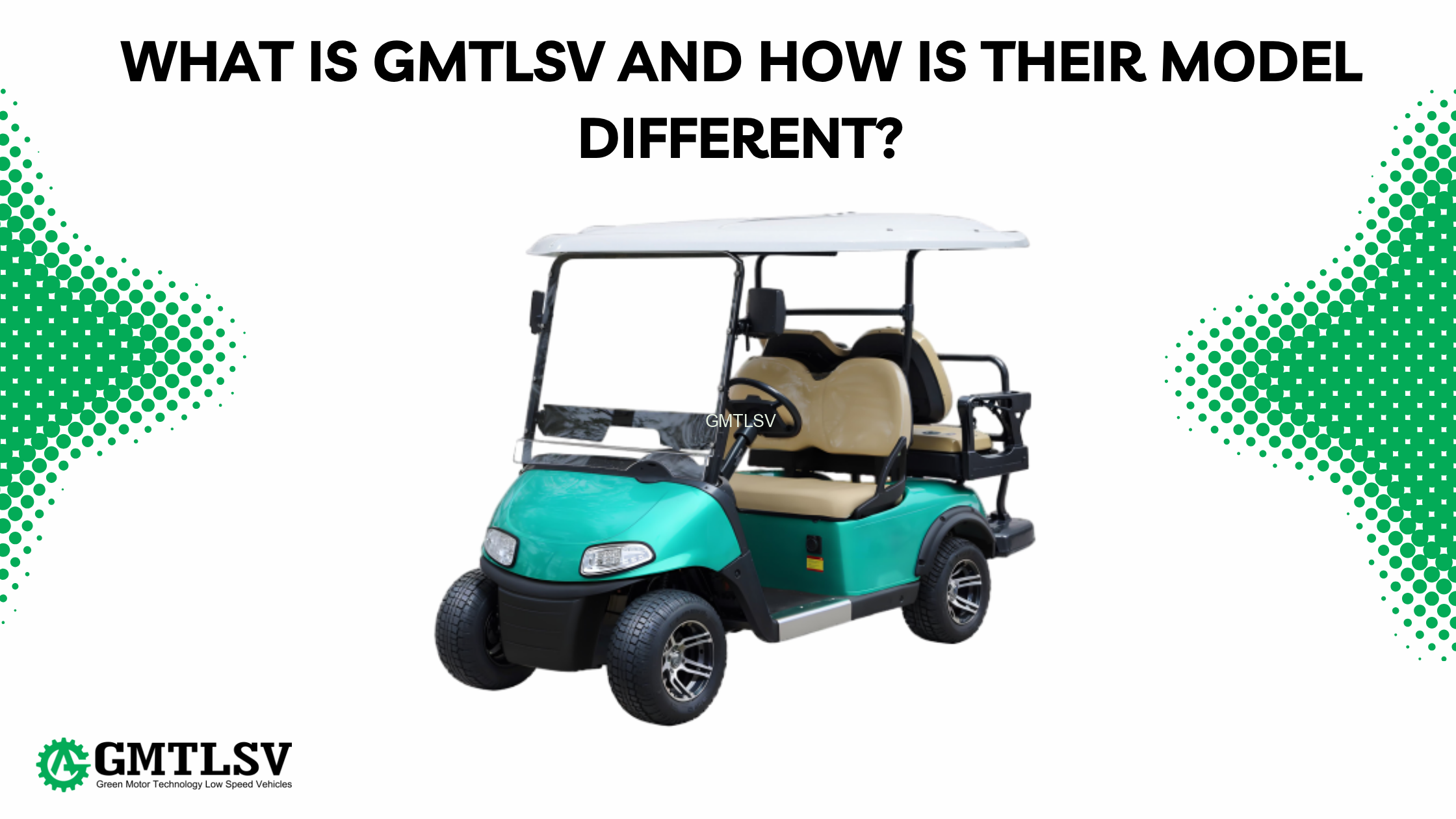
GMTLSV—Green Motor Technology Low Speed Vehicles—is a manufacturer and distributor founded in 2012 specializing in electric low-speed vehicles.
Their model focuses on B2B distributor partnerships rather than selling exclusively direct to consumers.
How it works: GMTLSV manufactures golf carts and LSVs. They sell wholesale to dealers and distributors. Those partners then sell to consumers in their local markets.
This differs from pure DTC brands that only sell factory-direct. GMTLSV builds dealer networks. They create local presence through partner relationships.
Benefits of this model: Competitive wholesale pricing makes the math work for local businesses. Global distribution network handles logistics at scale. Wide product range—from 2-seater personal carts to 23-seat people movers—lets partners serve diverse customer needs.
For consumers, this means potentially finding a local GMTLSV distributor who offers competitive pricing with local service support. The hybrid approach.
For entrepreneurs, it means an opportunity to enter the golf cart business with manufacturer backing, established products, and support systems.
Different from pure DTC because the local service and relationship component exists. Different from traditional major-brand dealers because the wholesale structure enables more competitive pricing.
How do I avoid golf cart buying scams?
Scams exist in this market. Protect yourself.
Red flags to watch:
Seller won’t meet in person. Insists on shipping or remote transaction only. Legitimate sellers allow inspection.
Price is significantly below market. A $6,000 cart listed for $2,500? Either something is seriously wrong with it, or it doesn’t exist.
Pressure to buy immediately. “Another buyer is coming tonight.” “Price goes up tomorrow.” High-pressure tactics signal problems.
No VIN provided or seller refuses to share it. Every legitimate golf cart has a VIN. Sellers hiding it are hiding something.
Won’t allow inspection or test drive. What are they protecting you from seeing?
Requests wire transfer or cryptocurrency payment. No purchase protection. No recourse. No legitimate seller requires these methods.
No verifiable business address for commercial sellers. Can you visit their location? Is it real?
No reviews, or reviews that seem fake. All five-star reviews with generic language? Suspicious.
Always do this:
Verify seller identity. For businesses, check registration. For private sellers, meet at their home, which proves they’re real.
Inspect in person. Never buy based only on photos.
Check VIN against manufacturer records and stolen vehicle databases.
Test everything. Drive it. Test brakes. Check all electrical.
Use secure payment. Credit cards offer protection. Cash in person for private sales is safest. Never wire money.
Get title and all documentation. Bill of sale. Registration history. Service records if available.
Trust your gut. Something feels wrong? Walk away. Another cart will come along.


