

Here’s the short answer. You’re looking at anywhere from $2,000 to $25,000 or more.
I know. That’s a huge range.
But golf carts aren’t one-size-fits-all anymore. You’ve got gas carts. Electric carts. Street-legal LSVs that can cruise through your neighborhood at 25 mph. Lifted utility beasts built for hunting and hauling. And then there’s customization, which can blow any budget wide open if you let it.
So the real question isn’t just “how much does a golf cart cost.” It’s what kind of cart do you actually need, and what are you willing to spend to get it.
That’s what this guide covers. Every price range. Every type. New vs. used. Brand comparisons. And the hidden costs people don’t think about until they’re already signing paperwork.
If you want to skip the research and talk to someone who actually knows carts, GMT LSV is worth a call. They specialize in street-legal LSVs but carry all types. Just saying.
Now let’s break this down.
Average Golf Cart Cost Breakdown
Before we get into the details, here’s a quick look at what you’ll pay depending on what tier you’re shopping in:
| Price Tier | Price Range | What You’re Getting |
| Entry-Level | $2,000 – $5,000 | Used carts, basic models, older batteries, limited features |
| Mid-Range | $5,000 – $10,000 | New base models, decent electric or gas options, some customization |
| Premium | $10,000 – $15,000 | Higher-end brands, better batteries, upgraded seats, street-legal options |
| Luxury/Custom | $15,000 – $25,000+ | Full custom builds, lithium batteries, LSV packages, premium everything |
Entry-level gets you from point A to point B. That’s about it.
Mid-range is where most people end up. Solid carts. Nothing fancy. They work.
Premium is where you start getting the good stuff. Lithium batteries. Better suspension. Maybe some street-legal features built in.
Luxury is… well, it’s luxury. Custom paint. Sound systems. Lifted suspensions. Stuff you didn’t even know you wanted until you saw it on someone else’s cart.
Golf Cart Price by Type
This is probably the biggest factor in what you’ll pay. More than brand. More than whether you buy new or used. The type of cart drives everything.
Let me walk through each one.
Electric Golf Carts
Price range: $4,000 – $15,000
Electric carts have become the default choice for most buyers. And honestly, they should be for most people.
They’re quieter. Way quieter. No exhaust fumes. Lower maintenance because there’s no engine oil to change, no spark plugs to replace. You plug it in overnight and you’re good.
But here’s the thing nobody tells you upfront: batteries matter. A lot.
Lead-acid batteries are cheaper, around $800 to $1,200 to replace. But they only last 4-6 years and need regular watering and maintenance.
Lithium batteries cost $2,000 to $3,000+ but last 10+ years and require basically zero maintenance. They’re also lighter, which means better performance and range.
So when you’re comparing electric cart prices, always ask what battery is included. A cart with lead-acid batteries should be priced lower than one with lithium. If it’s not, you’re overpaying.
Motor power and range capacity also affect price. More power, more range, more money. Pretty straightforward.
GMT LSV carries a solid selection of electric options if you want to see what different price points actually look like.
Gas-Powered Golf Carts
Price range: $3,000 – $12,000
Gas carts are the old-school option. And they still make sense for certain buyers.
You get more range. That’s the big advantage. Fill up the tank and you’re good for way longer than most electric carts can go on a charge. If you’re running a cart all day on a big property, gas might be the smarter choice.
They also tend to have more raw power. Especially for towing or hauling heavy loads.
Initial cost is usually lower than electric too. A decent gas cart starts around $3,000 used or $5,000-$6,000 new.
But—and this is a real but—maintenance costs add up. Oil changes. Air filters. Spark plugs. Fuel costs. Plus they’re louder and smellier, which matters if you’re using it in a neighborhood or retirement community where people will notice.
Over five years, electric usually wins on total cost of ownership. But if you need that extra range and power right now, gas isn’t a bad call.
Street-Legal LSV Golf Carts
Price range: $8,000 – $25,000+
This is where things get interesting.
LSV stands for Low-Speed Vehicle. These are golf carts that meet federal safety standards for driving on public roads with speed limits of 35 mph or less (varies by state, so check yours).
To be street-legal, a cart needs:
- Headlights and tail lights
- Turn signals
- Mirrors (usually side mirrors and a rearview)
- Seat belts for all passengers
- Brake lights
- A horn
- A VIN number
- DOT-approved windshield (in most states)
- Reflectors
All that equipment costs money. Plus the manufacturing process is different. The frame has to be sturdier. The electrical system is more complex. There’s actual regulatory compliance involved.
That’s why LSVs start around $8,000 and can easily hit $20,000 or more for a fully loaded model.
Worth it? If you live in a golf cart community, a 55+ neighborhood, or anywhere you can legally use roads—absolutely. It changes how you use the cart entirely. Quick trips to the mailbox. Running to the local store. Getting around without firing up your car.
GMT LSV specializes in exactly this category. If you want a street-legal cart done right, they know what they’re doing.
Utility/Hunting Carts
Price range: $6,000 – $18,000
Different animal here.
Utility carts are built for work. We’re talking cargo beds instead of rear seats. Lift kits for ground clearance. Off-road tires that can handle dirt, gravel, and mud. Beefed-up suspension. Sometimes even towing packages.
These are for property owners with land. Hunters who need to haul gear (and game) through rough terrain. Farmers moving equipment around. Groundskeepers. That kind of thing.
The price depends on how much capability you need. A basic utility cart with a flat bed might run $6,000-$8,000. Add a lift kit, fat tires, upgraded suspension, brush guards, a winch—now you’re pushing $15,000-$18,000.
If this is your use case, don’t buy a regular golf cart and try to convert it. Start with something purpose-built. You’ll save money and headaches in the long run.
New vs. Used Golf Cart Costs
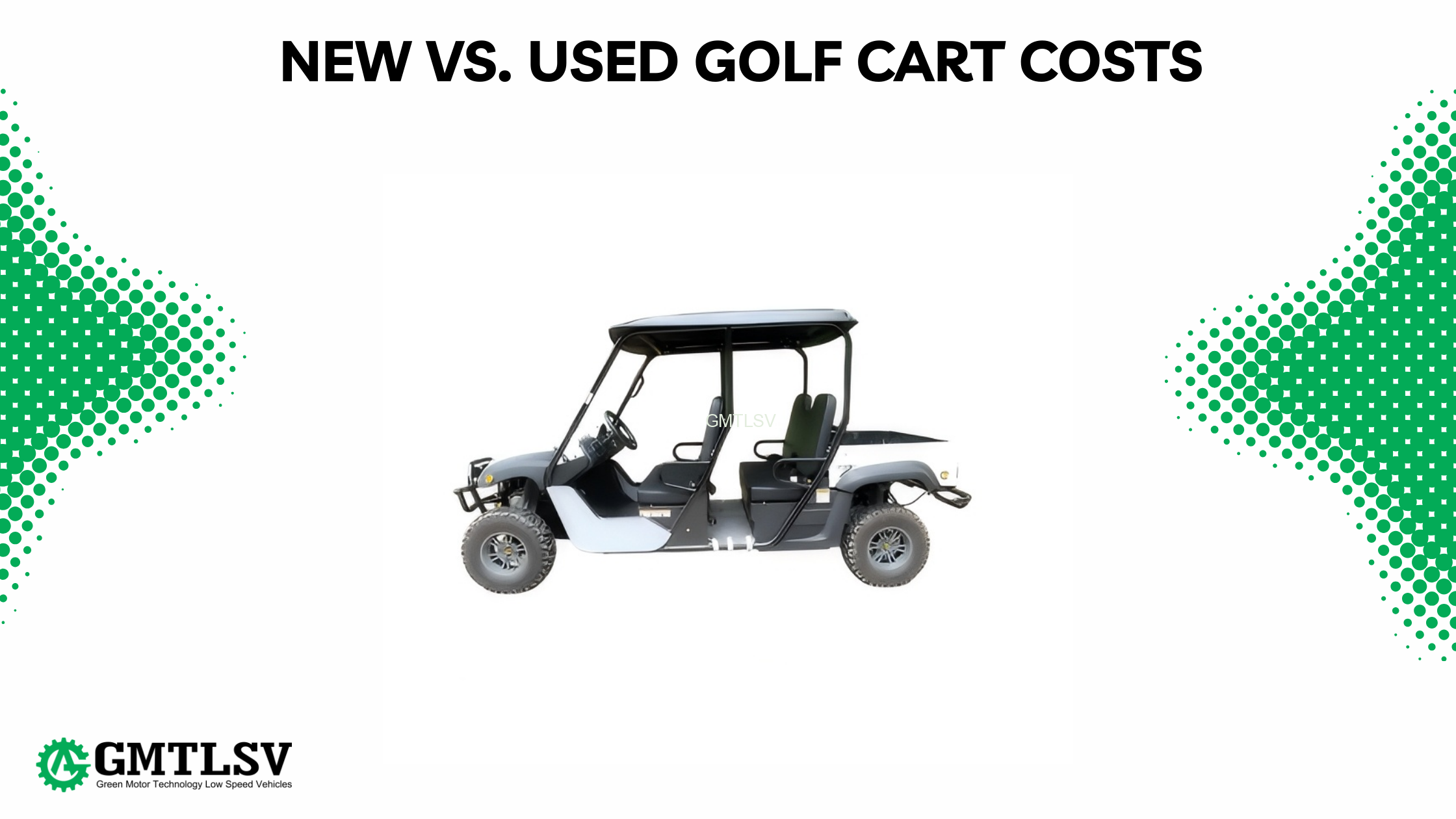
Okay. So you know what type you want. Now the question is: new or used?
Both can make sense depending on your situation.
New Golf Cart Prices
Price range: $5,000 – $25,000
Buying new gets you a few things you can’t get otherwise.
First, warranty coverage. Most manufacturers offer 2-5 years depending on the brand and component. Batteries often have separate warranties. If something breaks, you’re covered.
Second, the latest technology. Newer models have better battery management systems, more efficient motors, USB charging ports, Bluetooth speakers, digital dashboards. Stuff that didn’t exist on carts from five years ago.
Third, customization. When you buy new, you can often spec the cart exactly how you want it. Colors. Seating. Accessories. Lift kits. It’s built to your order.
And fourth, financing. Dealers offer financing on new carts that you usually can’t get buying used from a private seller. That makes a $15,000 cart a lot more accessible when you’re paying $250/month instead of $15,000 upfront.
Major brands and their typical ranges:
- Club Car: $8,000 – $20,000+
- EZGO: $5,500 – $16,000
- Yamaha: $6,500 – $17,000
- Star EV: $7,000 – $20,000
GMT LSV carries new inventory from several brands. Worth browsing if you’re in the market.
Used Golf Cart Prices
Price range: $2,000 – $12,000
Used carts can be a great deal. They can also be money pits. Depends on what you buy and who you buy from.
Here’s what matters most when buying used:
Age: Carts from the last 5-7 years are usually fine. Older than that, start being cautious.
Hours of use: Golf course carts get worked hard. Private-owner carts often have way fewer hours on them for the same age.
Battery condition (for electric): This is the biggest thing. Old batteries can cost $1,000-$2,500 to replace. Always ask when the batteries were last replaced and check their actual condition. Load test them if you can.
Brand reputation: Club Car, EZGO, and Yamaha hold their value because they’re built to last. Off-brand carts depreciate faster for a reason.
Where you buy: Dealerships cost more but often offer some kind of inspection or warranty. Private sellers are cheaper but you’re taking all the risk.
Certified pre-owned programs exist at some dealers, including GMT LSV. You pay a little more than private party but get peace of mind.
If you’re handy with maintenance and know what to look for, private sales can save you 20-30%. If you’re not, stick with a dealer.
Golf Cart Cost by Brand
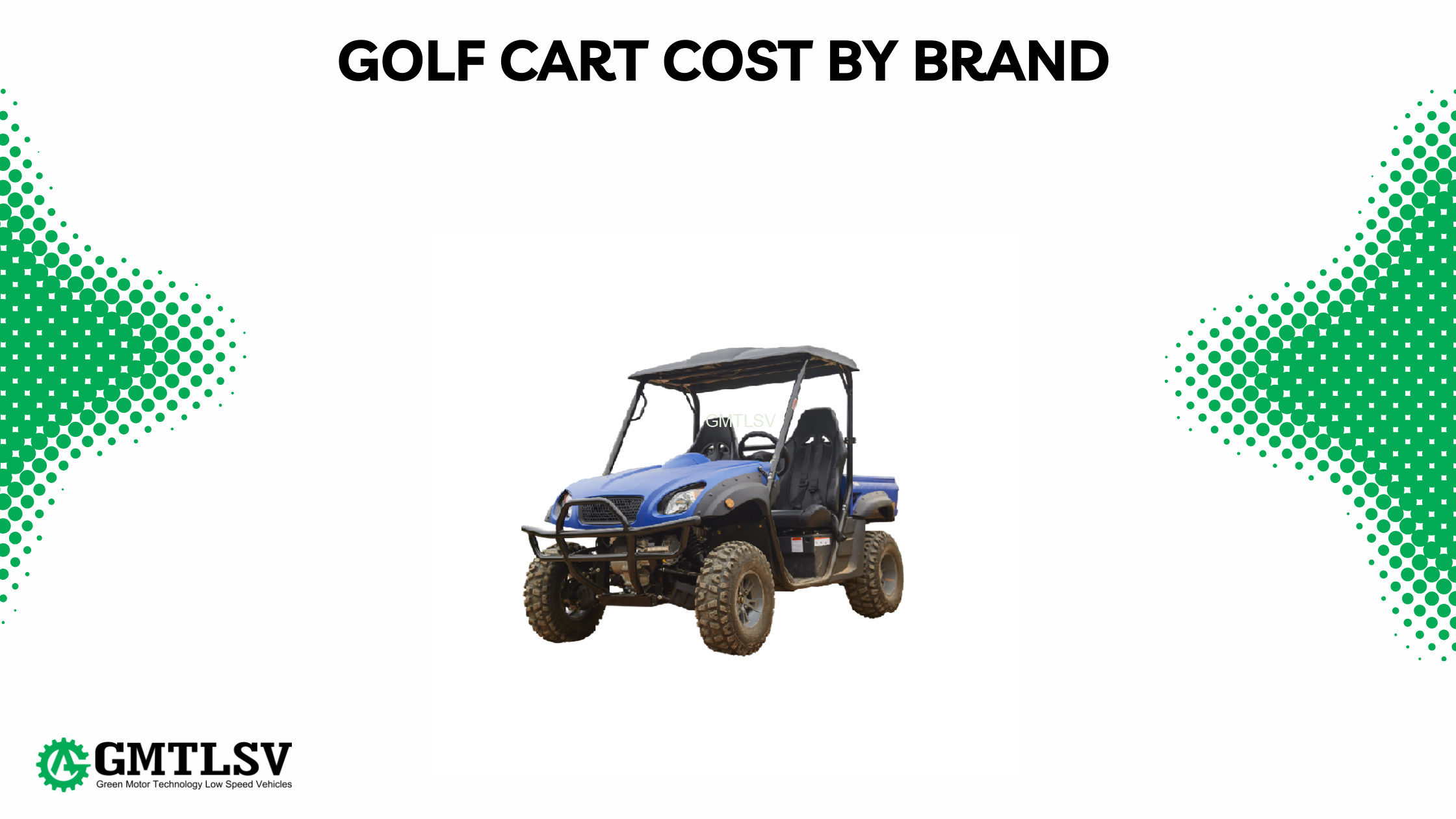
Brand matters. Not because of the logo, but because of the engineering behind it. Some brands just build better carts that last longer and hold value better.
Here’s the breakdown.
Club Car Golf Carts
Price range: $8,000 – $20,000+
Club Car is basically the Toyota of golf carts. Reliable. Durable. Maybe not the flashiest, but they just work.
They’ve been around forever and their carts show up on golf courses, resorts, and in neighborhoods everywhere. Parts are easy to find. Mechanics know how to work on them. Resale value stays strong.
Their Onward series is popular for personal use. Starts around $8,000-$9,000 for a basic model and goes up from there.
For LSVs, they have the Onward LSV and the newer XP series. Fully loaded, you’re looking at $15,000-$20,000+.
EZGO Golf Carts
Price range: $5,500 – $16,000
EZGO is owned by the same parent company as Club Car (Textron), but they’re positioned a bit differently. Generally more affordable, especially at the entry level.
Their Freedom and Liberty series are solid mid-range options. Good performance. Reasonable price. Wide dealer network so you won’t have trouble finding service.
The Express series is more utility-focused if you need cargo capacity.
EZGO tends to be a good choice for first-time buyers who want something reliable without spending $15,000.
Yamaha Golf Carts
Price range: $6,500 – $17,000
Yamaha builds everything from motorcycles to pianos to golf carts. And honestly, their carts show that engineering DNA.
They’re known for being quiet. Especially the gas models—Yamaha’s QuieTech gas engine is noticeably quieter than competitors. If you’re going gas but hate the noise, look at Yamaha.
Build quality is excellent. They hold up well over time. Resale value is strong.
The Drive2 series is their current lineup. Comes in gas and electric variants. Fleet and personal use versions.
For what you get, Yamaha is arguably the best value in the mid-to-premium range.
Star EV/Tomberlin Golf Carts
Price range: $7,000 – $20,000
Star EV (now under the same umbrella as Tomberlin) is an interesting option. They’re not as established as the big three, but they’ve carved out a niche with more modern designs and a focus on LSVs.
Their carts tend to look a bit sleeker. More automotive-influenced styling. They’ve pushed on features like touchscreen displays and better sound systems.
Solid choice if you want something that looks different from every other cart on the block.
GMT LSV works with several brands including Star EV, so you can compare them side by side.
Golf Cart FAQs
Let me answer the questions people actually ask.
How much does a cheap golf cart cost?
Cheap used carts start around $2,000-$4,500. But “cheap” usually comes with compromises—old batteries, worn tires, faded bodies, maybe some electrical quirks.
New entry-level carts run $4,500-$6,500.
Cheap carts work fine if you’re using them around a small property and don’t care about appearances. But if you’re planning to use it daily or want something street-legal, cheap will cost you more in repairs and upgrades.
Are electric or gas golf carts more expensive?
Upfront, electric carts cost $500-$2,000 more than comparable gas models.
But electricity is cheaper than gas. Electric motors have fewer moving parts, so less maintenance. No oil changes. No fuel filters. No carburetor issues.
Over five years, electric typically saves $1,000-$2,500 in operating costs. Battery replacement is the wild card—if you’re buying lithium upfront, the math works in your favor. Lead-acid batteries needing replacement in year 4-5 can erase those savings.
Total cost of ownership usually favors electric. But the higher initial price scares people off.
How much does it cost to convert a golf cart to street-legal?
Converting a regular golf cart to an LSV runs $1,500-$4,000 depending on what you’re starting with.
You’ll need: headlights, tail lights, turn signals, brake lights, mirrors, a horn, seat belts, possibly a DOT windshield, and reflectors. Plus wiring everything together properly.
Then there’s registration. You’ll need a VIN inspection in most states. Registration fees. Sometimes a title. That’s another $100-$300 depending on your state.
Honestly? Unless you already own a solid cart you love, buying a purpose-built LSV usually makes more sense. Conversions are tricky, and the end result often feels like… a converted cart.
What is the lifespan of a golf cart?
With proper maintenance, 20-30 years isn’t unusual.
The frame and body can last basically forever if you’re not beating it up.
The drivetrain—motor, controller, transmission (on gas)—lasts 10-20 years with normal use.
Batteries are the limiting factor on electric carts. Lead-acid: 4-6 years. Lithium: 10-15 years.
At some point, refurbishment makes sense. New batteries, maybe a motor rebuild, new seats and body panels. Can give an old cart another decade of life for $3,000-$5,000.
Replacement only makes sense when the frame itself is compromised or the technology is just too far behind.
Can you negotiate golf cart prices?
Yes. Especially on new carts.
Dealers have margin. Not a ton, but 5-15% negotiation room is realistic on most new carts.
Best times to negotiate: end of month (salespeople have quotas), end of year (clearing inventory for new models), or when buying multiple carts.
What’s negotiable: sticker price, accessories thrown in, delivery fees, trade-in value, financing rate.
What’s usually not negotiable: manufacturer pricing on high-demand models, certain factory accessories.
Used carts from private sellers are almost always negotiable. People price high expecting offers.
How much does golf cart insurance cost?
Annual premiums run $75-$300 depending on coverage level and your location.
Most standard auto policies don’t cover golf carts. You need separate golf cart insurance or an add-on to your homeowners policy.
If it’s street-legal (an LSV), you might need actual auto insurance. That can be pricier—$150-$400/year—but covers you properly for road use.
Factors that affect cost: value of the cart, your driving record, where you live, how you use it (property only vs. roads), and whether you bundle with other policies.
Worth getting quotes from your current insurer first. Then shop around.
Wrapping Up
Golf cart prices cover a huge range because the market covers a huge range of buyers.
Someone just wanting to scoot around a retirement community on weekends needs a very different cart than someone hauling deer stands through 200 acres of rough terrain.
Figure out your use case first. Then set your budget. Then start shopping.
And if you want to talk to actual humans who know this stuff inside and out, GMT LSV is a solid place to start. They’re especially good if you’re looking at street-legal options, but they know the market across the board.

