

Buying a golf cart isn’t like grabbing something off Amazon. This is real money. Whether you’re looking at a cart for your golf course, getting around a residential community, or running a resort operation, you’re making a significant investment that’ll affect your daily life for years.
And here’s the thing. Most buyers walk into a dealership and ask maybe two or three questions. Then they wonder why they ended up with a cart that doesn’t fit their needs. Or worse, one with hidden problems that cost thousands to fix.
GMTLSV has been manufacturing electric low-speed vehicles since 2012. We’ve seen what happens when buyers don’t ask the right questions. We’ve also seen how informed buyers end up happier, spend less over time, and actually get carts that do what they need.
This guide covers the essential questions you absolutely must ask before handing over your money. Skip these, and you’re gambling. Ask them, and you’re protecting yourself from costly mistakes that happen way too often in this industry.
Why Asking the Right Questions Matters When Buying a Golf Cart
Golf carts aren’t just for golf courses anymore. That changed years ago.
Today, people use them in retirement communities, on farms, at resorts, for campus transportation, hunting trips, warehouse work. The versatility is real. But that also means there’s no one-size-fits-all cart. What works perfectly for a golf course might be completely wrong for a hilly neighborhood.
The financial investment is substantial. You’re looking at anywhere from $5,000 to $25,000 or more depending on what you need. That’s not pocket change. And unlike cars, golf carts don’t have the same standardized inspection processes or consumer protections.
Asking informed questions protects you in three ways.
First, you avoid hidden issues. That used cart might look great but have a battery pack that’s about to die. Or frame damage from a previous accident. Questions surface these problems before they become your problems.
Second, you ensure proper warranty coverage. Warranties vary wildly between manufacturers and dealers. Understanding exactly what’s covered—and what isn’t—prevents nasty surprises when something breaks.
Third, you guarantee the right fit. A cart that’s perfect for someone else might be completely wrong for your situation.
Essential Questions About the Golf Cart’s Condition and History
This section is critical for used cart buyers. But even if you’re buying new, these questions help you understand manufacturing quality, testing processes, and what you’re actually getting.
What is the Make, Model, and Serial Number?
This seems basic. It’s not. This information unlocks everything else.
The make and model tell you what you’re dealing with. Is this model still in production? If not, parts become harder to find. And more expensive. Some discontinued models have excellent parts availability. Others become paperweights when something breaks.
The serial number reveals the cart’s age. Most manufacturers encode the year of manufacture in the serial. This matters because a “2020 model” might have actually been built in 2019. Or 2021. The serial number tells the truth.
Parts compatibility matters too. Accessories, upgrades, replacement components—they all depend on knowing exactly which cart you have. Get this wrong and you’re ordering parts that don’t fit.
For GMTLSV carts, the serial number links directly to manufacturing specifications and warranty details. Makes tracking everything easier.
Resale value connects to make, model, and year as well. If you ever plan to sell or trade up, knowing exactly what you have helps you price it correctly.
Has This Golf Cart Been in Any Accidents or Had Major Repairs?
This is the most important question for used carts. Full stop.
A cart that’s been in a collision might look fine. Fresh paint hides a lot. But structural damage affects everything. Frame integrity. Alignment. How the cart handles. Whether it’s actually safe.
What to look for: frame damage that’s been repaired, evidence of previous collision repairs, any structural integrity issues, electrical system damage from impacts.
Ask dealers directly. Request repair history documentation. Any reputable dealer—including those carrying GMTLSV products—should provide transparent vehicle history without hesitation.
Red flags: dealer gets evasive when you ask about accident history. Changes the subject. Says they “don’t know” for a cart they’re selling. These responses suggest problems they don’t want to disclose.
A cart with documented minor repairs isn’t necessarily bad. But you need to know what you’re buying. Hidden damage that surfaces later becomes your expensive problem.
How Many Hours or Cycles Are on This Cart?
Carts manufactured after 2005 typically have this data accessible. The controller stores it. Dealers can pull this information.
Think of it like checking mileage on a used car. A cart with 500 hours is very different from one with 3,000 hours. High usage means more wear on motors, controllers, suspension, everything.
What constitutes high versus low usage depends on the cart’s age. A 10-year-old cart with 1,000 hours has been used pretty lightly. A 3-year-old cart with 2,500 hours has been worked hard.
Major red flag: dealer refuses to show you the hours or cycles. Says they can’t access it. Says it doesn’t matter. This reluctance almost always means the cart has excessive wear and they don’t want you to know.
What is the Ownership History?
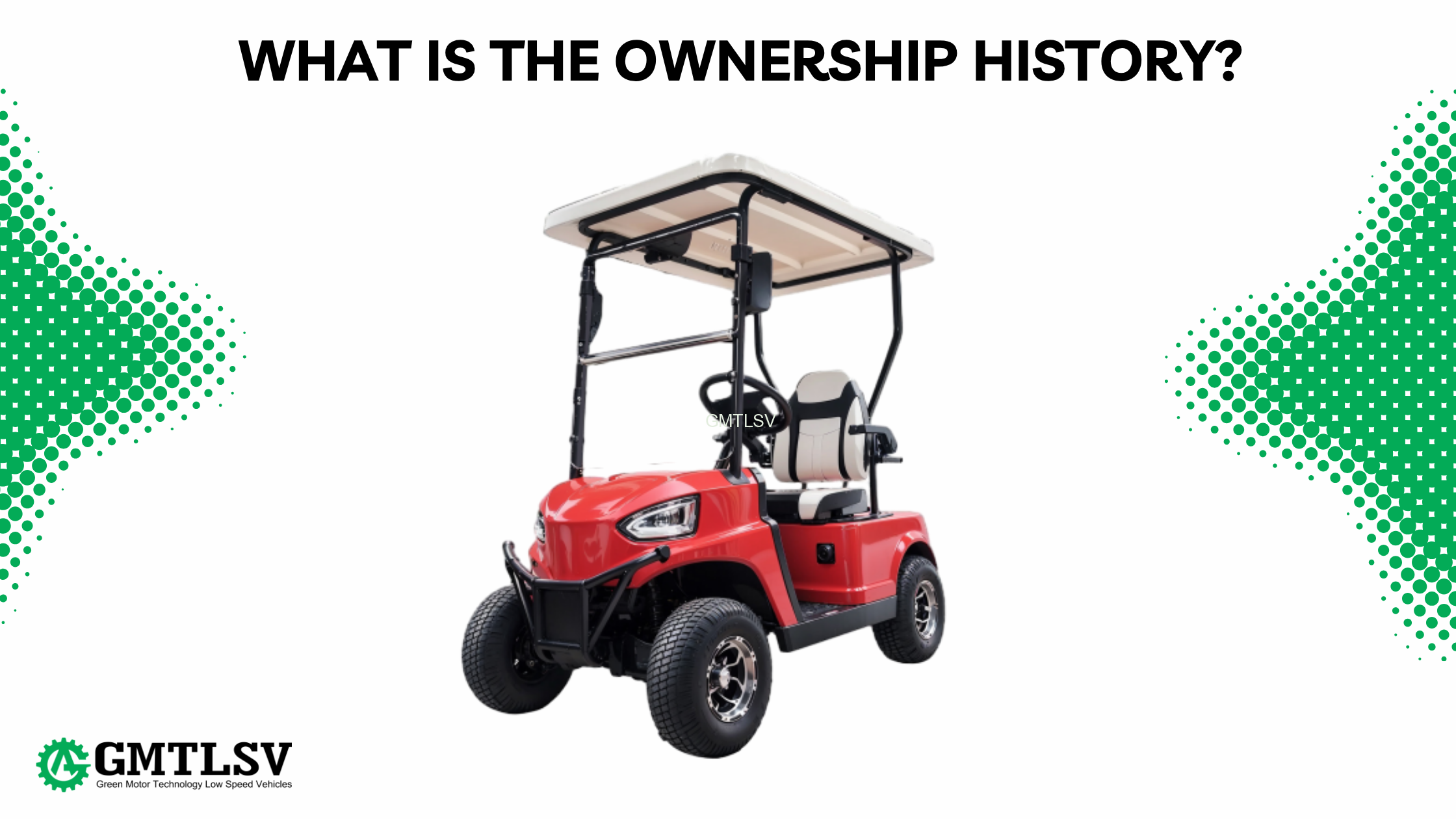
Previous use dramatically affects a cart’s condition and remaining lifespan.
Golf course fleet carts get used hard. Eight hours a day, five to seven days a week, different drivers who don’t own it and don’t care. High mileage, heavy wear, rough treatment.
Single-family residential use is typically gentler. One owner, consistent maintenance, fewer hours, careful handling.
Rental and resort carts fall somewhere in between. Maintenance quality varies wildly depending on the operation. Some resorts maintain their fleets religiously. Others run them until something breaks.
Commercial and utility use means potential heavy loads, demanding applications, stress on drivetrains and suspensions.
Knowing the ownership history helps you understand what the cart has been through. A low-hour cart from a residential owner is very different from a low-hour cart that sat unused for years (which creates its own problems).
Can I Take It for a Test Drive?
Non-negotiable. If a dealer won’t let you test drive, walk away.
During the test drive, check everything:
- Acceleration smoothness. Jerky acceleration suggests controller or motor issues.
- Braking responsiveness. Should stop cleanly without pulling to one side.
- Steering. No resistance, grinding, or odd noises when turning.
- Hill performance. Find an incline if possible.
- Vibrations or hesitations. These indicate problems.
- All features and functions. Lights, horn, turn signals, everything should work.
Test on terrain similar to your intended use. If you’ll be driving on hills, test on hills. If you need to handle gravel roads, find some gravel.
Dealers refusing test drives are hiding mechanical issues. Period. No legitimate reason exists to prevent a buyer from driving before purchasing.
What Type of Battery Does It Have and How Old Are the Batteries?
Battery type and age massively affect your purchase.
Battery types:
- Flooded lead-acid: Traditional technology. Requires regular maintenance—checking water levels, cleaning terminals. Lowest upfront cost but more work.
- AGM lead-acid: Sealed, maintenance-free version of lead-acid. More expensive but easier to live with.
- Gel batteries: Another sealed option. Performs better in temperature extremes.
- Lithium-ion: Premium option. GMTLSV uses advanced lithium technology. Lighter weight, longer lifespan, no maintenance, faster charging, more consistent power delivery.
Battery age matters enormously:
- Batteries 1 year old or less: Ideal. Plenty of life remaining.
- Batteries 2-3 years old: May need replacement soon depending on usage and type.
- Batteries 4+ years old: Budget for replacement. Lead-acid batteries rarely last beyond 4-5 years with regular use.
Replacement costs hurt. Depending on type, you’re looking at $800 to $3,000 or more. Factor this into your purchase price calculation for used carts.
Ask dealers to verify battery age and condition. Check for corrosion on terminals, any bulging of battery cases, proper water levels for lead-acid batteries, and charging capacity.
GMTLSV’s lithium batteries offer 50+ miles per charge with significantly lower long-term maintenance costs compared to lead-acid alternatives.
What is the Range Per Charge (or Fuel Capacity)?
Match range capability to your actual usage patterns.
For electric carts:
Most electric carts deliver 30-50 miles per charge under normal conditions. GMTLSV models offer 35-50 miles depending on specific model and terrain.
But range isn’t a fixed number. Several factors affect it:
- Terrain: Hills drain batteries faster than flat ground.
- Passenger weight: More weight means more energy consumption.
- Speed: Higher speeds reduce range.
- Weather: Extreme cold reduces battery performance.
- Battery age: Older batteries hold less charge.
For gas carts:
Ask about fuel tank capacity and typical miles per gallon. Most gas carts get 30-40 miles per gallon with tanks ranging from 4-6 gallons.
Be honest with yourself about how you’ll actually use the cart. If your daily driving is 10 miles, a 30-mile range cart works fine. If you need 25 miles daily, you want something with margin to spare.
How Does It Perform on Hills and Different Terrain?
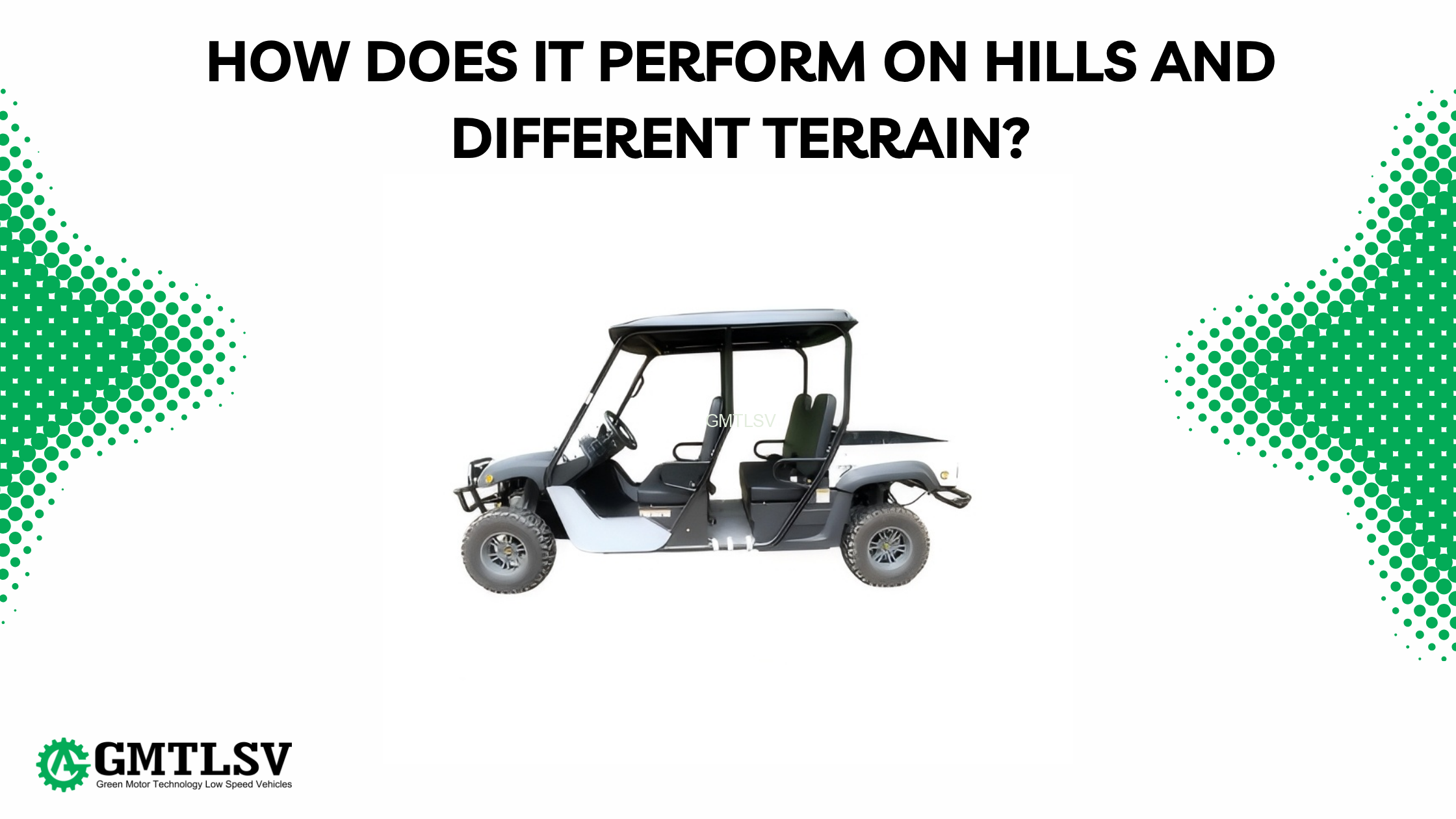
Motor power and torque determine how your cart handles challenging conditions.
AC motors—which GMTLSV uses—provide better torque for climbing hills compared to traditional DC motors. This matters if your intended use involves any inclines.
Ask specifically about:
- Motor specifications and power output
- Hill-climbing capability (dealers should be able to demonstrate this)
- Suitability for your specific terrain
If you’re dealing with flat golf courses, nearly any cart works fine. Hilly neighborhoods demand more capable drivetrains. Off-road trails or hunting applications require serious capability.
For challenging terrain, consider 4WD options. GMTLSV offers 4WD electric models that handle conditions where 2WD carts struggle.

