

Look, I’ve been around golf carts for years. And there’s something about three-wheeled autoettes that just makes sense. They’re compact. They’re nimble. And honestly? They’re kind of fun to drive.
Three-wheeled golf carts have been around longer than most people realize. The term “autoette” actually dates back decades. These things were some of the earliest personal golf vehicles ever made. But they’ve come a long way since then.
The design is simple. You’ve got three wheels instead of four. Usually one wheel up front, two in the back. Or sometimes the opposite. Either way, you end up with this tight little machine that can squeeze into spaces a regular cart can’t touch.
Golf courses love them. Resorts love them. Retirement communities are buying them like crazy. And I get it.
They cost less. They take up less space. They’re easier to maneuver around tight corners and crowded paths. For single riders especially, why would you drag around a big four-seater when you don’t need to?
Electric autoettes are basically the standard now. Quiet. Zero emissions. Easy to maintain. The compact golf cart market has exploded in the last few years, and three-wheelers are a big part of that.
If you’re looking at personal golf vehicles and haven’t considered a single-rider golf cart with three wheels, you’re probably overlooking one of the best options out there.
Let me walk you through everything you need to know.
What Are Three-Wheeled Golf Carts (Autoettes)?
Okay, so let’s get the basics out of the way.
A three-wheeled golf cart is exactly what it sounds like. A golf cart with three wheels. The term “autoette” goes back to one of the original manufacturers who made these things popular on golf courses in the mid-20th century. The name stuck.
There are two main configurations. Most common is the single front wheel with two rear wheels. Think tricycle style. The other option flips it—two wheels up front, one in the back. Both work. Different handling characteristics though.
Most autoettes seat one person. Some fit two. But the whole point is keeping things compact. These aren’t family haulers. They’re built for efficiency.
Standard features? Electric motor. Lightweight frame—usually aluminum or steel. Small footprint. Simple steering. Golf bag storage in the back. Nothing fancy. Just functional.
Where do people use them? Golf courses obviously. But also gated communities. Retirement villages are huge markets for these. Resorts use them for guest transport. I’ve seen them in warehouses, airports, and industrial facilities too. Anywhere you need to move people short distances without taking up much space.
The design philosophy is basically: strip away everything you don’t need.
Key Design Features of Three-Wheeled Golf Carts
The engineering behind these carts is actually pretty clever. Removing a wheel seems like it would create problems. But when it’s done right, you get benefits you can’t replicate with a four-wheeler.
1. Single vs. Dual Front Wheel Configuration
This is the big design choice.
Single front wheel is more common. The tricycle layout. It gives you the tightest possible turning radius. The cart can basically pivot on a dime. Great for navigating around obstacles on a golf course.
The trade-off? Slightly less stability at higher speeds. Especially on uneven terrain. Some people feel a little tippy the first time they drive one.
Dual front wheel designs (delta configuration) feel more stable. More like a regular car. But you lose some of that extreme maneuverability.
I’ve driven both. Honestly, the single front wheel feels weird for about five minutes. Then you get used to it. And the maneuverability becomes addictive.
2. Compact Footprint and Space Efficiency
Here’s where three-wheelers really shine.
A typical four-wheeled golf cart is around 4 feet wide and 8 feet long. A three-wheeled autoette? You’re looking at maybe 3 feet wide and 6-7 feet long. Depends on the model.
Doesn’t sound like a huge difference on paper. But in practice? It’s massive.
You can fit more carts in a charging station. Storage buildings hold 20-30% more units. Paths that are tight with a regular cart suddenly have room to spare. Crowded courses can handle more traffic.
For golf course operators, this is real money. More carts available means more rentals. Better utilization of existing infrastructure.
3. Electric Motor and Battery Systems
Pretty much all autoettes are electric now. Gas-powered three-wheelers exist but they’re rare.
Typical setup is a 36V or 48V system. DC motors mostly, though AC motors are becoming more common on higher-end models. AC motors give you regenerative braking and better efficiency.
Batteries are where the real decisions happen. Lead-acid batteries are cheaper upfront. They’ll run you maybe $400-800 for a full set. Last 3-5 years with good maintenance.
Lithium-ion costs more. Like, significantly more. Maybe $1,500-3,000. But they last 7-10 years. They’re lighter. Charge faster. No maintenance.
Range per charge? Expect 20-40 miles on a full battery. Depends on terrain, how much weight you’re hauling, and battery condition. Charging takes 6-8 hours for lead-acid, 2-4 hours for lithium.
The quiet operation is a real benefit too. No engine noise. Just a soft whir. Golfers appreciate that.
4. Steering and Maneuverability
This is the whole selling point, right?
Three-wheeled carts have a tighter turning radius than any four-wheeler. We’re talking about making U-turns in spaces that would require a three-point turn in a regular cart.
One-handed steering is easy. The wheel is light. Responsive. You can navigate around bunkers, squeeze between trees, get close to the green without tearing up turf.
That precision matters. Heavy four-wheeled carts doing wide turns damage courses. They track through rough areas when turning. Three-wheelers can stay on the path more consistently.
For courses that care about turf health (and they all should), this is a big deal.
5. Safety Features
Let’s talk about the elephant in the room. Three wheels sounds less stable than four, right?
It can be. But modern autoettes have addressed most of the concerns.
Standard safety features include:
- Seat belts (usually lap belts, sometimes three-point)
- Parking brakes
- Headlights and taillights
- Horns
- Reverse warning beepers
- Speed governors
Speed governors are important. Most are set between 12-15 mph. That’s slow enough that stability issues basically disappear.
Some higher-end models have roll bars. Wide wheel bases help with stability. Low center of gravity from battery placement helps too.
Are they as stable as a four-wheeler at high speed? No. But at golf cart speeds, driven reasonably, they’re fine. Millions of rounds are played on these things every year without incident.
Benefits and Advantages of Three-Wheeled Golf Carts
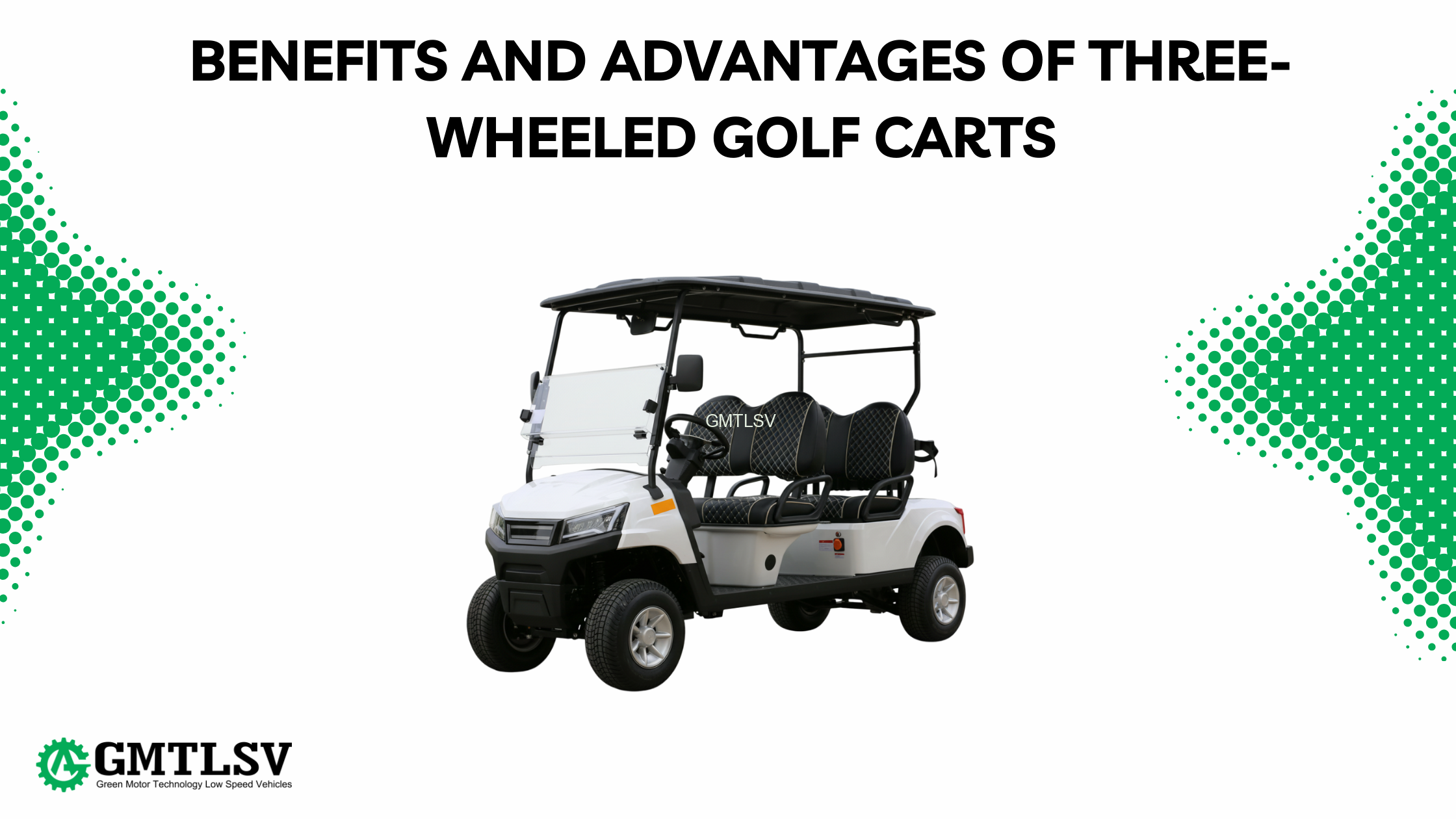
Why pick a three-wheeler over a traditional cart? Lots of reasons actually.
Cost-Effectiveness
The math is simple.
Fewer wheels means fewer parts. Fewer parts means lower manufacturing cost. Lower manufacturing cost means lower purchase price.
Entry-level three-wheeled autoettes start around $4,000-6,000. Comparable four-wheeled carts? $7,000-10,000 minimum. That’s a significant difference, especially if you’re buying a fleet.
Maintenance costs are lower too. One less wheel to replace. One less tire to buy. Simpler steering components. Fewer brake pads.
Electricity to charge is minimal. Maybe $1-2 per full charge. Try doing that with a gas cart.
For fleet operators, the ROI makes sense. Lower acquisition cost, lower operating cost, longer useful life with proper care.
Enhanced Maneuverability on Golf Courses
I keep coming back to this because it matters so much.
Golf courses have obstacles everywhere. Trees. Bunkers. Water hazards. Cart paths with tight turns. Other golfers.
A three-wheeled cart navigates all of this better. You can pull up closer to your ball. Make tighter turns around hazards. Get out of other golfers’ way faster.
Faster movement means faster play. Pace of play is a constant battle for courses. Anything that helps people move efficiently is valuable.
And the turf damage thing is real. I’ve seen courses where the rough near cart paths is completely worn out from four-wheelers making wide turns. Three-wheelers track tighter. Stay on the path. Cause less damage.
Reduced Environmental Impact
Zero emissions. Zero.
No gas. No oil changes. No exhaust. Just clean electric power.
Golf courses are increasingly focused on sustainability. Members care about it. Communities care about it. Regulators care about it.
Three-wheeled electric autoettes check all the boxes. Lower carbon footprint. Quieter operation (less noise pollution). No fuel spills to worry about.
It’s not just marketing. It’s genuinely better for the environment.
Easy Storage and Transportation
Smaller carts need smaller storage buildings.
Or the same building holds more carts.
Transporting autoettes is easier too. You can fit more on a trailer. Moving them around the property takes less effort.
Fleet management becomes simpler when your vehicles are compact. Less space needed for charging stations. Tighter parking configurations work.
Ideal for Solo Golfers and Speed of Play
This is maybe my favorite benefit.
Most golf is played in foursomes. But a lot of golfers play alone. Or in twosomes. Giving them a big four-seat cart is wasteful.
Single-rider autoettes are perfect for solo golfers. One person, one cart. They can move at their own pace. Not waiting on cart partners. Not dealing with someone else’s timing.
It speeds up play dramatically. A solo golfer in their own autoette can zip around the course efficiently. No coordination required.
Some courses have started offering single-rider carts specifically to improve pace of play. It works.
Applications and Uses of Three-Wheeled Golf Carts
These things aren’t just for golf anymore. The use cases have expanded a lot.
Golf Courses and Country Clubs
Obviously the primary market.
Country clubs use them for member fleets. Daily fee courses rent them out. Tournament operations use them for officials and marshals.
Some courses have gone all-in on three-wheelers. Others mix them with traditional carts. Offer the autoettes to solo players, the four-wheelers to groups.
Fleet management is simpler with standardized vehicles. But having options lets you serve different customer needs.
Residential Communities and Retirement Villages
This market has exploded.
Gated communities where cars aren’t necessary for short trips. Retirement villages where residents need mobility but don’t want to drive their car everywhere. Golf cart communities where LSVs are the primary transportation.
Three-wheelers work great here. Going to the clubhouse. Visiting neighbors. Quick runs to the community store.
In age-restricted communities, the smaller size and easy handling is a real advantage. Some older drivers aren’t comfortable with larger vehicles. An autoette is approachable. Not intimidating.
Street-legal versions open up even more possibilities. Drive to the local shopping center. Visit nearby restaurants. All without getting in a car.
Resorts and Hospitality Venues
Big resorts have discovered autoettes are great for guest transport.
Getting people from the lobby to their villa. Moving them around large properties. Shuttle service to golf courses, pools, restaurants.
Theme parks use them. Zoos use them. Botanical gardens, conference centers, you name it.
They’re quiet enough not to disturb other guests. Small enough to navigate pedestrian areas. Easy enough that staff can learn to operate them in minutes.
Custom branding is popular here. Paint them with resort colors. Add logos. They become marketing tools as much as transportation.
Industrial and Commercial Facilities
This surprised me when I first learned about it. But it makes total sense.
Warehouses cover massive areas. Walking takes forever. Three-wheeled carts get maintenance staff, supervisors, and security where they need to go.
Manufacturing plants use them. University campuses. Corporate headquarters with big parking lots.
Airports love them. Ground crews use them on the tarmac. Security patrols use them inside terminals.
The compact size means they fit in aisles. They fit in elevators. They navigate around equipment and obstacles that would block a larger vehicle.
Types and Models of Three-Wheeled Golf Carts
Not all autoettes are the same. There’s real variety in the market.
Single-Rider Autoettes
The classic configuration.
One seat. Compact body. Golf bag rack in back. Sometimes a small basket for personal items.
Dimensions are usually around 70-80 inches long, 35-40 inches wide. Light weight—maybe 400-500 pounds without batteries.
These are built for efficiency. No wasted space. Everything serves a purpose.
Popular for serious golfers who play alone often. Also great for commercial applications where you need lots of carts in limited space.
Two-Seater Three-Wheeled Carts
When one seat isn’t enough but you still want the compact benefits.
Two main configurations exist. Side-by-side seating puts passengers next to each other. Tandem seating puts them front-to-back.
Side-by-side is more common. Easier to have a conversation. More natural feeling. But it widens the vehicle.
Tandem keeps the narrow profile but feels a little weird. Like riding on the back of a motorcycle almost.
Both work. Just different trade-offs.
Golf bag storage gets tighter with two seats. You might only fit one bag easily. Some models have solved this better than others.
Street-Legal vs. Non-Street-Legal Models
This distinction matters a lot depending on how you want to use the cart.
Non-street-legal models are golf carts. Period. Use them on private property, golf courses, within communities. That’s it.
Street-legal models are classified as LSVs—Low-Speed Vehicles. They can legally drive on public roads with speed limits of 35 mph or less (varies by state).
To be street legal, a cart needs:
- DOT-approved headlights and taillights
- Turn signals
- Mirrors
- Seat belts
- Windshield (usually)
- Vehicle identification number (VIN)
- Capable of at least 20-25 mph
LSVs require registration. License plates. Insurance. Sometimes a driver’s license to operate.
More hassle? Yes. But you can actually drive them places. To the store. To a friend’s house. Around town.
Luxury and Custom Autoettes
If you’ve got the budget, you can make an autoette pretty fancy.
Upgraded leather seats. Custom upholstery. Premium suspension systems. Bigger wheels with custom rims.
Digital dashboards with speed, battery level, GPS. Bluetooth speakers. USB charging ports. LED lighting packages.
Custom paint jobs. Airbrushed designs. Two-tone schemes. Matching your golf club colors.
Some people go all out. I’ve seen autoettes with sound systems that rival cars. Wood-grain accents. Diamond-plate floors.
Is it necessary? No. But if it makes you happy and you can afford it, why not?
Key Specifications to Consider When Buying
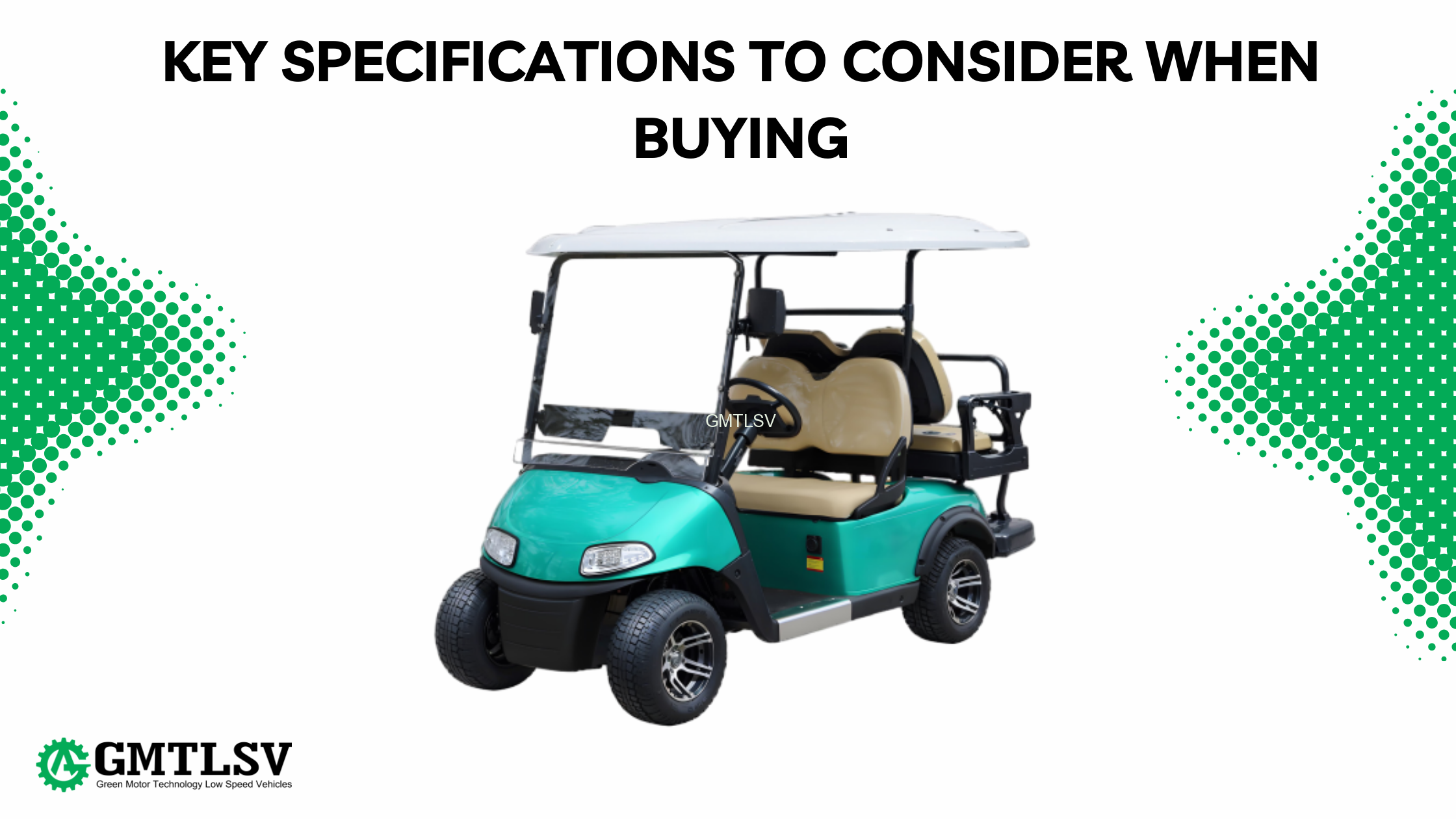
Shopping for a three-wheeled cart? Here’s what actually matters.
Motor Power and Performance
Motor power determines how the cart performs under load.
Most autoettes run motors in the 3-5 horsepower range. That’s plenty for flat golf courses. Hills are where you notice differences.
If you’re in a hilly area—San Francisco, parts of Arizona, anywhere with significant elevation changes—look for higher power ratings. 5+ horsepower. High torque ratings.
Speed typically maxes out at 12-15 mph for standard carts. Street-legal models go 20-25 mph.
Acceleration matters too. Some carts feel sluggish off the line. Others zip forward quickly. Test drive if you can. The feel varies more than specs suggest.
Battery Capacity and Range
Battery amp-hour (Ah) rating tells you capacity. Higher Ah = more range.
Typical setups are 150-225 Ah for lead-acid batteries. 100-150 Ah for lithium (they’re more efficient).
Expect 20-40 miles per charge. But that’s under ideal conditions. Hills, heavy loads, aggressive driving—all reduce range. Budget for 70-80% of rated range in real-world use.
Battery warranties matter. Good manufacturers offer 1-2 years on lead-acid, 3-5 years on lithium. If the warranty is short, that’s a red flag.
Weight Capacity and Cargo Space
Every cart has a weight limit. Usually 250-500 pounds total, including passenger and cargo.
Going over capacity kills performance. Strains the motor. Reduces battery life. Wears out components faster.
Be honest about what you’re hauling. Your weight. Your golf bag. Cooler. Any other stuff. Add it up.
Golf bag storage varies. Some carts have dedicated racks that hold bags securely. Others just have flat platforms. Check that your bag actually fits before buying.
Cup holders sound trivial. But you’ll want them. Check how many. Where they’re located.
Build Quality and Frame Durability
Frames are usually aluminum or steel.
Aluminum is lighter. Won’t rust. Costs more. Good for coastal areas or anywhere with salt and humidity.
Steel is heavier. Stronger. Cheaper. Will rust if not properly coated. Powder-coated steel is decent. Galvanized is better.
Body panels are fiberglass or ABS plastic. Fiberglass is more rigid. ABS is more impact-resistant. Both work.
Look at weld quality on the frame. Look at how body panels attach. Check for gaps. Misalignments. These indicate manufacturing quality.
Expected lifespan with proper maintenance? 10-20 years for the frame. Electric motors can last even longer. Batteries are the main replacement item.
Warranty and After-Sales Support
Standard warranty structures:
- Frame: 3-5 years
- Motor/controller: 2-3 years
- Batteries: 1-2 years (lead-acid), 3-5 years (lithium)
- Parts/accessories: 1 year
Longer is better obviously. But warranty is only useful if there’s a dealer nearby to service it.
Check dealer networks before buying. Can you get it serviced locally? Are parts readily available? How long do repairs typically take?
Big brands have better networks. Smaller brands might have better products but worse support. Trade-offs everywhere.
Top Manufacturers and Brands
The market has some clear leaders. And some interesting specialists.
GMTLSV and Specialized Manufacturers
Here’s where it gets interesting.
GMTLSV focuses specifically on the golf cart and low-speed vehicle market. They understand the segment deeply.
They offer various three-wheeled options. Different configurations for different needs. Custom solutions for specific applications.
Specialized manufacturers often innovate faster than the big brands. They’re trying new designs. Testing new features. Targeting niches the major players ignore.
If you have specific requirements—unusual dimensions, special features, particular applications—talking to specialists makes sense. They might have exactly what you need.
STAR EV
STAR EV has made a name in the three-wheeled space.
Their Sirius model is well-known. Single-rider. Compact design. Good build quality. Available in both standard and street-legal configurations.
Based in the US with manufacturing ties to Asia. Decent dealer network. Mid-range pricing—not the cheapest but not premium either.
Warranty is competitive. Customer service is generally responsive from what I’ve heard.
If you’re looking at single-rider autoettes, STAR EV belongs on your shortlist.
Club Car
The name everyone knows in golf carts.
Club Car has been around forever. Reputation for durability. Commercial fleets love them because they last.
Their three-wheeled offerings aren’t as extensive as their four-wheeled lineup. But what they make is quality.
The Villager line includes compact options. Premium pricing reflects the brand name. But resale value holds better than most.
Dealer network is extensive. Parts are easy to find. If something breaks, it gets fixed.
Yamaha Golf Carts
Japanese engineering. Reliability focus.
Yamaha doesn’t have as many three-wheeled models as some competitors. But their quality control is excellent.
Quiet operation is a Yamaha strength. Smooth acceleration. Consistent performance over time.
Slightly premium pricing. Worth it for the build quality. Motors and controllers are robust.
Are three-wheeled golf carts safe?
Yes. With caveats.
They’re safe when operated properly. At reasonable speeds. On appropriate terrain.
Modern autoettes have stability features. Speed governors prevent going too fast. Low center of gravity helps. Wide wheel stance helps.
Millions of rounds are played on three-wheeled carts every year. Serious accidents are rare.
That said—they’re not as stable as four-wheelers. Don’t take sharp corners at high speed. Don’t drive on steep side slopes. Don’t exceed weight capacity.
Use common sense and they’re perfectly safe.
How fast do three-wheeled golf carts go?
Standard models: 10-15 mph. Most are governed to 12-13 mph.
Street-legal models: 20-25 mph. Required by LSV regulations to reach at least 20 mph.
Speed governors can sometimes be adjusted. But increasing speed affects safety and may void warranties. Not generally recommended.
Different areas have different legal speed limits for golf carts and LSVs. Know your local rules.
Can I use a three-wheeled golf cart on the street?
Depends on the cart and your location.
Standard golf carts? No. They’re not street legal.
LSV-certified models? Yes, on roads with speed limits of 35 mph or less (typically). Requirements vary by state.
Some states are more permissive. Florida is famously golf-cart-friendly. Others are stricter.
You’ll need:
- Proper equipment (lights, signals, mirrors, etc.)
- Registration
- Insurance
- Valid driver’s license (usually)
Check your local laws. They vary significantly.
How long do the batteries last?
Lead-acid batteries: 3-5 years typical. With good maintenance, sometimes 6.
Lithium-ion batteries: 7-10 years. Some claim longer.
Factors affecting lifespan:
- How deeply you discharge them regularly
- Charging habits
- Temperature extremes
- Maintenance (lead-acid needs water)
- Quality of original batteries
Signs batteries need replacement: reduced range, slow acceleration, batteries not holding charge, visible damage or swelling.
What’s the range per charge?
Manufacturer claims: 20-40 miles typically.
Real-world range: Plan for 70-80% of rated range.
Factors that reduce range:
- Hills (big impact)
- Heavy passengers/cargo
- Cold weather
- Old batteries
- Aggressive acceleration
Flat Florida golf course? You’ll hit the rated range easily.
Hilly terrain with a heavy golfer and full bag? Expect less.
How much does it cost to charge?
Very little.
A typical charge consumes 5-10 kWh of electricity. At average US electricity rates ($0.12-0.15/kWh), that’s $0.60-1.50 per charge.
Even charging daily, annual electricity cost is under $500. Probably under $300.
Compare that to gas costs for a car or gas-powered cart. It’s basically nothing.
Charging time: 6-8 hours for lead-acid, 2-4 hours for lithium. Overnight charging is standard.
Do I need a license to operate one?
On private property (golf courses, private communities): Usually no license required.
On public roads (LSVs): Usually yes, you need a valid driver’s license. Requirements vary by state.
Age restrictions apply in many places. Typically 16-18 minimum for LSV operation.
Some communities and courses have their own rules. Training may be required. Always check local requirements.
Even where not required, understanding basic vehicle operation is important for safety. If you’ve never driven one, get familiar in a safe area before heading out.
That covers most of what you need to know about three-wheeled golf carts. They’re practical. They’re economical. They’re actually pretty fun to drive once you get comfortable with the handling.
The market keeps growing. More options appear every year. Whether you’re a golf course operator looking at fleet decisions, a retiree wanting easy neighborhood transportation, or just a golfer who likes the idea of zipping around solo—there’s probably an autoette that fits.

