

Here’s something I see all the time. A golf course manager buys a fleet of 48V carts because they’re cheaper. Makes sense on paper. Then six months later, they’re watching their carts crawl up the 14th hole like they’re dying. Golfers are frustrated. The pace of play is a disaster. And those “affordable” carts are burning through batteries way faster than expected.
Hills change everything.
If your course has any real elevation, this decision between 48V and 72V isn’t just about power. It’s about safety. It’s about your members’ experience. It’s about long-term costs that sneak up on you.
The terrain matters more than most people realize when they’re shopping. A cart that works perfectly on a flat Florida course will struggle hard in North Carolina or Colorado. I’ve seen it happen. And the people who made the wrong choice usually figure it out after it’s too late to return the carts.
So let’s actually break this down. Power, performance, cost, and terrain compatibility. No fluff. Just what you need to know before you write that check.
Understanding Voltage in Electric Golf Carts
Voltage confuses people. And honestly, it doesn’t need to. Here’s the simple version.
What Does Voltage Mean in Golf Cart Performance?
Think of voltage like water pressure in a pipe. Higher voltage pushes electricity through the motor with more force. More force means more power delivery to the wheels.
That’s it.
Higher voltage equals better torque. Better speed. Better hill-climbing ability. It’s not complicated.
A 72V system doesn’t just have “a little more” power than a 48V system. It has significantly more. And that gap shows up most when the terrain gets tough.
How 48V and 72V Systems Work
Here’s the basic setup.
A 48V system typically uses either six 8V batteries or four 12V batteries wired together. Pretty standard configuration. Been around for decades.
A 72V system usually uses six 12V batteries. More total voltage. More potential power.
The key thing people miss: higher voltage lets the cart deliver more power without pulling excessive current. That matters because high current creates heat. Heat kills batteries and motors. So the 72V system isn’t just more powerful—it’s often more efficient too.
48V Electric Golf Carts: Features and Performance
Let me be fair here. 48V carts aren’t bad. They’re just limited. And for the right application, they work perfectly fine.
Power and Torque Capabilities
Most 48V golf carts put out somewhere between 3-5 horsepower. That’s enough to move two people and their clubs on flat ground. No problem.
Speed typically ranges from 12-15 mph. Standard stuff.
The trouble starts when you introduce hills. Anything over a 15-20% grade, and a 48V cart starts working hard. Real hard. You’ll notice the speed drops. The motor strains. Sometimes it feels like you need to press the pedal through the floor just to keep moving.
And that’s with just a driver. Add a passenger and two full golf bags? Now you’re pushing the system to its limits.
Battery Configuration and Runtime
Standard 48V battery setups give you decent range on flat terrain. Usually 30-45 miles before you need a charge.
But here’s what the brochures don’t tell you. That range assumes flat ground. On hilly courses, you can lose 30-40% of that range easily. Sometimes more.
Charging takes 6-8 hours typically. Battery replacement costs add up over time—figure on replacing them every 3-5 years depending on use.
Best Use Cases for 48V Golf Carts
Let me be clear about where 48V actually makes sense:
- Flat to gently rolling courses
- Budget-conscious operations that don’t see heavy use
- Courses where no grade exceeds 10-15%
- Neighborhood or community use
- Short routes without sustained climbs
If that describes your situation, 48V is probably fine. Save your money.
Advantages of 48V Systems
There are real benefits here:
- Lower purchase price upfront
- Parts are everywhere. Easy to service.
- Lighter weight overall
- Proven technology that’s been around forever
- Replacement batteries are easy to find
- Most mechanics know how to work on them
For flat terrain, 48V delivers solid value. I’m not going to pretend otherwise.
Limitations of 48V on Hilly Courses
But on hills? The list of problems gets long.
Torque drops off on steep grades. You lose speed on inclines—sometimes dramatically. The batteries work overtime, which shortens their lifespan. There’s potential safety concerns on steep descents when the motor and brakes are straining.
I’ve heard from operators who say their 48V carts need the pedal floored just to maintain 5 mph on their steeper holes. That’s not a good experience for anyone.
And there’s the overheating issue. Extended hill climbing generates a lot of heat. Heat kills motors. Heat kills batteries. Heat kills controllers. You end up replacing parts way sooner than you should.
72V Electric Golf Carts: Features and Performance
Now we’re talking about what I actually recommend for hilly courses. Not because 72V is fancy. Because it’s appropriate.
Enhanced Power and Hill-Climbing Ability
A 72V system typically delivers 5-8+ horsepower. Sometimes more depending on the configuration. That extra power isn’t about going faster on flat ground—though it can do that too. It’s about maintaining performance when the terrain gets challenging.
Hills that make 48V carts crawl? A 72V cart handles them with ease. Grades of 20-25% that would stop a 48V in its tracks? 72V maintains speed. Passengers and cargo that would overload a 48V on inclines? 72V barely notices.
The acceleration is smoother too. Even when loaded. Even on hills. That matters for pace of play and rider experience.
Battery Configuration and Efficiency
The typical 72V setup uses six 12V batteries. Yes, that’s more batteries than some 48V configurations. But here’s the thing—you often get similar or better range despite the higher power output.
How? Efficiency.
Higher voltage means lower current draw for the same work. Lower current means less heat. Less heat means less wasted energy. The system runs cooler and lasts longer.
Range on 72V systems typically falls between 35-50 miles. On hilly terrain, you lose less of that range compared to what 48V loses.
Charging is similar to 48V. Maybe slightly longer, but not dramatically different.
Best Use Cases for 72V Golf Carts
This is where 72V shines:
- Hilly or mountainous courses
- Any course with grades exceeding 15%
- Operations that need consistent performance regardless of terrain
- Premium golf resorts where experience matters
- Courses where slow carts hurt pace of play
- Situations requiring higher sustained speeds
- Hauling heavier loads—maintenance vehicles, beverage carts, etc.
Advantages of 72V Systems
The benefits stack up quickly:
- Superior hill-climbing. Period.
- Speed maintenance on inclines
- Less battery strain means longer battery life
- Cooler operation with less heat buildup
- Better for multiple passengers on hills
- Improved safety on steep terrain
- Drivers actually feel confident instead of nervous
- Faster acceleration when you need it
For hilly courses, these aren’t luxuries. They’re necessities.
Investment Considerations for 72V
Let’s talk money. Yes, 72V costs more upfront. Typically 20-40% more than comparable 48V models.
Battery replacement may cost more too. And you might need upgraded charging infrastructure if you’re running a fleet.
But here’s what people miss in their calculations. The efficiency gains on hilly terrain often offset the higher initial cost over time. Battery life is longer because the system isn’t constantly straining. Maintenance costs can be lower. And resale value tends to be better.
More on the cost analysis later.
Head-to-Head: 48V vs 72V Performance on Hilly Courses
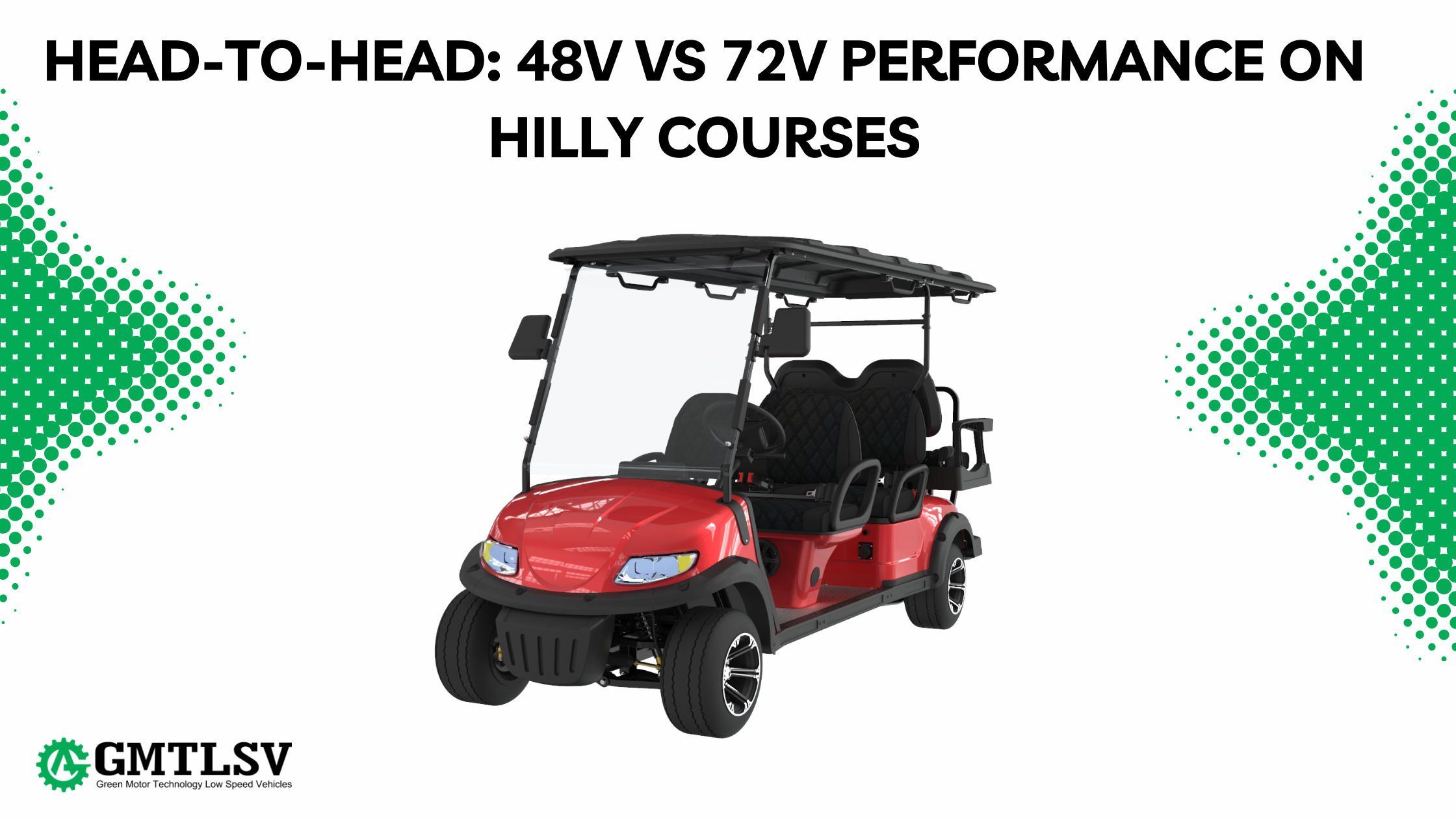
Let’s get specific. How do these systems actually compare when the terrain gets real?
Hill-Climbing Performance Comparison
On a 10% grade, both systems perform adequately. 48V slows down some, but it’s manageable.
At 15% grade, the difference becomes obvious. 48V carts struggle to maintain 8-10 mph. 72V carts maintain near-normal speed.
At 20% grade, most 48V carts drop to 5-6 mph or less. Some barely make it. 72V carts still climb comfortably.
At 25% grade, many 48V carts simply can’t do it—especially with two passengers and gear. 72V handles it.
The difference in driver experience is dramatic. On 48V, you’re hoping the cart makes it. On 72V, you’re not even thinking about it.
Add passengers and cargo, and the gap widens even more.
Speed and Acceleration on Inclines
Starting from a dead stop on a hill shows the biggest difference. A 48V cart hesitates. Takes time to get moving. Sometimes rolls back a bit before the motor engages fully.
A 72V cart? Just goes. The extra torque means confidence from a standstill.
Top speeds on inclines:
- 48V on 15% grade: maybe 8-10 mph max
- 72V on 15% grade: 12-14 mph typically
Time to climb matters too. A 72V cart might complete a challenging cart path section in half the time of a 48V.
Battery Life and Efficiency on Hills
This is where long-term costs start diverging.
Battery drain on hilly terrain is brutal on 48V systems. They’re working at near-maximum capacity much of the time. That accelerates wear.
Typical cycle life:
- 48V on hilly terrain: 500-800 cycles before replacement needed
- 72V on hilly terrain: 700-1000+ cycles
That translates to real dollars. If you’re replacing batteries every 3 years instead of every 5-6 years, those “savings” on the initial purchase disappear fast.
Safety Considerations on Steep Terrain
I don’t want to be dramatic here, but safety matters.
On descents, 72V systems often have better regenerative braking capability. That means more control going downhill.
Rollback on steep hills is a real concern with underpowered 48V carts. The motor struggles to hold position, and if someone stops on an incline… it can get sketchy.
Driver confidence isn’t just a nice-to-have. Nervous drivers make poor decisions. A cart that handles terrain confidently creates a safer operation overall.
Key Factors to Consider When Choosing Between 48V and 72V
Here’s how to actually think through this decision.
Assessing Your Course Terrain
Walk your course. Or drive it with a GPS app that tracks elevation.
What’s the steepest grade? Not the average—the steepest. Because that’s what your carts need to handle.
How many significant hills are there? A course with one tough hill is different from one with challenging terrain throughout.
Are the climbs sustained or short bursts? A 100-yard steep section is very different from a 400-yard climb.
My rough guidance:
- Average grades under 10%: 48V is probably fine
- Average grades 10-15% with occasional steeper sections: Consider 72V
- Any sustained grades over 15%: Strongly consider 72V
- Steepest grade over 20%: 72V is recommended
- Steepest grade over 25%: 72V is necessary
Budget and Return on Investment
Initial cost difference: yes, 72V costs more. Usually $2,000-5,000 more per cart depending on the model and features.
But run the full calculation:
- Battery replacement frequency and cost
- Maintenance frequency
- Expected cart lifespan
- Impact on pace of play (slower carts = fewer rounds = less revenue)
- Member satisfaction (hard to quantify, but real)
For many hilly courses, 72V breaks even within 4-5 years. Sometimes sooner.
Don’t just look at the sticker price. That’s how you make a expensive mistake.
Fleet Size and Operational Needs
If you’re running a larger fleet, standardization has value. Training is simpler. Parts inventory is simpler. But that doesn’t mean you have to go all-or-nothing.
Some operations benefit from a mixed fleet. 72V carts assigned to the hilliest routes. 48V for flatter areas. It adds complexity, but can optimize costs.
For rental operations, consistent performance matters more. You can’t predict which customers end up on which holes. Consistency means 72V.
Future-Proofing Your Investment
The industry is trending toward higher voltage systems. That’s not marketing—it’s reality.
Course modifications might add challenging terrain you don’t have today. Member expectations keep increasing. Technology development is focusing on higher voltage platforms.
What you buy today needs to work for 7-10 years. Think about where your course will be, not just where it is.
Technical Specifications Comparison
Let’s get into the details.
Motor Performance Specs
| Specification | 48V System | 72V System |
| Typical HP | 3-5 HP | 5-8+ HP |
| Torque | Moderate | High |
| Heat generation | Higher under load | Lower under load |
| Motor lifespan (hilly terrain) | 5-7 years | 7-10 years |
The torque difference is the big one. That’s what moves the cart up hills.
Battery Specifications
| Specification | 48V System | 72V System |
| Configuration | 6x 8V or 4x 12V | 6x 12V |
| Total voltage | 48V | 72V |
| Weight range | 350-450 lbs | 400-550 lbs |
| Cycle life (hilly terrain) | 500-800 cycles | 700-1000+ cycles |
| Replacement cost range | $800-1,500 | $1,200-2,000 |
Yes, 72V batteries cost more to replace. But you replace them less often on hilly terrain. That’s the trade-off most people miss.
Speed and Range Specifications
| Specification | 48V System | 72V System |
| Top speed (flat) | 12-15 mph | 15-20 mph |
| Top speed (15% grade) | 8-10 mph | 12-14 mph |
| Top speed (25% grade) | 3-5 mph or stalls | 8-10 mph |
| Range (flat terrain) | 30-45 miles | 35-50 miles |
| Range (hilly terrain) | 20-30 miles | 30-40 miles |
Look at that 25% grade row. That’s where the difference becomes undeniable.
Cost Analysis: Initial Investment vs Long-Term Value
Money matters. Let’s be honest about the numbers.
Initial Purchase Price Comparison
A quality 48V golf cart runs somewhere between $8,000-15,000 depending on brand, features, and configuration.
A comparable 72V model typically runs $10,000-20,000.
That 20-40% premium is real. I’m not going to pretend it doesn’t exist.
But initial price is just one number in a much bigger equation.
Operating Costs Over 5-7 Years
Let me sketch out a realistic comparison for a hilly course:
48V on hilly terrain (per cart, 7-year projection):
- Initial cost: $12,000
- Battery replacements (2 sets): $2,400
- Increased maintenance: $1,500
- Early motor replacement possibility: $1,000
- Total: approximately $16,900
72V on hilly terrain (per cart, 7-year projection):
- Initial cost: $16,000
- Battery replacement (1 set): $1,600
- Standard maintenance: $800
- Total: approximately $18,400
The gap is smaller than the sticker price suggests. And I haven’t factored in pace-of-play revenue impacts or member satisfaction.
Hidden Costs of Underpowered Carts on Hills
These are the costs that don’t show up on a spreadsheet but are very real:
- Accelerated wear on everything—motors, controllers, brakes, drivetrain
- More frequent breakdowns and associated downtime
- Slower pace of play affecting daily round capacity
- Member frustration leading to complaints or even membership changes
- Potential safety incidents (liability exposure)
- Earlier fleet replacement cycle
I’ve seen operations replace their entire 48V fleet after 5 years because the carts were worn out from hill strain. That’s an expensive “learning experience.”
Maintenance and Longevity on Hilly Terrain
How each system holds up over time.
Battery Maintenance Requirements
Both systems need regular battery maintenance if you’re running lead-acid batteries:
- Watering schedules (check weekly, add distilled water as needed)
- Terminal cleaning and anti-corrosion treatment
- Equalization charging periodically
- Voltage testing to catch failing cells early
The difference: 48V batteries under hill strain need more attention. They discharge deeper more often. They generate more heat. They degrade faster.
72V batteries work within a more comfortable range on the same terrain. Less strain means less accelerated wear.
Motor and Controller Longevity
Hill climbing generates heat. A lot of heat. That heat is the enemy of motors and controllers.
48V systems on hilly courses run hot frequently. That accelerates insulation breakdown in motors. Controllers work harder and fail sooner.
72V systems stay cooler under the same conditions because they’re not working at their limits as often. Everything lasts longer.
Expect motor life of 5-7 years for 48V on hilly terrain versus 7-10 years for 72V.
Brake System Considerations
Descending hills is as important as climbing them. Brakes work hard on hilly courses.
72V systems often feature better regenerative braking—the motor helps slow the cart and recharges the battery slightly. That reduces mechanical brake wear.
48V systems rely more on mechanical braking. More wear. More maintenance. More replacement costs.
Plan for more frequent brake inspections and service on hilly courses regardless of voltage. But expect 72V brakes to last longer.
Making the Right Choice for Your Hilly Golf Course
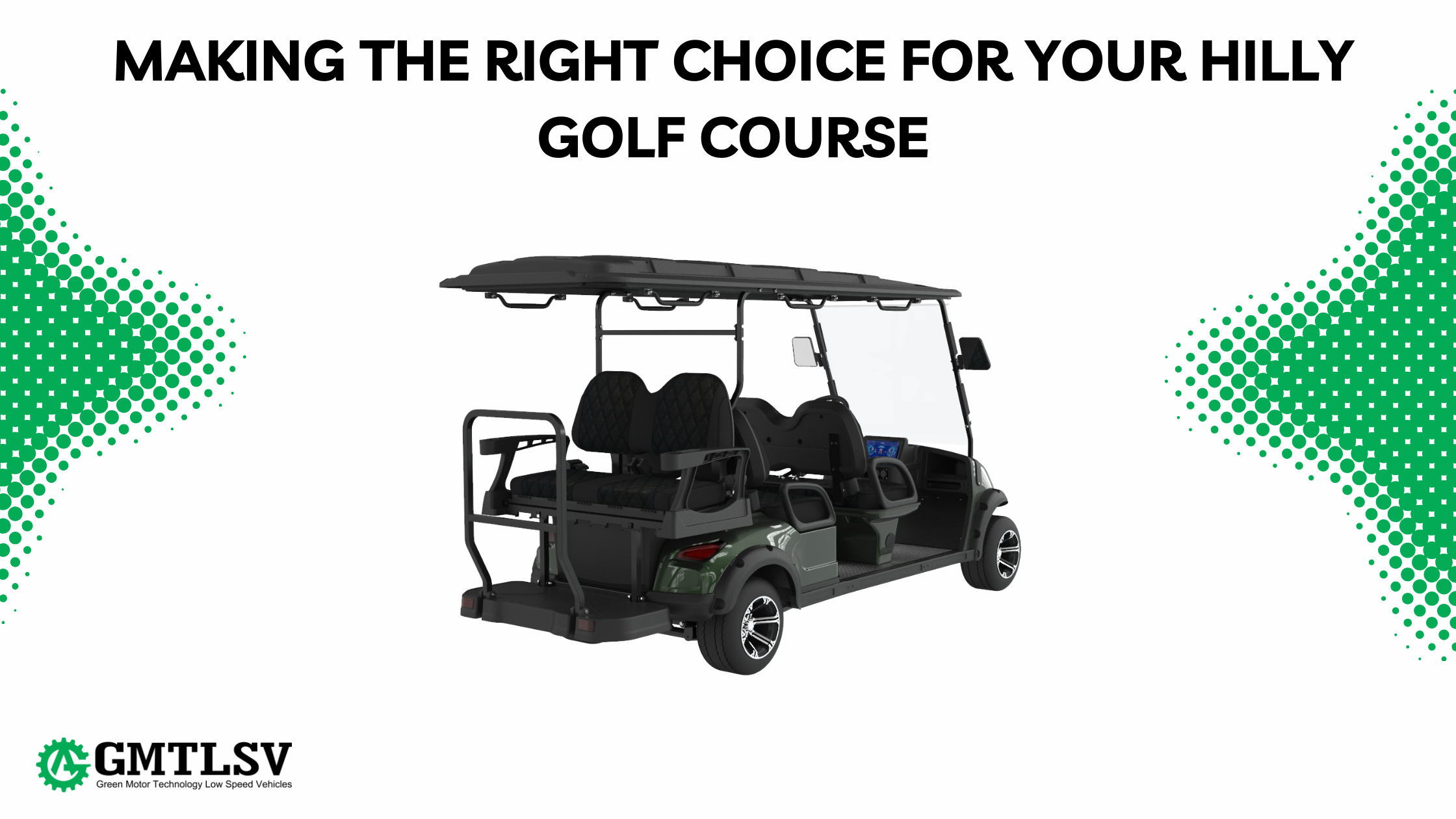
Let me give you a clear framework.
When 48V is Sufficient
Go with 48V if:
- Your steepest grade is under 12-15%
- Hills are short—under 50-75 yards
- Budget is your absolute primary constraint
- Daily usage is light to moderate
- You’re fine with reduced performance on inclines
- The course is mostly flat with just occasional small hills
Be honest with yourself about these criteria. “Mostly flat” means actually flat, not “not that bad.”
When 72V is Recommended
Go with 72V if:
- Any grades exceed 15% regularly
- Your course has multiple sustained climbs
- Terrain is mountainous or heavily rolling
- Daily usage is heavy (resort, high-traffic course)
- Member/guest experience is a priority
- You want long-term cost efficiency
- Safety on steep terrain matters (it should)
- You need consistent performance regardless of conditions
For most hilly courses, this is the answer. I’m just being direct about it.
Hybrid Fleet Approach
Some operations run mixed fleets. It can work, but adds complexity.
Maybe 72V carts stay on the hilliest nine while 48V handles the flatter holes. Requires cart tracking and assignment management.
Could make sense for:
- Very large operations where some terrain is genuinely flat
- Tight budgets where partial upgrade is better than none
- Transition periods while replacing 48V fleet gradually
Usually not worth the logistical headaches for smaller operations.
Questions to Ask Before Buying
Before you sign anything:
- What is the steepest grade on your course? (Measure it, don’t guess)
- How many hills over 10% grade?
- What’s your average daily cart usage in miles?
- What’s your realistic budget—not just purchase, but 5-year total?
- What do your members or guests expect from the experience?
- How long do you plan to own these carts?
- Have you actually test-driven both voltage options on your terrain?
That last one matters. Numbers are useful, but experiencing the difference firsthand is eye-opening.
GMT LSV Electric Golf Cart Solutions
Let me tell you why GMT LSV is worth considering for this purchase.
GMT LSV 48V Golf Cart Models
GMT LSV offers solid 48V options for courses where that configuration makes sense. Quality construction. Reliable performance. Good value for flat-terrain applications.
Standard features include comfortable seating, durable frames, and proven drivetrains. Customization options available for course-specific needs.
If 48V is right for your situation, GMT LSV delivers dependable carts at competitive prices.
GMT LSV 72V Golf Cart Models
For hilly courses, this is where GMT LSV shines.
The 72V lineup features enhanced motors with hill-climbing torque that handles real terrain. Battery configurations optimized for efficiency. Construction that holds up to demanding daily use.
Premium features include better controllers, improved regenerative braking, and components selected specifically for challenging conditions.
These aren’t just 48V carts with more batteries. They’re designed from the ground up for higher performance requirements.
Why Choose GMT LSV for Hilly Courses
A few reasons:
- They understand that different courses have different needs
- Quality manufacturing with attention to durability
- Strong customer support when you have questions
- Warranty coverage that gives you confidence
- Parts availability through established dealer network
- Track record with courses that have demanding terrain
Worth a conversation if you’re serious about getting the right carts for your course.
Can a 48V golf cart handle hills?
Yes—to a point. Moderate hills (under 15% grade), short inclines, light loads. A 48V cart can manage.
But “can handle” and “handles well” are different things. On steeper terrain, 48V carts struggle. Speed drops. Batteries drain fast. The motor strains.
If your course has real hills, 48V will disappoint you.
Is 72V worth the extra cost for a hilly course?
For courses with sustained grades over 15%, almost always yes.
The better performance, improved safety, longer component life, and reduced maintenance typically justify the premium within 3-5 years. Sometimes sooner if you’re running high daily mileage.
Run the full cost analysis. Don’t just compare sticker prices.
How much more does a 72V golf cart cost than 48V?
Generally 20-40% more upfront. That might be $2,000-5,000 per cart depending on the models you’re comparing.
Long-term costs often converge due to the efficiency and longevity advantages of 72V on hilly terrain. Total cost of ownership over 7 years can be surprisingly similar—or even favor 72V.
What voltage is best for steep hills?
72V. That’s the straightforward answer.
For grades over 15-20%, 72V delivers the torque and sustained power needed. For extreme terrain (25%+ grades), you’ll want 72V at minimum—and possibly specialized configurations beyond that.
48V simply can’t deliver what steep hills require.
Do 72V golf carts require special charging equipment?
Usually no. Most 72V carts use standard golf cart chargers rated for the appropriate voltage.
But verify your charger rating matches the cart before assuming compatibility. Some older infrastructure may need upgrading for 72V compatibility.
Charging times are similar to 48V systems. The infrastructure change is minimal for most operations.
How long do batteries last on hilly courses?
It depends heavily on the voltage system.
48V batteries on hilly terrain: typically 3-5 years or 500-800 cycles. The constant strain accelerates wear.
72V batteries on hilly terrain: typically 5-7 years or 700-1000+ cycles. Less strain means longer life.
Battery care matters too. Proper watering, charging practices, and storage all impact lifespan regardless of voltage.
Can I upgrade a 48V golf cart to 72V?
Technically possible. Practically questionable.
You’d need to replace the motor, controller, batteries, wiring, and potentially the charger. Parts compatibility becomes an issue. Safety certification is a concern. Warranties become void.
By the time you pay for all that, you’ve often spent nearly as much as just buying a proper 72V cart—and you have a Frankenstein vehicle with potential reliability issues.
If you need 72V, buy 72V. Conversions are rarely worth it.


