

Golf carts lose value. Everything does. But here’s what surprises most people: they don’t depreciate nearly as fast as regular vehicles.
A well-maintained golf cart can hold 60-70% of its original value after five years. Try that with a new car. You can’t.
Whether you’re looking at electric or gas-powered carts, the depreciation curve is gentler than you’d expect. Good news if you’re buying as an investment. Even better news if you’re worried about throwing money away on something that’ll be worthless in a few years.
For GMTLSV buyers and anyone treating a golf cart as a real purchase decision, understanding depreciation helps you buy smarter and sell smarter.
What is Golf Cart Depreciation?
Depreciation is just the decrease in your golf cart’s value over time. You buy it for $10,000. Three years later, it’s worth $7,000. That $3,000 difference? Depreciation.
It matters because golf carts aren’t cheap. People spend real money on these things. Knowing how much value you’re losing each year helps you plan. Helps you decide when to sell. Helps you understand whether that “deal” on a used cart is actually a deal.
Golf cart depreciation works differently than automobiles. Cars can lose 20-30% of their value the moment you drive off the lot. First year is brutal. Golf carts are kinder. The market is smaller, more specialized. Supply stays relatively tight. Demand stays consistent in the right areas.
Understanding this stuff matters when you’re buying or selling. Buy a cart that’s already taken the biggest depreciation hit and you save money. Sell before major components need replacing and you maximize return. It’s not complicated. Just requires paying attention.
How Much Do Golf Carts Depreciate Per Year?
On average, golf carts depreciate 10-20% per year. But that range depends on a bunch of factors we’ll get into.
The pattern follows a predictable curve though. Steep early, then it flattens out.
Year 1-2: Initial Depreciation
The first two years hit hardest. Expect 15-25% depreciation annually during this window.
It’s the “driving off the lot” effect. Same thing happens with cars. The moment something becomes “used,” it’s worth less. Even if it’s barely been touched.
Here’s a real example. You buy a $10,000 cart. Year one, it loses somewhere between $1,500 and $2,500 in value. By the end of year two, you might be looking at a cart worth $6,500-$7,500 depending on condition and brand.
That’s why buying a one or two-year-old cart makes so much sense. Someone else absorbed the steepest part of the depreciation curve. You get a nearly-new cart for meaningfully less money.
Year 3-5: Moderate Decline
Depreciation slows down here. You’re looking at 10-15% per year during this middle period.
Let’s continue the example. That $10,000 cart that was worth maybe $7,000 after year two? By year five, it’s probably worth $6,000-$7,000 if you’ve maintained it properly.
Well-maintained carts retain 60-70% of their original value after five years. That’s the benchmark. Hit that and you’ve done well.
The carts that fall below that range? Usually neglected batteries, cosmetic damage, missing maintenance records. Problems that could’ve been prevented.
Year 6+: Stabilized Value
After year five, depreciation slows dramatically. We’re talking 3-5% annually.
At this point, the cart has found its floor. It’s clearly used. Nobody’s paying anywhere near new prices. But it’s also proven itself. Older carts that still run well have demonstrated reliability.
Brand reputation matters more than ever here. A 7-year-old Club Car with good maintenance history holds value way better than a 7-year-old cart from some brand nobody recognizes.
Maintenance records become crucial. Buyers want proof the cart was cared for. They’re taking a chance on an older machine. Documentation reduces that perceived risk.
Standard Depreciation Rates by Cart Type
Electric and gas carts depreciate at slightly different rates.
Electric carts typically depreciate 12-15% annually. Gas carts run closer to 10-12% annually.
Why the difference? Electric carts have batteries. Batteries wear out. Buyers know they might be inheriting a battery replacement cost. That uncertainty gets priced in.
But here’s where it gets interesting. Electric carts with lithium batteries depreciate slower than those with lead-acid batteries. Lithium lasts longer, performs better, and buyers know it. They’ll pay more for a used cart with lithium because they’re not staring down a $2,000 battery replacement in two years.
Premium brands like GMTLSV hold value better across the board. Quality construction, better components, stronger reputation. All of it shows up in resale values.
Key Factors That Affect Golf Cart Depreciation
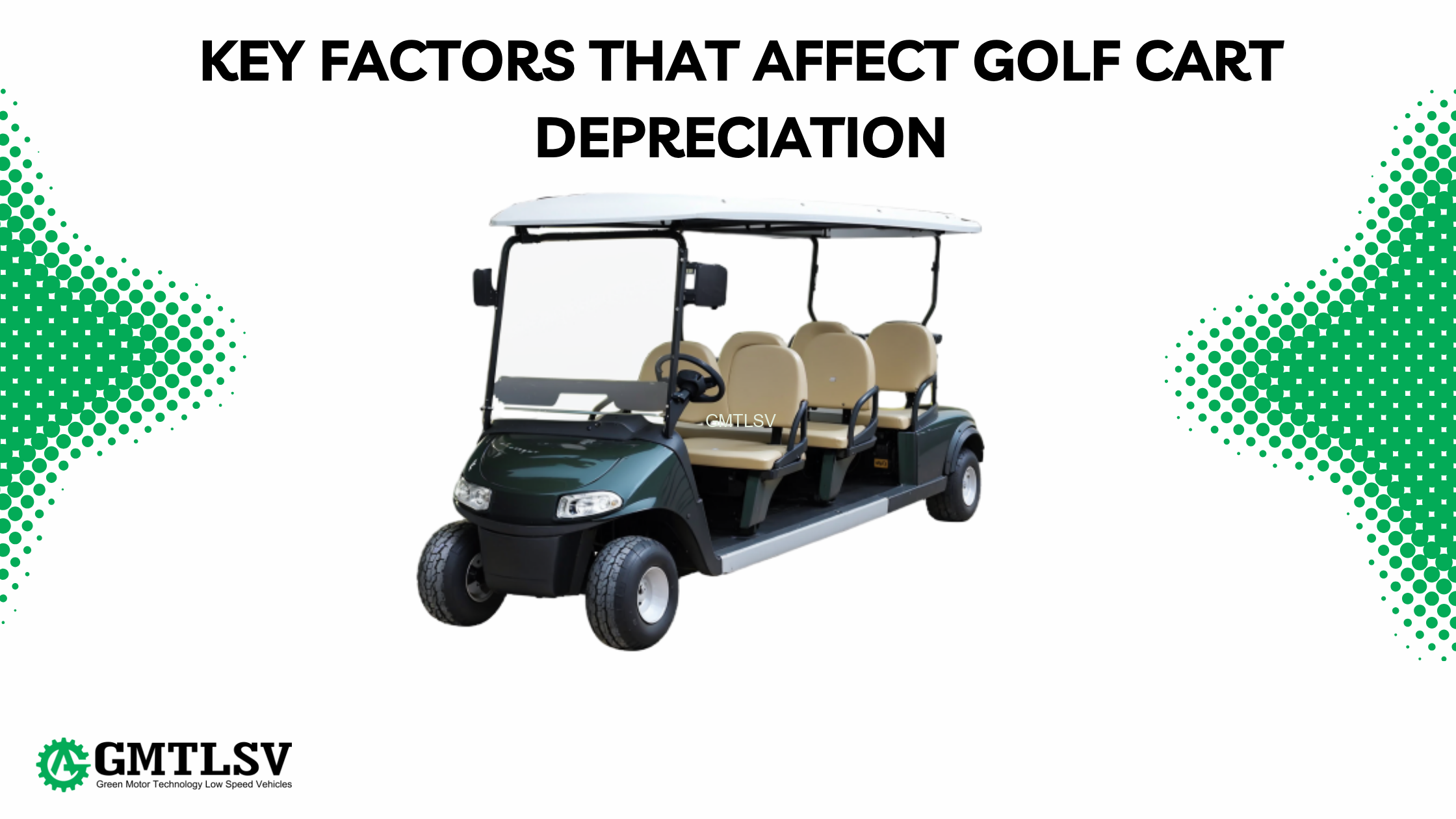
Depreciation isn’t uniform. Two carts bought the same year for the same price can be worth wildly different amounts five years later.
Multiple variables impact how much value your cart loses. Some you can control. Some you can’t.
1. Brand and Model Reputation
Premium brands retain value 10-15% better than lesser-known manufacturers.
Club Car. Yamaha. E-Z-GO. GMTLSV. These names mean something to buyers. Better build quality. Parts actually available when something breaks. Dealer networks that can service them. Buyer trust built over years.
It’s the same reason a used Toyota holds value better than a used whatever-brand-nobody’s-heard-of. Reputation compounds.
GMTLSV’s aluminum frame construction specifically helps with value retention. Aluminum doesn’t rust. It’s lighter. It lasts. Buyers recognize these features and pay accordingly.
Commercial-grade manufacturers maintain stronger resale values across the board. If a cart was built to handle fleet duty at a golf course, it can handle your neighborhood. Buyers understand this.
2. Battery Type and Condition
For electric carts, this is the big one. Batteries can make or break resale value.
Lithium-ion batteries retain 10-15% more value than lead-acid. The math makes sense. Lithium lasts 8-10+ years. Lead-acid lasts 3-5 years. A used cart with healthy lithium batteries has years of life left. A used cart with aging lead-acid batteries has a replacement bill coming.
Battery replacement costs run $800-$3,000 depending on type and quality. That’s a significant chunk of a cart’s value.
Weak batteries can reduce resale price by 30% or more. Buyers aren’t stupid. They test batteries. They notice sluggish acceleration and reduced range. They price that in.
GMTLSV’s lithium battery technology extends cart longevity and preserves value. It’s an upfront investment that pays back at resale time.
3. Age and Usage Hours
Older carts depreciate naturally. But usage matters more than age alone.
A 5-year-old cart with 200 hours of gentle golf course use is worth more than a 3-year-old cart with 800 hours of hauling equipment around a commercial property.
Environment impacts value too. Golf course carts see relatively gentle use. Flat terrain, paved paths, careful operators. Off-road or commercial applications are harsher. More strain on everything.
Hilly terrain specifically causes 5-10% faster depreciation. Motors and batteries work harder climbing grades. That extra stress shows up in component wear.
4. Maintenance History and Condition
Well-maintained carts depreciate slower than neglected ones. Obvious, right? But people still ignore it.
Documented service records matter. Regular battery checks. Tire rotations. Brake servicing. Oil changes on gas models. Write it down. Keep receipts. Future buyers want proof.
Cosmetic condition matters more than people think. Clean carts with minimal scratches and dings command higher prices. Rust-free frames. Good upholstery. Working lights. It all adds up.
Proper storage prevents corrosion and extends lifespan significantly. A cart stored in a garage depreciates slower than one sitting outside in weather.
5. Gas vs Electric Models
Electric carts are gaining an edge in resale value. The market is shifting.
Lower operating costs. Environmental benefits for buyers who care about that. Quieter operation. Reduced maintenance requirements. All pushing demand toward electric.
But gas carts still hold value well in specific applications. Rural properties where charging infrastructure is limited. Off-road use where range matters. Commercial applications requiring all-day operation.
The trend is clear though. Lithium-powered electric carts are where the market’s heading. Resale values reflect buyer preferences. And buyers increasingly prefer electric.
6. Customizations and Upgrades
This one’s tricky. Upgrades can help or hurt depending on what you did.
Strategic upgrades add value. Lithium battery conversions. LED lighting packages. Street-legal kits for road use. Lift kits for off-road capability. Rear seat additions. These have broad appeal. Buyers will pay for them.
Over-customization hurts value. Wild paint jobs. Questionable audio systems. Non-factory-approved modifications. Stuff that appeals to your specific taste but not the general market. You spent money that won’t come back.
Factory features retain value better than aftermarket additions. A cart that came from the factory with upgraded seats holds value better than one with aftermarket seats bolted on.
Valuable upgrades: Lithium batteries, street-legal packages, lift kits, LED lights, premium seats, enclosures
Upgrades that rarely return value: Extreme paint/wraps, elaborate sound systems, purely aesthetic mods, cheap aftermarket parts
7. Market Demand and Location
Where you sell matters almost as much as what you’re selling.
Florida. Arizona. California. Golf communities. Retirement villages. These areas have strong demand. Golf carts are transportation, not toys. Buyers compete. Prices stay high.
Sell the same cart in an area where golf carts are rare and demand drops. Fewer buyers means lower prices.
Seasonal demand is real too. Spring and summer are peak season. People want carts when weather is good. Winter? Demand drops. Prices follow.
Supply and demand dynamics work in golf cart sellers’ favor generally. New cart inventory can be limited. Production isn’t infinite. This helps used carts maintain value.
8. Technological Features
Newer carts with modern features hold premiums over older, simpler models.
Regenerative braking. Smart battery management systems. Digital displays. GPS integration. Bluetooth connectivity. Backup cameras. These features appeal to buyers.
Older carts without modern tech become less appealing over time. They work fine. But they feel dated. Buyers paying good money want something that doesn’t feel ancient.
GMTLSV’s modern features contribute directly to value retention. A cart with current technology competes better against newer models on the market.
How to Calculate Your Golf Cart’s Current Value
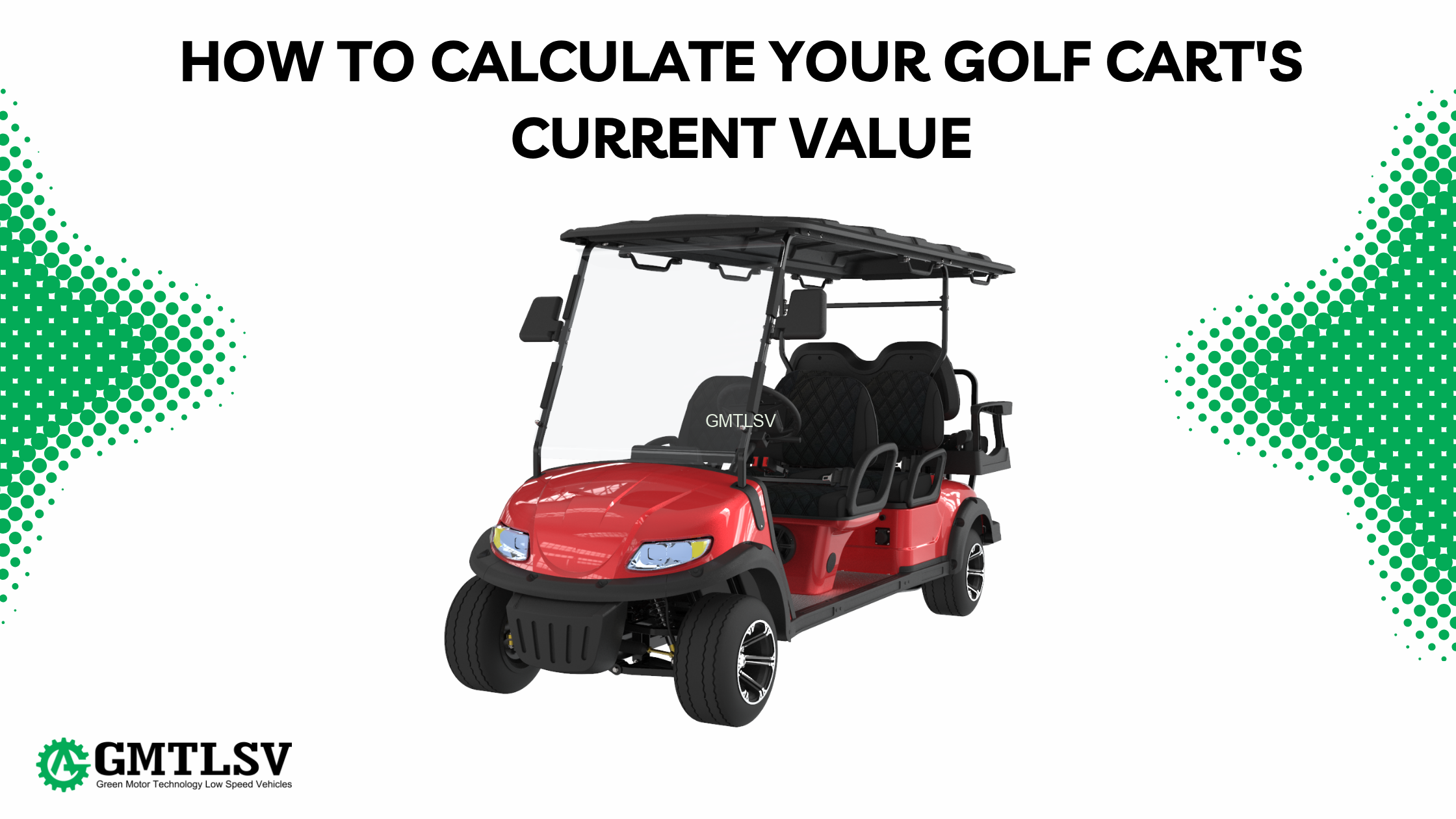
Want to know what your cart’s actually worth? Here’s how to figure it out.
Fair warning though. There’s no official “Blue Book” for golf carts like there is for cars. You’re working with estimates and comparisons.
Basic Depreciation Formula
The formula is straightforward:
Used Value = New Price × (1 – Depreciation Rate)^Years
Let’s run some examples.
Example 1: 3-year-old electric cart
- Original price: $10,000
- Assumed depreciation: 15% per year
- Calculation: $10,000 × (1 – 0.15)³ = $10,000 × 0.614 = $6,140
Example 2: 5-year-old gas cart
- Original price: $8,500
- Assumed depreciation: 12% per year
- Calculation: $8,500 × (1 – 0.12)⁵ = $8,500 × 0.528 = $4,488
Example 3: Premium brand with low depreciation
- Original price: $14,000 (GMTLSV or similar)
- Assumed depreciation: 10% per year
- After 5 years: $14,000 × (1 – 0.10)⁵ = $14,000 × 0.590 = $8,260
See how brand and depreciation rate dramatically impact long-term value? The premium cart retained over $8,000 of value. The standard electric cart retained just over $6,000 despite costing less originally.
Private Sale vs Dealership Trade-In Values
Private sales typically bring 20-30% more than trade-in values. Sometimes more.
Dealerships calculate depreciation aggressively. They need profit margin. They have overhead. They’re taking on risk and doing the work of reselling.
Example comparison:
Cart: 4-year-old Club Car, good condition
- Private sale value: $6,500-$7,000
- Dealership trade-in: $4,800-$5,500
That’s real money left on the table if you take the trade-in without considering alternatives.
Private sale pros: More money. You control the price. Direct negotiation.
Private sale cons: More work. Dealing with tire-kickers. Showing the cart repeatedly. Handling payment safely. No immediacy.
Trade-in pros: Fast and easy. Done in one transaction. No strangers coming to your house.
Trade-in cons: Less money. Usually significantly less money.
Online Valuation Tools and Resources
Several resources help determine value:
Golf Cart Resource calculator provides estimates based on year, make, condition. Not perfect but a starting point.
Marketplace comparisons tell you what similar carts are actually selling for. Facebook Marketplace, Craigslist, eBay completed listings. Real transaction data beats formulas.
Dealer inquiries give you the floor. Call around. Ask what they’d pay. You know the minimum.
Research comparable sales in your specific area. A cart worth $7,000 in Florida might be worth $5,500 in Minnesota. Local market conditions override national averages.
How much does a golf cart depreciate the first year?
Typically 15-25%. Similar to cars but usually on the lower end of that range.
A $10,000 cart might be worth $7,500-$8,500 after year one depending on brand and condition.
This is why buying a 1-2 year old cart makes financial sense. Someone else takes that first-year hit. You get a nearly-new cart for less.
Do electric or gas golf carts hold value better?
Increasingly electric. Especially lithium-powered models.
The market is shifting toward eco-friendly options. Lower operating costs. Less maintenance. Quieter operation. Buyers want electric.
Gas carts still hold value well for specific applications. Rural use. Heavy-duty commercial work. Situations where range and refueling speed matter.
But for most buyers in most situations? Electric is winning the depreciation battle.
What golf cart brand holds its value best?
Club Car, Yamaha, GMTLSV, and E-Z-GO consistently perform at the top.
Premium brands with commercial reputations retain 10-15% more value than lesser-known manufacturers.
GMTLSV’s aluminum construction and advanced battery technology make it particularly strong for value retention. The frame doesn’t rust. The batteries last. Buyers recognize these advantages.
Can golf cart upgrades increase resale value?
Yes. Strategic upgrades can add value. Sometimes they even help you exceed your original purchase price, though that’s rare.
Best upgrades for resale: Lithium battery conversions, street-legal packages, lift kits, LED lighting, quality rear seats, weather enclosures.
Avoid over-customization. Keep modifications professional. Document everything. Wild personalization rarely returns value.
How do I determine my golf cart’s current value?
Multiple approaches work best together:
- Use the depreciation formula for a baseline estimate
- Check online marketplaces for comparable sales
- Use the Golf Cart Resource calculator
- Get a dealer appraisal (knowing they’ll lowball)
Consider all the factors: age, condition, brand, battery type, features, and especially local market demand. A cart worth $7,000 in one market might be worth $5,000 somewhere else.
When is the best time to sell a golf cart?
Late spring and early summer bring the highest prices. People want carts when weather turns nice.
Age-wise, the sweet spot is 3-5 years old. The steepest depreciation has passed. The cart still has modern appeal. Major repairs probably aren’t imminent.
Sell before major repairs become necessary. A cart needing batteries or motor work is worth significantly less. Fix it and sell, or sell before it breaks. Don’t try to sell a cart with known expensive problems coming.
Avoid winter and off-season if possible. Demand drops. Prices follow.
How can I slow down my golf cart’s depreciation?
Several strategies actually work:
Buy smart: Choose reputable brands from the start. Premium brands depreciate slower.
Maintain religiously: Regular service with documented records. Battery checks. Brake servicing. Keep receipts.
Store properly: Garage storage prevents weather damage, corrosion, and sun fade.
Keep it clean: Cosmetic condition affects perceived value. Clean carts sell for more.
Strategic upgrades: Lithium batteries, useful features. Not vanity mods.
Replace batteries before failure: A cart with healthy batteries is worth far more than one with dying batteries.
Proper care can genuinely reduce depreciation by 5-10% annually compared to a neglected cart. Over five years, that’s thousands of dollars preserved.


