

Here’s the thing about buying a golf cart. Everyone asks the same question: should I go new or used? And honestly, there’s no universal answer. It depends on how you’ll use it, how long you plan to keep it, and—let’s be real—what you can actually afford.
Whether you’re managing a golf course, cruising around a retirement community, or just want something fun for weekend rides, the decision matters. A lot. We’re talking about a purchase that could cost you anywhere from $2,500 to over $15,000. That’s not pocket change.
The golf cart industry has been booming lately. The market’s expected to hit over $3 billion by 2030. More people are using these things than ever before—not just on courses, but in gated communities, beaches, campgrounds, large properties. The demand is driving up prices on both new and used models.
So which one gives you more bang for your buck? Let’s break it down.
Understanding Golf Cart Basics
Before we get into the nitty-gritty of value, we need to define what we’re actually comparing. Because “new” and “used” mean different things depending on who you ask.
What defines a new golf cart?
A new golf cart is pretty much what it sounds like. Zero previous owners. Comes directly from the factory or an authorized dealer. Current model year—or maybe one year back if it’s been sitting on a lot.
You’re getting that factory warranty, which typically runs 2 to 4 years depending on the manufacturer. The big three brands are Club Car, EZGO, and Yamaha. They dominate the market for good reason. There are others, sure, but those three are what most dealers stock.
New also means latest technology. We’re talking better batteries, smoother rides, updated safety features. If you buy from an authorized dealer, you get certification, support, parts availability. The whole package.
What qualifies as a used golf cart?
Used is a broader category. Could be a one-year-old cart that someone barely drove. Could be a 15-year-old workhorse that’s seen thousands of rounds.
Some used carts are “certified pre-owned,” which means a dealer inspected them, maybe refurbished them, sometimes offers a limited warranty. Others are sold “as-is”—what you see is what you get.
Used carts come from all sorts of places. Golf courses selling off their fleet after 4-5 years. Private owners upgrading to something newer. Rental companies rotating inventory. Commercial operations. The history matters. A cart that lived on a flat Florida course had a very different life than one that tackled hilly terrain every day.
New Golf Carts: Advantages and Considerations
Buying new isn’t cheap. But sometimes it makes complete sense. Here’s why people do it—and why others probably shouldn’t.
Benefits of buying a new golf cart
There are legitimate reasons to go new:
- Manufacturer warranty – Usually 2-4 years, covers major components. Peace of mind is worth something.
- Latest technology – Newer batteries, better efficiency, modern features. Lithium options on many models now.
- Full customization – Pick your colors, seats, wheels, accessories. Build exactly what you want.
- Financing availability – Dealers offer payment plans. Makes a $12,000 cart more accessible.
- No hidden surprises – Zero wear. Zero unknown history. Nothing’s been abused.
- Better fuel/energy efficiency – New models run better. Period.
- Modern safety features – Better brakes, lights, sometimes seat belts depending on model.
- Dealer support – Something goes wrong? You’ve got a relationship and a warranty to back you up.
There’s also just the feeling. I get it. Buying new feels different. That’s not nothing.
Drawbacks of new golf carts
Now here’s the uncomfortable part.
New golf carts are expensive. We’re talking $8,000 to $15,000 for a standard model. Want a lifted 6-seater with lithium batteries and all the upgrades? Could push past $20,000 easy.
And the moment you drive it off the lot? Depreciation hits. Hard. Expect to lose 20-30% in year one alone. That $12,000 cart is worth $8,500 by next summer. That stings if you ever need to sell.
Custom orders take time too. Sometimes weeks, sometimes months. If you need something now, that’s a problem.
For casual users—people who’ll drive maybe a few times a month—a new cart might be overkill. You’re paying for features and longevity you might not actually use.
Insurance tends to cost more too. Higher value, higher premiums. Something to factor in.
Best scenarios for buying new
So when does new actually make sense?
- Commercial fleet operations – Reliability is everything. Downtime costs money.
- Golf course owners – You need consistent performance across your fleet.
- Long-term ownership plans – If you’re keeping this thing for 10-15 years, new starts to make sense.
- Warranty matters to you – Some people just sleep better knowing they’re covered.
- You want specific features – Latest lithium tech, specific colors, certain configurations.
- Business tax deductions – Write it off. Makes the math different.
- Luxury community requirements – Some HOAs have standards. New carts meet them easier.
If several of these apply to you, new is probably the right call.
Used Golf Carts: Advantages and Considerations
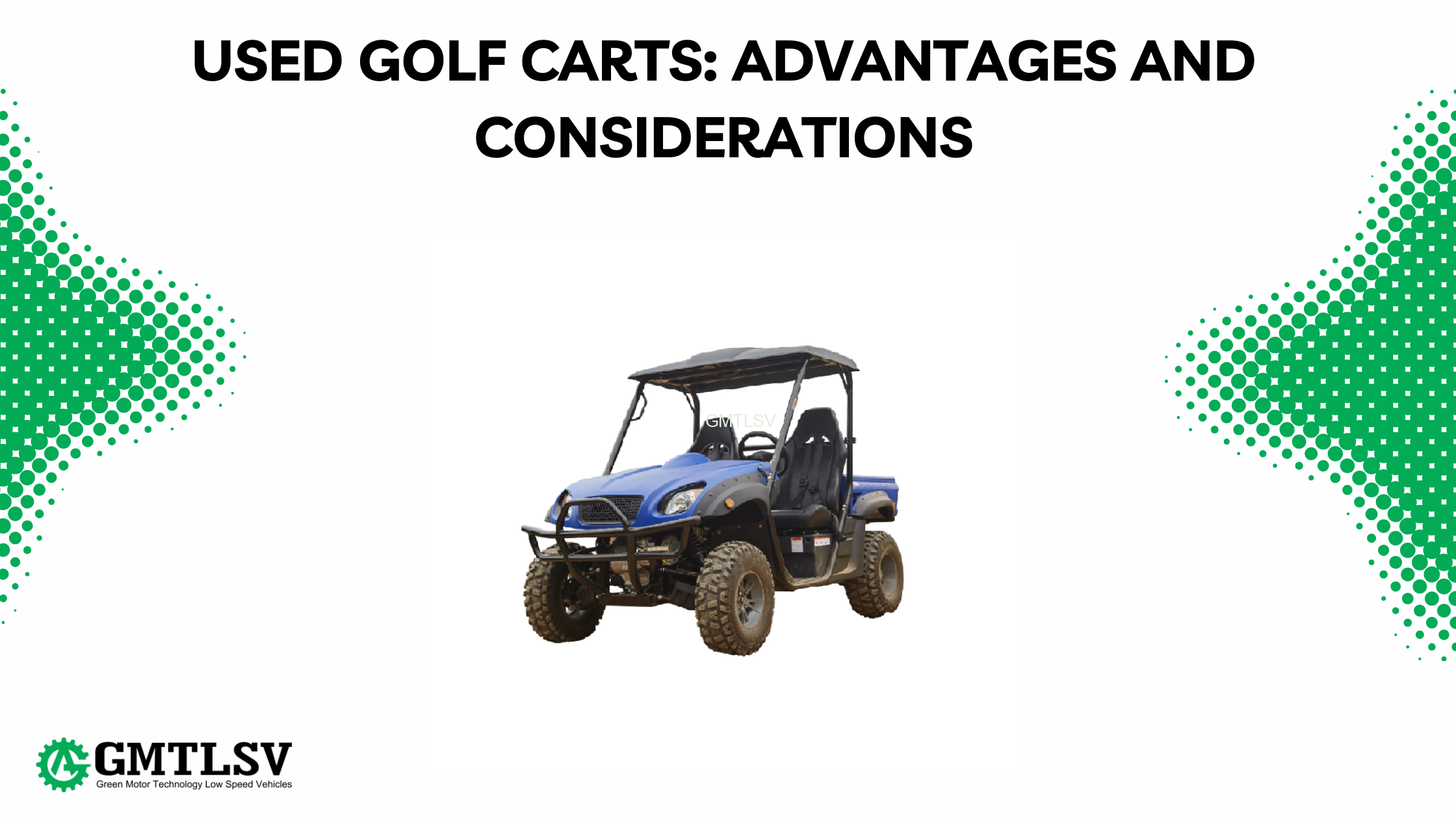
Used gets a bad rap sometimes. But honestly? For a lot of buyers, it’s the smarter play. You just need to know what you’re doing.
Benefits of buying a used golf cart
Let’s talk money first. Because that’s the big one.
Used golf carts cost 40-60% less than comparable new models. A cart that’s $10,000 new might run you $4,500 used. That’s $5,500 you keep in your pocket—or spend on upgrades.
Here’s what else you get:
- Slower depreciation – The previous owner already took the big hit. Your cart holds value better.
- Immediate availability – No waiting for factory orders. It’s sitting right there.
- Proven models – Some older carts have track records. You know what to expect.
- Accessories included – Lots of used carts come with extras already installed. Windshields, enclosures, upgraded seats.
- Negotiation room – Private sellers especially. There’s usually wiggle room on price.
- Vintage options – Some people want that classic look. Hard to get that new.
I’ve seen people pick up solid 5-year-old Club Cars for $4,000. Throw another $800 into it for maintenance, and they’ve got a cart that runs great for years. That’s hard to beat.
Drawbacks of used golf carts
But it’s not all upside. Used comes with risks.
The biggest one? Unknown history. You don’t know how the previous owner treated it. Was it maintained properly? Stored indoors or left outside in the elements? Driven hard or babied?
That mystery can turn into repair bills. Fast.
Other issues:
- Limited or no warranty – Most private sales are as-is. Even dealer warranties are short.
- Outdated technology – Older lead-acid batteries. Slower speeds. Fewer features.
- Battery concerns (electric carts) – This is huge. Batteries are expensive to replace. $800-$2,000 depending on type.
- Cosmetic wear – Scratches, faded seats, sun damage. Normal, but not pretty.
- Fewer financing options – Banks don’t love financing older equipment.
- Parts availability – Really old carts can be tricky. Some parts get discontinued.
Used can be a great deal. Or it can be a money pit. The difference is in the inspection.
What to inspect in a used golf cart
Do not skip this part. Seriously.
Before buying any used golf cart, check everything:
For electric carts:
- Battery age (ask for date codes)
- Battery health (voltage test under load)
- Charger condition and functionality
- Range test if possible
For gas carts:
- Engine compression
- Oil condition (check for metal shavings)
- Exhaust color and smell
- Start-up behavior (hesitation, knocking, smoke)
For all carts:
- Tire tread depth and condition
- Brake functionality
- Steering alignment (should track straight)
- Frame and body for rust, cracks, damage
- Hour meter reading (if equipped)
- Seat condition
- All lights and signals
- Suspension (bounce test)
- Any previous ownership documentation
I’d also recommend a professional inspection if you’re spending more than $3,000. Worth the $50-100 to avoid a $2,000 surprise.
Best scenarios for buying used
Used makes the most sense when:
- You’ll use it occasionally – Weekend rides, seasonal use. Why overpay?
- You’re on a tight budget – Pretty obvious.
- First-time buyer – Learn what you actually need before committing to new.
- Short-term needs – Just need something for a few years.
- Rental property or Airbnb – Guests won’t appreciate the difference between new and used.
- You’re handy – Know your way around small engines or electric systems? You can handle minor issues yourself.
If you’re not chasing the latest features and you’re comfortable with some DIY maintenance, used is almost always better value per dollar spent.
Cost Comparison Breakdown
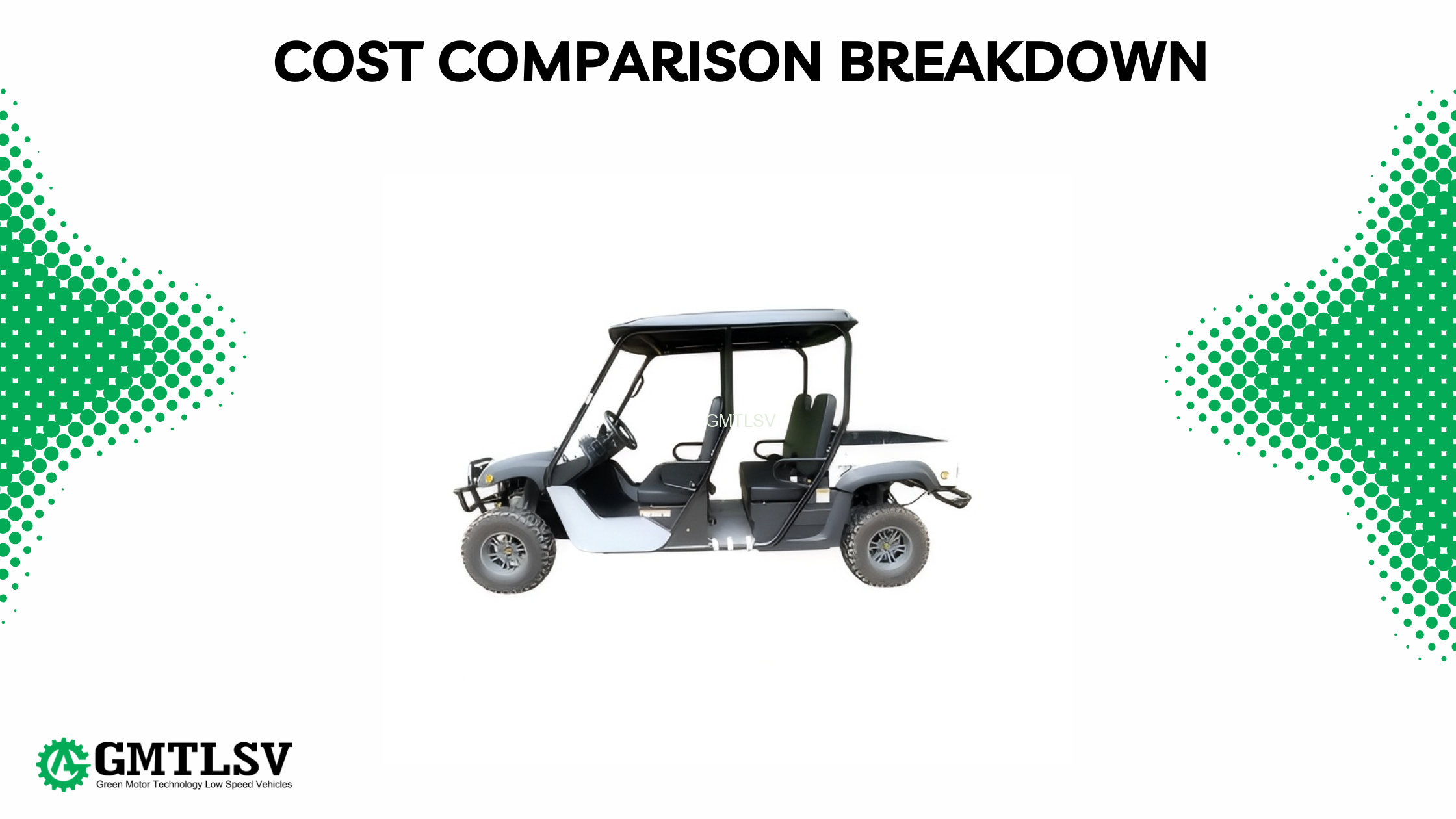
Let’s get into actual numbers. Because “value” doesn’t mean anything without context.
Initial purchase price comparison
Here’s what you’re looking at in 2024:
| Cart Type | New Price Range | Used Price Range |
| Electric 2-seater | $7,000 – $10,000 | $2,500 – $5,500 |
| Electric 4-seater | $9,000 – $14,000 | $3,500 – $7,500 |
| Electric 6-seater | $12,000 – $18,000 | $5,000 – $10,000 |
| Gas 2-seater | $7,500 – $11,000 | $2,000 – $5,000 |
| Gas 4-seater | $9,500 – $14,000 | $3,000 – $7,000 |
| Gas 6-seater | $12,000 – $17,000 | $4,500 – $9,000 |
Brand matters too. Club Car and Yamaha tend to command higher prices—new and used—than off-brand competitors. But they also tend to last longer and hold value better.
Lithium battery carts run $2,000-$4,000 more than lead-acid equivalents. Worth it for some people. Not for others.
Long-term ownership costs
Here’s where things get interesting.
Maintenance (over 5 years):
- New cart: $500-$1,000 (minimal issues, warranty covers most things)
- Used cart: $1,500-$3,500 (depending on age and condition)
Battery replacement (electric):
- Lead-acid pack: $800-$1,200
- Lithium pack: $1,500-$2,500
If you buy a used electric cart with 4-year-old batteries, budget for replacement within a year or two. That cost changes the math significantly.
Insurance (annually):
- New cart: $150-$300
- Used cart: $75-$200
Registration/licensing: Varies by state. Some don’t require it. Others charge $50-$100 annually for street-legal carts.
Repair frequency: New carts rarely need repairs in the first few years. Used carts? Expect something every year or two. Brake cables, solenoids, controller issues, wear items. Budget $200-$500 annually to be safe.
Depreciation factors
This is where new carts really take a hit.
Year 1: New carts lose 20-30% of value. That $10,000 cart becomes $7,000-$8,000.
Years 2-5: Depreciation slows to 10-15% per year.
Used carts: Already depreciated significantly. A 5-year-old cart might only lose 5-10% annually.
What affects resale value:
- Brand reputation (Club Car, Yamaha, EZGO hold value best)
- Overall condition
- Battery health (electric)
- Market demand in your area
- Gas vs electric preferences locally
If you might sell in a few years, used carts give you better value retention percentage-wise.
Total cost of ownership (5-year projection)
Let’s run a real comparison. Two buyers, same basic needs.
Buyer A: New Electric 4-Seater
- Purchase price: $11,000
- Maintenance (5 years): $800
- Battery replacement: $0 (covered by warranty timing)
- Insurance (5 years): $1,000
- Repairs: $200
- Total: $13,000
- Resale value after 5 years: ~$5,500
- Net cost: $7,500
Buyer B: Used Electric 4-Seater (4 years old)
- Purchase price: $4,500
- Maintenance (5 years): $2,000
- Battery replacement (year 2): $1,000
- Insurance (5 years): $600
- Repairs: $800
- Total: $8,900
- Resale value after 5 years: ~$2,000
- Net cost: $6,900
Used comes out ahead by about $600 in this scenario.
But here’s the thing. If that used cart needs a motor rebuild ($1,500) or has frame issues, the numbers flip. New becomes cheaper long-term.
The break-even point? Usually around 7-8 years of ownership. If you’re keeping it that long, new starts making more financial sense. Shorter than that, used usually wins.
Gas vs Electric: How It Affects New vs Used Decision
This is actually one of the most important factors. And it’s more complicated than people think.
New electric golf carts
Electric is where most of the innovation is happening right now.
New electric carts—especially lithium models—offer:
- 30-40+ mile range on a charge
- Quieter operation
- Lower maintenance (no oil changes, fewer moving parts)
- Better acceleration in many cases
- Zero direct emissions
- Consistent power until battery depletes
The downside? Higher upfront cost. Lithium carts especially add $2,000-$4,000 to the sticker price. You also need charging infrastructure—usually just a standard outlet, but something to consider.
New electric carts make sense for most buyers. The technology has matured significantly.
Used electric golf carts
Here’s where you need to be careful.
Used electric carts can be amazing deals. Or they can be expensive mistakes. The difference is almost always the batteries.
Older used carts typically have lead-acid batteries. These are:
- Heavier
- Lower range (15-25 miles typical)
- Require regular water maintenance
- Degrade faster
Battery age is the single most important factor when buying used electric. A 6-year-old cart with 6-year-old batteries needs immediate replacement. That $800-$1,200 cost needs to be factored into your offer price.
Always—always—test batteries under load before buying. Resting voltage doesn’t tell the whole story.
New gas golf carts
Gas carts still have their place. Especially if:
- You have hilly terrain
- You need extended range
- You don’t want to deal with charging
- You’re already comfortable with small engines
New gas carts have cleaner-burning, more fuel-efficient engines than even 5-year-old models. But they still require more maintenance. Oil changes, spark plugs, air filters, belt replacements.
They’re also louder. Some communities restrict gas carts for this reason.
Used gas golf carts
Gas carts are actually safer to buy used in some ways. Why? Because engine problems are easier to diagnose than battery problems.
You can hear if an engine knocks. You can see if it smokes. You can check oil for contamination. It’s more obvious when something’s wrong.
Older gas carts can have carburetor issues, fuel system problems, and worn-out components. But repairs are often straightforward and parts are usually available.
If you’re handy, used gas carts offer the easiest DIY maintenance path.
How long do golf carts typically last?
This question matters a lot for the new vs used decision.
Frame and body: With proper care, 20-30 years. The structure is pretty simple. Rust is the main enemy.
Electric motor: 15-20+ years. They’re remarkably durable.
Batteries:
- Lead-acid: 4-6 years with proper maintenance
- Lithium: 8-12 years
Gas engine: 10-15 years or 1,000-1,500 operating hours. Depends heavily on maintenance.
Everything else: Controllers, solenoids, switches—these fail eventually. Budget for them.
Bottom line: A well-maintained golf cart can easily outlast a car. That’s part of what makes used so appealing. These aren’t disposable machines.
What is the average lifespan of golf cart batteries?
Since this is the biggest concern with used electric carts, let’s dig deeper.
Lead-acid batteries: 4-6 years typical. Can stretch to 7-8 with exceptional maintenance. That means regular watering, proper charging habits, avoiding deep discharge, and keeping terminals clean.
Lithium batteries: 8-10+ years. Some manufacturers claim 3,000-5,000 charge cycles. They’re essentially maintenance-free.
Signs your batteries are dying:
- Reduced range (most obvious)
- Slower acceleration
- Longer charging times
- Batteries getting hot during charge
- Individual cells showing different voltages
- Bulging or leaking (lead-acid)
What kills batteries faster:
- Letting them sit discharged
- Overcharging
- Extreme temperatures
- Neglecting water levels (lead-acid)
- Using wrong charger
Replacement costs: $800-$1,200 for a lead-acid pack, $1,500-$2,500 for lithium. Labor adds $100-$300 if you can’t DIY.
Can I finance a used golf cart?
Yes, but it’s harder than financing new.
Options for used cart financing:
- Dealer financing – Some dealers offer it, but terms are typically worse than new. Higher rates, shorter terms.
- Credit unions – Often the best rates for used equipment. Worth calling around.
- Personal loans – Banks and online lenders. Rates vary wildly based on credit.
- Home equity lines – If you have equity, this can offer lower rates.
What to expect:
- Interest rates 2-5% higher than new cart financing
- Some lenders won’t finance carts older than 5-7 years
- Minimum loan amounts might apply ($3,000-$5,000)
- Shorter loan terms (24-48 months typical)
Many people buying used just pay cash. At $3,000-$5,000, it’s often simpler than dealing with financing hassles.
Are used golf carts reliable?
Honest answer: it depends.
A 5-year-old Club Car that was dealer-maintained and garage-stored? Probably more reliable than you need it to be.
A 10-year-old off-brand cart with unknown history bought from a random guy on Facebook Marketplace? Roll of the dice.
Most reliable used brands (generally):
- Club Car – Especially the DS and Precedent models
- Yamaha – Great engines on gas models
- EZGO – TXT series has a good reputation
Factors that matter more than brand:
- Maintenance history (documentation is gold)
- Storage conditions
- Previous use type (golf course fleet vs private owner)
- How thoroughly you inspect before buying
Red flags to watch for:
- Seller who can’t answer basic questions
- No service records whatsoever
- Multiple owners in short time
- Extremely low price (usually means problems)
- Pressure to buy quickly
Used carts from reputable dealers with some warranty protection are generally safe bets. Private sales require more due diligence.
So which is better value—new or used?
For most recreational buyers, used is the smarter financial choice. You save thousands upfront, depreciation already happened, and a well-chosen used cart runs just as well for your needs.
For commercial operations, long-term owners, and anyone who values warranty protection, new makes sense. The premium buys peace of mind and the latest technology.
There’s no wrong answer. Just the right answer for your situation.
Know what you need. Know what you’re buying. And don’t skip the inspection—especially when used.

