

So you’re trying to figure out who actually makes Club Car golf buggies.
Maybe you’re just curious. Maybe you’re comparing brands. Or maybe you’re a buyer looking at Club Car alternatives and wondering who the real manufacturers are.
Let’s start with the simple answer, then go deeper.
Who Is the Manufacturer of Club Car Golf Buggies?
Club Car, LLC. That’s the company behind the brand.
They’re headquartered in Evans, Georgia, USA. The company has been around since 1958 and moved to the Augusta, Georgia area back in 1962.
Club Car describes itself as a manufacturer of golf cars, utility vehicles, and personal transportation vehicles.
So yes—Club Car is both the brand and the manufacturer. It’s not a badge slapped onto someone else’s product.
Who Owns Club Car?
This part is worth knowing because it comes up a lot.
Club Car has changed hands several times over the decades:
-
1995: Acquired by Ingersoll Rand
-
2021: Sold to Platinum Equity
So today, Club Car operates under Platinum Equity ownership. Ingersoll Rand is no longer involved.
Does this matter for buyers? Not directly—the carts are still built to Club Car specs. But it explains why you sometimes see ownership questions pop up in search results.
Where Are Club Car Golf Buggies Manufactured?
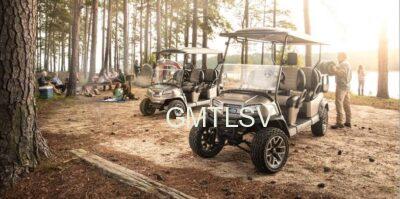
Most Club Car vehicles are assembled at the company’s facilities in Evans, Georgia.
That’s the main manufacturing base. It’s been there for decades, and Club Car has continued to invest in it.
But here’s something a lot of people don’t know: Club Car also has manufacturing operations in China.
According to Club Car’s own FAQ, some vehicles are manufactured in Wujiang, China, for the Asia-Pacific market.
So the honest answer is: most Club Car buggies are American-assembled, but not all of them. It depends on the model and the market.
Does “Made in USA” Mean Every Part Is American?
No, and this is where things get complicated.
Final assembly location doesn’t tell you where every component comes from.
Like most vehicle manufacturers, Club Car sources parts globally. Motors, controllers, batteries, electronics—these can come from various countries.
That doesn’t make the cart bad. It just means “Made in USA” is more about where the vehicle is put together than where every single part was born.
What Types of Golf Buggies Does Club Car Make?
Club Car’s product line has expanded well beyond traditional golf carts.
Today they make:
-
Golf cars for courses and fleets
-
Personal transportation vehicles for neighborhoods and communities
-
Utility vehicles for commercial and industrial use
-
Shuttle and transport vehicles for resorts and campuses
-
LSV (Low-Speed Vehicles) that are street-legal in many areas
So when you see “Club Car,” it’s not just one type of buggy. It’s a whole range of electric vehicles.
Why Is Club Car So Well-Known?
Club Car has been in the game for over 60 years. That’s a long time in any industry.
Here’s what gave them staying power:
-
Early mover advantage. They were building golf carts when the market was still forming.
-
Fleet relationships. Golf courses and resorts standardized on Club Car platforms.
-
Dealer network. They built a global network of authorized dealers and distributors.
-
Product evolution. They moved from basic golf carts into utility, personal transport, and LSV categories.
-
Brand recognition. In many markets, “Club Car” is almost synonymous with “golf cart.”
None of this means they’re the only option. But it explains why they’re one of the first names people think of.
Who Are the Major Golf Cart Manufacturers Besides Club Car?
Club Car isn’t alone at the top.
The traditional “big three” are:
-
Club Car
-
E-Z-GO (owned by Textron)
-
Yamaha
These three have dominated the golf cart market for decades. They control a huge share of fleet sales, dealer networks, and brand recognition.
But the market has changed. Today there are manufacturers all over the world—including a growing number in China.
Are There Golf Buggy Manufacturers in China?
Yes. And this is where things get interesting for buyers.
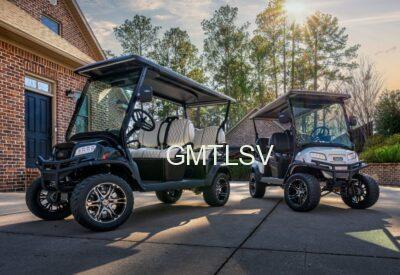
China has become a major manufacturing base for golf carts and low-speed electric vehicles. The country has a mature EV supply chain—motors, controllers, batteries, chassis, and electronics are all available within a well-developed industrial ecosystem.
Chinese manufacturers now produce:
-
Golf carts (2-seat to 8-seat)
-
Lifted and utility models
-
LSVs and street-legal vehicles
-
Sightseeing buses and shuttles
-
Enclosed electric vehicles
-
UTVs and off-road models
Many of these factories are export-oriented. They serve buyers in North America, Europe, Southeast Asia, the Middle East, and beyond.
The quality range is wide, though. Some factories are excellent. Some are trading companies reselling whatever they can find. The difference matters.
Club Car vs. China Golf Cart Manufacturers: What’s the Difference?
Here’s a fair comparison without the hype:
| Factor | Club Car | China Manufacturer |
|---|---|---|
| Brand recognition | Very high | Varies by factory |
| Manufacturing | Brand-controlled platforms | Factory/OEM platforms |
| Customization | Model-dependent, limited | Often OEM/ODM flexible |
| Product range | Established portfolio | Highly configurable |
| MOQ | Dealer/fleet dependent | Factory dependent |
| Pricing | Brand + dealer markup | Factory quotation |
| Spare parts | Dealer network | Factory + distributor support |
| Fleet projects | Available | Available depending on factory |
| Custom design | Limited | OEM/ODM possible |
Neither column is “better.” They serve different buyers with different needs.
If you want a proven brand with dealer support, Club Car makes sense. If you need custom configurations, volume pricing, or OEM branding, a Chinese manufacturer might be a better fit.
How to Choose a Golf Buggy Manufacturer
If you’re sourcing from a manufacturer—especially from China—here’s what to check:
1. Do they actually own a factory?
Ask for a live video tour. Not a pre-recorded marketing video. Real-time, so you can see the production floor.
2. Do they have R&D capability?
Can they design vehicles, or do they just assemble kits? A real manufacturer will have engineering resources.
3. What’s the chassis made of?
Aluminum or steel? What thickness? How is it protected against rust? These details matter.
4. What powertrain do they use?
Motor, controller, axle—brand names or generic? A factory proud of its components will tell you exactly what’s inside.
5. What battery options do they offer?
Lead-acid or lithium? What capacity? What brand cells? Does the BMS communicate properly with the charger?
6. What does their QC process look like?
Incoming inspection. In-process checks. End-of-line testing. Ask for their checklist.
7. What certifications do they have?
CE, DOT, EEC, EPA—depending on your market. A serious exporter will have these ready.
8. Can they supply spare parts long-term?
Can they ship a replacement controller in two weeks? Do they have English-speaking support? Will they still stock parts for your model in three years?
9. Do they have OEM/ODM capability?
Custom branding, colors, seating, battery configuration—if they can’t customize, they’re probably not a real manufacturer.
10. What’s their export experience?
Shipping golf carts overseas requires proper packaging, documentation, and logistics. A factory that regularly exports to your region will understand this.
GMTLSV: A China Golf Cart and Low-Speed EV Manufacturer
This is where we come in.
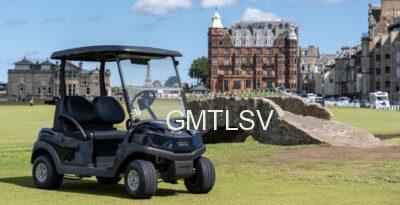
GMTLSV is a China-based manufacturer of golf carts and low-speed electric vehicles. We’ve been building electric vehicles since 1995, and we serve golf courses, resorts, commercial facilities, communities, and fleet operators worldwide.
Here’s what we offer:
Golf carts in multiple configurations—2-seat to 8-seat, lifted, utility, and custom builds.
Low-speed electric vehicles (LSV) for street-legal applications where permitted.
Enclosed electric vehicles for community transport, resort shuttles, and commercial use—with heating and AC options.
Sightseeing buses for campus, resort, and tourism applications.
Utility EVs and UTVs for commercial, agricultural, and industrial use.
OEM/ODM services. Custom branding, colors, seating, battery options, accessory packages. If you need a specific spec, we can build to it.
Global export support. We handle documentation, packaging, and logistics coordination. CE and DOT certification options available.
We’re not Club Car. We don’t claim to be. What we are is a real factory that builds electric vehicles for buyers who need flexibility, competitive pricing, and a manufacturing partner they can work with directly.
Dealer vs. Manufacturer: Which Should You Choose?
This is a question a lot of buyers ask.
Buy from a dealer if:
-
You want a proven brand with local support
-
You need a single cart for personal use
-
You want someone else to handle service and warranty
-
You’re willing to pay a premium for convenience
Buy from a manufacturer if:
-
You’re sourcing multiple vehicles
-
You need custom configurations or OEM branding
-
You want factory-direct pricing
-
You’re comfortable coordinating shipping and logistics
-
You want a long-term manufacturing partner, not just a one-time purchase
The Bottom Line
Who manufactures Club Car golf buggies? Club Car, LLC—headquartered in Evans, Georgia, with most vehicles assembled there and some production in China for the Asia-Pacific market.
But here’s the bigger picture: Club Car is one manufacturer among many. The golf cart industry has expanded well beyond the traditional big three brands.
Today, buyers have options. Chinese manufacturers offer flexibility, customization, and competitive pricing. They’re not for everyone—but for fleet operators, distributors, and buyers who need something specific, they can be a smart choice.
The key is knowing what to look for. Check the factory. Check the components. Check the QC process. Check the after-sales support.
That’s how you end up with a cart that works—whether it says Club Car on the front or not.

