

Custom Golf Carts for South Africa: OEM & ODM Manufacturing Options
In the South African market, golf cart dealers, vehicle brands and fleet operators have different requirements for electric golf carts and low-speed electric vehicles.
If you are a South African dealer or brand owner who has been sourcing standard golf carts from China but still cannot find a manufacturer that can meet your requirements for right-hand drive configurations, distinctive body designs or transparent manufacturing costs, this article is for you.
Some customers simply want to customize an existing model with different colors, seating arrangements, wheels, driving layouts or brand logos. Others want to establish their own product range and need to redesign the body, frame, chassis or drive system. There are also companies that already have complete vehicle designs and established component supply chains but need a manufacturer with engineering capabilities, production facilities and vehicle assembly experience to handle manufacturing and assembly.
These requirements correspond to different levels of cooperation, including OEM, ODM and contract manufacturing.
As a Chinese low-speed electric vehicle manufacturer with complete vehicle assembly experience and a background in motor and drivetrain manufacturing, GMTLSV offers more than standard vehicle customization. We can participate in the entire vehicle development process, from product definition and engineering design to component integration, prototype development and mass production.
Whether you want to customize an existing golf cart, develop a completely new electric vehicle or outsource vehicle manufacturing and assembly based on your own design and supply chain, we can discuss a suitable cooperation model according to your project requirements.
1. What Can Be Customized on an Existing Golf Cart?
For most dealers and fleet buyers, starting with an existing vehicle platform is usually a more cost-effective and manageable option in terms of development time and investment.
If the existing frame, chassis and powertrain already meet the basic application requirements, customization can focus on adjusting vehicle configurations to match the target market and brand positioning.
Right-Hand Drive Is an Engineering Decision, Not a Simple Configuration Switch
For projects targeting South Africa, the left-hand drive or right-hand drive layout should be confirmed during product definition rather than treated as a modification after production.
Changing from LHD to RHD involves more than moving the steering wheel to the opposite side. Depending on the vehicle platform, it may require changes to the dashboard, steering mechanism, pedal positions, wiring harness and cockpit structure.
For existing platforms designed to support different driving layouts, the required modifications can be evaluated according to the project specifications. More extensive structural changes require a separate engineering assessment.
Exterior and Body Customization
- Single-color or two-tone body finishes and custom color schemes.
- Selected plastic body panels and decorative components.
- Front and rear bumpers, roofs and windshields.
- Lighting systems, mirrors and other exterior accessories.
- Brand logos and distinctive styling elements.
Seating and Interior Customization
- 2-, 4-, 6- and 8-seat configurations.
- Seat colors, materials and designs.
- Dashboard and interior color schemes.
- Rear-facing foldable seats and luggage space.
- Seating arrangements adapted to the existing vehicle platform.
Powertrain and Electrical Configuration
- Motor power ratings and motor types.
- Controller specifications and electrical system configurations.
- Lithium battery types and capacities.
- On-board chargers and DC-DC converters.
- Powertrain matching based on target speed, payload and operating conditions.
Wheels, Suspension, Steering and Accessories
- Tires and wheel options.
- Suspension configurations compatible with the existing platform.
- Ground clearance adjustments.
- Left-hand drive (LHD) or right-hand drive (RHD) layouts, subject to platform suitability and project requirements.
- Steering position, dashboard layout, pedal positions and related steering system components.
- Cargo racks, storage compartments, rain curtains, vehicle covers and other functional accessories.
Right-hand drive is particularly important for the South African market. Since standard vehicles manufactured in China are generally designed with left-hand drive configurations, the driving layout and related specifications should be confirmed before production.
Not every configuration can be freely combined. Different frame structures, chassis designs, electrical systems and powertrain specifications have engineering dependencies. GMTLSV evaluates the feasibility of each modification based on the actual vehicle platform.
For dealers who want to introduce their own branded products without developing an entirely new vehicle, this is often a practical starting point. Click here for Golf Cart Product Range.
2. Beyond Configuration: Developing a Completely New Vehicle
Some projects cannot be adequately addressed by modifying an existing model.
For example, a customer may want to develop a completely new golf cart or multi-purpose low-speed electric vehicle with a different appearance, passenger capacity, payload, body dimensions, chassis structure or driving performance.
This requires more than configuration customization. It involves complete vehicle engineering and development.
GMTLSV can participate in the following development activities according to the customer’s product positioning and technical requirements.
2.1 Plastic Components and New Body Design
If a customer wants a distinctive vehicle appearance or an existing model cannot meet the brand’s design requirements, new plastic body components may need to be developed.
The development scope may include:
- New exterior styling and product design.
- Structural design of plastic body panels and functional components.
- Tooling feasibility assessment and mold development coordination.
- Prototype evaluation, assembly matching and subsequent improvements.
GMTLSV coordinates product design, manages the tooling supply chain, organizes component development and ensures integration with the complete vehicle. The actual plastic molds are manufactured by specialized partner tooling companies.
This approach combines complete vehicle design coordination with professional mold manufacturing. Customers do not need to independently coordinate separate design teams, tooling suppliers and vehicle manufacturers.
For dealers and brands seeking to establish their own product identity, this development approach can help create more distinctive vehicle designs.
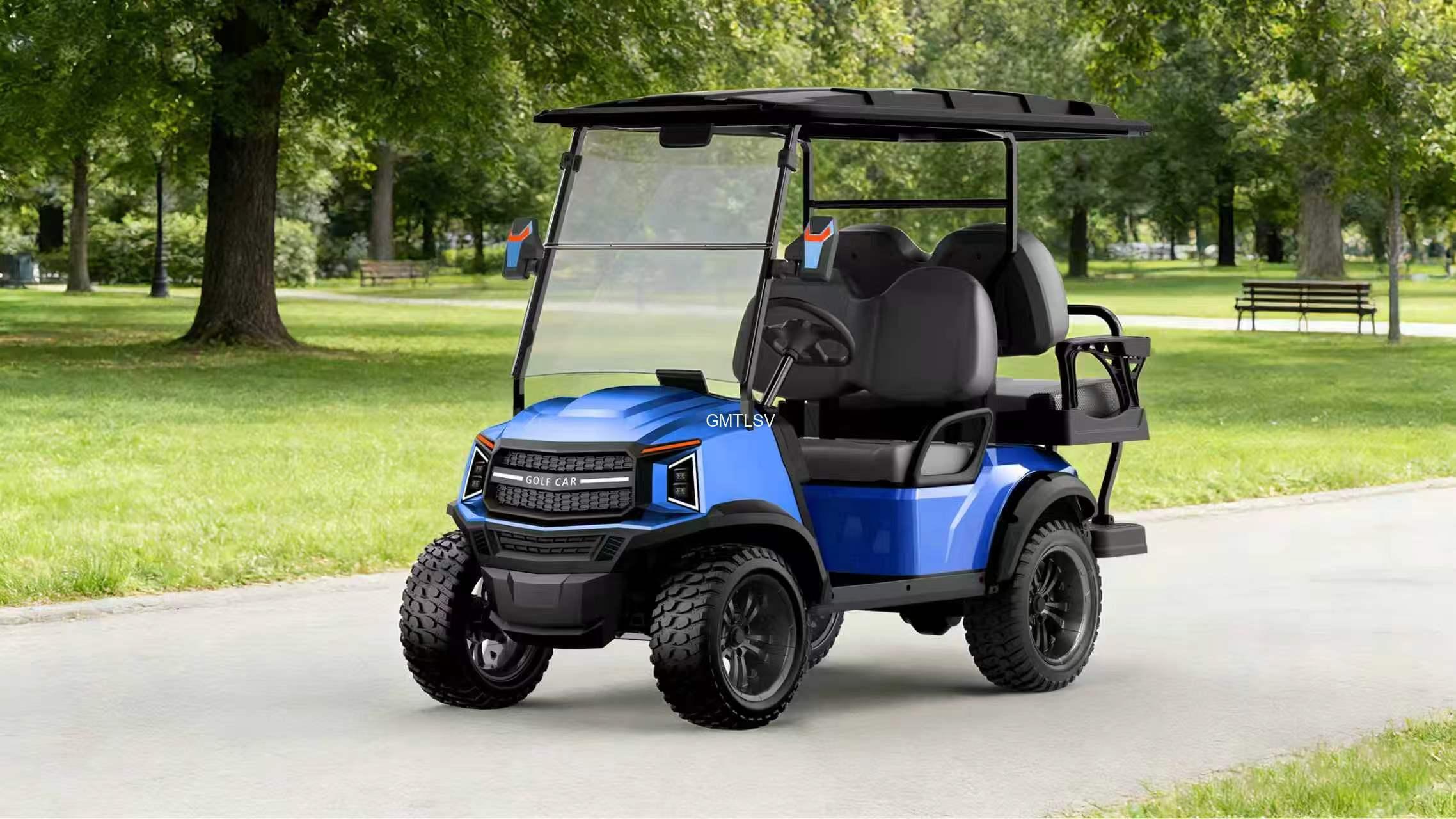
Custom golf carts manufactured for South African dealers
2.2 Frame and Chassis Redesign
The frame and chassis are fundamental elements of complete vehicle development.
If a customer has specific requirements for passenger capacity, maximum payload, vehicle dimensions, wheelbase or operating conditions, an existing vehicle platform may not be suitable without substantial modifications.
GMTLSV has independent structural design capabilities for vehicle frames and chassis. Based on project requirements, we can redesign the relevant structures and provide engineering drawings, structural calculations and related engineering validation.
Development activities may include:
- Replanning seating arrangements according to passenger capacity.
- Redesigning the frame to meet vehicle length, width and wheelbase requirements.
- Adjusting structural designs according to rated payload and load distribution.
- Repositioning batteries, drive systems and other major components.
- Modifying chassis structures to suit specific vehicle applications.
- Carrying out relevant structural calculations, engineering analysis and necessary testing or validation.
If a project involves a larger passenger capacity or higher payload, additional assessments may be required for frame strength, structural rigidity, braking performance and overall vehicle stability.
These requirements cannot be addressed simply by adding more seats or extending the body. They require engineering design and validation at the complete vehicle level.
2.3 Suspension and Chassis Engineering
The suspension system affects not only ride comfort but also load-carrying capacity, handling and vehicle stability under different road conditions.
For different vehicle applications and operating environments, GMTLSV can participate in the redesign of suspension and chassis solutions.
For example:
- Reassessing suspension designs according to different payload requirements.
- Matching chassis structures to revised body dimensions and wheelbases.
- Developing suspension configurations based on road conditions and ground clearance requirements.
- Selecting and matching springs, shock absorbers and related components according to vehicle applications.
- Reassessing steering, braking and wheel alignment requirements.
In South African applications such as farms, estates, resorts and industrial sites, vehicles may need to operate on gravel roads, slopes, uneven surfaces and under varying load conditions.
Suspension and chassis engineering should therefore be based on actual operating requirements rather than simply selecting individual components or specifications.
Custom golf cart frame and chassis engineering
2.4 Drive System Development and Matching
Drive system development is one of the areas where GMTLSV has its own manufacturing background and technical experience.
Different vehicle projects may have significantly different requirements for speed, driving range, climbing ability, payload and road conditions. Therefore, the same motor and controller configuration cannot simply be applied to every vehicle.
GMTLSV can participate in drive system development and matching according to the target vehicle specifications, including:
- Motor type, power rating and operating speed.
- Controller specifications and output capacity.
- Battery voltage and capacity.
- Transmission systems, reduction mechanisms and drive axles.
- Front-wheel drive, rear-wheel drive and four-wheel drive (4WD) configurations.
- Target maximum speed, climbing ability and driving range.
During development, factors such as gross vehicle weight, maximum payload, tire size, gear ratio, road gradient, operating speed and usable battery energy must be considered together.
For example, a four-seat golf cart mainly used on flat roads within a resort may require a very different powertrain and chassis configuration from a multi-purpose electric vehicle designed to transport goods on farm roads.
GMTLSV’s motor, controller, drive axle and complete vehicle engineering resources can provide more integrated system-matching support for these projects.
2.5 Left-Hand Drive and Right-Hand Drive Vehicle Development
For markets such as South Africa, the United Kingdom and Australia, driving orientation is an important consideration during vehicle development.
If a customer plans to develop a vehicle specifically for the South African market, GMTLSV can evaluate the required right-hand drive layout, including:
- Steering wheel and steering mechanism positioning.
- Dashboard and cockpit structure.
- Brake and accelerator pedal positions.
- Steering system components and related connections.
- Electrical wiring harnesses and cockpit configurations.
- Installation compatibility with the frame, body and other vehicle components.
For a completely new vehicle, the LHD or RHD layout can be defined at the beginning of the product design process. This helps avoid unnecessary structural modifications at a later stage.
For existing models, the required conversion scope must be assessed according to the original platform design. You can click here to check GMTLSV multiple vehicles : [ Custom Golf Cart Models / Electric Vehicle Engineering]
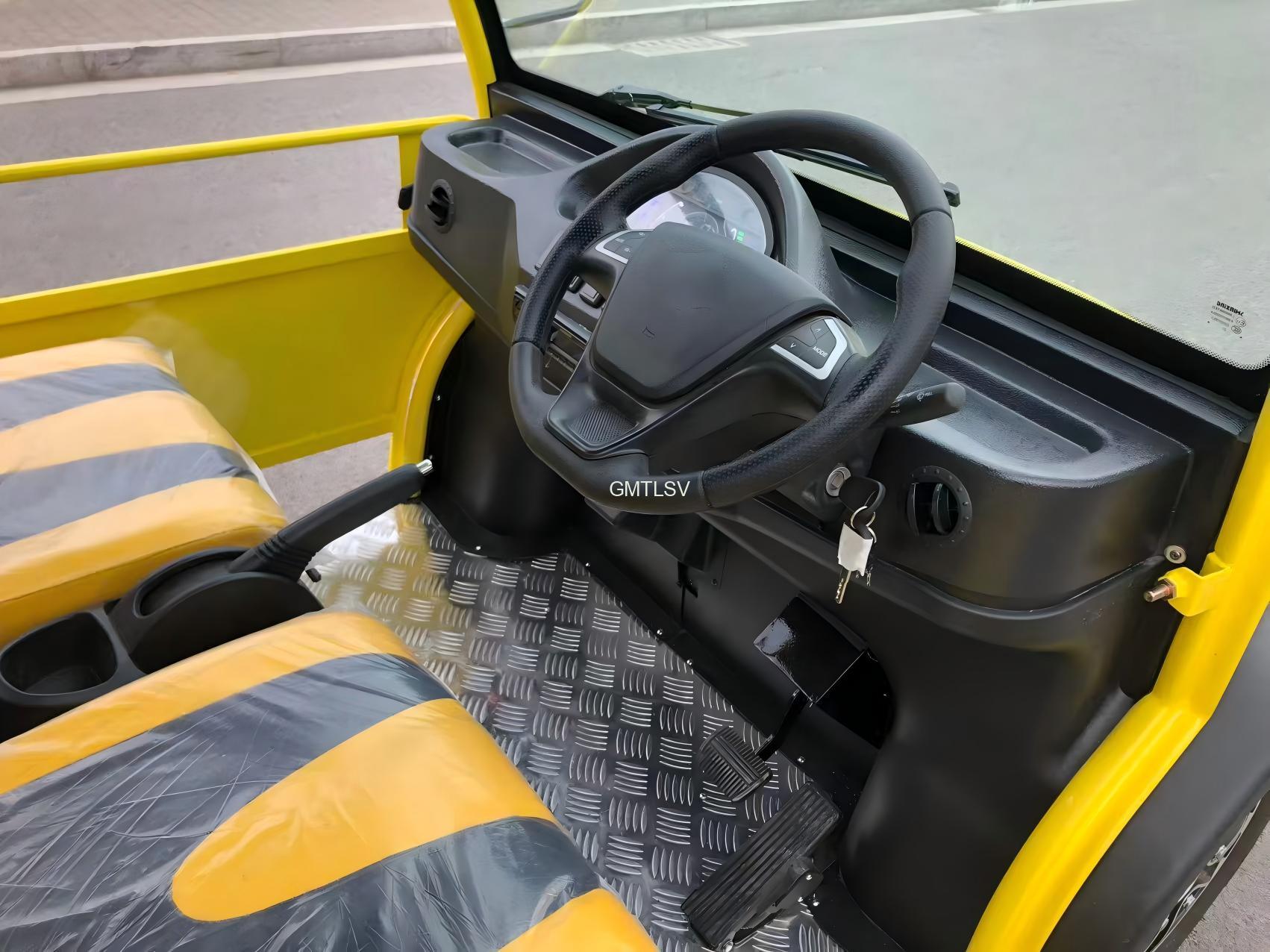
Right-hand drive golf cart development for South Africa
3. Two Ways to Develop Your Own Vehicle: OEM and ODM
Customers do not necessarily need to follow the same development approach.
Depending on their in-house design capabilities, supply chain resources and project management arrangements, GMTLSV can support two main vehicle development models.
Option A: OEM – Develop Your Own Branded Vehicle
If you already have product designs, technical specifications or clearly defined vehicle development requirements, GMTLSV can participate in engineering development and manufacturing based on the technical方案 agreed by both parties.
The cooperation scope may include:
- Technical evaluation of customer designs.
- Body, frame and chassis engineering development.
- Plastic component design coordination and tooling development management.
- Powertrain and electrical system integration.
- LHD/RHD layout adaptation.
- Prototype manufacturing and technical validation.
- Mass production and quality control.
- Vehicle manufacturing under the customer’s brand and product specifications.
You retain control over your brand, product positioning and design direction, while GMTLSV undertakes the engineering and manufacturing responsibilities defined in the project agreement.
For dealers looking to develop a private-label golf cart brand in South Africa, OEM cooperation offers a practical way to move beyond standard vehicle sourcing and build a more distinctive product range.
Option B: ODM – Develop a Vehicle Together with GMTLSV
If you have a product concept, target market or basic performance requirements but do not have complete technical designs, you can also consider ODM cooperation with GMTLSV.
You provide the initial product requirements, such as:
- Target passenger capacity.
- Rated payload.
- Vehicle dimensions.
- Maximum speed.
- Target driving range.
- Climbing ability.
- LHD or RHD requirements.
- Main operating environments.
- Exterior styling and brand positioning.
GMTLSV can then participate in product definition, engineering design, frame and chassis development, system integration, prototype development and mass production.
This model is suitable for dealers, brands and project developers who want to establish their own vehicle product range but do not have a complete in-house vehicle engineering team.
OEM and ODM are not necessarily two completely separate approaches. In actual projects, the division of responsibilities can be adjusted according to the design resources and technical capabilities of each party.
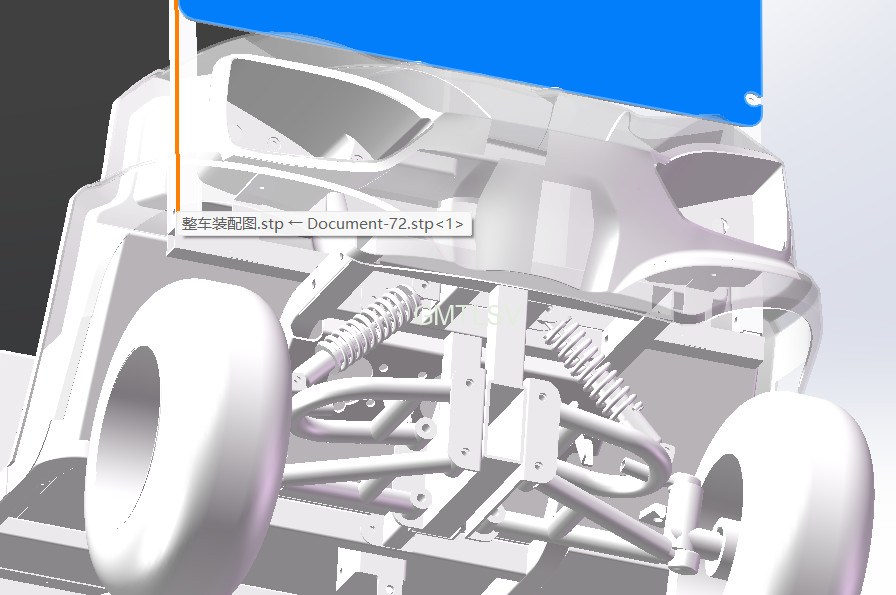
Golf cart OEM and ODM vehicle development
4. Customer-Designed Vehicles: Contract Manufacturing with Open BOM Costing
In addition to traditional OEM and ODM cooperation, GMTLSV is also open to another manufacturing model:
The customer manages the product design and component supply chain, while GMTLSV handles vehicle production, assembly and quality control.
Some brands already have established engineering teams and long-term relationships with component suppliers. They may not need a manufacturer to redesign the entire vehicle.
Instead, they may already have:
- Complete vehicle designs and technical drawings.
- A defined bill of materials (BOM).
- Component specifications and technical standards.
- Selected suppliers for major components.
- Established purchasing and supply chain arrangements.
What they need is a manufacturing partner capable of receiving components, organizing production, assembling complete vehicles, carrying out inspections and delivering products according to the agreed technical documents and quality standards.
This can be described as contract manufacturing for golf carts or, more broadly, complete vehicle assembly based on customer-owned designs and supply chains.
4.1 Customer-Selected Component Suppliers
Under this cooperation model, customers can nominate their own suppliers for major components, including:
- Batteries and battery management systems (BMS).
- Motors.
- Motor controllers.
- Tires and wheels.
- Drive axles and transmission systems.
- Chargers and other electrical components.
- Other customer-specified vehicle parts.
GMTLSV can work with the customer’s selected supply chain and organize vehicle manufacturing and assembly according to the confirmed technical specifications, BOM and quality standards.
This means customers do not have to abandon their existing supplier relationships simply to work with a vehicle manufacturer. They can continue managing their own component sourcing and brand supply chain.
For components sourced from different suppliers, technical compatibility, interfaces, specifications, installation requirements and quality responsibilities must be confirmed before the project begins. This helps ensure that all components can be properly integrated into the complete vehicle.
4.2 Transparent BOM and Assembly Cost Structure
We understand that brands with their own products and supply chains place considerable importance on manufacturing cost transparency.
For suitable contract manufacturing projects, GMTLSV can provide itemized BOM costing and separate manufacturing expenses from component costs.
The cost structure can include the following:
1. Material and Component Costs
Individual components and material costs are listed according to the confirmed BOM. For customer-nominated components, the purchasing and settlement arrangements can be calculated according to the agreement between both parties.
2. Assembly Labor Costs
Reasonable assembly labor costs are calculated according to the assembly processes, production complexity and actual labor input.
3. Infrastructure and Manufacturing Overhead
Production-related expenses, including factory facilities, equipment, production infrastructure and relevant manufacturing management costs, are reasonably allocated according to the resources used by the project.
4. Manufacturing Profit
An agreed and reasonable manufacturing profit margin is calculated separately based on the above cost structure.
This approach allows customers to understand how complete vehicle manufacturing costs are structured and provides a more transparent commercial basis for cooperation between the manufacturer and the brand owner.
Unlike a traditional vehicle quotation that combines all expenses into a single finished-vehicle price, open-BOM manufacturing allows customers to see the breakdown of material costs, assembly labor and manufacturing expenses.
| Traditional Complete Vehicle Quotation | Open-BOM Contract Manufacturing |
|---|---|
| One combined vehicle price | Itemized materials, labor, manufacturing overhead and agreed profit |
| Supplier selection may be limited by the manufacturer | Customer-selected suppliers can be accepted |
| Limited visibility into individual cost components | Cost structure and adjustment mechanisms can be agreed in advance |
Specific arrangements covering BOM management, supplier payments, inventory ownership, material losses, quality responsibilities and cost adjustment mechanisms should be clearly defined before formal cooperation begins.
For brands that want to retain control over their product designs and component supply chains while working with a long-term vehicle manufacturing partner, this is a cooperation model worth considering.
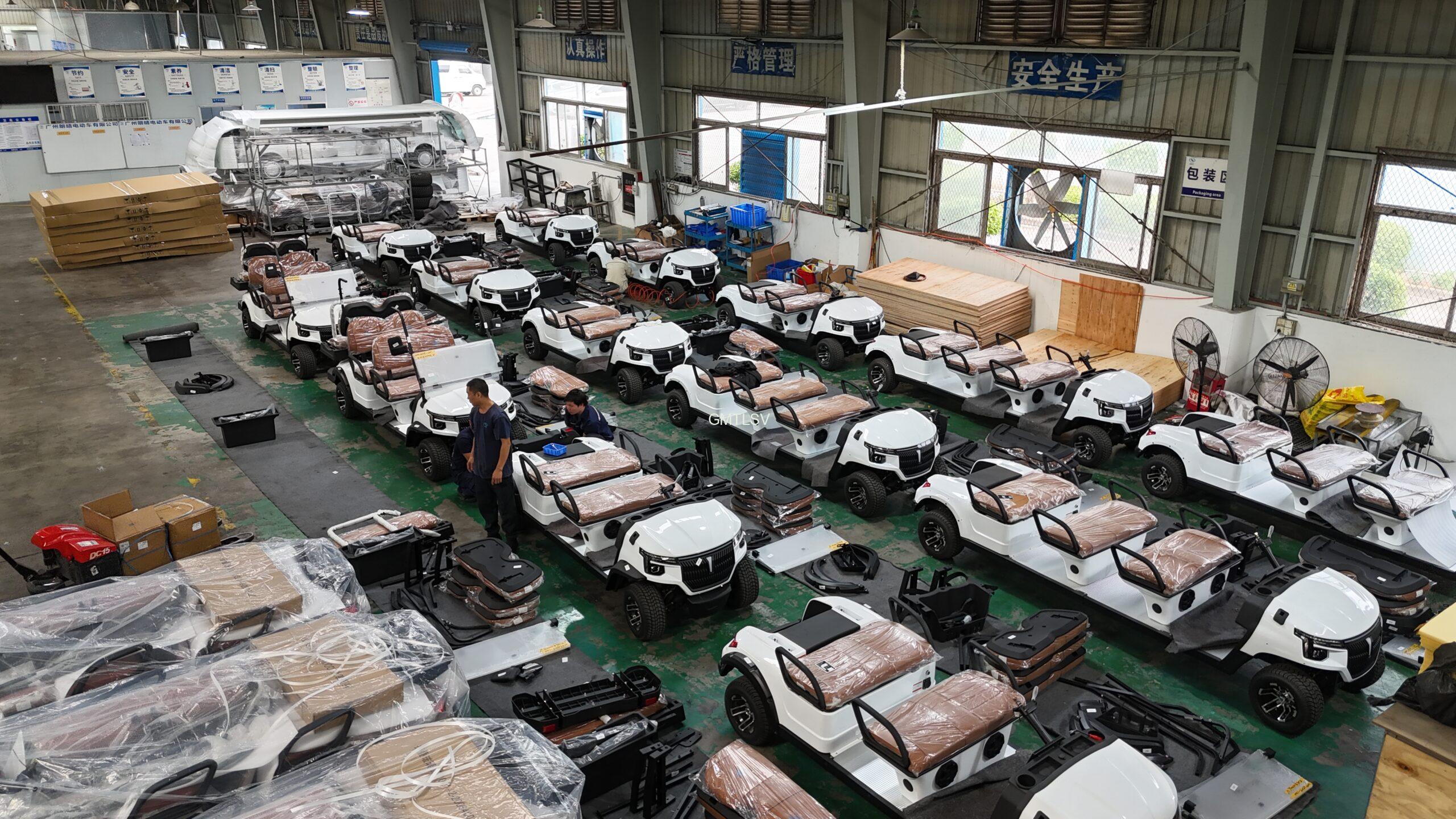
Custom golf cart frame and chassis engineering
5. From Product Concept to Mass Production: Our Development Process
Whether a project involves customization of an existing model, complete vehicle development or contract manufacturing based on customer designs, a clear technical confirmation and production management process is essential.
A typical development process includes the following steps:
Step 1 – Project Requirements
Define the target market, application, vehicle type, passenger capacity, payload, performance requirements, driving orientation and budget.
Step 2 – Technical Review and Engineering Design
Evaluate the product design, frame, chassis, steering system, powertrain, key components and engineering feasibility. For new vehicle projects, structural design and relevant calculations may also be required.
Step 3 – BOM and Cost Evaluation
Confirm major components, material sources, customer-nominated suppliers, development expenses, manufacturing costs and the quotation structure.
Step 4 – Prototype Development
Manufacture prototypes according to project requirements and carry out structural, assembly compatibility and necessary functional evaluations.
Step 5 – Sample Approval
Confirm the vehicle appearance, configuration, technical specifications, performance targets and acceptance criteria.
Step 6 – Mass Production
Organize production according to the technical documents, BOM and prototype standards approved by both parties.
Step 7 – Quality Inspection and Delivery
Carry out the required vehicle function checks, quality inspections, pre-delivery inspection (PDI) and export packaging.
The engineering complexity of each project is different. Simple configuration changes, modifications to existing platforms and completely new vehicle development involve different development schedules, costs and prototype validation requirements.
Therefore, a detailed project schedule can be established after the initial technical evaluation.
Click here to see: GMTLSV Quality Control / Manufacturing Process
6. MOQ, Prototype Development and Project Lead Time
There is no single minimum order quantity (MOQ) that applies to every custom vehicle project.
For adjustments to existing models, such as colors, seats, accessories or brand logos, the MOQ can be evaluated according to current production arrangements and component sourcing requirements.
If a project involves exclusive body styling, plastic tooling, frame redesign, right-hand drive structural adaptation or a new powertrain configuration, additional factors must be considered, including engineering investment, tooling costs, component sourcing and expected production volume.
We generally evaluate projects across three levels:
Standard Configuration: Selection and adjustment of configurations based on existing vehicle models.
OEM Customization: Exclusive configurations and partial engineering modifications according to customer brand and product requirements.
New Vehicle Development: Complete vehicle engineering involving body, frame, chassis, steering and powertrain development.
For contract manufacturing projects where customers provide complete designs and BOMs, the MOQ and production arrangements can be evaluated separately according to component availability, assembly processes and production volume.
Prototype quantities, tooling costs, MOQ and lead times are all determined according to the actual project requirements.
7. Quality Control for OEM and ODM Vehicles
Compared with standard vehicle models, customized vehicles require greater attention to technical documentation management and consistency during mass production.
During project execution, particular attention should be given to:
- Final approved technical specifications and BOM.
- Models and quality standards of key components.
- Consistency between approved prototypes and mass-produced vehicles.
- Motor, controller, battery and transmission system matching.
- Frame, chassis and assembly quality.
- Braking, steering, lighting and other vehicle function checks.
- Pre-delivery inspection (PDI) and export packaging.
For projects involving customer-selected suppliers, incoming inspection criteria, supplier quality responsibilities and procedures for handling non-conforming components should also be agreed in advance.
For new frame, chassis and suspension development projects, appropriate structural validation and testing plans should be established according to the design requirements.
A clear quality management process helps prevent responsibility gaps between product design, component procurement and vehicle manufacturing. GMTLSV Quality Control procedure you can see here.
8. Custom Golf Carts and Complete Vehicle Development for South Africa
The South African market needs more than standard golf carts. It also offers opportunities for specialized vehicles and low-speed electric vehicle projects designed for different applications.
Depending on the operating environment, potential development projects may include:
Resorts and Safari Lodges: Vehicles with different passenger configurations, luggage space, right-hand drive layouts and specifications suited to resort roads and property operations.
Golf Courses: Vehicles with exclusive branding, seating arrangements and exterior configurations.
Farms and Estates: Cargo vehicles, tool carriers and multi-purpose utility vehicles.
Industrial Sites: Vehicles for material transportation, towing and maintenance operations.
Special Vehicle Projects: Vehicles with specialized bodies and functional configurations developed according to specific project requirements.
Consider a typical South African project: a dealer wants to develop a six-seat right-hand drive golf cart for a safari lodge, equipped with an aluminum cargo bed and a lithium battery from the customer’s nominated supplier.
Under an open-BOM contract manufacturing arrangement, GMTLSV can review the customer’s BOM, confirm component interfaces and quality standards, complete vehicle assembly and provide an itemized breakdown of material and labor costs. The customer can retain its existing battery supplier relationship without giving up control of its component sourcing.
If an existing vehicle platform cannot meet the project requirements, the customer can also discuss further development of the vehicle structure, chassis, driving layout and drive system.
For the South African market, right-hand drive requirements, local road conditions, vehicle registration and applicable certification requirements should all be considered during product definition rather than after the vehicle has been manufactured. Click here to check: Electric Utility Vehicles for South African Farms and Industrial Sites.
9. Start Your Custom Vehicle Project with GMTLSV
GMTLSV does not limit OEM and ODM cooperation to simple private labeling or configuration changes.
Whether you want to establish your own branded golf cart range based on an existing platform, develop a completely new low-speed electric vehicle or find a manufacturing and assembly partner for your own vehicle design and component supply chain, we are open to discussing a suitable cooperation model.
For projects where local customization is mainly limited to exterior changes, GMTLSV can offer a broader scope of support by combining motor and controller manufacturing, frame and chassis engineering, and open-BOM vehicle assembly. Our goal is to support deeper product development rather than simply make surface-level modifications.
Our manufacturing background includes motors, controllers, drive systems and complete low-speed electric vehicle assembly. By coordinating vehicle engineering, component manufacturing resources, specialized tooling partners and production facilities, we can support projects with different levels of complexity.
If you are looking for a custom golf cart manufacturer for South Africa, an OEM/ODM partner or a manufacturer capable of supporting your own low-speed electric vehicle development project, contact GMTLSV to discuss your requirements.
To help us make an initial project assessment, please provide the following information:
- The vehicle type or product concept you want to develop.
- Target passenger capacity and payload.
- Vehicle dimensions and main performance requirements.
- Left-hand drive or right-hand drive requirements.
- Existing design drawings or reference models, if available.
- Whether you already have a BOM and nominated component suppliers.
- Expected prototype quantity and mass production volume.
- Target market and intended operating environment.
Whether you need a customized existing model, a completely new vehicle or a transparent contract manufacturing partner for your own design, GMTLSV is ready to discuss the right development and manufacturing approach with you.
Frequently Asked Questions
Can GMTLSV develop a completely new golf cart design?
Yes. Depending on project requirements, GMTLSV can participate in new body design, plastic component development through specialized tooling partners, frame and chassis redesign, suspension engineering and drive system development. Engineering drawings, structural calculations and relevant validation can be provided as part of the agreed development scope.
Can GMTLSV manufacture right-hand drive golf carts for South Africa?
Right-hand drive configurations can be evaluated for existing platforms or incorporated into new vehicle development. The scope may include steering layout, dashboard, pedals, steering components and related structural adaptations, depending on the vehicle design and engineering assessment.
Can I use my own design and component suppliers?
Yes. GMTLSV can accept customer-selected suppliers for major components, including batteries, motors, controllers, tires and other vehicle parts. Technical specifications, interfaces, quality standards and responsibilities are confirmed before production.
Does GMTLSV provide transparent BOM costing?
Yes. For suitable contract manufacturing projects, GMTLSV can provide itemized BOM costing and separate accounting for material costs, assembly labor, infrastructure and manufacturing overhead, and an agreed manufacturing profit.
Can I develop my own golf cart brand?
Yes. Customers can discuss branded vehicle development based on existing platforms or pursue more extensive OEM/ODM development according to their product requirements.
What is the MOQ for a custom golf cart project?
MOQ depends on the customization level, tooling requirements, component sourcing and production complexity. Standard configuration changes, OEM customization and complete new vehicle development require different evaluations.
How long does a new golf cart development project take?
The development timeline depends on design readiness, engineering changes, tooling, prototype testing and component availability. A project-specific schedule can be prepared after technical review.


