

Look, gas golf carts aren’t complicated machines. But they do need attention. Skip the maintenance and you’re looking at breakdowns, expensive repairs, and a cart that dies way before it should.
I’ve seen people spend $3,000 fixing problems that a $50 oil change would’ve prevented. It’s frustrating to watch, honestly.
Regular maintenance keeps your cart running strong, maintains resale value, and saves you money long-term. We’re talking potentially 20+ years of life from a gas golf cart if you treat it right. Neglect it? Maybe 7-8 years if you’re lucky.
This guide covers everything. The full maintenance schedule – daily checks through annual service. What things actually cost, both DIY and professional. The essential tasks you can’t skip. Seasonal prep. And answers to the questions people ask us most at GMT LSV.
Gas Golf Cart Maintenance Schedule
A structured maintenance schedule isn’t optional. It’s how you keep small problems from becoming expensive ones.
Your manufacturer probably has a recommended schedule. Follow it. But usage matters too. A golf course cart running 8 hours daily needs way more attention than a neighborhood cruiser used on weekends.
Here’s what a solid maintenance schedule looks like.
Daily/Before Each Use Inspection
This takes maybe 5 minutes. Do it anyway.
Quick checklist before you drive:
- Check tire pressure visually (they look low?)
- Look underneath for any fluid leaks
- Test the brakes before moving
- Turn the steering wheel – feels normal?
- Check lights and signals work
- Verify fuel level
- Start it up and listen for anything weird
Most people skip this entirely. Then they’re stranded somewhere with a flat tire or no brakes. Not worth it.
Weekly Maintenance Tasks
Set aside 15-20 minutes once a week.
Weekly tasks:
- Clean the exterior and undercarriage (dirt causes corrosion)
- Check starter battery connections for corrosion
- Inspect belts visually for cracks or wear
- Check all fluid levels
- Look at tires closely for damage or uneven wear
- Test the horn and any safety features
The cleaning matters more than people think. Salt, dirt, grass – it all eats away at components over time.
Monthly Maintenance Requirements
Now we’re getting into the stuff that actually prevents problems.
Monthly checklist:
- Oil level check – top up if needed, but watch for consumption issues
- Air filter inspection – hold it up to light, if you can’t see through it, clean or replace
- Brake inspection – look at pads, check cable tension
- Tire rotation – consider rotating for even wear
- Grease fittings – hit all the zerk fittings with grease
- Fuel lines – look for cracks, brittleness, leaks
- Exhaust system – check for rust, holes, loose connections
- Carburetor area – clean debris away from the air intake
Each one of these catches problems early. That grease on the fittings? Prevents squeaking and premature wear on suspension and steering. The fuel line check? Prevents fires. Seriously.
Quarterly Maintenance (Every 3 Months or 50 Hours)
This is where you start doing real service work. Some of this you can DIY. Some probably needs a professional.
Quarterly service items:
- Oil and filter change (you can do this yourself)
- Spark plug inspection and cleaning
- Air filter replacement
- Fuel filter check/replacement
- Drive belt inspection
- Brake adjustment
- Carburetor cleaning
- Valve clearance check (this one’s tricky – might want professional help)
The oil change is the big one. Fresh oil every 50 hours or 3 months keeps the engine happy.
If you’re not comfortable adjusting valves or cleaning carburetors, no shame in taking it to a shop. Better than messing something up.
Semi-Annual Maintenance (Every 6 Months or 100 Hours)
Time for comprehensive service. Honestly, I’d recommend professional service for this one unless you really know what you’re doing.
Semi-annual checklist:
- Complete oil change with new filter
- Spark plug replacement
- Thorough brake system inspection
- Suspension check – bushings, shocks, mounts
- Steering system lubrication and inspection
- Transmission fluid check (some carts have this)
- Cooling system inspection (air cooling fins, fan)
- Full safety inspection – everything that could hurt someone
This is where a trained eye catches things you might miss. Worn suspension bushings, loose steering components, brakes that are about to fail. Worth the service cost.
Annual Maintenance (Yearly or 200 Hours)
Major service time. This is the big one.
Annual service items:
- Complete tune-up
- Carburetor rebuild or thorough cleaning
- Fuel system cleaning
- Replace ALL filters
- Valve adjustment
- Compression test
- Full brake service – new pads/shoes if needed
- Tire replacement if worn
- Complete fluid flush and replacement
- Wiring inspection
Get a certified technician for this. Compression tests tell you engine health. Valve adjustments require precision. Carburetor rebuilds need experience.
This is also when you find out what’s coming. A good tech will tell you “hey, you’ve probably got another year on that belt, but watch it” or “your brakes are fine now but plan on doing them next time.”
Heavy Use/Commercial Maintenance Schedule
Golf courses. Resorts. Rental operations. You’re running carts hard.
Forget the calendar schedule. Go by hours.
Adjusted schedule for heavy use:
- Oil changes every 50 hours, no exceptions
- Weekly air filter checks, monthly replacement
- Monthly spark plug inspection
- Weekly brake inspection
- Daily fluid level checks
- Quarterly comprehensive service
- Semi-annual major service
A golf course cart might run 1,000+ hours per year. Compare that to a recreational cart doing maybe 100-150 hours. The maintenance needs aren’t even close.
Track your hours. Most gas carts have an hour meter. If yours doesn’t, install one. They’re cheap and essential for commercial use.
Gas Golf Cart Maintenance Costs Breakdown
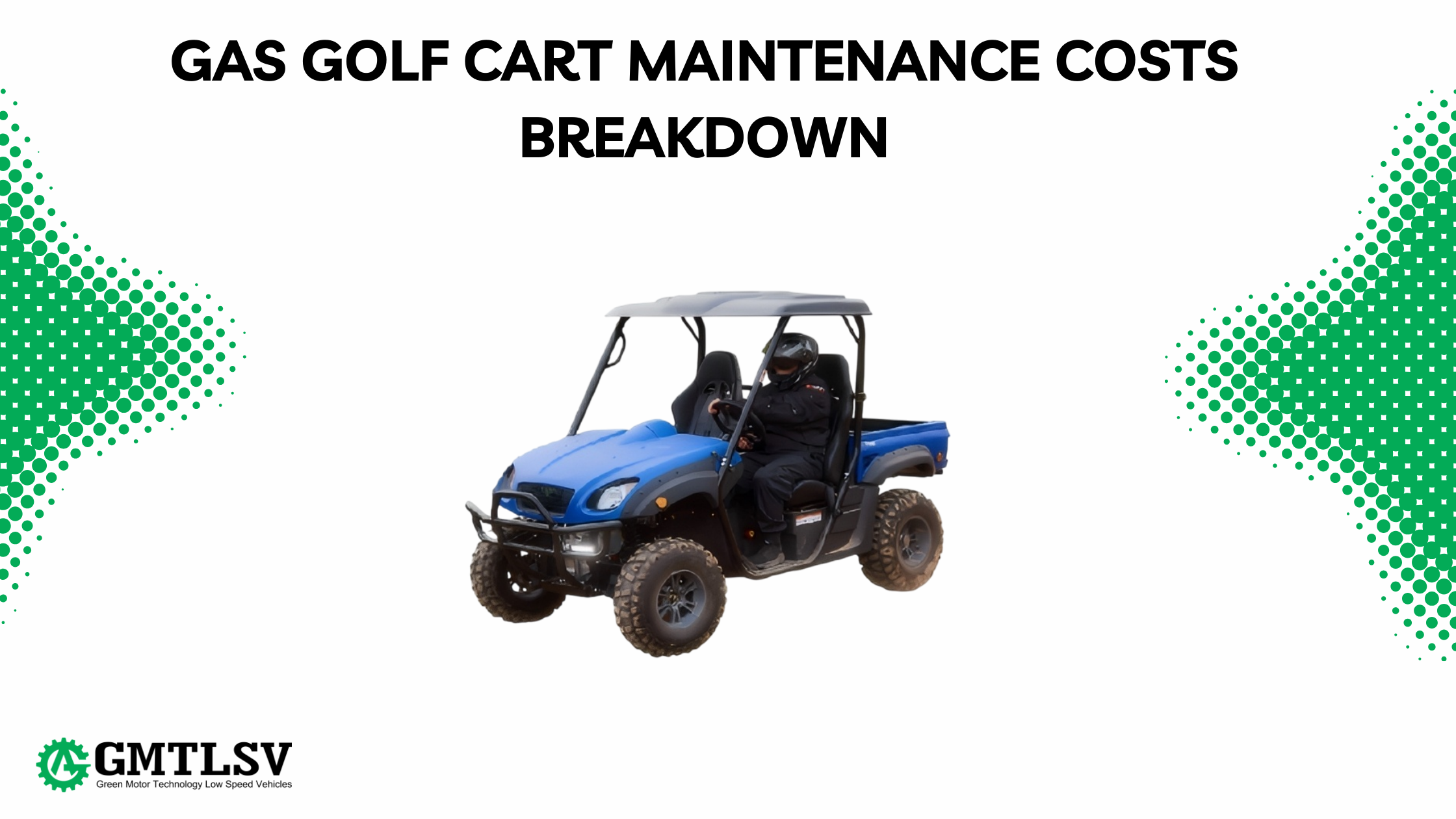
Here’s where people get nervous. But honestly? Gas golf cart maintenance is pretty affordable. Especially compared to what repairs cost when you skip maintenance.
Costs depend on a few things. DIY or professional service. OEM parts or aftermarket. Your cart’s age and condition. Where you live. Who you use for service.
Think of maintenance as an investment. $500 per year in maintenance prevents $3,000 repair bills. That’s just math.
Professional Maintenance Service Costs
Taking it to a shop costs more but saves time and catches things you might miss.
Typical professional pricing:
- Basic oil change: $50-80
- Quarterly service: $100-150
- Semi-annual service: $150-250
- Annual comprehensive service: $300-500
- Diagnostic fee: $50-100
- Labor rate: $75-125 per hour
Regional variation is real. Shop in Florida might charge differently than one in Arizona. Get quotes from a few places.
Some shops offer maintenance packages. Might be worth looking into if you want to set it and forget it.
Unexpected Repair Costs
This is the stuff that happens when maintenance gets skipped. Or just bad luck sometimes.
Potential repair costs:
- Engine rebuild: $800-1,500
- Transmission repair: $400-800
- Carburetor replacement: $150-300
- Electrical system repairs: $100-500
- Body damage repair: $200-1,000
Engine rebuilds are the scary one. Running low on oil, ignoring overheating, never changing filters – that’s how you end up needing one.
Most of these repairs are preventable. That’s the frustrating part. Regular maintenance catches problems before they become expensive.
Annual Total Cost of Ownership
Let’s put real numbers on this.
Light use (recreational – weekends, neighborhood driving):
- Annual maintenance: $300-600
- Includes: 2 oil changes, filters, annual service, minor parts
Moderate use (regular daily use):
- Annual maintenance: $600-1,000
- Includes: 3-4 oil changes, quarterly services, parts replacement as needed
Heavy use (commercial operations):
- Annual maintenance: $1,000-2,000
- Includes: Monthly services, frequent parts replacement, multiple comprehensive services
These numbers assume you’re actually doing the maintenance. Skip it and you’re not saving money. You’re deferring cost – and it comes back with interest.
Cost Comparison: Maintenance vs. Neglect
Let me show you the math on this. Five year comparison.
Regular maintenance over 5 years:
- Annual maintenance: $500 average
- Parts replacement: $300 average
- Total 5-year cost: $2,000-3,000
- Cart condition at end: Running strong, good resale value
Neglecting maintenance over 5 years:
- Year 1-2: $0 (feels great)
- Year 3: Engine problems, $500 repair
- Year 4: Transmission issues, $600 repair
- Year 5: Engine rebuild or replacement, $1,200
- Plus: carburetor replacement, brake overhaul, various breakdowns
- Total 5-year cost: $5,000-10,000
- Cart condition at end: Worn out, low resale value, might need replacement
I’ve seen this play out over and over. The guy who changes his oil regularly is still running his cart at 15 years. The guy who “saves money” by skipping maintenance is buying a new cart at year 8.
Essential Gas Golf Cart Maintenance Tasks
Some maintenance tasks are more critical than others. These are the ones you absolutely cannot skip.
Engine Oil Changes
This is the single most important maintenance task. Full stop.
Why it matters: Oil lubricates, cools, and cleans the engine. Old oil breaks down, gets contaminated, and stops protecting. Run too long without changes and you’re looking at premature engine wear or failure.
Recommended oil: Most gas golf carts use 10W-30 automotive oil. Check your owner’s manual. Some manufacturers specify different weights.
Change frequency: Every 125 hours of use OR every 6 months. Whichever comes first.
Oil capacity: Typically 1.2-1.5 quarts, but varies by engine.
DIY process:
- Run the engine briefly to warm the oil
- Remove drain plug, drain completely
- Replace drain plug
- Remove old filter, install new one
- Add correct amount of fresh oil
- Run engine, check for leaks
- Verify oil level
Dispose of used oil properly. Most auto parts stores take it for free.
Cost: DIY $25-40, Professional $50-80
Spark Plug Service
Spark plugs ignite the fuel. When they’re worn or fouled, performance suffers.
Role in engine performance: Creates the spark that ignites the air-fuel mixture. Worn plugs mean weak spark, incomplete combustion, hard starting.
Inspection frequency: Every 50-100 hours.
Reading spark plug condition:
- Light tan/gray: Running correctly
- Black and sooty: Running rich (too much fuel)
- White/blistered: Running lean (too hot)
- Wet: Oil burning problem
- Electrode worn: Time to replace
Gap specification: Check your manual. Usually around 0.028-0.030 inches. Adjust with a gap tool.
Replacement schedule: Every 100-200 hours.
Choosing correct plugs: Match the manufacturer’s specification exactly. Wrong heat range causes problems.
Cost: Plugs $8-15, professional service including installation $40-60.
Fuel System Maintenance
Fuel system problems are super common. Especially with ethanol in modern gas.
Key tasks:
Fuel filter replacement: Every 6-12 months. They’re cheap insurance. A clogged filter starves the engine of fuel.
Carburetor cleaning: Prevents hard starting, rough running, and poor performance. Varnish from old fuel gums up the jets.
Fuel line inspection: Look for cracks, hardness, or soft spots. Old rubber deteriorates. Leaking fuel is a fire hazard.
Fuel stabilizer: Use it if the cart sits for more than 2-3 weeks. Ethanol fuel goes bad faster than you’d think.
Draining old fuel: If fuel has been sitting for months, drain it. Old fuel causes more carburetor problems than anything else.
Ethanol issues: E10 fuel attracts water, causes corrosion, and breaks down rubber. Consider ethanol-free fuel if available in your area.
Cost: Fuel filter $10-20, professional carburetor cleaning $80-150.
Brake System Care
Brakes are a safety system. Don’t mess around here.
Inspection schedule: Monthly visual check, quarterly thorough inspection.
Brake fluid: Some carts have hydraulic brakes – check fluid level monthly. Top up with DOT 3 or specified fluid.
Tire Maintenance and Care
Tires affect handling, ride quality, and safety. Easy to overlook, important to maintain.
Proper inflation: Typically 18-22 PSI. Check your door sticker or manual. Check pressure when tires are cold.
Rotation schedule: Every 50-100 hours. Helps even out wear patterns.
Tread depth monitoring: Replace when tread is worn smooth or showing wear bars. Worn tires lose traction.
Battery Maintenance (Starter Battery)
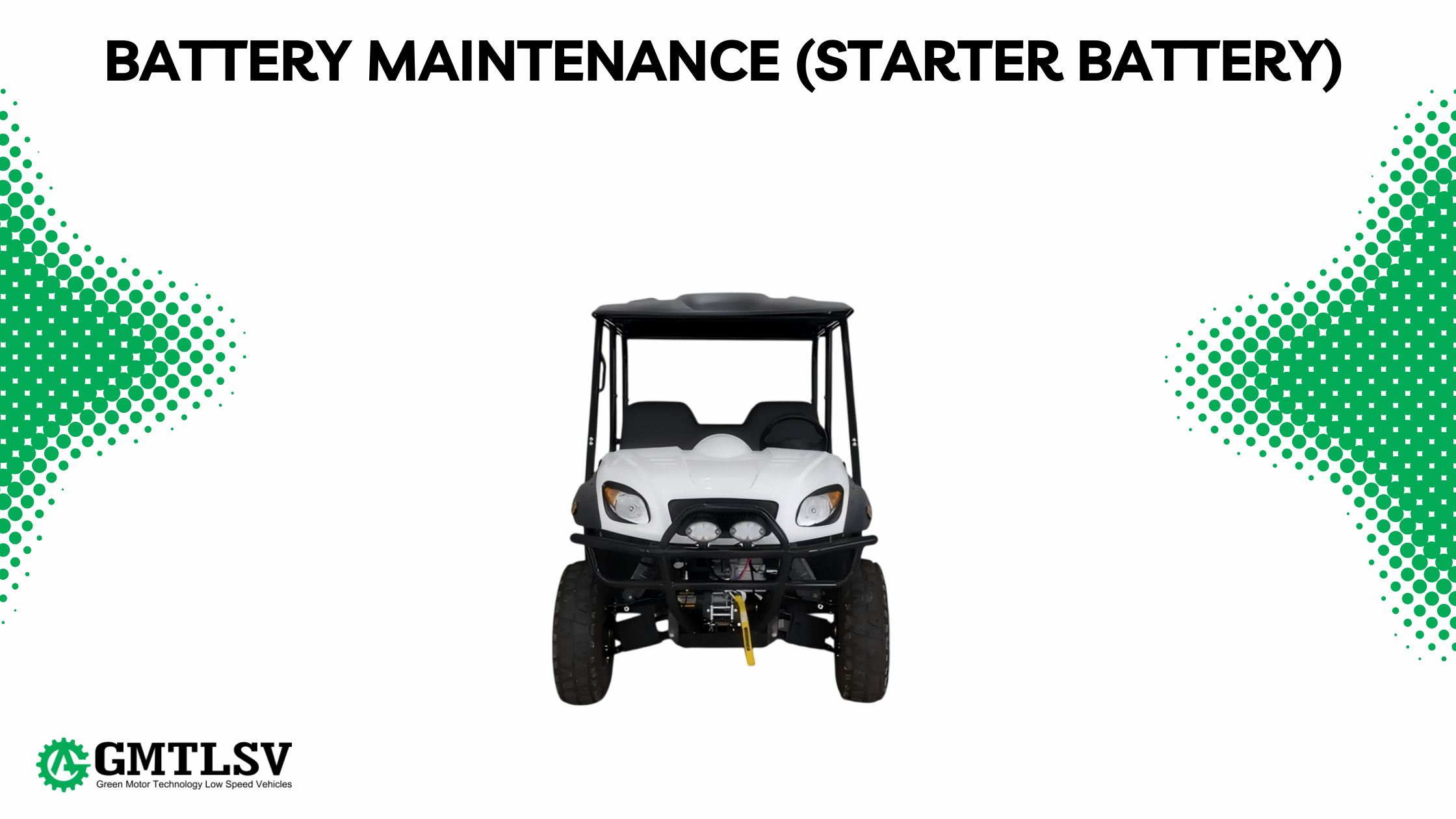
Gas golf carts use a 12V battery for starting and accessories. Don’t confuse this with electric golf cart battery banks – totally different.
Regular checks:
- Clean terminals (baking soda and water works great)
- Check connections are tight
- Look for corrosion
- Test voltage (should be 12.4V+ when fully charged)
Testing charge: A multimeter tells you battery health. Below 12V consistently? Battery’s dying.
Replacement indicators:
- Slow cranking when starting
- Clicking but no start
- Needing frequent jump starts
- Battery is 3-4+ years old
Storage practices: If storing the cart, either remove the battery or use a battery tender/maintainer. Letting it drain completely kills batteries.
Cost: Replacement battery $50-100, expect to replace every 3-4 years.
Carburetor Cleaning and Adjustment
Carburetors are old technology but still on most gas golf carts. They need attention.
Why carburetors get dirty: Fuel varnish builds up, especially from ethanol fuel sitting too long. Small passages in the jets get blocked.
Symptoms of carburetor problems:
- Hard starting (especially when cold)
- Rough idle
- Poor acceleration
- Stalling
- Black smoke (running rich)
- Backfiring (running lean)
Cleaning frequency: At minimum annually. More often if you have fuel issues.
Adjustment basics: Carburetors have mixture screws and idle speed screws. Get a service manual for your specific cart – adjustments vary.
When to rebuild vs. replace:
- Rebuild if the body is in good shape, just dirty
- Replace if there’s damage, excessive wear, or rebuild doesn’t solve problems
- Rebuild kits are much cheaper than new carburetors
Cost: Cleaning $80-150, rebuild $150-300, replacement $200-400.
How often should I change the oil in my gas golf cart?
Every 125 hours of operation or every 6 months – whichever comes first.
Why this frequency? Oil breaks down over time, both from use and just from sitting. The detergents deplete, viscosity changes, and contamination builds up.
Go too long? You’re looking at increased engine wear, reduced performance, and eventually engine damage. I’ve seen engines with sludge buildup from skipped oil changes. Not pretty.
Change more often if you’re in dusty conditions, doing a lot of stop-and-go, or running in extreme temperatures.
How much does annual gas golf cart maintenance cost?
Depends on usage:
- Light use (recreational): $300-600/year
- Moderate use (daily driver): $600-1,000/year
- Heavy use (commercial): $1,000-2,000/year
DIY saves money – maybe half the cost of professional service. But you need tools, time, and knowledge.
These numbers include routine maintenance, normal parts replacement, and occasional repairs. They don’t include major unexpected repairs or accidents.
Is gas golf cart maintenance expensive?
Honestly? Not compared to electric carts over time.
Electric golf cart battery packs need replacement every 5-7 years. That’s $800-2,000 each time. Gas cart maintenance runs $300-600 per year for light use.
Over 10 years:
- Gas cart maintenance: $3,000-6,000
- Electric cart with one battery replacement: $4,000-8,000
Plus gas engines are more repairable. Electric carts sometimes need expensive controller or motor replacements.
The key is actually doing the maintenance. Skipping it doesn’t save money – it costs more in repairs.
How do I winterize my gas golf cart?
Step-by-step:
- Clean thoroughly – don’t store dirt on the cart
- Fuel – fill tank and add stabilizer, OR drain completely
- Run engine to circulate stabilized fuel
- Change the oil – fresh oil sits better than dirty oil
- Remove battery or connect to tender
- Check tire pressure, slightly over-inflate
- Cover with breathable cover
- Store in dry location if possible
Why each step matters:
- Dirty fuel gunks up carburetor
- Old oil contains acids that corrode
- Dead batteries can freeze and crack
- Low tires can develop flat spots
- Moisture under solid covers causes rust
Skip winterizing and you’ll spend spring fixing problems that were completely preventable.


