

Look, if you’re reading this, you’re probably stuck. Gas or electric. Two solid options. Both have people swearing by them.
I get it. This isn’t a simple choice.
Maybe you’re buying your first golf cart for the neighborhood. Maybe you’ve got 50 acres and need something that won’t quit halfway through the property. Or maybe you just want to cruise to the clubhouse without overthinking it.
Here’s the thing. There’s no universal “best” option. Gas carts do some things better. Electric carts win in other areas. And what works perfectly for your neighbor might be completely wrong for you.
This guide breaks it all down. Performance, costs, maintenance, lifespan, terrain handling—everything that actually matters when you’re spending a few thousand dollars.
At GMT LSV, we’ve seen people make great decisions and we’ve seen people regret their choice six months later. The difference usually comes down to understanding what you actually need versus what sounds good on paper.
Let’s figure out which one makes sense for you.
What is a Gas Golf Cart?
A gas golf cart runs on an internal combustion engine. Same basic concept as your car, just smaller. You fill it with gasoline, turn the key, and the engine does its thing.
Most gas carts run 9-11 horsepower engines. Not huge, but enough to haul you and your clubs around without struggling. Some utility models go higher.
These were the original golf carts. Electric came later. And honestly, a lot of people still prefer the feel of a gas-powered machine.
What is an Electric Golf Cart?
Electric golf carts run on batteries and an electric motor. No gas, no combustion, no engine noise. You plug it in, charge it up, and drive.
The battery voltage varies. Older carts might run 36V systems. Newer ones typically use 48V. High-performance and street-legal models sometimes go 72V.
More voltage generally means more power. But it also means more battery cost.
Electric carts have become the modern standard. Most golf courses run all-electric fleets now. The technology keeps getting better, and for a lot of uses, they just make more sense.
Gas vs Electric Golf Cart: Key Comparison Factors
Alright. Here’s where it gets real.
Choosing between gas and electricity isn’t about which one is “better.” It’s about which one fits your situation. Your terrain. Your budget. How you’ll actually use the thing.
I’m going to break down every factor that matters. Some will lean gas. Some will lean electric. By the end, you’ll know which trade-offs work for you.
1. Performance & Power
Gas carts have more raw power. That’s just physics. A combustion engine delivers consistent torque, especially under load.
On flat terrain, you won’t notice much difference. Both types cruise around 15-20 mph comfortably. But start climbing hills? Different story.
Gas carts handle steep inclines better. They don’t lose power the way some electric carts do when the battery gets low. If you’ve got hilly property or rough terrain, gas gives you that extra muscle.
Electric carts accelerate smoother though. No engine rev-up, just immediate torque from the motor. It feels more refined. Quieter too.
For golf courses, electric makes sense. Flat, maintained paths. No need for extra power. For hunting property with elevation changes? Gas might serve you better.
Top speeds are similar—both can hit 18-20 mph depending on the model. But some electric carts come governed lower, around 12-15 mph. Check the specs before you buy.
2. Operating Cost & Fuel Efficiency
This is where electric starts winning.
Gas carts burn fuel. Current prices fluctuate, but let’s say you’re averaging $3.50-4.00 per gallon in most areas. A typical gas cart gets maybe 30-40 miles per gallon. Not terrible.
For 50 rounds of golf per year, figure maybe 3-4 gallons of gas. That’s $12-16 annually just in fuel. For heavier use—daily driving on your property—costs go up significantly.
Electric carts cost pennies to charge. Literally.
A full charge on a 48V system runs about $0.50-1.00 in electricity, depending on your local rates. That gets you 25-40 miles of range. Do the math over a year, and you’re looking at maybe $50-100 in electricity versus several hundred in gas for equivalent use.
The gap widens with heavy use. If you’re driving daily, electric saves you real money.
3. Maintenance Requirements
Gas carts need regular maintenance. Same as any engine.
Oil changes every 100-150 hours of operation or annually. Air filters, spark plugs, fuel filters—all need periodic replacement. Belts wear out. Clutches need attention. Carburetors can get finicky.
Expect to spend $150-300 annually on gas cart maintenance if you’re doing some work yourself. More if you’re paying a shop for everything.
Electric carts are simple.
There’s not much to maintain. No oil. No filters. No spark plugs. The motor is basically maintenance-free. Brakes need occasional attention. Tires wear like any vehicle.
The main thing is battery maintenance. If you have lead-acid batteries, you’ll need to check water levels monthly. Keep terminals clean. Follow proper charging practices.
Lithium batteries? Even less maintenance. Just charge them and go.
Annual maintenance costs for electric: maybe $50-100. Sometimes less. The mechanical simplicity is a real advantage.
4. Initial Purchase Price
Gas carts cost less upfront. Usually.
A new entry-level gas cart runs $5,000-7,000. Mid-range options hit $8,000-12,000. Premium models with all the features can go higher.
Electric carts start around $6,000-8,000 for basic models. Mid-range is $9,000-14,000. And once you start looking at lithium battery options, prices climb to $12,000-18,000 or more.
The battery is the expensive part. A quality lithium battery pack can cost $2,000-5,000 by itself. That’s built into the electric cart price.
If your budget is tight, gas gives you more cart for less money upfront. Just know the operating costs will balance things over time.
5. Environmental Impact
Electric wins this one. No contest.
Gas carts produce emissions. Carbon monoxide, hydrocarbons, nitrogen oxides. Not huge amounts compared to a car, but it adds up across a golf course fleet.
They’re also loud. Engine noise carries. That matters on a peaceful golf course and in residential neighborhoods.
Electric carts produce zero direct emissions. No exhaust, no fumes. If you’re charging from solar or renewable energy, the environmental impact is minimal across the board.
Many golf courses now mandate electric-only. It’s cleaner, quieter, and aligns with environmental certifications many courses pursue.
Gated communities and HOAs often prefer or require electric too. Noise ordinances in some areas effectively ban gas carts from neighborhood streets.
If environmental impact matters to you—or your golf course requires it—electric is the only option.
6. Range & Refueling/Recharging
Gas carts have unlimited range as long as you have gas. Run low? Two-minute fill-up at any gas station. Back on the road.
That’s a real advantage for large properties or extended use. You’re never stranded waiting for a charge.
Electric cart range depends on the battery. Most get 25-40 miles per charge under normal conditions. Some high-capacity lithium setups push past 50 miles.
But here’s the catch. Charging takes time.
Standard charging is 6-8 hours for a full charge from empty. Overnight, basically. Fast chargers cut that to 2-3 hours, but they cost extra and aren’t always good for long-term battery health.
For typical use—golf course, neighborhood cruising, property circuits—electric range is plenty. Most people never come close to draining the battery in a day.
But if you need to go all day without stopping? Or if you don’t have reliable access to an outlet? Gas makes more practical sense.
7. Speed & Acceleration
Factory settings put most carts in similar ranges.
Gas carts typically top out at 18-20 mph. Electric carts range from 12-20 mph depending on model and configuration.
Gas accelerates with a bit of delay—the engine needs to rev. You get the familiar sound and feel of combustion power building.
Electric acceleration is instant. Step on the pedal, the motor responds immediately. It feels quick off the line even if top speed is similar.
For street-legal LSVs, you need minimum 20 mph capability for most states. Both gas and electric can meet that, but check the specific model. Some basic electric carts don’t reach that speed.
Speed governors can usually be adjusted by dealers if you need more top end. Within reason.
8. Lifespan & Durability
Both types can last a long time. We’re talking 10-20+ years with proper care.
Gas carts have proven longevity. The engines are robust. Even when they eventually wear out, engine rebuilds are possible. Plenty of gas carts from the 1990s still running today.
Electric carts can last even longer in some cases. The motor has fewer moving parts to wear out. The frame and body last indefinitely with basic care.
The asterisk on electric is batteries.
Lead-acid batteries last 5-7 years typically. Then you’re looking at $800-1,500 for a new set. Lithium batteries last 10+ years, but replacement costs $2,000-5,000.
So the cart itself might outlive the batteries by decades. You’ll replace battery packs at least once or twice over the cart’s lifetime.
Gas carts might need engine work eventually, but a rebuild runs $500-1,000. And many engines go decades without major issues.
Long-term, it roughly evens out. Electric might have an edge on total lifespan, but those battery replacements are real costs.
9. Noise Level
Electric carts are nearly silent. Just a quiet hum from the motor and tire noise. That’s it.
Gas carts sound like gas carts. Engine running, exhaust rumbling. Not motorcycle-loud, but definitely audible. Probably around 75-85 decibels when operating.
For golf, quiet matters. Nobody wants to hear an engine while lining up a putt. This is why most courses went electric years ago.
For neighborhoods, quiet matters too. Early morning cruises to the mailbox won’t wake anyone with an electric cart. Gas might draw some looks.
If you’re using the cart on a farm or large property away from neighbors? Noise probably doesn’t matter much. But in any shared or residential environment, electric is far more considerate.
10. Resale Value
Both types depreciate, but differently.
Gas carts hold value reasonably well. The engines are familiar, parts are available, and buyers know what they’re getting. A well-maintained gas cart might retain 40-50% of value after 5 years.
Electric cart resale depends heavily on battery condition.
A 5-year-old electric cart with healthy batteries holds good value. But if the batteries are near end-of-life? Buyers factor in that $1,000-4,000 replacement cost. It kills resale.
Lithium-equipped carts hold value better because the batteries last longer. Buyers pay more knowing they won’t need immediate replacement.
The used market trends toward electric, especially for golf course and neighborhood use. But you need to be transparent about battery age and health. That’s what buyers care about most.
11. Weather & Climate Considerations
Climate affects performance. More than most people realize.
Gas carts handle cold weather better. The engine runs the same whether it’s 80°F or 20°F. Cold starts might need a moment, but performance stays consistent.
Electric batteries don’t like cold.
Below freezing, battery capacity drops 10-30%. Your 40-mile range becomes 28-35 miles. In extreme cold—below 0°F—performance suffers more. Batteries can be damaged if left in deep cold while discharged.
Hot weather affects both types but differently. Batteries generate heat during use and charging. Excessive heat can shorten battery lifespan. Most electric carts have thermal management, but it’s still a factor in desert climates.
If you’re in Minnesota or Maine, gas might be more practical for winter use. If you’re in Arizona, you’ll want to protect electric batteries from extreme heat.
Moderate climates? Either type works fine year-round.
What Type of Golf Cart is Better for Different Uses?
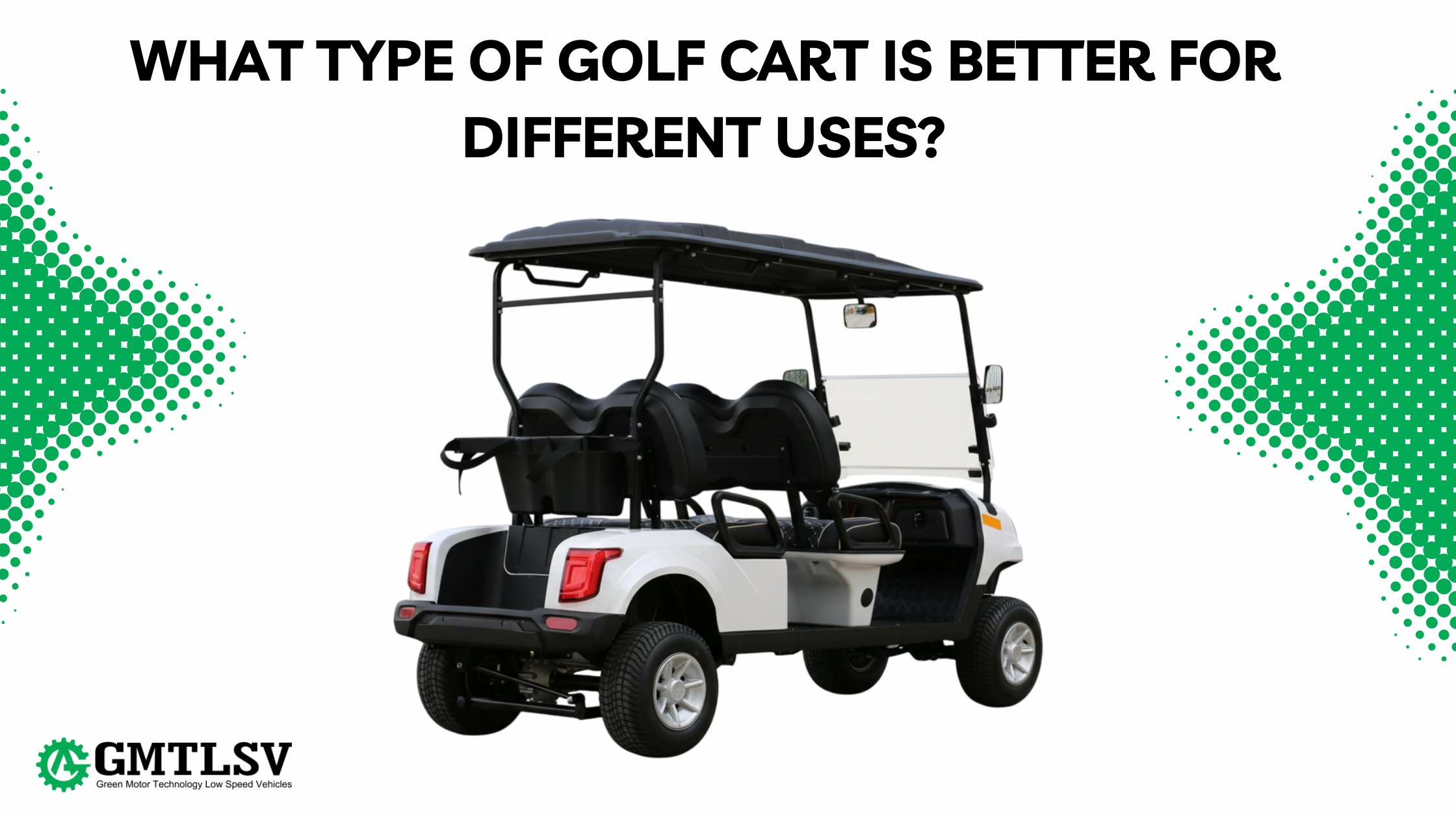
“Better” is relative. It depends on what you’re actually doing.
Let me break down specific scenarios.
Best for Golf Courses
Electric. Almost always.
Most courses mandate electric anyway. Even if they don’t, electric makes sense for golf.
Golf courses are flat or gently rolling. No extreme terrain. Electric handles that easily. The quiet operation respects other players. No emissions mean no fumes drifting across fairways.
Charging infrastructure is built in—courses have plugs everywhere. Range is plenty for 18 holes.
I can’t think of a scenario where gas makes more sense for actual golf course use. Electric is the standard for good reason.
Best for Personal/Residential Use
Electric wins here too, for most people.
Neighborhood streets, gated communities, running to the pool or clubhouse. Electric handles all of it quietly and cheaply.
You plug in at home overnight. No trips to the gas station. No noise complaints from neighbors. HOAs generally prefer or require electric.
Distances are short. Range is never an issue. You’re probably driving 2-5 miles in a typical day of neighborhood use.
The only exception might be if you don’t have a convenient outdoor outlet. But even then, running an extension cord usually solves it.
Best for Large Properties & Farms
Gas often makes more sense here.
Large acreage means long distances. If you’re covering 50+ acres throughout a day, electric range might not cut it. Especially if you’re hauling loads, which drains batteries faster.
Farms and ranches often lack convenient electrical outlets in remote areas. Running power to a barn isn’t always practical. But you can store gas anywhere.
Refueling takes two minutes. No waiting 6-8 hours to get moving again.
The terrain is usually tougher too. Rutted paths, mud, hills. Gas provides more consistent power for those conditions.
For hunting properties, same logic applies. You might drive several miles to a hunting spot, sit all day, then drive back. Gas gives you that flexibility without range anxiety.
Best for Hilly or Rough Terrain
Gas has the edge.
Electric carts can handle moderate hills fine. But steep inclines challenge them, especially when batteries aren’t fully charged.
Gas engines deliver consistent torque regardless of terrain. Climbing a steep hill doesn’t drain a tank the way it drains a battery.
If you’re hauling heavy loads uphill—tools, feed, equipment—that demands sustained power. Gas handles it better.
If your property is mostly flat with occasional gentle slopes? Electric is probably fine. But for genuinely hilly terrain, gas gives you peace of mind.
Best for Commercial & Business Use
Depends on the application.
Golf courses, resorts, and hotels have mostly gone electric. Image matters. Quiet, clean, eco-friendly aligns with hospitality branding.
Airports, industrial complexes, and warehouses might go either way. If carts run continuously across long shifts, gas can be easier. No downtime for charging. Quick refueling keeps carts in service.
Electric makes sense where you can rotate carts—some charging while others operate. And the lower operating costs compound when you’re running 20+ carts daily.
Many businesses are going electric for sustainability reasons. It’s good PR and often qualifies for green incentives.
Pros and Cons: Gas Golf Carts
Let me lay out the advantages and disadvantages clearly. No spin.
Advantages of Gas Golf Carts
More power and torque. The combustion engine delivers consistent, reliable power. This matters for hills, rough terrain, and heavy loads. Electric catches up in some ways, but gas still has the edge in raw capability.
Better for challenging terrain. Hills don’t phase a gas cart. Neither does mud, soft ground, or uneven surfaces. The power stays constant regardless of conditions.
Longer range without worrying. Fill the tank and go. No calculating whether you have enough charge for your route. No planning around charging time. Just drive.
Quick refueling. Two minutes at a gas station versus hours plugged in. For some applications, this difference is huge. No downtime means more productivity.
Lower initial cost. Gas carts typically cost less upfront. If budget is tight, you get more cart for your money going gas.
Reliable in cold weather. Batteries struggle in freezing temps. Gas engines don’t care. If you’re using your cart in winter, gas performs more consistently.
Familiar technology. Most people understand gas engines. Maintenance is straightforward. Parts are readily available. There’s something comfortable about known technology.
No battery replacement costs. Yes, gas carts need engine maintenance. But you’re not facing a $1,500-4,000 battery replacement every 5-10 years.
Disadvantages of Gas Golf Carts
Higher operating costs. Fuel isn’t cheap. And it adds up over years of use. Electric is far cheaper to “refuel.”
Regular maintenance required. Oil changes, filters, spark plugs, belts. It’s not overwhelming, but it’s more work and expense than electric.
Noisy operation. Engine noise is unavoidable. This limits where you can comfortably use a gas cart without annoying people.
Emissions and environmental impact. Gas carts produce exhaust. Some people care about this more than others. Golf courses and communities increasingly do.
Restricted or banned in many places. Many golf courses don’t allow gas carts. Some neighborhoods prohibit them. Regulations are trending toward electric.
Fuel storage needed. You need access to gas. Storing fuel has its own safety considerations.
Fumes. The smell of exhaust isn’t pleasant. For passengers, it can be noticeable during use.
Pros and Cons: Electric Golf Carts
Same format. Honest assessment.
Advantages of Electric Golf Carts
Lower operating costs. Pennies per charge versus dollars per tank. Over years of ownership, the savings are significant. This is probably the biggest advantage.
Minimal maintenance. No oil, no filters, no spark plugs. The motor and drivetrain are mechanically simple. You’ll spend less time and money keeping it running.
Quiet operation. Nearly silent. This opens up uses where gas carts wouldn’t be welcome. Early morning drives, golf courses, residential neighborhoods.
Zero direct emissions. No exhaust, no fumes. Environmentally cleaner, especially if charged from renewable sources.
Accepted everywhere. No course or community restrictions. Electric is universally welcome.
Convenient home charging. Plug in overnight, full battery in the morning. No trips to the gas station.
Smooth acceleration. Instant torque from the motor. Responsive and refined feel compared to gas.
Cleaner operation. No oil changes means no oil drips. No gasoline smell. The cart stays cleaner.
Disadvantages of Electric Golf Carts
Higher upfront cost. Batteries are expensive. That cost is built into the purchase price. Budget more for equivalent features.
Battery replacement expense. Batteries don’t last forever. You’ll eventually need to spend $1,000-4,000+ on replacement. Factor this into long-term ownership costs.
Charging time required. 6-8 hours for a full charge. Planning is necessary. You can’t just refuel and go.
Limited range. 25-40 miles per charge is typical. For most uses it’s plenty. For extensive daily use, it might not be.
Cold weather performance hit. Batteries lose capacity in cold. Winter use in northern climates affects range noticeably.
Requires electrical access. You need an outlet where you park the cart. Not always available in remote areas.
Battery disposal concerns. Batteries eventually need proper disposal or recycling. Environmental impact of battery production and disposal is real.
Battery Types for Electric Golf Carts: What You Need to Know
If you’re going electric, battery choice matters. A lot.
The battery is the most expensive component. It determines range, performance, maintenance requirements, and long-term costs. Get this right.
Lead-Acid Batteries
The traditional choice. Most electric carts on the road use lead-acid.
Cost: Lower upfront. A full set for a 48V cart runs $800-1,500.
Lifespan: 5-7 years with proper maintenance. Some last longer with excellent care.
Maintenance: Requires attention. Check water levels monthly. Keep terminals clean and tight. Equalize charge periodically.
Weight: Heavy. Adds 300-400+ pounds to the cart. This affects suspension and tire wear.
Performance: Delivers good power but can sag when deeply discharged. Performance drops in cold weather more noticeably.
Lead-acid works fine for most users. It’s proven technology. Just understand the maintenance requirements going in.
Lithium-Ion Batteries
The modern upgrade. Increasingly common, especially in new carts.
Cost: Higher upfront. A lithium pack runs $2,000-5,000 depending on capacity and brand.
Lifespan: 10+ years typically. Some manufacturers warranty 5-8 years. Many users report 10-15+ years of service.
Maintenance: Essentially none. No watering. No equalization. Just charge and use.
Weight: Significantly lighter. Maybe 100-150 pounds versus 350+ for lead-acid. This improves handling and reduces wear on other components.
Performance: Consistent power delivery throughout the discharge cycle. Better in cold weather than lead-acid. Faster charging capability.
The higher cost pays back over time. One lithium pack might outlast two or three lead-acid replacements.
Which Battery is Right for You?
Think about how long you’ll own the cart.
Budget-conscious, shorter-term ownership (3-5 years)? Lead-acid makes financial sense. Lower upfront cost, and you’ll probably sell before needing replacement.
Long-term ownership (7-10+ years)? Lithium likely saves money overall. You avoid at least one battery replacement cycle. The maintenance-free operation is valuable too.
Heavy usage? Lithium handles frequent deep discharge better. Lead-acid degrades faster under heavy use.
Want simplicity? Lithium. Truly no maintenance required.
If you can afford lithium upfront, it’s the better long-term choice for most people. But lead-acid remains a solid option if budget is the priority.
Performance in Different Conditions
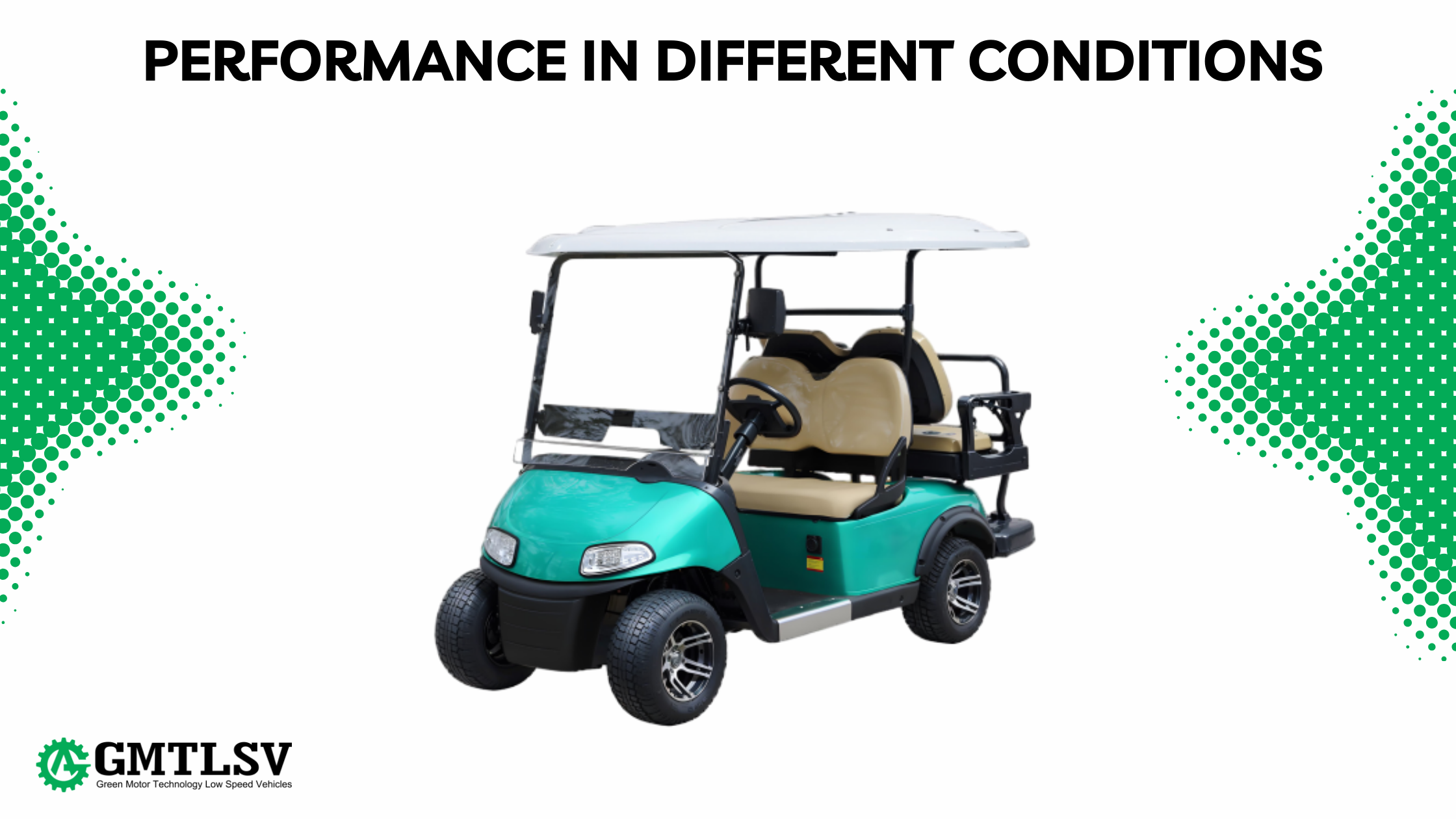
Weather and environment affect both types. Know what to expect.
Cold Weather Performance
Gas carts handle cold better overall.
The engine might take an extra moment to start on frigid mornings. Use fresh fuel with stabilizer in winter. Otherwise, performance stays consistent regardless of temperature.
Electric batteries hate cold.
Below 40°F, you’ll notice reduced range. Below 20°F, expect 20-30% capacity loss. Charging in cold takes longer and can damage batteries if done improperly.
Store electric carts in a garage or insulated space if possible. Never let batteries freeze while discharged—that causes permanent damage.
If you live somewhere with harsh winters and plan to use your cart year-round, gas is more reliable.
Hot Weather & Summer Use
Heat affects both, but differently.
Gas engines generate heat normally. Make sure cooling fins and exhaust areas have airflow. Don’t park on dry grass—fire risk from hot components.
Electric batteries also dislike extreme heat. Consistent temperatures above 95°F accelerate battery degradation. Charging generates additional heat.
Park in shade when possible. If your area regularly sees 100°F+ summers, consider a garage or covered parking for cart storage. Lithium batteries handle heat better than lead-acid.
Wet Conditions & Rain
Both types can handle some rain. Neither should be submerged.
Gas carts have electrical systems too—starter, ignition. These don’t like being soaked. Light rain is fine. Heavy downpours, wait it out.
Electric carts are surprisingly resilient to rain. The motor and controller are usually sealed well. Main concern is water in the battery compartment.
After wet operation:
- Dry off the cart
- Inspect battery compartment for standing water
- Check electrical connections for moisture
- Don’t charge until things are dry
Never drive through deep water with either type. The damage isn’t worth it.
Street Legal Golf Carts & LSV Regulations
Golf carts and Low-Speed Vehicles (LSVs) aren’t the same thing. This matters if you want to drive on public roads.
A standard golf cart isn’t street legal. An LSV is specifically designed and equipped to meet federal and state requirements for on-road use.
GMT LSV specializes in this category. We know the requirements inside and out.
Can Golf Carts Be Street Legal?
Yes, but they need to meet specific requirements.
Federal requirements for LSVs include:
- Headlights
- Taillights
- Turn signals
- Mirrors
- Parking brake
- Seat belts
- Windshield
- DOT-compliant tires
- VIN number
Speed requirements vary. Most states require LSVs to reach at least 20 mph but not exceed 25 mph on level ground.
State and local regulations differ significantly. Some allow LSVs on roads with speed limits up to 35 mph. Others restrict to 25 mph roads or specific designated areas.
Check your specific state and municipality before buying with street use in mind.
Gas vs Electric for Street Use
Either can be configured for street legal use.
Electric is more common for LSVs. The quiet operation fits neighborhood streets. Range is usually sufficient for local errands. Most LSV manufacturers focus on electric.
Gas LSVs exist but are less common. They make sense for longer range requirements or areas without charging infrastructure.
Registration and insurance requirements apply regardless of power source. You’ll need to register the LSV like a vehicle and carry liability coverage.
For most suburban/neighborhood street use, electric LSVs make the most sense. That’s why the market has moved heavily in that direction.
Converting Your Golf Cart for Street Use
Converting a standard golf cart to street legal is possible. But it’s not simple.
You’ll need to add:
- Full lighting package
- Mirrors and turn signals
- Seat belts
- Windshield
- DOT tires
- Parking brake (if not equipped)
Cost: $1,000-3,000 depending on starting point and component quality.
Then you need inspection, registration, and potentially a VIN assignment depending on your state.
Honestly? Buying an LSV-ready cart or a factory LSV is often easier and not much more expensive than converting. The engineering is designed for street use from the start.
If you definitely want street capability, consider buying LSV-spec from the beginning. Less hassle.
Which is faster: gas or electric golf cart?
Similar top speeds usually. Gas carts often hit 18-20 mph. Electric ranges from 12-20 mph depending on model.
Gas might edge out slightly at the very top end. But modern electric carts are closing that gap. For practical purposes, you won’t notice much difference in daily use.
How much does it cost to charge an electric golf cart?
About $0.50-1.00 per full charge typically.
A 48V cart with standard batteries needs roughly 5-8 kWh for a full charge. At average electricity rates of $0.12-0.15 per kWh, that’s about $0.60-1.20.
Annual charging cost for typical use: $50-100. Maybe less.
How long do golf cart batteries last?
Lead-acid: 5-7 years with proper maintenance.
Lithium: 10-15+ years typically.
Factors that shorten lifespan: chronic undercharging, deep discharges, neglected maintenance (lead-acid), extreme temperatures, infrequent use.
Are gas golf carts allowed on golf courses?
Many courses no longer allow them.
Some courses permit personal gas carts but are increasingly rare. Most require electric only. Always check with the specific course before bringing a gas cart.
Can you convert a gas golf cart to electric?
Yes. Conversion kits exist. Expect to spend $2,000-5,000+ for a quality conversion.
The process involves removing the engine and installing electric motor, controller, and batteries. It’s not a weekend project—professional installation is recommended.
Worth it? Depends. Sometimes buying an electric cart makes more sense than converting.
Which golf cart has better resale value?
Generally similar depreciation patterns.
Gas carts hold value steadily based on condition and engine hours.
Electric cart value heavily depends on battery health. New batteries increase value significantly. Old batteries tank it.
Lithium-equipped electric carts hold value better due to longer battery life.
How far can an electric golf cart go on a single charge?
25-40 miles typically. Some high-capacity lithium setups push past 50 miles.
Factors that reduce range: hills, heavy loads, cold weather, old batteries, aggressive driving.
What maintenance does a gas golf cart need?
Regular oil changes (every 100-150 hours or annually). Air filter and spark plug replacement. Fuel filter service. Belt inspection. Brake checks. Periodic clutch attention.
Budget $150-250 annually if doing some work yourself.
Are electric golf carts good for hills?
Moderate hills, yes. Most electric carts handle gentle slopes without issue.
Steep hills challenge electric carts, especially when batteries aren’t fully charged. Power drops as battery depletes.
For genuinely hilly terrain with challenging grades, gas provides more consistent performance.
How long does it take to charge an electric golf cart?
Standard charging: 6-8 hours for full charge from depleted.
Fast charging (where available): 2-3 hours.
Best practice: charge overnight after use. Don’t let batteries sit discharged for extended periods.


