

Gas prices keep climbing. And more people are driving golf carts than ever before. Not just on courses—in neighborhoods, on farms, at resorts, everywhere really.
So the question comes up a lot. How much gas does a golf cart actually use?
Here’s the short answer: most gas golf carts burn through 1-2 gallons every 40-50 miles. That’s pretty decent when you think about it. Way better than your truck. Way better than most things with an engine, honestly.
But that number shifts. A lot. Depends on what you’re driving, how you’re driving it, where you’re driving, who’s in the cart with you. All of it matters.
I’m going to break down the real fuel consumption numbers. What affects them. How gas compares to electric. And how to squeeze more miles out of every gallon if that matters to you.
Whether you’re cruising a golf course, getting around your neighborhood, or using a cart for actual work—this stuff applies.
Average Gas Consumption: What to Expect
Let’s get specific.
A standard gas golf cart uses about 1-2 gallons of fuel to go 40-50 miles. Translated into MPG terms most people understand, that’s roughly 20-30 miles per gallon.
Not bad at all.
But here’s where it gets interesting. Cart size changes things.
A basic 2-seater? You’re looking at the higher end of that efficiency range. Smaller engine, less weight, less fuel burned. Simple math.
A 4-6 passenger cart? Now you’re pulling more weight. The engine works harder. Fuel consumption goes up. You might see closer to 18-23 MPG equivalent depending on conditions.
For perspective—a typical riding lawn mower gets maybe 2-4 MPG. A small motorcycle gets 40-60 MPG. A golf cart sits somewhere in between, closer to a really efficient small car from the 90s.
The point is this: golf carts aren’t gas guzzlers. They’re actually pretty reasonable.
Tank Size and Range Capabilities
Most gas golf carts come with a 5-6 gallon fuel tank. Some utility models go larger, but that’s the standard you’ll find on recreational carts.
Do the math and you get somewhere between 100-150 miles on a full tank.
That’s a lot of golf. That’s weeks of neighborhood driving for most people. That’s several days of moderate work use.
For daily driving around a community or property, you’re probably filling up once or twice a month. Maybe less if you’re not putting serious miles on.
For commercial use or heavy daily driving? Weekly fill-ups are more realistic.
The nice thing about gas carts is you just fill up and go. No waiting around for a charge. Takes two minutes at most.
Planning a longer trip or all-day use? You can carry extra fuel. Try doing that with electricity.
What Affects Golf Cart Gas Consumption?
Here’s the thing about those “1-2 gallons per 40-50 miles” numbers. They’re averages. Generalizations. What the manufacturers put in their brochures.
Your actual consumption? It varies. Sometimes a lot.
There are real factors that push your fuel use higher or lower. Understanding them helps you plan better. And maybe save some money if you’re paying attention.
1. Terrain and Driving Conditions
This one’s huge.
Flat ground is easy. The engine barely has to work. You’re coasting half the time. Fuel consumption stays low.
Hills? Inclines? The engine fights gravity every time you go up. Your fuel consumption can jump 30-50% in hilly terrain. I’ve seen it happen.
Driving on pavement is efficient. Driving through sand, mud, grass, rough trails—the wheels have to work harder. More resistance means more fuel burned.
Think about it like this: cruising around a flat Florida golf course is going to be way more fuel-efficient than navigating a hilly Tennessee property with unpaved paths everywhere.
If you’re doing a lot of off-road or rough terrain driving, plan for higher fuel costs. That’s just how it works.
2. Passenger and Cargo Weight
Weight matters. Every pound the engine has to move costs fuel.
Two people in a cart versus six people in a cart? Real difference. We’re talking noticeable difference in how fast you burn through gas.
Same with cargo. Hauling tools, coolers, supplies, equipment—all of it adds up. A utility cart loaded down with landscaping gear isn’t going to get the same mileage as an empty cart on a joyride.
Heavier loads also mean the engine runs harder, which means more wear over time, which can affect efficiency down the road.
Something to think about when you’re choosing between a 2-passenger and a 6-passenger model. Bigger isn’t always better if you’re rarely using the extra capacity.
3. Driving Speed and Habits
How you drive changes everything.
Cruising steady at 12-15 mph? Pretty efficient. The engine’s happy. Fuel consumption stays predictable.
Flooring it to max speed constantly? Burning through gas faster. That’s just physics.
And acceleration patterns matter too. Gradual, smooth acceleration is easier on fuel than punching it from every stop. Aggressive driving wastes gas in a golf cart just like it does in a car.
If you’re the type who drives like you’re late for something—you’re going to use more fuel. If you take it easy and cruise, you’ll stretch every gallon further.
Not saying you have to drive like a grandma. Just know it costs you if you don’t.
4. Golf Cart Maintenance and Engine Condition
A well-maintained cart runs efficiently. A neglected cart doesn’t.
Dirty air filters restrict airflow. The engine compensates by burning more fuel. Worn spark plugs cause incomplete combustion. Wasted fuel. Low tire pressure creates more rolling resistance. More work for the engine.
It all adds up.
Regular maintenance keeps your fuel consumption where it should be:
- Clean or replace air filters regularly
- Check and replace spark plugs as needed
- Keep tire pressure correct (18-22 PSI typically)
- Change oil on schedule
- Keep the fuel system clean
Skip maintenance and watch your fuel efficiency drop. Your cart might still run fine for a while. But it’s costing you extra at the pump without you realizing it.
5. Age and Model of the Golf Cart
Older carts generally aren’t as efficient as newer ones. Engine technology improves. Manufacturing gets better. Newer models just tend to squeeze more miles out of each gallon.
Doesn’t mean old carts are bad. Plenty of 15-20 year old golf carts still running strong. But a brand new cart with a modern engine is probably going to outperform them on fuel economy.
Different brands have different reputations too. Club Car, Yamaha, E-Z-GO—they all have their strengths. Fuel consumption varies somewhat between makes and models, though we’re talking incremental differences mostly.
If fuel efficiency is a priority for you, newer models with modern engines are worth looking at.
6. Accessories and Modifications
People love customizing golf carts. Lift kits, bigger tires, light bars, sound systems, custom bodies.
All of that affects fuel consumption.
Lift kits and larger tires change the aerodynamics and rolling resistance. The engine has to work harder. More fuel burned.
Electrical accessories like lights, speakers, and fans draw power. On a gas cart, that power comes from the engine running the alternator. More electrical load means more fuel consumption.
Not saying don’t customize your cart. Just know there’s a cost beyond the parts and installation. Your MPG takes a hit with every modification that adds weight, drag, or electrical demand.
Worth it for some people. Just go in with your eyes open.
Gas vs Electric Golf Carts: Fuel Cost Comparison
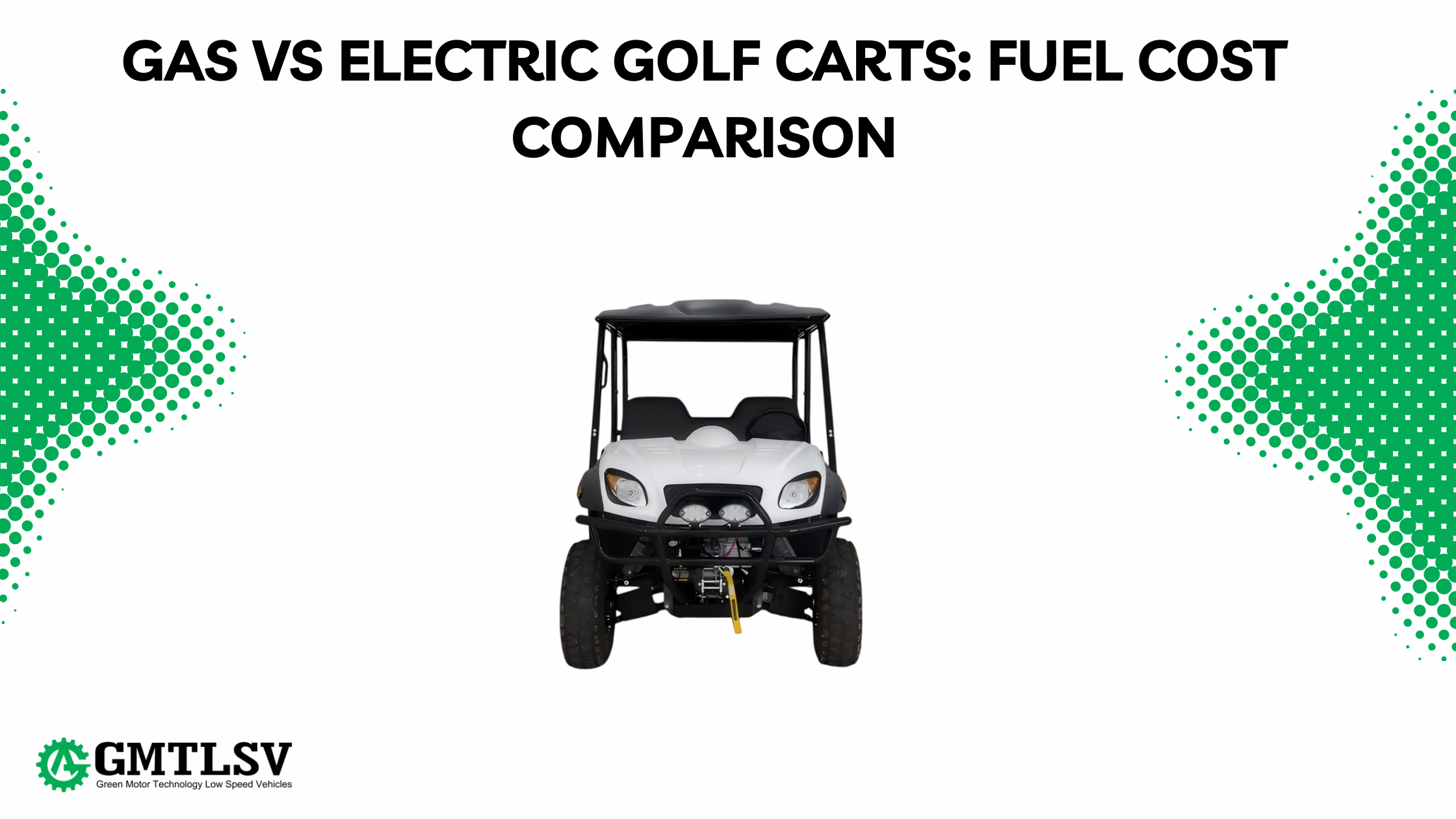
This is where a lot of people get stuck. Gas or electric?
Both have real costs. Both have advantages. The math depends on how you use it.
Let me break it down honestly.
Calculating Actual Fuel Costs
Formula’s simple:
(Miles driven ÷ MPG) × Price per gallon = Fuel cost
Let’s run some real numbers. Say you’re getting 25 MPG and gas is $3.50 per gallon.
Drive 100 miles? That’s 4 gallons. $14.
Drive 500 miles a month? That’s 20 gallons. $70.
Over a year at that rate? $840 in gas.
For heavy users putting on 1,000+ miles monthly? Double or triple those numbers.
For casual recreational users doing 200 miles a month? Maybe $28 monthly. That’s nothing really.
Your actual costs depend entirely on how much you drive. And gas prices where you live. Pretty straightforward once you know your usage patterns.
Electric Golf Cart Operating Costs
Electric carts need electricity to charge. Electricity isn’t free.
Most electric golf carts have 4-6kW battery packs. Charging from empty costs somewhere between $0.50-$1.50 depending on your local electricity rates.
So if you’re charging twice a week, that’s maybe $4-12 per month in electricity. Way less than gas in pure fuel costs.
But there’s more to consider.
Batteries don’t last forever. Lead-acid batteries need replacing every 4-6 years. Lithium lasts longer but costs more upfront. That replacement cost is significant—$800-$2,000+ depending on battery type.
Charging takes time too. Several hours minimum. You can’t just fill up in 2 minutes and keep going like gas.
The convenience factor matters depending on how you use your cart.
Which is More Cost-Effective Long-Term?
Over 5 years, here’s what I’ve seen:
Electric carts cost less to operate daily. No question. The fuel savings are real.
But gas carts often cost less upfront. And there’s no big battery replacement looming at year 5 or 6.
Maintenance is different too. Gas carts need oil changes, air filters, spark plugs. Electric carts need battery maintenance, sometimes motor brushes. Neither is maintenance-free.
Gas makes more sense if:
- You drive long distances
- You need quick refueling
- You don’t want to worry about battery life declining
- Lower purchase price matters more than operating costs
Electric makes more sense if:
- You drive shorter distances
- You can charge overnight without inconvenience
- You want lower daily operating costs
- Quieter operation matters to you
There’s no universal right answer. Depends on your situation.
How to Improve Your Golf Cart’s Fuel Efficiency
If you’ve got a gas cart and want to stretch every gallon, there’s real stuff you can do. Not just theoretical tips—actual things that make a measurable difference.
Regular Maintenance Tips
Here’s the checklist:
Oil changes — Every 125-150 hours of operation. Clean oil means less friction means less fuel wasted fighting internal resistance.
Air filter — Check monthly, replace quarterly or sooner if you’re driving in dusty conditions. Clogged filters kill fuel economy.
Spark plugs — Inspect annually, replace when worn. Bad plugs mean incomplete combustion and wasted fuel.
Tire pressure — 18-22 PSI depending on your tires and conditions. Check monthly. Low pressure creates drag.
Fuel system — Clean the carburetor periodically. Old fuel and varnish buildup affect how cleanly the engine runs.
None of this is hard. Takes maybe an hour total every few months. Saves you fuel and extends the life of your cart.
Smart Driving Practices
You control how efficiently your cart runs. More than you probably think.
Accelerate gradually. Punching it wastes fuel.
Anticipate stops. Coast when you can instead of driving hard right up to a stop.
Maintain steady speed. Constant speed/slow-down/speed-up cycles burn more gas than just cruising.
Avoid unnecessary idling. If you’re sitting still for more than 30 seconds, turn it off.
Plan efficient routes. Going the same places? Find the route that avoids hills and rough terrain when possible.
Reduce weight. Don’t haul stuff you don’t need. Every pound costs fuel.
Could these practices save you 10-15% on fuel? Realistically, yes. Maybe more if your current habits are inefficient.
Optimal Tire Selection and Pressure
Tires matter more than most people realize.
Street tires on pavement = lower rolling resistance = better fuel economy.
Knobby off-road tires on pavement = more resistance = worse fuel economy.
Match your tires to how you actually drive most of the time.
And keep them properly inflated. This is the easiest free efficiency gain available. Under-inflated tires make the engine work harder for every mile.
Check pressure once a month. Takes 2 minutes. Keeps your mileage where it should be.
Different Types of Gas Golf Carts and Their Consumption
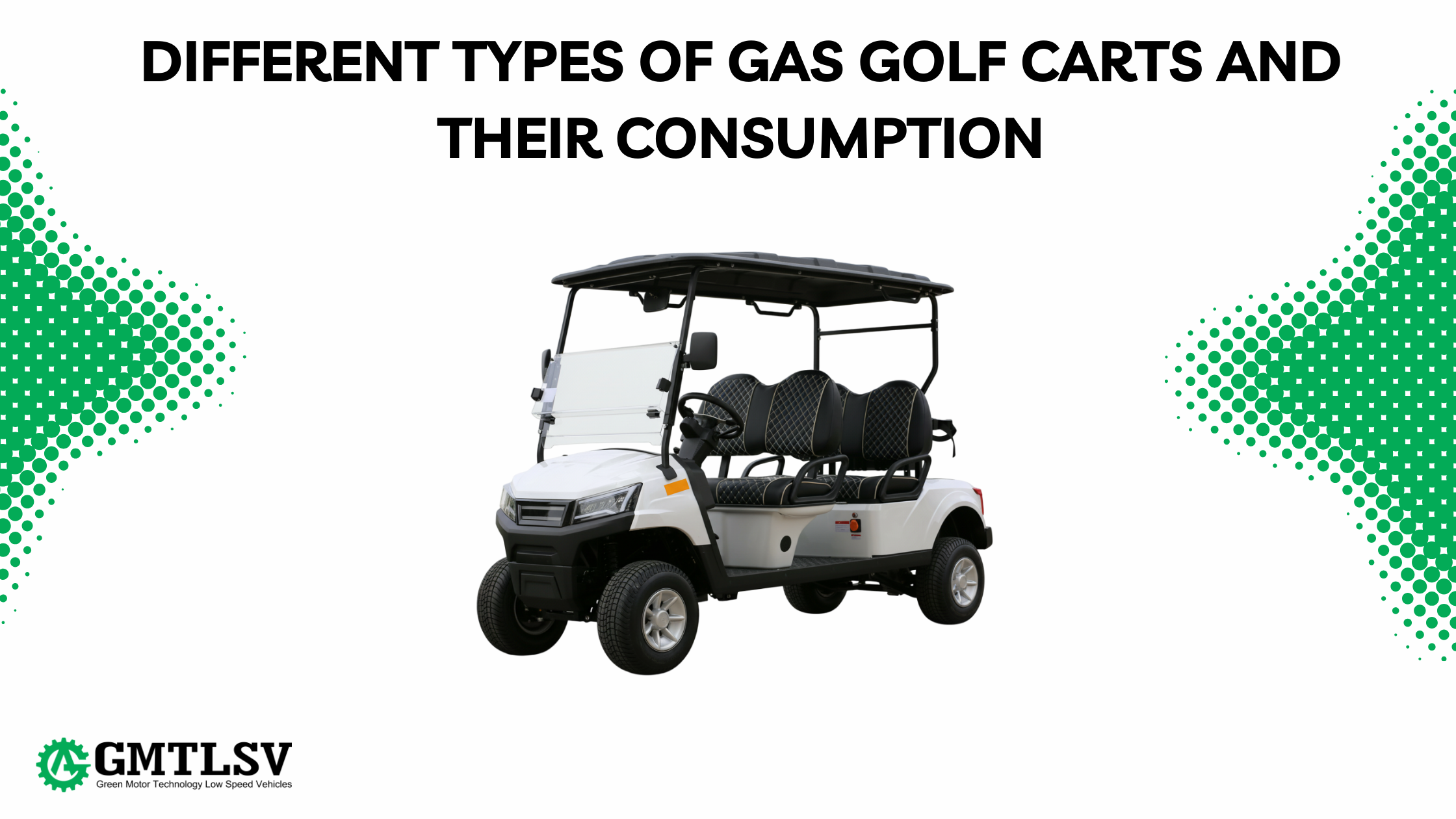
Not all gas carts are the same. Different types serve different purposes. And they use different amounts of fuel.
Standard 2-Passenger Golf Carts
The classic. Two seats, minimal footprint, designed for golf courses or quick trips around a property.
Fuel efficiency: 25-30 MPG equivalent typically.
These are the most efficient gas carts you’ll find. Smaller engine, less weight to move, fewer demands on the drivetrain.
Perfect for individual use, couples, or anyone who doesn’t need passenger capacity.
4-6 Passenger Golf Carts
Family carts. Group carts. The ones you see in resort communities and large properties where multiple people need to get around together.
Fuel efficiency: 18-23 MPG equivalent.
The engine’s bigger or working harder. More weight when loaded. More fuel used.
Still pretty efficient compared to real vehicles. But noticeably more thirsty than a 2-seater.
If you need the capacity, you need it. Just factor the higher operating costs into your decision.
Utility and Commercial Golf Carts
Work carts. Built for hauling cargo, towing equipment, handling daily commercial use.
Fuel efficiency: 15-20 MPG equivalent.
These engines work hard. Heavy loads, rough conditions, constant use. Fuel consumption goes up accordingly.
If you’re using a cart for landscaping, farming, facility maintenance, resort operations—expect to use more fuel than recreational users.
Worth it for the capability. Just budget for it.
How far can a gas golf cart go on one tank?
Typically 100-150 miles on a standard 5-6 gallon tank.
But that’s with average driving. Hills, heavy loads, aggressive driving—all reduce range. Flat terrain, light load, efficient driving—extends it.
Figure 100 miles as a conservative estimate. You’ll probably do better.
What type of gas should I use in my golf cart?
Regular unleaded. 87 octane. Same stuff you put in a basic economy car.
Premium isn’t necessary. Golf cart engines aren’t high-compression performance motors that need it. You’re just wasting money using premium.
Regarding ethanol: E10 (10% ethanol) is fine. Most gas stations sell it anyway. Avoid E85 though—golf cart engines aren’t designed for high ethanol blends.
How often do I need to fill up a gas golf cart?
Depends entirely on how much you drive.
Recreational users doing 50-100 miles per month? Filling up once or twice a month maybe.
Daily drivers putting on 300-500 miles monthly? Weekly fill-ups.
Commercial users going hard every day? Might need fuel every few days.
Tie it to your mileage, not the calendar. You’ll figure out your pattern pretty quick once you start tracking it.
Are gas golf carts expensive to operate?
Honestly? No.
For typical recreational use, you’re looking at maybe $20-50 per month in fuel. That’s nothing.
Even heavy commercial use might only run $100-200 monthly in fuel depending on gas prices and mileage.
Compare that to operating a truck or car for the same purposes. Golf carts are cheap to run. That’s part of why people buy them.
Can I improve my golf cart’s MPG?
Yes. Absolutely.
Keep up with maintenance. Drive smoothly. Maintain proper tire pressure. Don’t carry unnecessary weight. Match tires to your typical driving surface.
All of that helps. None of it is hard.
10-20% improvement in fuel economy is realistic if you’re currently neglecting some of these things.


