

Replacing an entire golf cart fleet is a major capital investment for a golf course, country club, resort, or commercial facility.
The difficult part is that the golf cart fleet replacement cost is not simply the number of carts multiplied by the price of one cart.
A fleet replacement project can include new vehicles, batteries, chargers, accessories, transportation, spare parts, old-fleet disposal, financing, and even charging infrastructure.
So if you are asking: How much does it cost to replace a golf cart fleet?
The better question is: How many vehicles do I need, what type of vehicles should I buy, when should I replace them, and what will the complete replacement project cost?
This guide explains how to calculate a golf cart fleet replacement budget, how to estimate the cost of 25, 50, 75, or 100 carts, when a fleet should be replaced, and how buying directly from a manufacturer can affect the total project cost.
Quick Answer: How Much Does Golf Cart Fleet Replacement Cost?
For planning purposes, commercial golf cart fleet replacement can range from tens of thousands to more than one million dollars, depending primarily on fleet size, vehicle configuration, battery technology, accessories, and purchasing structure.
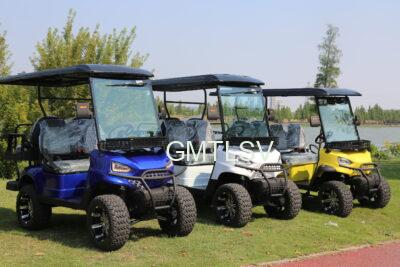
A practical starting point is to estimate the vehicle cost first, then add project-specific costs. For example, if your replacement carts average: $6,000 per cart, 50 carts = about $300,000
This is planning examples rather than fixed market prices. Actual fleet quotations can vary significantly based on the vehicle, battery, quantity, configuration, shipping terms, accessories, and supplier.
Current commercial pricing guides show similarly wide ranges, while real public-sector fleet replacement projects demonstrate why fleet size and specification matter. For example, South Suburban Parks and Recreation District has budgeted approximately $2.1 million to replace 225 golf carts, or roughly $9,333 per cart, with the new fleet including GPS distance control and tracking technology.
The important point is: Do not budget a fleet replacement using the lowest advertised cart price. Build the budget around the complete fleet specification and total project cost.
Golf Cart Fleet Replacement Cost Formula
A simple way to think about fleet replacement is:
Total Fleet Replacement Cost = Vehicle Cost + Fleet Equipment + Logistics + Infrastructure + Spare Parts + Financing Costs − Old Fleet Resale Value
The largest component is normally the vehicle fleet itself.
But several other costs can materially change the final number.
What Is Included in Golf Cart Fleet Replacement Cost?
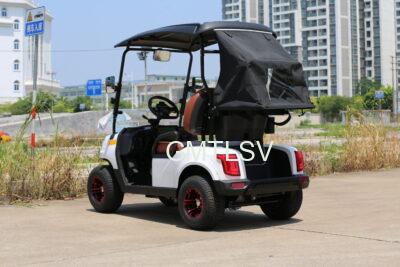
1、New Golf Cart Purchase Price
This is the obvious starting point.
However, not every golf cart has the same cost.
The purchase price can change depending on: Passenger capacity、Battery type、Battery capacity、Motor power、Vehicle dimensions、Suspension&Tires、Windshield、Roof、Seating、
GPS、Fleet management systems、Other accessories.
A basic 2-passenger commercial golf cart and a premium lithium 6-passenger vehicle should not be treated as the same cost category. Current pricing guides show new golf carts spanning a very wide range depending on configuration, with commercial fleet vehicles generally priced differently from recreational or premium retail builds.
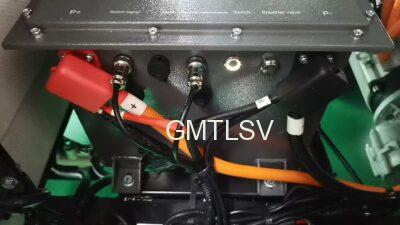
disconnect discharge cable of lithium battery
2、Battery Cost
For an electric fleet, the battery is one of the most important components of the replacement budget.
The main decision is usually:
Lead-Acid vs. Lithium
Lithium-powered fleets generally have a higher initial purchase price but may provide advantages in: Charging time、Maintenance、Usable energy、Daily fleet availability.
Lead-acid batteries generally have a lower initial cost and remain familiar to many golf-course operators.
The correct choice depends on:
- Daily operating hours
- Number of rounds
- Charging schedule
- Climate
- Available charging infrastructure
- Maintenance resources
- Expected fleet life
A fleet that operates heavily every day should evaluate battery technology using total cost of ownership, not simply the initial battery price.
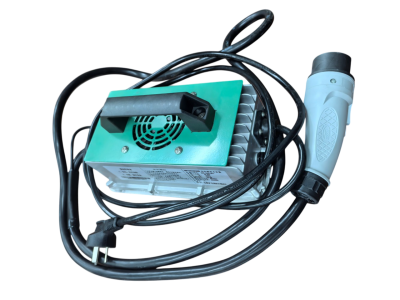
3、Chargers and Charging Infrastructure
Replacing the carts may not be enough.
If you change from an older lead-acid fleet to a new lithium fleet, or significantly increase fleet size, you should review your charging system.
Potential costs include:
- Individual chargers
- Charging cables
- Charging stations
- Electrical upgrades
- Distribution equipment
- Installation
- Ventilation requirements for certain battery systems
- Charging management systems
For a small fleet replacement, the existing infrastructure may be sufficient.
For a major fleet upgrade, however, charging capacity should be evaluated before the vehicles are ordered.
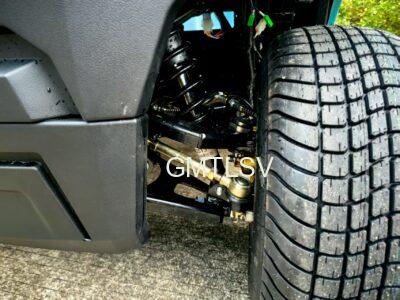
4、Accessories and Fleet Equipment
A commercial golf cart fleet often requires more than the basic vehicle.
Depending on the course, the fleet may need:
- Golf bag holders
- Windshields
- Mirrors
- Canopies
- Rain curtains
- Sand bottles
- USB charging
- LED headlights
- Tail lights
- Turn signals
- Reverse alarms
- Safety equipment
- GPS
- Fleet tracking
- Custom seats
- Club branding
A small amount added to every vehicle becomes significant when multiplied across a 50- or 100-cart fleet.
For example:
$500 of additional equipment × 100 carts = $50,000
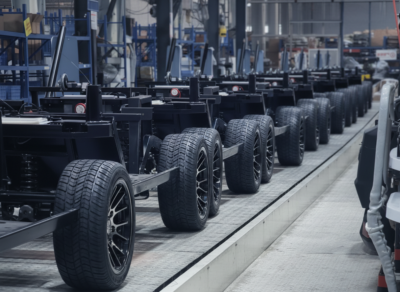
5、Shipping and Logistics
If the fleet is purchased directly from an overseas manufacturer, logistics becomes another major cost category.
Depending on the purchasing arrangement, you may need to consider:
- Factory loading
- Export documentation
- Ocean freight
- Port charges
- Customs clearance
- Inland transportation
- Destination delivery
- Insurance
- Local assembly or preparation
This is particularly important when comparing a local dealer’s price with a factory-direct quotation.
A factory quotation may look lower because the quotation is based on an export term such as FOB, while a dealer quotation may already include domestic transportation and preparation.
Always compare landed cost with landed cost.
Golf Cart Fleet Replacement Cost by Fleet Size
Fleet size is one of the biggest drivers of the total investment.
Here is a simple planning model.
| Fleet Size | $6,000/cart | $8,000/cart | $10,000/cart | $12,000/cart |
|---|---|---|---|---|
| 25 carts | $150,000 | $200,000 | $250,000 | $300,000 |
| 50 carts | $300,000 | $400,000 | $500,000 | $600,000 |
| 75 carts | $450,000 | $600,000 | $750,000 | $900,000 |
| 100 carts | $600,000 | $800,000 | $1,000,000 | $1,200,000 |
| 150 carts | $900,000 | $1,200,000 | $1,500,000 | $1,800,000 |
These figures are planning examples only.
They do not represent a universal market price and do not include shipping, taxes, chargers, infrastructure, GPS systems, customization, or other project costs.
The purpose of this table is to show how quickly fleet size changes the capital requirement.
How Many Golf Carts Does a Golf Course Need?
Before calculating replacement cost, you need to know how many vehicles you actually need.
This is where many fleet replacement projects go wrong.
A course should not automatically replace: 100 old carts with 100 new carts.
The fleet may have been oversized, undersized, or incorrectly configured.
Instead, analyze:
- Number of holes
- Daily rounds
- Peak rounds
- Tournament demand
- Cart utilization
- Seasonal demand
- Number of maintenance vehicles
- Number of utility carts
- Security requirements
- Guest transportation
- Resort operations
A golf course with 18 holes may need a very different fleet from another 18-hole course with a large resort, hotel, and event business.
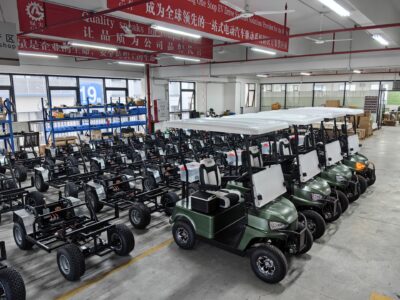
Golf Cart Fleet Replacement Is Not Always a 1-for-1 Replacement
This is an important point.
Imagine an existing fleet contains:
80 standard 2-passenger carts
But the course has expanded its resort facilities.
The replacement fleet might be:
- 60 × 2-passenger golf carts
- 8 × 4-passenger carts
- 4 × utility carts
- 3 × security vehicles
- 3 × guest transportation vehicles
- 2 × service carts
Total:
80 vehicles
The number is unchanged.
But the fleet is now much better matched to actual operations.
Alternatively, the course might discover that only 70 vehicles are required.
In that case:
Fleet replacement can also be an opportunity to reduce unnecessary capital expenditure.
When Should a Golf Cart Fleet Be Replaced?
There is no universal replacement age.
Different courses replace fleets at different intervals depending on utilization, maintenance, financing, and operating strategy.
Published golf-course planning documents commonly show replacement cycles around 4–7 years, although actual decisions vary by usage and maintenance condition. For example, Meadow Lakes Golf Course’s planning document describes a four-to-five-year industry replacement standard and planned replacement at six years, while South Suburban Parks and Recreation District plans around a six-year life for its fleet.
A useful planning range is:
| Fleet Usage | Possible Replacement Window |
| Heavy commercial use | 4–5 years |
| Standard golf-course use | 5–7 years |
| Lower-use private facility | 6–8 years |
These are planning references, not mandatory replacement rules.
The actual decision should be based on condition and economics.
The Maintenance Cost Inflection Point
One of the best ways to decide whether a fleet should be replaced is to track maintenance costs.
Imagine this pattern:
Year 1–3: Low maintenance 👉 Year 4–5: Moderate maintenance👉 Year 5–6: More batteries, brakes, tires, suspension and electrical repairs 👉 Year 6+: Frequent breakdowns + downtime + increasing repair bills
At some point, keeping the old fleet may become more expensive than replacing it.
This is the maintenance cost inflection point.
A recent golf-course fleet replacement guide also emphasizes rising repair frequency, downtime, and maintenance costs as key replacement signals.
Don’t Replace the Fleet Based on Age Alone
Age is useful.
But age alone is not enough.
A six-year-old fleet with excellent preventive maintenance may perform better than a four-year-old fleet that has been heavily abused.
Before replacement, review:
Mechanical Condition
- Steering
- Brakes
- Suspension
- Tires
- Frame
- Axles
Electrical Condition
- Batteries
- Charger
- Controller
- Wiring
- Motor
Operational Condition
- Downtime
- Repair frequency
- Daily availability
- Range
- Performance
Financial Condition
- Annual repair cost
- Battery replacement cost
- Labor cost
- Lost operating time
This gives management a much better basis for the replacement decision.
What Is the Total Cost of Ownership of a Golf Cart Fleet?
TCO can be thought of as: Purchase Cost、Battery Cost、Charging Cost、Maintenance、Parts、Labor、Downtime、Transportation、Financing.
The cheapest fleet at the time of purchase may not be the cheapest fleet to operate.
How to Reduce Fleet Replacement Costs
1. Buy the Right Number
Eliminate unnecessary vehicles.
10 fewer carts × $8,000 = **$80,000 saved**
2. Standardize
Stick to one battery platform, charger type, and parts family. This simplifies maintenance and reduces inventory.
3. Match Vehicle to Job
Don’t use premium passenger carts for utility work. Use utility vehicles for maintenance—they’re cheaper and more durable.
4. Evaluate Lithium on TCO, Not Price
For high-utilization fleets, lithium’s higher upfront cost often pays off in lower maintenance and less downtime.
5. Buy Spare Parts With the Fleet
Order wear items (brakes, tires, belts, fuses, chargers) upfront to avoid future shipping costs and delays.
6. Consider Factory-Direct Sourcing
A typical supply chain adds layers:
Manufacturer → Exporter → Distributor → Dealer → Course
Buying direct can reduce margins—but always compare landed cost and after-sales support.
8-Step Planning Process
-
Audit your current fleet (age, condition, costs, downtime).
-
Determine the actual number of carts needed.
-
Define the right mix (passenger, utility, security, shuttle).
-
Specify battery, motor, range, seating, and accessories.
-
Calculate the full budget, not just vehicle cost.
-
Compare buy vs. lease over the planned life.
-
Plan old fleet disposition (sell, trade, refurbish, retire).
-
Request comparable quotes from suppliers—same specs, side-by-side.
Final Takeaway
Fleet replacement isn’t about buying the same number of carts you had before.
It’s an opportunity to redesign your transportation system around current operations.
The right process:
Audit → Define mix → Specify → Budget → Compare TCO → Choose supplier
Do that, and you’ll avoid the most common mistake: replacing an old fleet without asking whether it’s still the right fleet.

