

The battery is the heart of any Low-Speed Vehicle. It determines your range, performance, maintenance schedule, and long-term ownership costs. When buying an LSV, one of the most important decisions you’ll make is choosing between lead-acid and lithium batteries. This guide breaks down everything you need to know.
Lead-Acid Batteries: The Traditional Choice
Lead-acid batteries have been powering electric vehicles for over a century. They’re the standard option on most entry-level LSVs.
Pros:
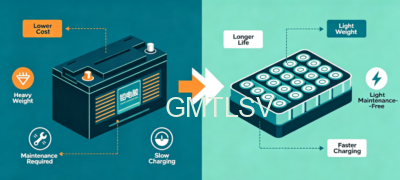
- Lower upfront cost: A lead-acid battery pack costs $800–$1,500
- Widely available and easy to replace
- Well-understood technology with established recycling infrastructure
- Can be serviced by most automotive shops
Cons:
- Shorter lifespan: 3–5 years with proper maintenance
- Heavier: A typical lead-acid pack weighs 500–800 lbs
- Requires regular maintenance: checking water levels, cleaning terminals
- Slower charging: 8–12 hours for a full charge
- Reduced capacity in cold weather
- Depth of discharge limited to 50% for optimal life
Lithium Batteries: The Modern Upgrade
Lithium-ion batteries are the same technology powering electric cars, laptops, and smartphones. They’re increasingly common in premium LSVs.
Pros:
- Longer lifespan: 8–12 years or more
- Much lighter: 150–300 lbs for an equivalent pack
- Maintenance-free: no water checking or terminal cleaning
- Faster charging: 4–6 hours for a full charge
- Better cold-weather performance
- Can be discharged to 80–90% without damage
- Consistent power output throughout the discharge cycle
Cons:
- Higher upfront cost: $2,000–$5,000 for a lithium pack
- Requires a compatible charger
- More complex battery management system (BMS)
- Fewer service centers can work on them
Total Cost of Ownership Comparison
Let’s look at a 10-year ownership scenario:
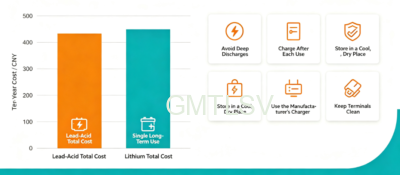
Lead-Acid: $1,200 initial cost + one replacement at year 5 ($1,200) = $2,400 total. Plus maintenance time and effort.
Lithium: $3,500 initial cost, no replacement needed. Zero maintenance.
Over 10 years, lithium is actually cheaper — and that’s before factoring in the convenience of faster charging, lighter weight (better performance), and no maintenance.
Which Should You Choose?
Choose lead-acid if:
- You have a tight budget
- You drive infrequently (less than 2,000 miles/year)
- You’re comfortable with regular maintenance
- You plan to keep the LSV for less than 5 years
Choose lithium if:
- You want the lowest long-term cost
- You drive daily or rely on your LSV
- You prefer maintenance-free ownership
- You live in a cold climate
- You plan to keep your LSV for 5+ years
Battery Care Tips (For Both Types)
- Avoid deep discharges when possible
- Charge after each use, not just when empty
- Store in a cool, dry place
- Use the manufacturer’s recommended charger
- Keep terminals clean and connections tight
The Bottom Line
While lithium batteries cost more upfront, their longer life, lighter weight, and lower maintenance make them the better value for most owners. However, lead-acid batteries remain a perfectly viable option for budget-conscious buyers or occasional users. Whichever you choose, proper care will maximize your battery’s lifespan and your LSV’s performance.


