

Proper maintenance is essential for keeping your Low-Speed Vehicle (LSV) running safely and efficiently. While LSVs require less maintenance than gas-powered vehicles, they still need regular attention. This guide covers everything you need to know about LSV maintenance.
Daily Maintenance Checklist
These quick checks should be performed before each use:
- Tire Pressure:Check that all tires are inflated to the manufacturer’s recommended pressure. Underinflated tires reduce range and handling.
- Lights and Signals:Verify that headlights, taillights, brake lights, and turn signals are working.
- Brakes:Test the brakes before moving. They should feel firm and responsive.
- Horn:Ensure the horn is working.
- Mirrors:Adjust mirrors for proper visibility.
- Seat Belts:Check that all seat belts are functioning properly.
Weekly Maintenance Tasks
- Battery Charge:Keep batteries charged. For lead-acid batteries, charge after each use. For lithium, charge when the state of charge drops below 20-30%.
- Visual Inspection:Look for loose wires, damaged components, or fluid leaks.
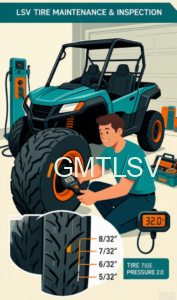
- Tire Inspection:Check for cuts, bulges, or uneven wear patterns.
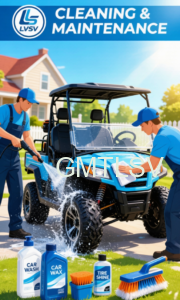
- Cleanliness:Remove dirt and debris from the vehicle, especially around electrical components.
Monthly Maintenance Tasks
For Lead-Acid Batteries:
- Check water levels in each cell
- Add distilled water as needed (do not overfill)
- Clean battery terminals and apply anti-corrosion spray
- Check and tighten battery connections
- Perform an equalization charge (if recommended by manufacturer)
For All Batteries:
- Check battery voltage with a multimeter
- Inspect battery cables for damage or corrosion
- Ensure battery hold-downs are secure
General Monthly Tasks:
- Lubricate suspension components and steering linkage
- Check brake fluid level (if hydraulic brakes)
- Inspect brake pads for wear
- Check and tighten lug nuts
- Inspect windshield for cracks or damage
Quarterly Maintenance Tasks
- Deep Battery Inspection:Have batteries professionally tested for capacity and health.
- Wheel Alignment:Check and adjust alignment to prevent uneven tire wear.
- Suspension Inspection:Check shocks, struts, and bushings for wear.
- Steering System:Inspect tie rods, ball joints, and steering rack.
- Electrical System:Check all wiring, connectors, and fuses.
- Motor and Controller:Inspect for signs of overheating or damage.
- Charger:Verify that the charger is functioning correctly.
Annual Maintenance Tasks
- Complete Vehicle Inspection:Have a professional technician perform a comprehensive inspection.
- Battery Replacement:Lead-acid batteries typically need replacement every 3-5 years. Lithium batteries every 5-10 years.
- Tire Replacement:Replace tires when tread depth reaches 2/32 inch or after 3-4 years.
- Brake Service:Replace brake pads and inspect brake lines.
- Wheel Bearings:Inspect and repack wheel bearings.
- Frame Inspection:Check the frame for cracks, rust, or damage.
- Software Updates:If your LSV has a digital system, check for firmware updates.
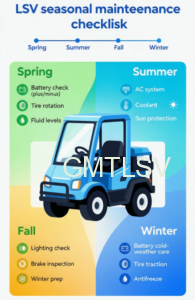
Seasonal Maintenance Considerations
Spring:
- Inspect for winter damage
- Clean and lubricate all moving parts
- Check battery condition after winter storage
- Inspect tires for cold-weather cracking
Summer:
- Monitor battery temperature (lithium batteries are sensitive to heat)
- Check tire pressure more frequently (heat increases pressure)
- Keep batteries clean and dry
- Ensure cooling fans are working (if equipped)
Fall:
- Prepare for colder weather
- Check heater and defroster (if equipped)
- Inspect weather seals and enclosures
- Test lights and signals (shorter days mean more night driving)
Winter:
- Store batteries at proper temperature
- Reduce load and speed in snow and ice
- Clean salt and road chemicals from the vehicle
- Consider winter tires for improved traction
Common LSV Problems and Solutions
Problem: Reduced Range
- Check tire pressure
- Verify battery charge and health
- Reduce vehicle load
- Check for dragging brakes
- Inspect wheel bearings
Problem: Slow Speed
- Check battery voltage
- Inspect throttle potentiometer
- Verify controller settings
- Check motor brushes (if applicable)
Problem: Battery Not Charging
- Check charger connections
- Verify charger is functioning
- Inspect battery fuses
- Check for tripped circuit breakers
Problem: Brakes Squeaking
- Inspect brake pads for wear
- Clean brake drums or rotors
- Lubricate brake hardware
- Replace worn components
Problem: Uneven Tire Wear
- Check wheel alignment
- Inspect suspension components
- Verify tire pressure
- Rotate tires
When to Call a Professional
While many maintenance tasks can be performed by owners, some situations require professional service:
- Electrical system diagnostics
- Motor or controller repair
- Battery replacement (especially lithium)
- Brake system overhaul
- Frame or structural repairs
- Any safety-related issues
Maintenance Log
Keep a detailed maintenance log for your LSV. Record:
- Date of each maintenance task
- Description of work performed
- Parts replaced (with part numbers)
- Battery voltage readings
- Any issues or observations
A good maintenance log helps track patterns, plan future maintenance, and provides documentation for warranty claims or resale.
Conclusion
Regular maintenance is the key to a long-lasting, reliable LSV. By following this guide and staying proactive about vehicle care, you can maximize your LSV’s lifespan, performance, and safety. Remember: a well-maintained LSV is a safe LSV.


