

Resorts and hotels are among the largest users of Low-Speed Vehicles. From transporting guests between buildings to moving luggage and servicing facilities, LSVs are an essential part of daily operations. But with so many models, configurations, and features available, how do you choose the right one?
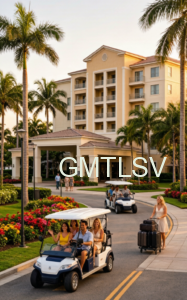
This guide will walk you through the key factors to consider when selecting LSVs for your hospitality business.
- Determine Your Primary Use Case
Before looking at specific models, define how the vehicles will be used. Different use cases require different configurations.
- Guest Transportation:If the primary purpose is moving guests between rooms, restaurants, pools, and event spaces, passenger comfort is paramount. Look for models with comfortable seating, weather enclosures, and a smooth ride.
- Luggage and Cargo:If the vehicle will primarily carry luggage, supplies, or equipment, consider a flatbed or enclosed cargo model. Payload capacity and cargo bed size become critical factors.
- Maintenance and Service:For maintenance crews, durability and utility are most important. Look for rugged models with high ground clearance and the ability to carry tools and materials.
- Security Patrol:For security applications, consider models with enclosed cabs, lighting packages, and space for communication equipment.
- Consider Seating Capacity
LSVs come in a range of seating configurations:
- 2-Passenger:Ideal for maintenance, security, or single-guest transport.
- 4-Passenger:The most common configuration for general resort use.
- 6-Passenger:Good for family groups or small tour parties.
- 8+ Passenger:Some models can accommodate larger groups, often with rear-facing seats.
Consider your peak demand periods. If you frequently need to transport groups of 4 or more, investing in 6-passenger models may be more efficient than sending multiple 4-passenger vehicles.
- Evaluate Battery Options
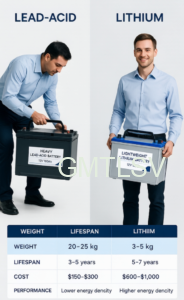
Battery technology is one of the most important decisions you will make. The two main options are:
Lead-Acid Batteries:
- Lower upfront cost
- Proven technology
- Require regular maintenance (water refilling, terminal cleaning)
- Shorter lifespan (3-5 years)
- Longer charging time (8-12 hours)
- Heavier, reducing efficiency
Lithium-Ion Batteries:
- Higher upfront cost
- Lower total cost of ownership over the vehicle’s life
- Virtually maintenance-free
- Longer lifespan (5-10 years)
- Faster charging (2-4 hours)
- Lighter, improving range and efficiency
- Better performance in extreme temperatures
For resorts and hotels that use vehicles daily, lithium-ion batteries are almost always the better long-term investment.
- Assess Range Requirements
How far will your vehicles travel in a typical day? Consider the size of your property and the number of trips each vehicle will make.
A small resort might need only 10-15 miles of range per day. A large destination resort could require 30-40 miles. Choose a battery configuration that provides at least 20% more range than your daily requirement to account for battery degradation over time.
- Consider Weather Protection
Depending on your location, weather protection may be a critical factor.
- Open Models:Best for warm, dry climates. They offer a classic resort feel and are less expensive.
- Half-Enclosed (Windshield + Roof):Suitable for most climates. Provides protection from sun and light rain.
- Fully Enclosed (Cabin with Doors):Essential for cold or rainy climates. Provides heating, air conditioning, and full weather protection.
- Evaluate Comfort Features
Guest experience matters. Consider these comfort features:
- Suspension System:Independent suspension provides a smoother ride than leaf-spring systems.
- Seat Quality:Marine-grade vinyl seats are durable and easy to clean.
- Flooring:Rubber flooring is easier to maintain than carpet.
- Sound System:Bluetooth-enabled stereos can enhance the guest experience.
- USB Charging Ports:Guests appreciate the ability to charge their devices.
- Think About Branding and Aesthetics
Your LSVs are a visible part of your property. Many manufacturers offer customization options:
- Custom paint colors to match your brand
- Logo decals and graphics
- Custom seat colors and materials
- Numbered fleet markings
Well-branded LSVs reinforce your property’s image and create a cohesive guest experience.
- Consider Fleet Management Features
If you are purchasing multiple vehicles, fleet management capabilities become important. Look for:
- GPS tracking for vehicle location and usage monitoring
- Battery management systems with remote monitoring
- Speed limiting and geofencing capabilities
- Maintenance tracking and alerts
- Evaluate Total Cost of Ownership
The purchase price is only part of the equation. Consider:
- Maintenance Costs:Electric vehicles have fewer moving parts than gas vehicles, but batteries will eventually need replacement.
- Charging Infrastructure:You will need to install charging stations. Factor in electrical work and equipment costs.
- Insurance:Commercial LSV insurance costs vary by location and usage.
- Resale Value:Some models hold their value better than others.
- Choose a Reputable Manufacturer
Finally, choose a manufacturer with a proven track record in the hospitality industry. Look for:
- Strong warranty coverage (at least 2 years on the vehicle, 5 years on lithium batteries)
- Local dealer support for maintenance and repairs
- Availability of replacement parts
- Positive reviews from other hospitality operators
Conclusion
Choosing the right LSV for your resort or hotel requires careful consideration of your specific needs, budget, and operating environment. By evaluating use cases, seating capacity, battery technology, range, weather protection, comfort features, and total cost of ownership, you can make an informed decision that will serve your property well for years to come.


