

Australia’s golf cart market is no longer just about moving golfers around a golf course.
Golf carts and other low-speed electric vehicles are also used at resorts, holiday parks, residential communities, tourist attractions, industrial sites and large commercial properties. For businesses, they can make short-distance transport easier without needing a full-size vehicle for every task.
For golf cart dealers, importers and fleet buyers, this creates a wider range of opportunities. But it also means that choosing the right vehicle and the right manufacturing partner matters more than ever.
In this guide, we look at the Australian golf cart market, the main vehicle types, changing buyer needs, and what businesses should consider when sourcing golf carts.
Overview of the Australian Golf Cart Market
Australia has a well-established golf industry, but golf courses are only one part of the market for golf carts.
Many businesses need small vehicles to move people, equipment or supplies over relatively short distances. A golf cart can be a practical option when walking takes too long, a regular car is too large, or a commercial vehicle is more than the job requires.
Typical users include:
- Golf courses that need vehicles for players and course operations.
- Resorts and holiday parks that transport guests and luggage.
- Retirement communities and large residential developments.
- Tourist attractions that need short-distance passenger transport.
- Factories, warehouses and commercial sites that move staff or light cargo.
- Dealers and distributors supplying vehicles to local customers.
These buyers do not all need the same product. A golf course may prioritise reliability and easy maintenance, while a resort may care more about passenger capacity, appearance and guest comfort.
That difference creates opportunities for manufacturers and suppliers that can offer more than one standard model.

How Big Is the Australian Golf Cart Market?
Market research can help buyers understand the size of the opportunity, but it is important to know what the numbers actually mean.
According to IMARC Group’s Australia Golf Cart Market report, the market was valued at US$37.6 million in 2025. The research firm estimates that it reached US$39.4 million in 2026 and projects that it could reach US$52.4 million by 2034, representing a forecast compound annual growth rate of 3.62% from 2026 to 2034.
These figures are estimates and forecasts from a commercial market research firm. They are not official Australian government statistics, and different research providers may use different market definitions.
Still, the figures offer a useful starting point: the market is expected to grow, but the forecast suggests steady expansion rather than an overnight boom.
For a dealer or importer, that means it is worth looking beyond the total market value. The more useful questions are:
- Which customer groups are buying?
- What types of vehicles do they need?
- Are they buying one vehicle or replacing an entire fleet?
- What level of local service and parts support do they expect?
- Can a supplier provide the right configuration at a workable total cost?
The answers to these questions can be more useful for business planning than a single market-size figure.
What Is Driving Demand for Golf Carts in Australia?
More uses beyond the golf course
Golf carts were originally associated with golf, but many businesses now use them for other short-distance transport jobs.
A resort may use a four-seat cart to move guests around the property. A holiday park may need passenger vehicles and a separate cargo cart for supplies. A factory may use a utility model to move tools and materials between work areas.
This is why buyers should start with the application, not just the vehicle name.
Demand for electric vehicles
Electric golf carts are attractive for many indoor and outdoor sites because they produce no exhaust emissions while driving and can operate quietly.
Their actual running cost depends on electricity prices, battery size, charging habits, vehicle load and how often the cart is used. Buyers should compare real operating conditions rather than relying only on a supplier’s advertised cost per kilometre.
Battery choice also matters. Lead-acid and lithium batteries have different upfront costs, maintenance requirements, charging characteristics and expected service lives.
The best option depends on the budget and how intensively the vehicle will be used.
Different passenger and cargo needs
A two-seat cart may be enough for a golf course or private property. A four-seat model can suit guest transport, while a six-seat vehicle may be more practical for resorts and larger sites.
For work applications, a utility cart with a cargo bed may be more useful than a passenger model.
Some projects need both. A resort, for example, may need passenger carts for guests and utility vehicles for housekeeping, maintenance and deliveries.
For dealers, this creates an opportunity to offer a product range instead of relying on one model.
Which Golf Cart Types Have the Most Practical Applications?
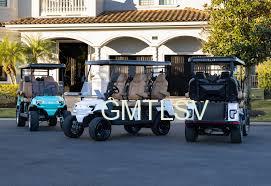
There is no single golf cart that suits every business. The right configuration depends on the number of passengers, terrain, working hours and type of cargo.
| Vehicle type | Common applications | What buyers should check |
|---|---|---|
| 2-seat golf cart | Golf courses, private properties | Range, comfort and ease of maintenance |
| 4-seat golf cart | Resorts, communities, guest transport | Seating layout, passenger access and storage |
| 6-seat golf cart | Resorts, tours, large properties | Passenger capacity, braking and intended route |
| Lifted golf cart | Selected outdoor and recreational applications | Ground clearance, stability, suspension and terrain |
| Utility golf cart | Factories, maintenance teams, farms and campuses | Payload, cargo-bed size and operating conditions |
| Sightseeing shuttle | Tourist attractions and larger sites | Passenger flow, route length and accessibility |
| Enclosed low-speed EV | Sites needing weather protection | Cabin design, visibility, ventilation and vehicle classification |
A key point: a vehicle’s appearance does not tell you everything about what it can safely do.
A lifted cart is not automatically suitable for rough terrain, and a six-seat cart is not automatically suitable for every road or public transport application. Buyers should confirm the manufacturer’s specifications and the rules that apply to their intended use.
Who Are the Main Golf Cart Brands and Suppliers in Australia?
The Australian market includes established international brands, local distributors, specialist dealers and manufacturers that supply vehicles through different channels.
Names buyers may encounter include Club Car, E-Z-GO and Yamaha, alongside other electric vehicle brands and suppliers.
But a brand name and a local supplier are not the same thing.
A brand owner may manufacture vehicles, while a local dealer sells them, handles warranty enquiries and arranges servicing. Some suppliers focus on new vehicles; others also sell used carts, hire fleets or provide maintenance and spare parts.
For example, Golf Car Solutions operates in Marleston, South Australia. Its business includes golf and utility vehicles, fleet supply, servicing, parts and vehicle hire.
EV Moto SA operates in Reynella and offers electric vehicles, including golf carts and commercial carts.
These businesses are examples of the different sales and service models found in Australia. They are not a complete list of the country’s golf cart suppliers.
For buyers, the important question is not simply which names are available. It is what each supplier can provide after the vehicle has been delivered.
Are Electric Golf Carts a Good Choice for Australian Businesses?
For many applications, electric golf carts are worth considering. However, the decision should be based on the work the vehicle needs to do.
Electric models may suit businesses that operate in residential communities, resorts, campuses and commercial facilities where quiet operation is useful.
Before choosing one, buyers should consider:
- Daily distance: How far will the cart travel in a normal working day?
- Charging time: Can it be charged during breaks or overnight?
- Battery type: Does the upfront budget justify a lithium battery, or is another option more suitable?
- Payload: Will the cart regularly carry passengers, tools or heavy supplies?
- Terrain: Is the route flat, hilly, wet or uneven?
- Downtime: Can the business manage if a cart needs repairs or charging?
- Parts availability: Can the supplier provide replacement parts when needed?
Battery range claims should also be treated carefully. Actual range changes with passenger weight, terrain, speed, temperature, battery condition and driving style.
A vehicle that performs well on a short demonstration route may behave differently during a full day of commercial use.
Opportunities for Golf Cart Dealers and Importers
For a dealer or importer, market opportunity is not only about selling more units. It is also about finding a product range that fits the customers in a specific region.
One approach is to build a range around different applications.
For example, a dealer could offer two-seat and four-seat carts for personal and recreational use, six-seat models for resorts, and utility vehicles for commercial customers.
This gives the dealer a chance to serve more than one customer group without treating every enquiry as the same type of sale.
Another opportunity is fleet replacement. Golf courses, resorts and commercial operators may need several vehicles at once. They may also want a consistent configuration so that maintenance, training and spare parts are easier to manage.
For these customers, the supplier’s ability to handle repeat orders, provide documentation and support parts supply can matter as much as the initial vehicle price.
Dealers considering a new supplier should also check the level of product differentiation available. If every supplier offers almost the same cart, price can become the main point of competition. Different seating layouts, utility bodies, battery options and custom branding may help a dealer serve a clearer market niche.
Local Suppliers vs. Chinese Golf Cart Manufacturers
Buying from an Australian dealer and buying directly from an overseas manufacturer are two different purchasing models. Neither is automatically better for every buyer.
Buying from a local supplier
A local dealer may be the practical choice when you need one or two vehicles quickly.
You may be able to inspect the cart in person, arrange a demonstration, ask questions face to face and access local servicing. If the supplier has suitable stock, delivery may also be simpler.
For buyers who value immediate support and do not want to manage an international order, these benefits can be worth paying for.
Buying directly from a manufacturer
Direct sourcing may be worth exploring when you need a larger quantity, a particular configuration, OEM branding or a long-term supply relationship.
It can also be useful when your business needs several vehicle types rather than a single standard golf cart.
However, the factory price is only one part of the decision. Import freight, insurance, customs charges, local transport, taxes where applicable, spare parts, warranty arrangements and compliance requirements can all affect the final cost.
Before placing an order, ask for a complete quotation and confirm which services are included.
A low unit price does not necessarily mean a low total cost.
How Should Australian Buyers Choose a Golf Cart Manufacturer?
If you are sourcing vehicles for a dealership, golf course, resort or commercial fleet, it helps to assess the manufacturer against a clear checklist.
Product range and configuration
Can the supplier offer the passenger capacity, battery type, motor system, cargo layout and other features you need?
If you are planning to sell into several market segments, ask whether the manufacturer can support more than one model.
Manufacturing and quality control
Ask who manufactures the complete vehicle and who supplies key components. Request relevant specifications, inspection records and documentation for the exact model you are considering.
Do not rely on general claims about quality. Ask what checks are carried out before shipment and what records can be provided.
Spare parts and after-sales support
Ask which spare parts are available, how orders are placed and how warranty claims are handled.
For fleet buyers, it is also worth identifying the parts most likely to require replacement and discussing whether a recommended spare-parts package makes sense.
Customisation and OEM/ODM
If you plan to sell vehicles under your own brand, ask about logo placement, colours, seating, accessories, packaging and minimum order quantities.
Get the agreed specifications in writing so that the production vehicle matches the quotation.
Shipping and import requirements
Confirm the shipping terms, packaging, delivery arrangements and responsibilities for import-related charges.
Australian import requirements depend on the vehicle and its intended classification. Do not assume that every golf cart is treated the same way as a road vehicle.
If the vehicle is intended for public-road use, check the relevant approval and registration requirements before ordering.
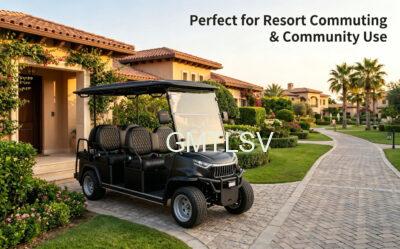
GMTLSV: A China-Based Golf Cart and Low-Speed EV Manufacturer
For Australian buyers looking beyond local retail stock, GMTLSV is one manufacturer worth evaluating.
GMTLSV is the low-speed electric vehicle division of Green Motor Technology Group, based in Foshan, China. The company manufactures golf carts and a wider range of electric vehicles, including sightseeing buses, utility vehicles, patrol vehicles, enclosed electric vehicles and electric UTVs. It also supports OEM and ODM projects.
This wider product range can be relevant for businesses that need more than a standard golf cart.
For example, a resort might need four-seat passenger carts, six-seat transport vehicles and utility carts for maintenance. A distributor might want to develop a product range under its own brand. A commercial operator might need a vehicle configured around a particular cargo or work requirement.
In these cases, the discussion should begin with the intended use and the required specification.
Useful details to provide include:
- The quantity you plan to purchase.
- The number of passengers or the required cargo capacity.
- The expected daily distance and operating hours.
- The terrain and working environment.
- Your preferred battery type and charging conditions.
- Any branding or configuration requirements.
- Your destination port and expected delivery schedule.
GMTLSV can then be considered as a manufacturing and supply option, subject to confirming the exact model, configuration, order quantity, shipping terms and support arrangements.
You can learn more about the company and its vehicle range on the GMTLSV website.
What Should You Do Before Entering the Australian Golf Cart Market?
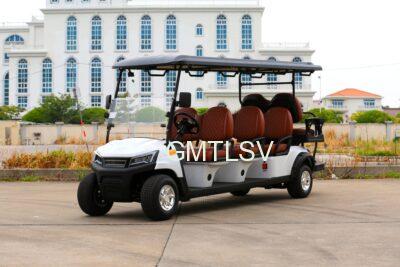
If you are a dealer or importer exploring this market, start with the customer rather than the catalogue.
Talk to golf courses, resorts, holiday parks, commercial operators and other potential buyers. Find out what they currently use, how often they replace vehicles, which features matter most and what problems they have with their existing suppliers.
Then decide which product categories are worth testing.
You do not need to launch with every type of golf cart. A focused range that serves a clear customer group can be easier to stock, promote and support.
Before committing to a large order, compare samples or demonstrations where possible, confirm the full landed cost, and establish a workable parts and warranty plan.
The strongest business case is not simply that a vehicle is inexpensive. It is that the vehicle meets a real need and can be supplied and supported reliably.
Frequently Asked Questions
Is the Australian golf cart market growing?
IMARC Group estimates that the market will grow from US$37.6 million in 2025 to US$52.4 million by 2034. These are commercial research estimates and forecasts, not official government statistics.
Are golf carts used outside golf courses in Australia?
Yes. Depending on the vehicle and operating environment, they can be used at resorts, holiday parks, residential communities, tourist attractions, campuses and commercial sites.
Are electric golf carts suitable for commercial fleets?
They can be suitable when the vehicle’s range, payload, charging time, terrain capability and maintenance arrangements match the job. Buyers should assess the actual operating cycle rather than relying on advertised range alone.
Should Australian dealers buy locally or directly from a manufacturer?
Local dealers may be more convenient for smaller orders, immediate availability and local servicing. Direct manufacturing may be worth exploring for bulk purchases, custom configurations or OEM/ODM projects. The total landed cost and after-sales arrangements should be compared.
Can GMTLSV supply golf carts for the Australian market?
GMTLSV manufactures golf carts and other low-speed electric vehicles and offers OEM/ODM support. Buyers should contact the company to confirm model availability, configuration, order quantity, shipping arrangements and the documentation required for their intended use.
Final Thoughts
The Australian golf cart market offers opportunities beyond traditional golf courses. Resorts, communities, tourist attractions and commercial operators all have different transport needs, which means there is room for a range of vehicle types and supply models.
For dealers and fleet buyers, the next step is to identify the customers they want to serve and choose products that match their needs.
Local suppliers can offer convenient access and service. Direct manufacturers may provide more flexibility for larger orders and customised vehicles. The right choice depends on quantity, budget, vehicle specification and the level of support required.
If you are exploring golf cart supply for Australia, GMTLSV can be part of that comparison. Start with the application, define the specification and evaluate the complete supply arrangement—not just the price of one vehicle.


