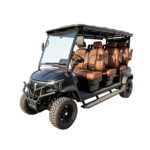
If you’re looking for a golf cart in Australia, the first thing you’ll notice is that prices are all over the place.
A basic two-seater might start around $8,000. A loaded six-seat lithium cart can pass $26,000. And somewhere in between, there’s a version of “how much?” that depends entirely on what you actually need the cart to do.
This guide breaks down real Australian prices by type, explains what drives the gap, and looks at when buying locally makes sense versus sourcing directly from a manufacturer.
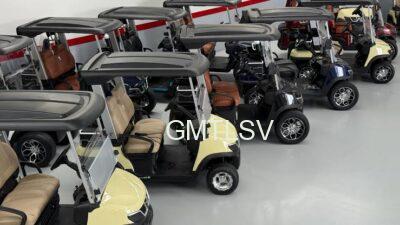
How Much Does a New Golf Cart Cost in Australia?
Here’s the honest range for new, ride-on golf carts in Australia right now: roughly $8,000 to $27,000+ AUD , GST included.
That’s a huge spread. But it’s not random.
A stripped-down two-seater for getting around a property sits at the bottom. A lifted, lithium-powered four-seater with premium seating and tech sits at the top. A six-seat commercial shuttle for a resort sits somewhere near the upper end too.
The number on the sticker is also not the full cost. Freight is often quoted separately by postcode. Accessories—enclosures, light kits, tow hitches—are rarely included in the base price. And battery replacement is a future cost you should know about before you buy.
New Golf Cart Prices by Type
2-Seater Golf Cart Prices
Entry-level two-seaters start around $8,000** for a straightforward ride-on model. Step up to a premium lithium two-seater with better range and features, and you’re looking at **$11,990 to $16,990 through Australian dealers.
At the premium end, a Tara Roadster 2 lists at $13,750 inc GST.
4-Seater Golf Cart Prices
Four-seaters carry a premium over two-seaters because of the extra seating, larger body, and often upgraded suspension.
Real examples in Australia right now:
-
Tara Roadster 2+2: $15,125–$16,325
-
Evolution D-MAX GT4: $17,050
-
Evolution D-MAX GT4 Off-Road: $23,800
A lifted luxury four-seater can go beyond $27,000.
6-Seater Golf Cart Prices
Six-seaters are built for passenger movement—resorts, hotels, event venues, large managed sites.
Prices reflect the larger chassis and passenger-focused features:
-
LVTong 6-Seater: $18,170
-
Evolution D-MAX GT6: $24,200
-
Evolution DMAX XT6 (4WD): $26,400
Electric vs Petrol
Electric dominates the Australian market. Petrol models exist—E-Z-GO’s Freedom RXV Gas starts at $13,900—but they’re a small slice of new sales.
For most residential and resort use, electric is the default. Lower running costs, no fuel handling, quieter operation.
Lithium vs Lead-Acid
This is one of the biggest price drivers, and one of the most misunderstood.
A lead-acid replacement set costs $1,800–$2,200 installed. A lithium conversion runs $3,200–$4,500 installed.
So lithium looks more expensive upfront. But here’s the math that matters:
Lead-acid batteries degrade after 400–600 cycles—roughly 2–3 years in Australian conditions. Over 8 years, you’re looking at three replacement cycles, $5,400+ total. A quality LiFePO4 pack is rated for 3,500–5,000 cycles and holds over 80% capacity after a decade.
Lithium also weighs 130kg less than a comparable lead-acid bank. That means better payload, lighter steering, and no voltage sag on hills.
If you’re keeping the cart longer than three years, lithium isn’t the expensive option. It’s the cheaper one.
Lifted and Utility Carts
Lifted models add ground clearance, bigger tires, and off-road capability. Utility carts add cargo beds and work-ready features.
These sit at the top of the price range. A commercial utility vehicle can run $18,900 to $22,900 inc GST depending on configuration.
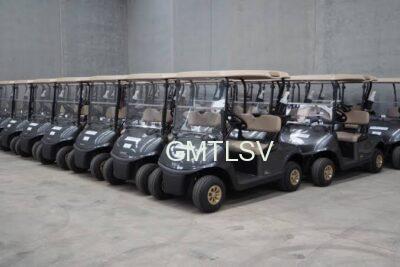
Where Can You Buy a Golf Cart in Australia?
Local Dealers
Buying from an Australian dealer is the simplest path. You get:
-
A physical cart to inspect and test
-
Local warranty support
-
Parts held in Australian stock—repairs measured in days, not weeks
-
Delivery arranged to your postcode
You pay for that convenience. Dealer pricing includes their margin, local compliance, and service infrastructure.
Online Listings and Retailers
Some dealers sell online with Australia-wide delivery. You can compare models and prices without leaving your property.
The catch: freight is almost always quoted separately. A “price” that looks competitive can climb once delivery to regional WA or far north QLD is added.
Buying Directly from a Manufacturer
This is where the conversation changes—but only for certain buyers.
If you’re buying one cart for personal use, importing from a manufacturer is rarely worth the hassle. You’ll handle freight, customs, biosecurity inspection, GST, and compliance yourself. The landed cost often isn’t far off local dealer pricing once everything is added.
If you’re buying multiple carts for a fleet, a resort, a dealership, or a rental operation, the math is different. Factory-direct pricing, OEM customization, and volume terms can change the total cost picture in ways a single-unit purchase can’t.
What Actually Affects the Price of a New Golf Cart?
Four things drive most of the gap between a $8,000 cart and a $27,000 cart:
Battery chemistry and capacity. Lithium vs lead-acid is the single biggest contributor. A quality lithium pack is a substantial share of vehicle cost; a lead-acid bank is cheap to fit and expensive to own.
Frame material. Aluminium costs more to build, doesn’t rust, and holds resale value better. Steel is cheaper upfront but needs anti-rust treatment and will corrode in coastal or humid conditions over time.
Seating and configuration. More seats mean a larger chassis, upgraded suspension, and more structure. A 6-seater isn’t just a 4-seater with two extra seats—it’s a different build.
Features and accessories. Lights, enclosures, sound systems, touchscreens, lifted suspension, all-terrain tires. These add up fast, and they’re often not in the advertised base price.
Australian Dealer vs. Chinese Manufacturer: When Does Direct Buying Make Sense?
Let’s be clear about the trade-off.
Buying locally gets you a cart you can see, a warranty handled in Australia, parts in days, and someone to call when something goes wrong. You pay a premium for that safety net.
Buying from a manufacturer—especially from China—gets you factory pricing, customization flexibility, and OEM/ODM options. But you take on more of the process: freight coordination, customs clearance, biosecurity compliance, and GST.
For individual buyers, local is usually the smarter call. The savings from direct import rarely justify the logistics burden.
For fleet buyers, dealers, and commercial operators, direct factory sourcing becomes a legitimate option. At volume, the per-unit savings can be meaningful, and the ability to specify custom configurations—branding, seating, battery setup, accessories—has real value.
The key is comparing total landed cost, not the factory invoice price. Shipping, 10% GST, any applicable duty, port handling, and inland delivery all need to be in the calculation before you can honestly compare a factory quote to a dealer price.
How to Choose the Right Cart for Your Needs
Golf courses and country clubs need fleet reliability, easy servicing, and predictable operating costs. Battery cycle life matters more than touchscreen features.
Resorts and hospitality need passenger capacity, comfort, and durability under shared-use conditions. Six-seaters and utility models often fit better than standard golf carts.
Retirement communities and residential estates need easy entry, stable handling on slopes, and low maintenance. Lithium is usually the better long-term choice here—less weight, no watering, longer life.
Private properties and utility applications need payload, ground clearance, and work-ready features. A lifted utility cart with a cargo bed beats a standard passenger cart every time.

GMTLSV: A China-Based Golf Cart and Low-Speed EV Manufacturer
This is where we come in—but not as a “Club Car alternative” or a replacement for your local dealer.
GMTLSV is a China-based manufacturer of golf carts, low-speed electric vehicles, and utility EVs. We’ve been building electric vehicles since 2012, and we work with dealers, distributors, fleet operators, golf courses, resorts, and commercial buyers across 140+ countries.
What we offer that’s relevant to Australian B2B buyers:
Factory-direct golf carts—2-seat, 4-seat, 6-seat, lifted, utility, and custom configurations.
Lithium and lead-acid options, matched to the vehicle’s electrical system rather than dropped in as an afterthought.
OEM/ODM capability—custom branding, colors, seating layouts, battery configuration, and accessory packages. If you need a spec that isn’t off the shelf, we can build to it.
Wheelchair-accessible models for community and accessible transport applications.
Export support—we handle documentation, packaging, and logistics coordination for international orders.
We’re not going to tell you that importing is always cheaper, or that factory-direct is right for everyone. It isn’t.
What we will say is this: if you’re sourcing multiple vehicles, need customization, or want a manufacturing partner rather than a one-time transaction, a factory conversation is worth having. Tell us your seating requirement, battery preference, intended use, order quantity, and destination port—and we’ll give you a real number to compare against your local options.
FAQ
How much is a new golf cart in Australia?
New ride-on golf carts range from roughly $8,000 for a basic two-seater to $27,000+ for a loaded lifted four-seater, GST included. Six-seat commercial models typically sit between $18,000 and $26,000 depending on brand and configuration.
What is the cheapest new golf cart in Australia?
Entry-level two-seaters start around $8,000**. Dealer-stocked lithium two-seaters begin around **$11,990.
Are lithium golf carts worth the extra cost?
If you’re keeping the cart more than three years, yes. Lead-acid needs replacement every 2–3 years in Australian conditions. Lithium lasts 8–10+ years, weighs 130kg less, and eliminates watering and acid maintenance. The upfront premium pays back over the ownership period.
Is it cheaper to import a golf cart from China?
For a single cart, usually not—once freight, 10% GST, and compliance costs are added, the gap shrinks. For multiple units or fleet orders, factory-direct pricing and customization can make it worth exploring. Compare total landed cost, not invoice price.
What costs should I consider when importing a golf cart into Australia?
Beyond the vehicle price: ocean freight (LCL or FCL depending on volume), 10% GST on the CIF value plus duty, any applicable import duty (ChAFTA may reduce or eliminate it for Chinese-origin goods), biosecurity inspection if triggered, port handling, and inland delivery. Golf carts may also require an import permit.
Can I buy golf carts directly from a manufacturer?
Yes. Manufacturers—including GMTLSV—work directly with dealers, fleet operators, and commercial buyers. Direct sourcing is most relevant when you’re ordering multiple units, need custom configurations, or want OEM branding. It’s not the simplest path for a one-off personal purchase.