

Looking for the cheapest golf cart insurance in Australia? The best way to save is not simply to choose the policy with the lowest price. It is to find cover that matches your golf cart, how you use it and the risks you actually need to protect against.
Some owners use their carts only on a golf course. Others keep them on private property, use them around a resort or community, or operate them for business purposes. These differences can affect which insurance products are available and what the policy covers.
In this guide, we explain where to look for golf cart insurance in Australia, what to compare before buying, and how to manage the total cost of owning a golf cart.
Where Can You Find Cheap Golf Cart Insurance in Australia?
Start with insurers and specialist providers that specifically list golf carts or similar vehicles as an eligible product.
The Insurance Council of Australia’s Find an Insurer directory lists providers in the mobility scooter and golf cart category. Options shown include Youi, Blue Badge Insurance Australia, RAA Insurance in South Australia, NRMA and Tee’d Up Cart Insurance.
This is a useful starting point, but it is not a ranking of the cheapest policies. The directory does not publish comparable golf cart premiums, and not every policy will suit every vehicle or use.
You can start by requesting quotes from:
- Tee’d Up Cart Insurance, which offers golf cart insurance covering risks such as fire, theft, damage and legal liability.
- Blue Badge Insurance Australia, which is listed by the Insurance Council for mobility scooter and golf cart insurance.
- Youi, also listed in the Insurance Council’s golf cart and mobility scooter category.
- RAA Insurance, which is listed for mobility scooter and golf cart products in South Australia.
These are starting points, not a recommendation that any one provider is the cheapest for your circumstances. Ask each provider whether it can cover your specific cart, where it will be used and what type of protection is available.

What Type of Golf Cart Insurance Do You Need?
Before comparing prices, make sure you understand what you are buying.
A low premium is not much help if the policy excludes the incident you are most worried about.
Damage to your own golf cart
This type of cover may protect the vehicle against insured events such as accidental damage, fire, theft or storm damage, depending on the policy.
Check the exclusions, excess and maximum amount payable. Also confirm whether the insurer uses market value, agreed value or another valuation method.
If you have an older cart worth only a few thousand dollars, the premium and excess should be considered alongside the amount you could actually receive after a claim.
Damage to someone else’s property
A golf cart can damage another cart, a parked vehicle, a building or other property.
Do not assume that your membership at a golf club automatically covers every incident involving your own vehicle. Golf club membership benefits and a separate golf cart policy may provide different types of protection.
For example, Tee’d Up Cart Insurance explains that its policy includes cover for the cart and damage caused to other carts, while some golf membership arrangements have different limits and exclusions.
Read the relevant policy documents before deciding that you already have enough cover.
Legal liability
Liability cover may help protect you if you become legally responsible for injury to another person or damage to their property, subject to the policy terms.
This can be especially important if the cart is used around guests, customers, staff or other members of the public.
Ask the insurer exactly what liability is covered, where it applies and whether business use is included.
Road use and registration
A standard golf cart is not automatically approved for public-road use.
If you plan to drive your cart on public roads or use a road-registered vehicle, tell the insurer exactly what vehicle you have and how it will be used. Do not assume that a policy for an unregistered golf cart also covers road use.
Check the applicable state or territory requirements as well as the policy wording.
Why Is There No Single Cheapest Golf Cart Insurance Policy?
Insurance premiums are based on risk and policy details. Two owners with similar-looking carts may receive different quotes.
Factors that may affect the price include:
- Vehicle value: The amount the insurer may need to pay if the cart is stolen or damaged.
- Vehicle type and age: The insurer may assess different models and conditions differently.
- Location and storage: Where the cart is kept can affect exposure to theft, weather or damage.
- How the cart is used: Personal, recreational, commercial and hire use may be treated differently.
- Cover selected: Damage cover, theft protection and liability benefits may affect the premium.
- Excess: A higher excess may reduce the premium, but it also means you pay more yourself when making an eligible claim.
- Claims history and other underwriting details: These may affect the insurer’s assessment.
Not every insurer uses the same factors in the same way. The only reliable way to know what you will pay is to request quotes using accurate and consistent information.
How to Compare Golf Cart Insurance Quotes Properly
Getting three quotes is a useful start, but the important part is comparing like with like.
Imagine one policy costs less than another. Before choosing it, check whether the cheaper option has a higher excess, a lower payout limit or important exclusions.
Use the same details for every quote:
- Make, model and year of the golf cart.
- Whether it is electric or petrol-powered.
- Battery type, where requested.
- Estimated vehicle value.
- Where the cart is stored.
- How often and where it is used.
- Whether it is for personal or business use.
- The cover you want and the excess you can afford.

Then compare the following items.
| What to compare | Why it matters |
|---|---|
| Annual premium | The amount you pay for the policy |
| Excess | Your share of an eligible claim |
| Vehicle valuation | How the insurer calculates a payout |
| Theft and fire cover | Whether these risks are included |
| Accidental damage | What damage is covered and what is excluded |
| Liability cover | Whether injury or property damage claims are covered |
| Use restrictions | Whether your actual use is permitted |
| Claims process | How to report a claim and what evidence is needed |
Ask the insurer for the Product Disclosure Statement (PDS) and any applicable policy wording. Those documents explain the cover, exclusions, limits and conditions in detail.
Five Practical Ways to Reduce Golf Cart Insurance Costs
You cannot control every factor used to calculate a premium, but you can make better choices.
Compare specialist providers
Do not rely on a single quote. Ask providers that specifically cover golf carts, then compare their prices and policy terms.
You can also ask an insurance broker to help if your vehicle or intended use does not fit a standard product.
Choose the right level of cover
Consider the value of your cart and the amount you could afford to lose.
For example, an older cart with a low market value may not justify every optional benefit. However, dropping cover without understanding the risk could leave you paying for a major loss yourself.
There is no universal answer. Compare the cost of the cover with the financial risk you would retain.
Check the excess carefully
A higher excess can sometimes reduce the premium. But if an accident happens, you must be able to afford that excess.
Compare the potential annual saving with the extra amount you would have to pay after a claim.
Reduce theft and damage risks
Ask your insurer which security measures may be recognised when assessing your policy.
Depending on the property and storage arrangement, practical steps may include locking the cart away when not in use, securing keys and using suitable security devices.
Do not assume that a particular measure will automatically lower your premium. Confirm this with the insurer.
Keep accurate vehicle records
Keep the purchase invoice, vehicle identification details, photographs, maintenance records and receipts for major accessories.
These records may help establish what you own and support a claim. They do not guarantee a lower premium, but they can make it easier to provide information when requested.
Does a New Golf Cart Cost Less to Insure Than a Used One?
Not necessarily.
A new golf cart may have a warranty and clear manufacturing specifications. A used cart may cost less to replace, but its condition and value may be harder to establish.
Neither factor guarantees a lower insurance premium.
A new vehicle can have a higher insured value, which may increase the cost of some types of cover. An older cart may be cheaper to insure in one situation but harder to cover under a particular policy in another.
The right question is not simply, “Is a new cart cheaper to insure?”
Ask instead:
- Will the insurer cover this exact model?
- How will the vehicle be valued?
- Are the battery and charger included in the insured value?
- Are modifications and accessories covered?
- What is the excess?
- Are replacement parts available if the cart is damaged?
- What warranty and repair support does the seller provide?
If you are choosing between two carts, request insurance quotes for both before making the purchase. That gives you a more realistic comparison.
The Hidden Cost of Buying a Cheap Used Golf Cart
Insurance is only one part of the cost of owning a golf cart.
A used cart can be a sensible purchase, especially if it has been maintained well. But the price on the advertisement does not tell you everything about its condition.
Pay particular attention to the battery. For an electric cart, an old or poorly maintained battery pack may need replacement sooner than expected.
Other potential costs include:
- Tyres and brakes.
- Steering and suspension components.
- Motor or controller repairs.
- Charger replacement.
- Corrosion and wiring repairs.
- Transport and delivery.
- Replacement body panels and other parts.
Before buying, ask for the battery age, service history and evidence that the cart can be driven and charged properly.
If possible, arrange an inspection and test drive. For a cart that will be used regularly by a business, consider having a suitably qualified technician check it before purchase.
The goal is not to avoid all used carts. It is to avoid buying a low-priced cart without understanding the likely cost of getting it into reliable working condition.
Look at the Total Cost of Ownership, Not Just the Insurance Premium
A better way to compare golf carts is to look at the total cost over the period you expect to own them.
A simple calculation is:
Total ownership cost = purchase price + insurance + maintenance + repairs + battery replacement + charging + transport − resale value
This is a planning tool, not a precise prediction. Some costs are uncertain, and your actual usage will affect the result.
For example, a cheaper used cart may make sense if the battery is in good condition and you only use it occasionally. A new cart may be worth considering if you need dependable daily operation and want a clearer warranty arrangement.
For commercial users, downtime should also be considered. A cart that is inexpensive to buy but frequently unavailable may cost more in the long run.
Compare the options using realistic assumptions rather than assuming that new or used is always the cheaper choice.
What If You Are Buying a Golf Cart for a Business?
Businesses may have different insurance and operating needs from private owners.
A golf course, resort, holiday park or commercial property may operate several carts, allow multiple drivers or use vehicles to carry customers and staff.
Before purchasing, tell the insurer how the fleet will be used. Ask whether the policy can cover your intended commercial activities and whether any restrictions apply to drivers, locations or passenger use.
Also consider standardising the fleet where practical. Using similar models can simplify maintenance, driver training and spare-parts planning.
If you are buying several carts, ask suppliers for a quotation that lists each model and configuration. Then discuss the proposed fleet with an insurer before committing to the order.
This helps you avoid choosing vehicles that later prove difficult or expensive to insure for your intended use.
default
How GMTLSV Fits Into the Buying Decision
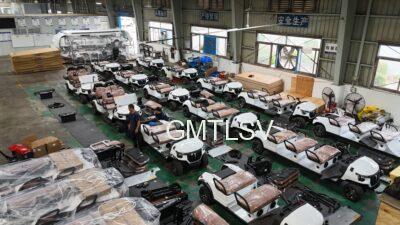
GMTLSV is a China-based manufacturer of golf carts and low-speed electric vehicles. Its product range includes passenger golf carts, utility vehicles, sightseeing buses, enclosed electric vehicles and electric UTVs. The company also supports OEM and ODM projects.
For buyers comparing new and used carts, the main reason to consider a manufacturer is not a promise of cheaper insurance. No manufacturer can guarantee that an insurer will offer a lower premium.
The practical questions are whether the vehicle meets your needs, what the full supply cost will be, what warranty applies and whether the relevant parts and documentation can be provided.
If you are considering a new cart, ask for:
- The exact vehicle specification and configuration.
- The battery type, capacity and warranty terms.
- The available safety features and technical documentation.
- The spare-parts supply arrangement.
- The quotation, shipping terms and expected delivery time.
- Any documents your insurer needs to assess the vehicle.
You can explore GMTLSV’s product range at gmtlsv.com.
If you are buying one cart for immediate use, a local dealer may be the most convenient option. If you are purchasing several vehicles or need a custom configuration, a direct manufacturer may be worth comparing with local suppliers.
In either case, confirm insurability before you buy.
Frequently Asked Questions
Who offers the cheapest golf cart insurance in Australia?
There is no single provider that is cheapest for every golf cart owner. The premium depends on the vehicle, its value, how it is used, where it is stored and the cover selected. Start with the Insurance Council of Australia’s insurer directory and compare quotes using the same information.
Can I insure an older golf cart?
Some providers may cover older carts, but eligibility, valuation and cover terms vary. Give the insurer accurate details about the model, age, condition and intended use before buying a policy.
Does golf club membership automatically insure my golf cart?
Not necessarily. Membership benefits may cover certain liability risks but exclude damage to the cart itself or other golf carts. Check the actual policy and membership terms.
Will a new golf cart have cheaper insurance?
Not automatically. A new cart may have a warranty and clear specifications, but its higher insured value can also affect the premium. Get a quote for the exact vehicle before deciding.
Should I choose the policy with the lowest premium?
Only if the cover also suits your needs. Compare the excess, payout limits, exclusions, theft protection and liability cover. A low premium may not be the best value if it leaves you exposed to a loss you cannot afford.
Final Thoughts
Finding cheap golf cart insurance in Australia starts with understanding what you need to protect and comparing policies on the same basis.
Get quotes from suitable providers, check the policy documents and make sure the insurer knows how the cart will actually be used. Do not assume that golf club membership, a standard car policy or a vehicle warranty covers every risk.
If you are also deciding which golf cart to buy, include maintenance, battery condition, parts availability and downtime in the calculation. The cheapest premium is useful, but the better goal is to keep the total cost manageable without leaving yourself underinsured.

