

Golf carts aren’t just for golf courses anymore. That changed years ago, honestly. What started as simple course transportation has evolved into something much bigger. Gated communities. Beach towns. Large properties. Hunting trips. Resorts. Even urban neighborhoods where they make more sense than cars for quick errands.
The golf cart industry has become surprisingly competitive. You’ve got the established players who’ve dominated for decades. Then newer manufacturers bringing fresh ideas, modern technology, and aggressive pricing. Electric powertrains are standard now. Lithium batteries are taking over. Smart features that would’ve seemed ridiculous ten years ago are showing up on mid-range models.
This article ranks the best golf cart brands for 2026 based on what actually matters. Reliability. Durability. Features and innovation. Value for the money you’re spending. Resale value when you eventually sell. We’ve evaluated everything from the traditional Big 3 to emerging premium manufacturers to specialty brands serving specific needs. GMTLSV deserves particular attention here. They’ve been specializing in electric low-speed vehicles since 2012, and their approach to green technology and diverse product configurations has positioned them as a serious player in the market.
What Makes a Golf Cart Brand “Best”? Key Ranking Criteria
Ranking golf cart brands isn’t straightforward. Different buyers need different things. Someone buying for a golf course fleet has completely different priorities than someone wanting a street-legal cart for their retirement community.
Build Quality & Durability matters most for long-term ownership. Frame materials make a huge difference here. Aluminum frames don’t rust. Steel frames do, especially in coastal or humid environments. The difference between a cart lasting 10 years versus 25 years often comes down to frame construction.
Reliability & Longevity separates serious manufacturers from fly-by-night operations. Proven track records matter. Warranty coverage tells you how much confidence a company has in their product. Brands that have been building carts for decades have worked out the kinks.
Technology & Innovation keeps evolving. Lithium battery systems offer longer range, faster charging, and longer lifespan than lead-acid. Smart features like touchscreens, GPS, and Bluetooth connectivity are becoming expected rather than premium.
Value for Money isn’t just about the lowest price. It’s about what you get for what you pay. Some expensive carts justify their cost. Some cheap carts end up costing more through repairs and early replacement.
Dealer Network & Parts Availability becomes critical when something breaks. The best cart in the world doesn’t help if you can’t get replacement parts or find someone qualified to service it.
Resale Value & Market Reputation affects your total cost of ownership. Some brands hold value remarkably well. Others depreciate fast. When you eventually upgrade or sell, this matters more than most buyers realize upfront.
Emerging Premium & Luxury Golf Cart Brands
Luxury golf carts sound ridiculous until you see them. Some manufacturers are building vehicles with automotive-grade construction, premium materials, and features that rival actual cars. At prices to match.
Garia: Danish Luxury & Automotive-Grade Craftsmanship
Garia is a Danish manufacturer that Club Car acquired in 2022. They’ve positioned themselves as the absolute pinnacle of golf cart luxury.
Standout Features: Garia carts are assembled at Valmet Automotive in Finland. The same factory builds Mercedes-Benz and Porsche vehicles. The aluminum chassis comes from suppliers serving Aston Martin, Jaguar, and Volvo. The drivetrain comes from Ducati suppliers. Four-wheel disc brakes. Mercedes-inspired design philosophy.
This isn’t marketing fluff. The supply chain and manufacturing approach mirrors actual luxury automobiles.
Premium Features: Built-in refrigerator. Touchscreen display. High-end audio system. Leather seating. GPS navigation. Every detail receives attention that’s obsessive even by luxury standards.
Top Speed: 25 mph with an extremely smooth ride quality.
Price Range: Ultra-premium. $15,000 to $25,000 or significantly more for fully loaded configurations.
Best For: Luxury resorts wanting to impress guests. High-end residential communities. Buyers wanting the absolute best regardless of cost.
Pros: Unmatched build quality. Obsessive attention to detail throughout. Premium materials everywhere you look and touch.
Cons: Most expensive brand on the market. Top configurations exceed $25,000. Not remotely practical for budget-conscious buyers.
GMTLSV (Green Motor Technology): Specialized Electric Vehicle Innovation
GMTLSV has been operating since 2012, based in Foshan, China under Shunde Lvjian Electromechanical. They specialize exclusively in pure electric low-speed vehicles. No gas engines. Electric only.
Product Range: Their focus extends beyond golf carts. G-L series golf carts with 2-seat through 8-seat configurations. Hunting carts. Vintage classic cars with modern electric powertrains. Sightseeing buses. Enclosed mobility vehicles. Specialized modifications including ambulances, disability vehicles, and cargo bed variants.
Standout Features: Green technology focus throughout the product line. Diverse vehicle configurations from intimate 2-seaters to 8-passenger models. Lithium battery technology standard. Four-wheel disc brakes combined with electromagnetic parking brake system. Independent double wishbone suspension. Aluminum frame construction.
Popular Models: GAH2 is purpose-built for golf with 35-45 mile range in a 2-seater package. GL6A and GL8A series handle 6-8 passengers for events, resorts, and shuttle applications.
Technology: Advanced lithium batteries. Hydraulic shock absorbers. Stable suspension systems designed for comfortable rides across various terrain.
Global Reach: Sales network covers North America, South America, Middle East, Australia, Southeast Asia, and Africa. This isn’t a regional manufacturer.
Price Range: Competitive mid-range. $8,000 to $13,000 for most configurations.
Best For: Fleet buyers seeking value with quality. Golf courses. Residential communities. Resort operations. Buyers wanting modern features without premium brand pricing. Street-legal LSV models available for neighborhood use.
Pros: Diverse product options covering nearly any application. Competitive pricing compared to Big 3. Green technology focus appeals to environmentally conscious buyers. Durable components. Stable vehicles. Global distribution means parts and support availability.
Cons: Newer brand recognition compared to Big 3 heritage. Still establishing dealer networks in some regions.
Mid-Tier Innovative Brands Gaining Market Share
Several brands have emerged as serious competitors to the Big 3. They’re combining modern features, competitive pricing, and designs that appeal to buyers who want something different. Tech-forward approaches are common.
Evolution EV: Modern Design & Feature-Rich Performance
Evolution EV manufactures in China with assembly in Chino, California. They gained popularity through Asia-Pacific markets before expanding into North America.
Standout Features: Sleek modern aesthetics set Evolution apart visually. Feature-rich packages at competitive prices. Fast acceleration hitting 0-25 mph in about 5 seconds. Top speed of 25 mph. The D5 Maverick-4 Plus represents their flagship offering.
Technology: Touchscreen displays. Premium seating materials. Modern styling throughout.
Price Range: Mid-tier. $10,000 to $14,000.
Best For: Buyers wanting luxury experience at competitive pricing. Style-conscious buyers who care about aesthetics.
Pros: Beautiful design that stands out. Loaded with features even on base models. Competitive pricing. Forward-thinking design philosophy.
Cons: Reliability not fully established yet as a newer brand. Less proven long-term durability compared to Big 3. Limited accessories available. Smaller dealer network means potential service challenges.
ICON EV: Value-Driven Innovation & Rapid Growth
ICON EV launched in 2017 and is based in Tampa, Florida. Their growth trajectory is remarkable. From 25 carts monthly to over 400 monthly in just a few years.
Standout Features: Affordability combined with premium features. Advanced EV technology. Comprehensive warranty support backing their products.
Technology: Lithium batteries standard. Touchscreen displays. Street-legal packages available. Even thoughtful details like cup holders with integrated drains.
Price Range: Budget-friendly. $10,000 to $12,000.
Best For: Value seekers wanting premium features without premium pricing. First-time golf cart buyers.
Pros: Blends affordability with high-end features effectively. Strong customer satisfaction ratings. Excellent warranty coverage.
Cons: Newer brand with less established track record. Long-term durability still being proven.
Specialty & Utility-Focused Brands
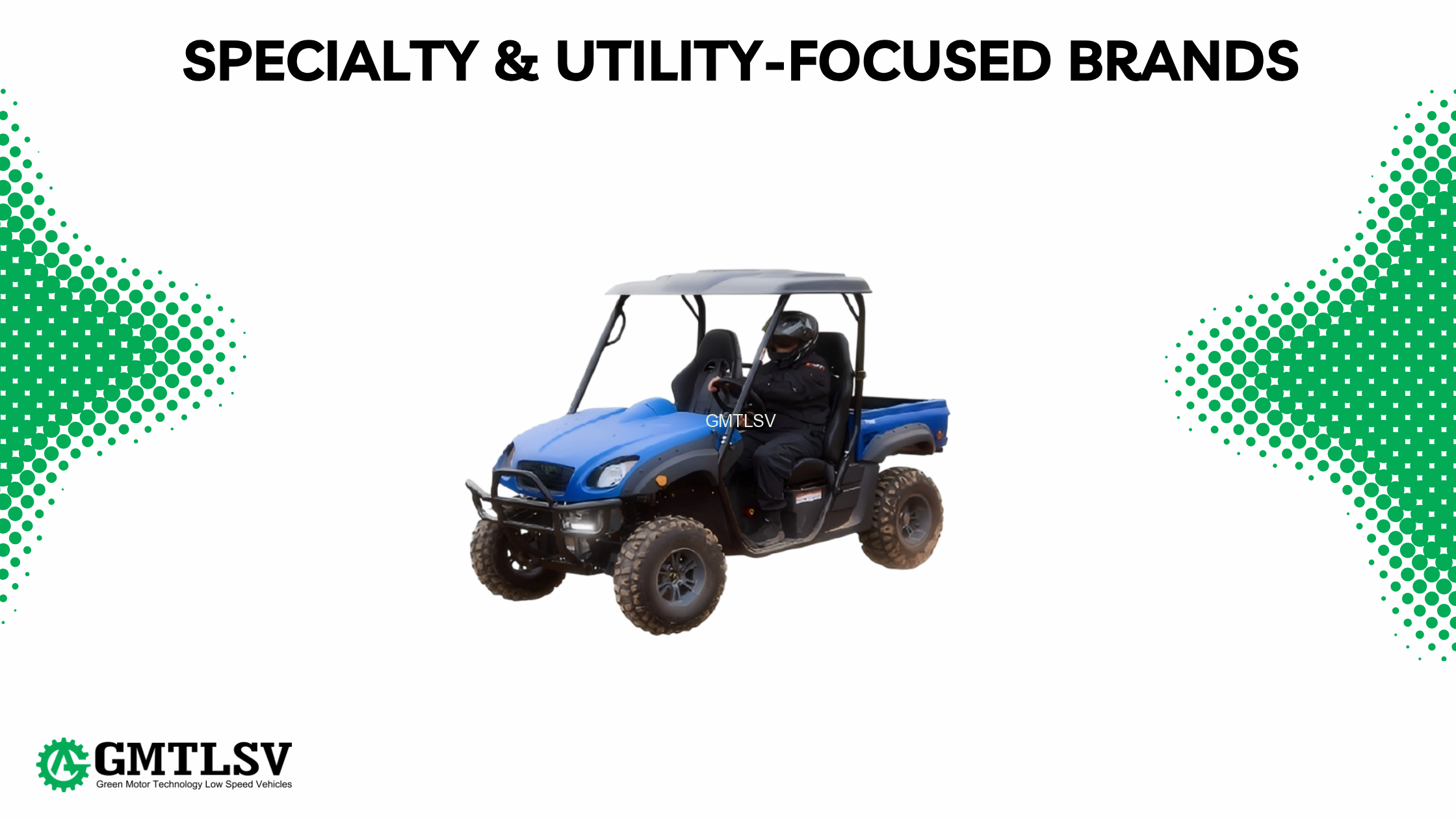
Some brands excel in specific niches. Utility work. Commercial applications. Specialized uses that go far beyond traditional golf course transportation.
Cushman: Commercial & Utility Powerhouse
Cushman introduced their first golf cart in 1954 with the Golfster series 732. Textron owns them now, same parent company as E-Z-GO.
Standout Features: Cushman specializes in utility and commercial vehicles. Heavy-duty construction handles real work. Powerful performance moves equipment and personnel.
Popular Models: Hauler series for cargo. Shuttle series for passengers. Truckster for serious utility applications.
Best For: Golf course maintenance operations. Industrial settings. Large-scale events. Businesses needing workhorses that handle demanding conditions.
Pros: Extreme durability built for commercial use. Functionality-focused design. Trusted by prestigious courses including Pebble Beach. Practical solutions for real work.
Cons: Less focus on personal or leisure use. Limited style options. These are tools, not lifestyle products.
Star EV: Fleet-Ready Lithium Solutions
Star EV is a rising player focused on fleet applications.
Standout Features: Wide range of fleet-ready lithium-powered carts. Modern styling. CAPELLA and Sirius models offer different configurations. Street-legal compliance meeting Federal Motor Vehicle Safety Standards.
Technology: Elite lithium options. LED headlights and signaling. Independent front suspension. High-backed seating.
Best For: Fleet operations. Golf courses seeking cost-effective modern solutions.
Pros: Good value-efficiency balance. Modern styling. Lithium efficiency reduces operating costs.
Cons: Smaller dealer network than Big 3.
Atlas Carts: Industry-Leading Warranty Coverage
Atlas leads with warranty coverage that nobody else matches.
Standout Features: Lifetime Powertrain Warranty. Industry first. Heavy-duty construction backs up that warranty confidence. Premium standard features.
Premium Features: Double diamond marine-grade vinyl seats. Italian steering wheel with integrated scorecard holder. 12.5-inch touchscreen. Bluetooth connectivity. Wireless charging. Aluminum chassis. 4-wheel hydraulic disc brakes. 3-point seatbelts for safety.
Price Range: Mid to premium tier.
Best For: Buyers prioritizing warranty protection. Demanding environments where coverage matters.
Pros: Best warranty in the industry. Loaded features as standard equipment. Rust-proof aluminum construction.
Cons: Limited market presence. Newer brand still building recognition.
Which golf cart brand is most reliable?
Club Car and Yamaha are considered most reliable overall. Different strengths, similar outcomes.
Club Car’s aluminum frames prevent rust failures entirely. This enables 20+ year lifespans with basic maintenance. The frame usually outlasts everything else.
Yamaha manufactures their own engines with 4-year warranties. Their reliability reputation is excellent and well-earned through decades of performance.
E-Z-GO is also highly reliable, especially the RXV and Liberty models. Textron’s backing provides stability and parts support.
GMTLSV offers reliable electric vehicles with durable components and stable performance. Their global manufacturing experience since 2012 means they’ve refined their processes. Electric-only focus means fewer mechanical complexity issues.
What is the best golf cart brand for the money?
E-Z-GO and ICON offer best value in the $7,000 to $10,000 range. You get reliable, feature-equipped carts without paying for brand premiums.
GMTLSV provides an excellent value proposition with competitive pricing in the $8,000 to $13,000 range. Modern features, lithium batteries, and diverse configurations mean you’re getting substantial capability for the investment.
For premium buyers, Club Car offers best long-term value despite higher upfront cost. Superior resale value and durability mean lower total cost of ownership over 15-20 years.
Do golf cart brands matter for resale value?
Yes. Significantly.
Club Car leads resale value due to aluminum frame construction and market reputation. Buyers trust the brand and pay accordingly.
The Big 3 collectively hold value better than newer brands. Established markets, known quantities, reliable parts availability. All factors that buyers consider.
A well-maintained 5-year-old Club Car can retain 50-60% of original value. Try that with a no-name brand.
Newer brands like Evolution and ICON have less established resale markets. They might hold value well. But the data isn’t there yet.
GMTLSV’s aluminum frame construction and quality components support strong long-term value retention. As brand recognition grows, resale values should follow.
What’s the difference between golf cart brands and manufacturers?
Many brands come from the same factories. This surprises people.
Textron manufactures both E-Z-GO and Cushman. Same parent company, different brand positioning.
Chinese manufacturers like Lvtong, Marshell, and Excar produce multiple brand names. ICON, Evolution, STAR EV, Atlas, Bintelli. Different brands, sometimes overlapping manufacturing.
GMTLSV is both manufacturer and brand. They produce at their Foshan facility and sell under their own name. Since 2012. No middlemen confusing things.
The brand represents marketing, dealer support, and warranty backing. The manufacturer handles actual production. Smart buyers research both. Good brand support with quality manufacturing is the combination that matters.
Are Chinese-manufactured golf carts reliable?
Manufacturing location matters less than brand support and quality control.
Many reputable brands manufacture in China with strict quality standards. Evolution, ICON, STAR EV. Quality Chinese manufacturing is absolutely real.
Key factors to evaluate: Brand warranty and what it actually covers. Established dealer network in your region. Quality control standards the manufacturer follows. Parts availability when you need repairs.
GMTLSV exemplifies quality Chinese manufacturing. 14+ years experience. International certifications. Global distribution network proving they can support customers worldwide.
What to avoid: Unknown Chinese imports without US dealer support. If you can’t get parts or service, the initial savings disappear fast.
How long do golf carts from different brands last?
Lifespan varies dramatically by brand tier and construction.
Premium brands like Club Car, Yamaha, and GMTLSV aluminum models can last 20-30 years with proper maintenance. The frame doesn’t fail. Components are replaceable.
Mid-tier brands with quality construction typically deliver 15-20 years. Still excellent value.
Budget and unknown brands often last just 5-10 years before major failures make repair uneconomical.
Critical factors affecting lifespan: Frame material determines maximum potential life. Aluminum lasts longer. Battery type affects operating costs. Lithium batteries last 8-10 years versus lead-acid at 4-6 years. Regular maintenance extends everything. Storage conditions matter enormously. Covered storage versus outdoor exposure.
Electric golf carts generally outlast gas models. Fewer moving parts. Less vibration. Simpler systems.
Can I upgrade golf carts from any brand?
Customization possibilities vary significantly by brand.
The Big 3 have the most extensive aftermarket support. Lift kits. Wheels and tires. Seats. Enclosures. Lighting. Audio systems. Decades of third-party manufacturing created massive parts ecosystems.
Newer brands may have limited compatible accessories. The aftermarket hasn’t caught up yet.
GMTLSV offers customizable configurations and upgrade options including more powerful motors, better speed controllers, and model-specific accessories. Built-in upgrade paths matter.
Before buying any cart, verify desired upgrades are available for your chosen brand. Nothing worse than discovering the lift kit you want doesn’t exist for your model.
Why GMTLSV Stands Out in 2026
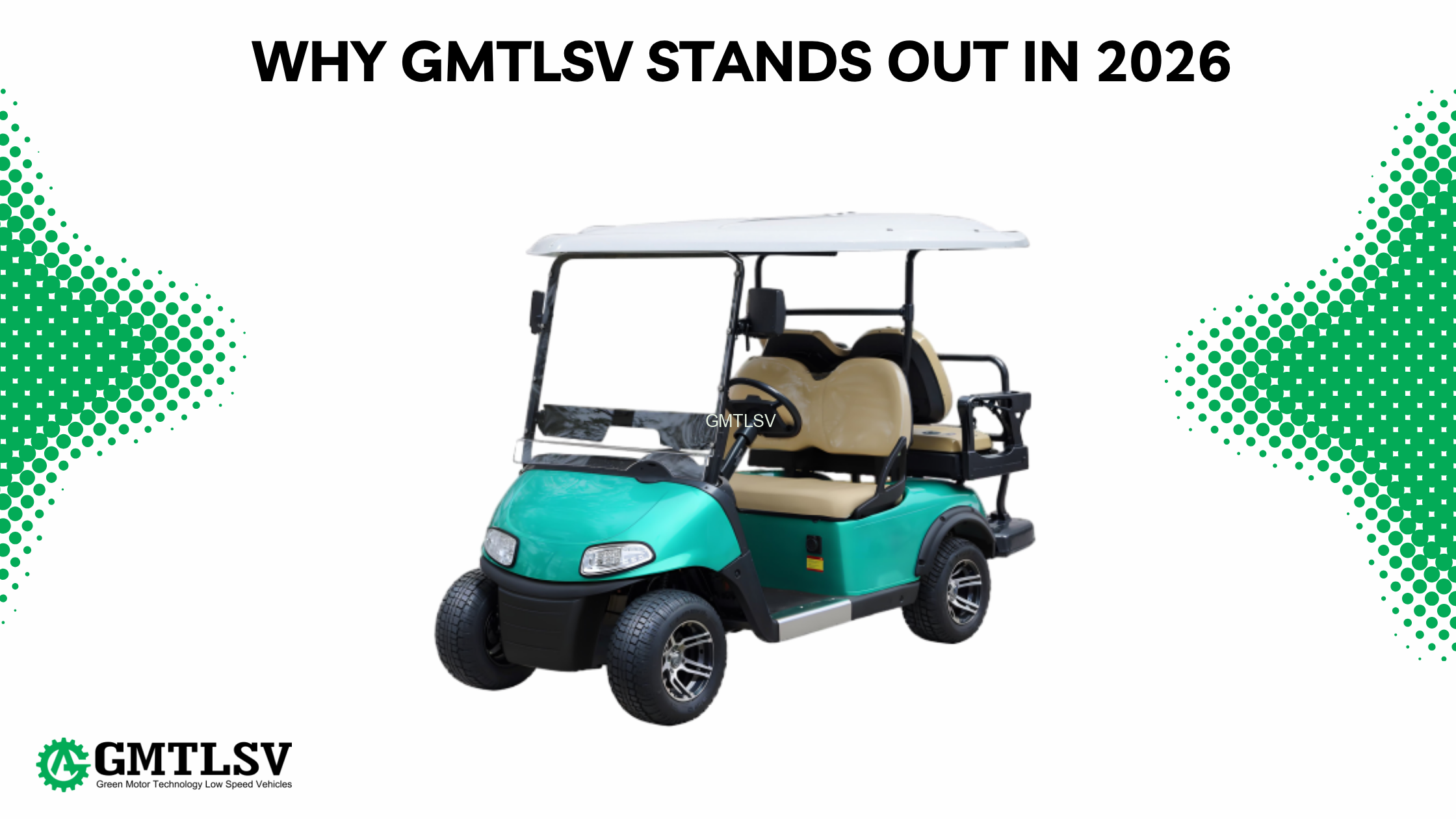
GMTLSV deserves specific attention because their approach differs from most manufacturers.
Specialized Electric Vehicle Expertise
GMTLSV has focused exclusively on electric low-speed vehicles since 2012. That’s 14+ years of dedicated development. Not gas engines with electric options. Electric only.
This specialization matters. Green technology and sustainability aren’t afterthoughts. They’re core business philosophy. Pure electric focus means their engineering resources concentrate on what they do rather than splitting attention between powertrains.
Advanced lithium battery technology delivers 50+ mile range on many models. Commitment to zero emissions and environmental responsibility runs through the product line.
Contrast this with the Big 3, who all offer both gas and electric models. GMTLSV is an electric-only specialist. Their expertise goes deeper in that specific technology.
Unmatched Product Diversity & Customization
The G-L series offers the widest seating range in a single product line. 2-seat through 8-passenger configurations. Same platform, different setups.
Purpose-built configurations serve different scenarios. Golf applications. Resort transportation. Sightseeing. Utility work. Vintage styling with modern powertrains.
Specialized models go further. Ambulance configurations. Disability vehicles. Cargo variants. Room service carts for hospitality.
This diversity means fleet buyers can source different vehicle types from a single supplier. Simplified procurement. Consistent quality. Single relationship to manage.
Compare to competitors offering limited seating options. GMTLSV’s range is genuinely wider.
Global Distribution with Competitive Pricing
GMTLSV’s sales network spans six continents. North America. South America. Middle East. Australia. Southeast Asia. Africa. This isn’t a regional player trying to expand.
Competitive pricing comes from efficient manufacturing. The $8,000 to $13,000 range puts them against or below Big 3 pricing while offering modern features.
Direct manufacturer model reduces costs. No middleman markups. Strong B2B distributor support makes them ideal for fleet buyers and distributors seeking reliable suppliers with growth potential.


