South African Resort & Lodge Electric Fleet Planning Guide: Vehicles, Charging and Operating Costs
Prepared by the GMTLSV Application Engineering Team
Technical review: GMTLSV Application Engineering Team
Last updated: 10 November 2026
Contents
-
Introduction: Why Resort Electric Fleet Planning Matters
-
Electric Vehicles for Resorts and Safari Lodges: Matching Vehicles to Operating Environments
-
Off-Road and Enclosed Electric Golf Cart Configuration for Resort Terrain
-
4/6/8-Seater Capacity Mix: Choosing a Resort Shuttle Fleet
-
Resort Shuttle Fleet Sizing and Daily Energy Calculation
-
Electric Golf Cart Operating Costs vs Fuel-Powered Shuttles
-
Solar Charging for Golf Carts: Payback Check for Resort Fleets
-
Resort Vehicle Charging Infrastructure and Fleet Storage Planning
-
Resort Electric Fleet Maintenance, Spare Parts and Fleet Management Planning
-
Choosing an Electric Fleet Supplier for Your Resort
-
Request a Resort Electric Fleet Proposal
-
Frequently Asked Questions
Introduction: Why Resort Electric Fleet Planning Matters
South Africa’s resorts, safari lodges, wine estates, golf estates and conference hotels differ widely in road conditions, operating distances, passenger demand and climate. A vehicle specification that works on the Cape coast may be marginal in Limpopo, while a fleet sized around room count may struggle during the morning departure peak.
Purchasing an electric shuttle is therefore not simply a seat-count or unit-price decision. It requires planning around terrain, passenger and cargo requirements, vehicle performance, battery capacity, charging infrastructure, fleet storage, maintenance and long-term operating costs.
This guide explains how to approach those decisions for South African hospitality properties. For a more focused comparison of passenger configurations, see our companion guide to [4/6/8-seater golf carts for resorts, hotels and guest transfers] https://gmtlsv.com/4-6-8-seater-golf-carts-resorts-hotels-south-africa/
Quick answer: A resort fleet plan starts with peak concurrent guest movement, not room count. Match vehicle configuration to terrain, size the fleet around the busiest 30-minute window plus a spare ratio, plan charging around the worst load-shedding week, and treat roof solar as supplementary resilience rather than a fast-payback investment.
Electric Vehicles for Resorts and Safari Lodges: Matching Vehicles to Operating Environments
The most common fleet-planning mistake is to treat every property as having the same operating requirements. The following examples illustrate why vehicle configuration should be based on the actual site.
| Property type | Operating environment | Vehicle selection direction |
|---|---|---|
| Coastal resorts | Paved roads, beach access points, humidity, salt-laden air and heavy rain | Corrosion protection, weather-resistant electrical connections and flexible passenger capacity |
| Wine estates | Gravel tracks, dirt roads, longer internal transfers and moderate gradients | Upgraded suspension, suitable tyres and sufficient battery capacity |
| Safari lodges | Sand, dirt, dust, uneven surfaces and temperature changes | Higher ground clearance, sand-appropriate tyres, dust protection and traction assessment |
| Golf estates | Paved paths, fairway edges and gentle gradients | Low-noise drivetrain, comfortable handling and appropriate tyre specification |
| Conference hotels | Paved roads, car parks, hotel entrances and concentrated guest movements | 6- and 8-seat configurations for scheduled group transfers |
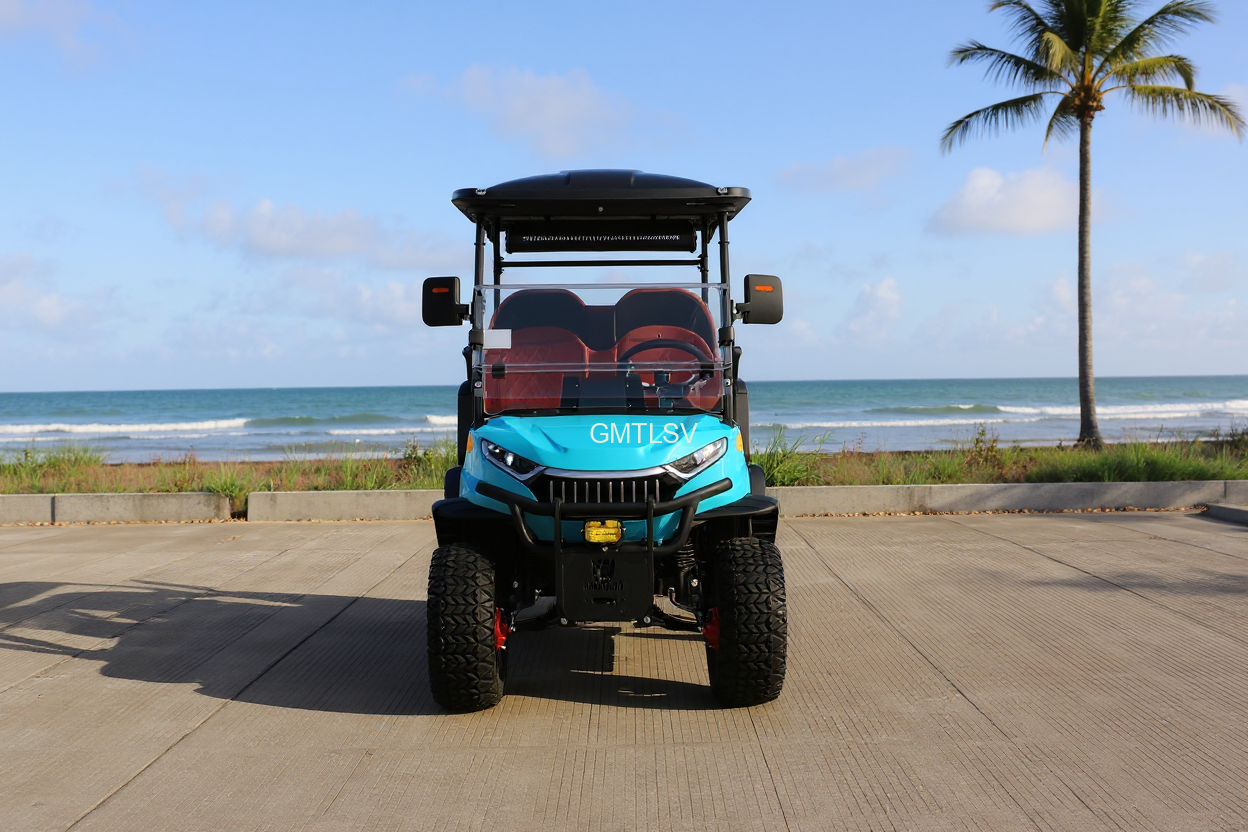
A standard configuration that is adequate for a Cape Town coastal hotel may not be suitable for a Limpopo safari lodge. Safari lodge operators should pay particular attention to sand traction, dust ingress, cold-morning battery performance and charging limitations, as well as longer transfer routes. These requirements should be assessed before confirming vehicle capacity, battery selection and purchase price.
For routes that combine sand, gravel and gradients, see our [off-road electric golf carts product page] https://gmtlsv.com/product-category/lifted-golf-cart/ For climate-isolated guest transport, see [enclosed electric vehicles product page] https://gmtlsv.com/product-category/enclosed-electric-vehicle/
Off-Road and Enclosed Electric Golf Cart Configuration for Resort Terrain
Vehicle configuration should follow the route, not the catalogue. The main decisions include:
-
Larger tyres: Suitable for soft or uneven surfaces when the tyre pattern and vehicle structure are correctly matched. Larger tyres can also affect vehicle height, handling and parking clearance.
-
Heavy-duty suspension: Worth considering for higher payloads and uneven surfaces, although it can add weight and cost.
-
Higher ground clearance: Helps reduce the risk of underbody contact on rough tracks. It should be checked against loading bays, ramps and access points.
-
Four-wheel drive: Relevant where additional traction is genuinely required, such as sand, steep loose-surface inclines or wet gravel. It is a traction solution, not simply a comfort upgrade. See [4WD electric vehicles product page] https://gmtlsv.com/product/electric-off-road-4wd-utility-vehicle-utv-2-seater/.
-
Enclosed cabin: Helps protect passengers from rain, dust and cold conditions. It can be particularly useful for safari lodges and properties with longer outdoor routes.
-
Air conditioning and heating: Improve passenger comfort across South Africa’s climate range, but increase energy demand and should be included in battery and charging calculations.
More equipment does not automatically mean a better vehicle. Every upgrade should be justified by the route profile, passenger load, operating distance and maintenance capability. A lifted 4WD vehicle with an enclosed cabin may be appropriate for a lodge with sandy tracks, but unnecessary for a conference hotel operating short, paved routes.
| Upgrade | Operational benefit | Cost or constraint |
|---|---|---|
| Larger tyres | Better flotation and grip on soft ground | Higher ride height; possible clearance and turning-envelope impact |
| Heavy-duty suspension | Handles higher payload and rough tracks | Added weight; higher maintenance complexity |
| Higher ground clearance | Less underbody contact | Loading bay and ramp geometry must be rechecked |
| Four-wheel drive | Traction on sand, loose gravel and steep inclines | Higher energy use and drivetrain complexity |
| Enclosed cabin with AC/heater | Weather and dust isolation; year-round comfort | Added weight and charging demand |
4/6/8-Seater Capacity Mix: Choosing a Resort Shuttle Fleet
The detailed 4/6/8-seat comparison is covered in our companion selection guide. From a fleet perspective, the question is not which capacity is best, but which combination matches peak demand.
-
4-seater: Flexible and suitable for small transfers, VIP movements and dispersed tasks.
-
6-seater: Suitable for families, small groups and routine scheduled circulation.
-
8-seater (6+2): Suitable for larger resorts, group transfers and peak-period demand. The rear flip seat can be converted into a load deck when passenger capacity is not required.
-
Utility vehicles: Useful for luggage, supplies, maintenance tools and back-of-house logistics. See [utility electric vehicles product page] https://gmtlsv.com/product-category/utility-golf-cart/
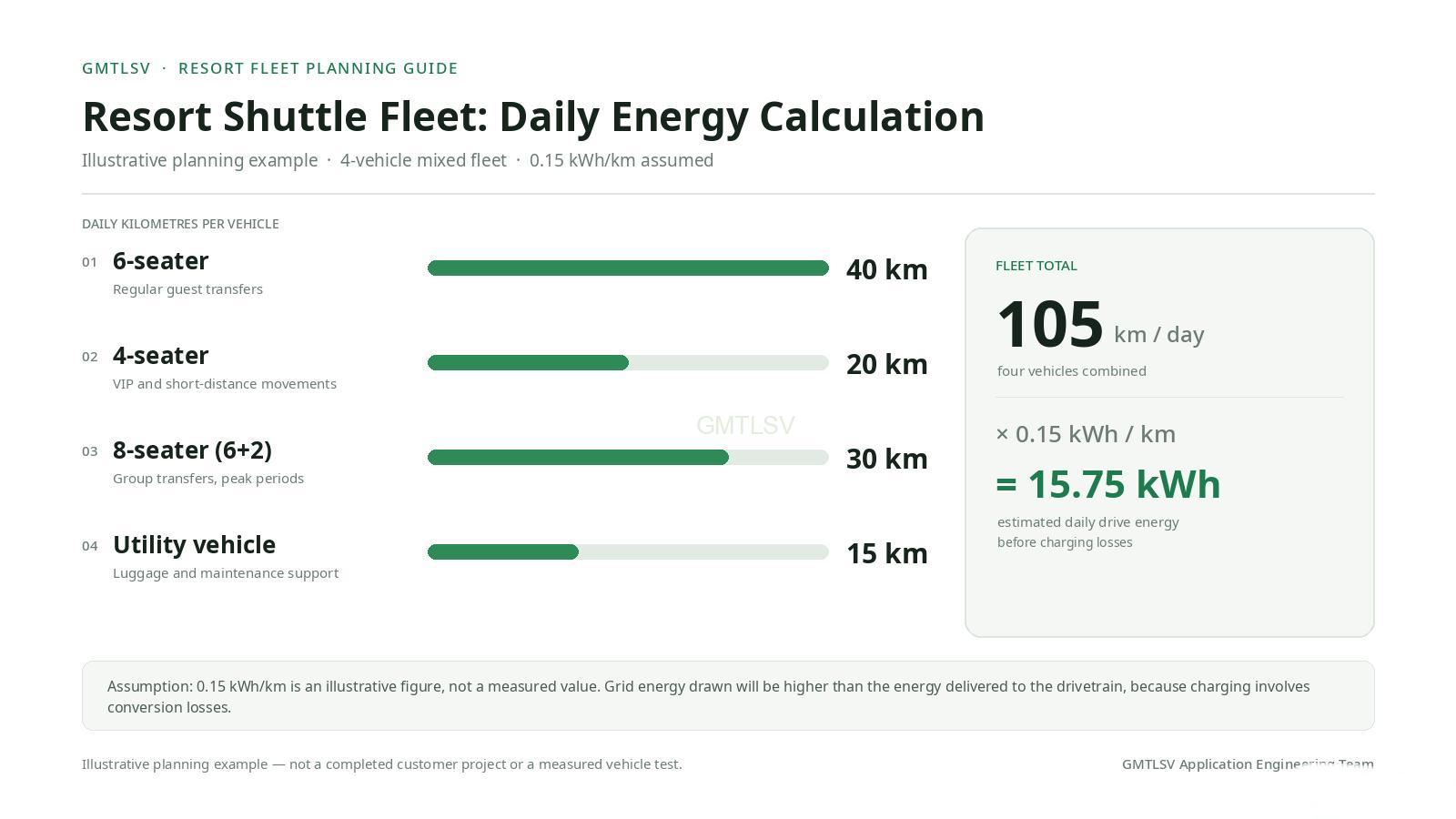
A mixed fleet often fits a large property better than a fleet made up of one vehicle type. For example, a resort might use 6-seat vehicles for regular guest circulation, 8-seat vehicles for group transfers, 4-seat vehicles for flexible tasks and utility vehicles for luggage and supplies.
For GMTLSV’s 8-seat configuration, the vehicle shares the 6-seater chassis and turning radius. This allows operators to add passenger capacity without introducing a separate chassis size into the fleet. However, the additional passenger load should still be considered when assessing battery demand, braking performance and route suitability.
For the full capacity range, see [4/6/8-seater sightseeing vehicles product page] https://gmtlsv.com/product-category/6-seater-golf-cart/.
Resort Shuttle Fleet Sizing and Daily Energy Calculation
Fleet capacity and energy consumption should be calculated together.
Passenger capacity: Estimate daily passenger movements, the round-trip cycle time on the main route, peak-period guest flow and the number of vehicles required, including a spare arrangement. The starting point should be peak concurrent demand during the busiest 30-minute period, not simply the total number of guest rooms.
Battery energy: Consider a 51.2V 150Ah lithium battery as an example:
51.2V × 150Ah = 7.68 kWh nominal battery energy.
The usable energy will be lower after allowing for the battery’s permitted depth of discharge and system operating limits.
Now consider a vehicle travelling 50 km per day at an assumed energy consumption of 0.15 kWh/km:
50 km × 0.15 kWh/km = 7.5 kWh of daily drive energy.
This example illustrates an important point: a 7.68 kWh nominal battery should not automatically be assumed to support this duty cycle. Its usable energy is lower than its nominal capacity, and the actual result depends on terrain, passenger load, auxiliary equipment and operating conditions. A larger battery, a lower measured energy consumption or an additional charging opportunity may be required.
The grid energy needed will also be higher than the energy delivered to the drivetrain because charging involves conversion losses.
For a resort fleet, record the following before confirming the battery configuration:
-
The longest single transfer route.
-
The number of expected trips per shift.
-
The total daily distance.
-
Passenger and luggage loads.
-
The available overnight charging window.
-
Whether vehicles can be recharged between operating periods.
If the property experiences load-shedding or other power interruptions, charging resilience should be included in the fleet plan. The objective is to ensure that vehicles remain available during busy operating periods, not simply to achieve a theoretical range figure.
Field Note: How a Charging Window Changed a Fleet Mix
Field note (anonymised): A 40-villa safari lodge originally planned six identical 6-seat shuttles. During fleet review, the binding constraint turned out to be the 8-hour overnight charging window, not vehicle count. Only four of the six vehicles could be returned to full charge before the morning departure peak, which would have left the property short during the busiest 90 minutes of the day. The recommended mix changed to four 6-seaters, one 6+2 for group departures and one 4-seat spare. The 6+2 covered the activity departure window, while the 4-seater protected VIP transfers and narrow villa access routes. Project details anonymised; operating data used with client consent.
What this shows: Fleet sizing should be tested against the charging window and the peak departure window, not just against total daily passenger volume. A fleet that looks adequate on paper can fail operationally if the charging schedule cannot return vehicles to service in time.
[Publisher note: replace the bracketed figures and lodge description with verified project data before publishing, or relabel this box as an illustrative scenario.]
Need help sizing a fleet around your actual peak guest flow and charging window? [Send us your route profile] https://gmtlsv.com/contact-us/ and we will respond with a capacity and energy estimate, not a price list.
Electric Golf Cart Operating Costs vs Fuel-Powered Shuttles
Electric and fuel-powered vehicles should be compared using similar passenger capacity, payload and operating duty cycles.
Fuel prices in South Africa vary by location and are adjusted regularly. According to the Fuels Industry Association of South Africa, the November 2026 retail price of 95-octane petrol, effective from 4 November 2026, was:
-
Coastal areas: R29.37 per litre
-
Gauteng: R30.24 per litre
For electricity, there is no single national business tariff that applies to every resort. The actual rate depends on the municipality or electricity supplier, customer category, tariff structure and consumption profile. The comparison below therefore uses an illustrative electricity rate of R3.50/kWh. This is a calculation assumption, not a quoted national commercial tariff. Replace it with the property’s actual electricity rate before making an investment decision.
| Cost item | Electric shuttle (illustrative) | Petrol-powered shuttle (illustrative) |
|---|---|---|
| Energy consumption | 0.15 kWh/km | 8–12 L/100 km |
| Energy price | R3.50/kWh assumed | R29.37–30.24/L, depending on location |
| Energy cost per 100 km | R52.50 | Approximately R235–363 |
| Daily energy cost (50 km) | R26.25 | Approximately R117–181 |
| Annual energy cost (300 days) | R7,875 | Approximately R35,244–54,432 |
The petrol consumption range is an illustrative assumption for a comparable small fuel-powered shuttle, not a measured result from a specific vehicle. The electric consumption figure is also an assumption and should be replaced with measured fleet data.
The comparison indicates that electric vehicles can offer a substantial energy-cost advantage in suitable applications. However, a complete ownership comparison should also include initial vehicle purchase price, battery replacement and warranty, routine maintenance and spare parts, charging equipment and electrical installation, vehicle downtime and maintenance labour, financing, insurance and expected service life.
Sensitivity matters: if electricity tariffs rise faster than fuel prices, the electric advantage narrows, but at current South African ratios the operating-cost gap remains wide. Re-run the comparison with the property’s actual tariff and fuel contract before committing to a fleet size.
Solar Charging for Golf Carts: Payback Check for Resort Fleets
Solar charging can make a useful contribution to resort fleet operations, but it should be evaluated as an energy supplement rather than assumed to replace grid charging.
A roof-mounted solar system rated at 400–600W may generate approximately:
| Roof solar capacity | Illustrative daily energy generation |
|---|---|
| 400W | Around 1.5 kWh |
| 600W | Around 2.2–2.3 kWh |
These are indicative engineering estimates, not guaranteed daily outputs. Actual generation depends on solar exposure, panel orientation, shading, temperature, installation quality and the time the vehicle spends parked in daylight.
How Much of the Vehicle’s Daily Energy Can Solar Provide?
Using the earlier example of a vehicle travelling 50 km per day at 0.15 kWh/km, its estimated drive energy is 7.5 kWh. A 400W system generating 1.5 kWh could theoretically contribute around 20% of that daily drive energy; a 600W system generating 2.3 kWh could contribute around 31%.
These percentages are indicative comparisons of generated solar energy against estimated drive energy. Actual grid electricity savings may be lower because of charging losses, periods when the vehicle is away from sunlight, shading and differences between solar generation and charging demand. A vehicle that operates throughout the day and is parked overnight may receive less direct benefit from roof solar than one that spends several hours parked outdoors during daylight.
What Is the Potential Financial Return?
For an illustrative calculation, assume electricity at R3.50/kWh, 300 operating days per year, and an installed roof solar kit cost of R5,000–12,000 per vehicle (an engineering estimate, not a supplier quotation).
| Item | 400W solar | 600W solar |
|---|---|---|
| Estimated daily generation | 1.5 kWh | 2.3 kWh |
| Potential daily electricity value | R5.25 | R8.05 |
| Potential annual electricity value (300 days) | R1,575 | R2,415 |
| Indicative installed cost | R5,000–12,000 | R5,000–12,000 |
| Simple payback indication | Approximately 3–8 years | Approximately 2–5 years |
The payback figures are simplified estimates based on the assumptions above. They assume that all generated energy can be used to offset electricity purchased from the grid. They do not include maintenance, panel degradation, financing costs, replacement costs or periods of low solar generation.
solar charging payback for golf cart fleet South Africa
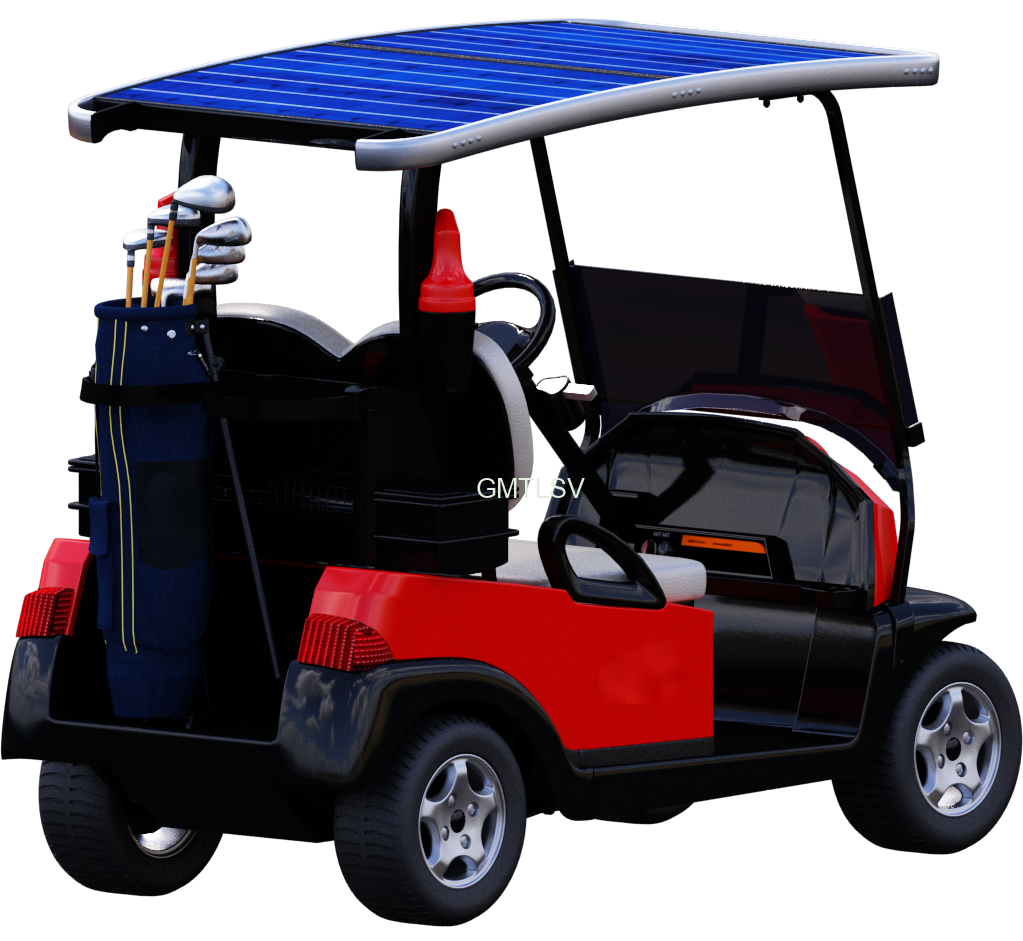
The practical conclusion is that roof-mounted solar may provide useful supplementary energy, particularly where vehicles are regularly parked in sunlight or grid availability is limited. However, it should not be presented as a guaranteed way to reduce operating costs quickly. For larger fleets, a centralized solar carport or ground-mounted solar installation may be worth evaluating alongside vehicle-level solar systems, because a centralized system can serve multiple vehicles and offer more flexibility in how solar energy is used across the property. Before selecting either approach, compare installation cost, available roof or parking space, daily charging schedule and actual electricity tariff.
If you want a site-specific solar feasibility check, [contact our team] https://gmtlsv.com/contact-us/with your fleet size, charging window and available roof or carport area.
Resort Vehicle Charging Infrastructure and Fleet Storage Planning
Vehicle-level range figures are covered in the companion selection guide; this section addresses fleet-level charging capacity, scheduling and storage layout.
-
Parking and storage space: Bay width, aisle width and reversing space should be sized around the largest vehicle in the planned fleet.
-
Charging positions and electrical load: The number of charging points, their power ratings and the available electricity supply should be checked against the fleet’s charging schedule.
-
Daytime top-up versus overnight charging: The balance determines how many vehicles can return to service between guest movement peaks.
-
Dispatch and key management: Establish who releases each vehicle, to which driver and for which route.
-
Daily records: Record mileage, energy consumption and charging activity to support maintenance planning and cost control.
-
Spare vehicle arrangements: Keep an appropriate reserve or establish a vehicle reallocation plan for busy periods.
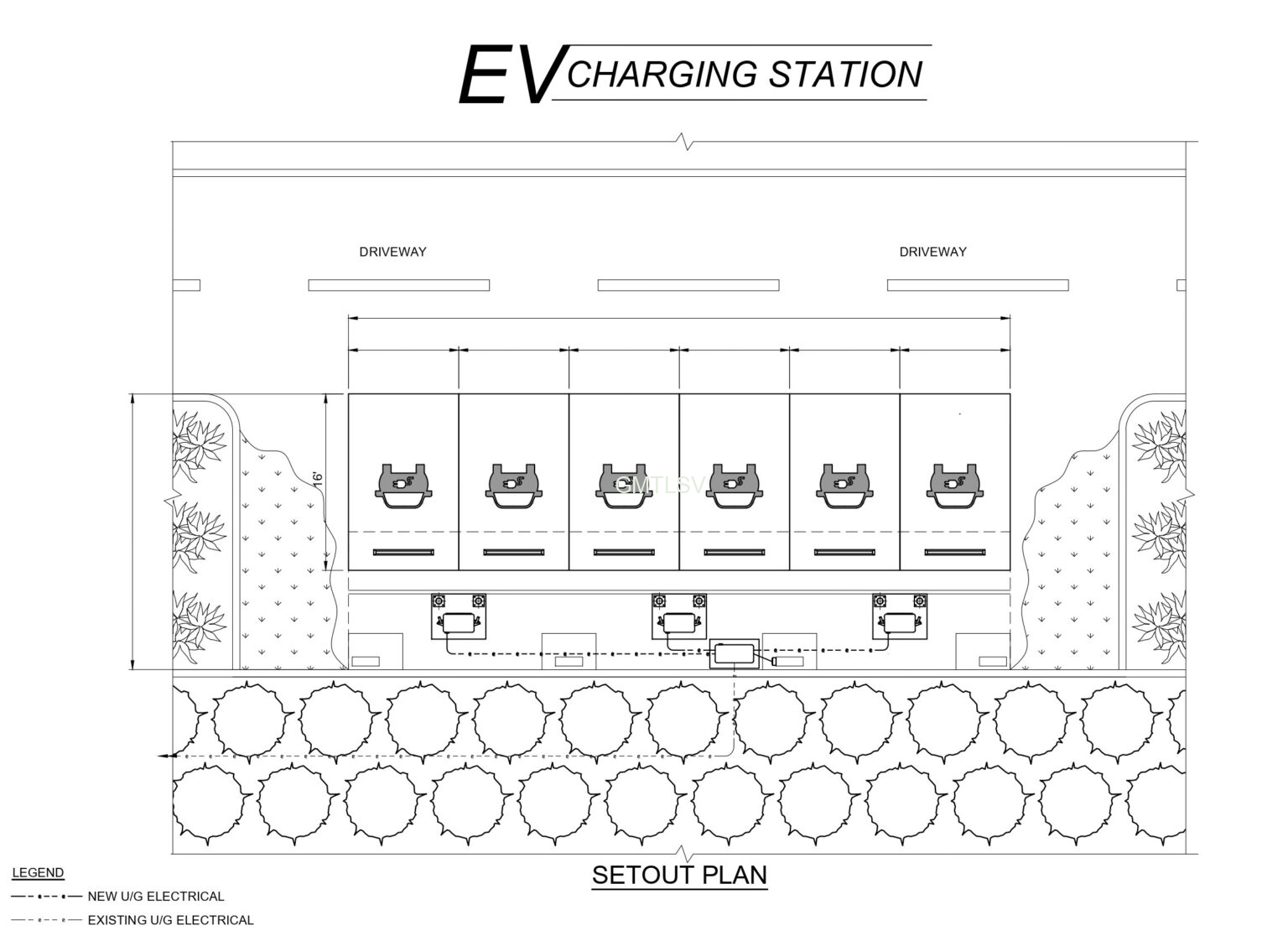
resort electric shuttle charging and storage layout
Parking space cannot be calculated from vehicle count alone. Vehicle dimensions, charging equipment, access aisles and maintenance areas all require space. A fleet area designed around 4-seater vehicles may not be suitable if the property later adds 6- or 8-seater vehicles. For properties affected by load-shedding, consider how charging can be scheduled around power availability. Backup power or a centralized solar solution may be worth evaluating where vehicle availability is essential to daily operations.
Resort Electric Fleet Maintenance, Spare Parts and Fleet Management Planning
Maintenance arrangements should follow fleet size and in-house capability rather than a fixed technician-to-vehicle ratio.
| Fleet size and situation | Suggested management approach |
|---|---|
| Small fleet | Existing maintenance staff perform daily checks; complex faults are handled by an external technician |
| Medium fleet | Assign a trained vehicle maintenance responsible person and stock common spare parts on site |
| Large fleet | Employ dedicated maintenance staff, schedule regular servicing and maintain an inventory of critical spare parts |
A practical maintenance frequency guide:
| Task | Frequency | Typical owner |
|---|---|---|
| Tyre pressure, lights, charging connectors, brake feel | Daily / pre-shift | Driver or duty staff |
| Brake adjustment, suspension inspection, battery terminal check (lead-acid) | Weekly | Trained maintenance staff |
| Controller diagnostics, wiring inspection, battery capacity check | Monthly / quarterly | Technician or service partner |
| Full service, brake system overhaul, battery health assessment | Annual | Service partner or manufacturer support |
Maintenance should cover tyres and brakes, steering and suspension, battery and charging systems, motors and controllers, and wiring and electrical connections.
Spare-parts availability also affects fleet availability. Brake pads, tyres, lights, charging connectors and battery components should be discussed with the supplier before purchase. For properties without in-house technical capability, a manufacturer-direct supply arrangement combined with a local service partner may be a practical approach. The responsibilities of each party should be agreed before delivery, including routine servicing, troubleshooting, warranty claims and replacement-parts supply.
Choosing an Electric Fleet Supplier for Your Resort
The right supplier should be able to match vehicle types to the operating environments discussed above, rather than simply quote a unit price. GMTLSV’s product range covers standard electric golf carts, 4/6/8-seater sightseeing vehicles, lifted and off-road electric golf carts, enclosed electric vehicles, utility electric vehicles, 4WD electric vehicles and customized low-speed electric mobility solutions.
For hospitality operators, the key question is which configuration corresponds to the property’s route profile, climate, passenger flow and maintenance model. A supplier that can discuss battery capacity, drivetrain configuration, terrain requirements, charging arrangements and spare-parts planning is more useful than one that simply offers the widest catalogue.
Request a Resort Electric Fleet Proposal
To prepare a practical fleet proposal, the following information is useful:
-
Property type and location.
-
Road and terrain conditions, including gradients, surface types and narrowest turning points.
-
Daily passenger volume and peak concurrent demand.
-
Average and maximum travel distance per shift.
-
Required seating capacity and expected vehicle mix.
-
Battery and charging requirements, including available charging power and charging windows.
-
Expected fleet size and spare vehicle requirements.
-
Maintenance model: in-house, outsourced or hybrid.
GMTLSV can use these parameters to recommend a vehicle mix and configuration based on actual operating conditions rather than a generic price list.
Download the resort fleet sizing worksheet — enter your daily distance, passenger flow and charging window to estimate fleet size and daily energy demand. [Download the worksheet]
[Request a Resort Electric Fleet Proposal] https://gmtlsv.com/contact-us/
Frequently Asked Questions
How many electric shuttles does a resort need?
Start with peak concurrent guest movement during the busiest 30-minute period, the round-trip cycle time on the main route and an appropriate spare arrangement. Room count alone is not a reliable way to determine fleet size.
Is a mixed-capacity fleet better than a single-capacity fleet?
For many large properties, yes. A combination of 4-, 6- and 8-seat vehicles can cover flexible movements, routine guest transfers and peak group demand more effectively than a fleet made up of identical vehicles.
How much does it cost to charge an electric resort shuttle?
At an assumed R3.50/kWh and a daily grid input of roughly 3–5.5 kWh, a shuttle costs around R10–19 per day to charge. Actual cost depends on tariff, duty cycle, terrain and charging efficiency.
Can roof solar fully charge a resort shuttle?
Usually not. A 400–600W roof-mounted system typically provides only part of a vehicle’s daily energy requirement. It is best treated as supplementary charging rather than a replacement for properly planned charging infrastructure.
What is the spare ratio for a resort shuttle fleet?
A common starting point is one spare vehicle for every four to six active vehicles, or a reallocation plan that protects the morning departure peak. The right ratio depends on charging window, maintenance response time and peak demand concentration.
How does load-shedding affect resort shuttle fleet planning?
If the charging circuit is affected, the practical range of every vehicle shrinks. The fleet should be sized against the worst load-shedding week, and the charging circuit should be checked for backup power availability.
What maintenance capability does a resort need?
At minimum, staff should be able to perform daily checks, with access to an external technician for complex faults. Larger fleets benefit from a trained maintenance responsible person, scheduled servicing and a stock of common spare parts.
About the Authors
The GMTLSV Application Engineering Team supports resort, lodge and estate fleet projects across Southern Africa, covering vehicle configuration, charging planning and spare-parts strategy. The team works with hospitality operators on site-specific fleet sizing, terrain assessment and energy calculations. For technical questions about this guide, contact [Maggie Chen/Sales Director — maggie@greenmotortech.com].