Electric Utility Vehicles for Farms and Industrial Sites in South Africa
How to Choose the Right Vehicle: From Cargo Golf Carts to Heavy-Duty Work Vehicles
If you operate a farm, vineyard, estate or industrial facility in South Africa, choosing the wrong utility vehicle can cost more than you expect. It may not carry enough cargo, struggle on slopes, or run out of battery before the end of a working shift. On the other hand, buying a vehicle with more capacity than you actually need can also increase your investment unnecessarily.
Before comparing models, start with three basic questions:
Terrain. For paved roads, gravel paths and relatively level working areas, an electric golf cart with a cargo bed can be an economical and manoeuvrable option. If your site includes steep gradients, soft ground or muddy areas after rain, you need to look beyond the vehicle’s appearance and evaluate its chassis, drivetrain and ground clearance.
Payload. A large cargo bed does not automatically mean a vehicle can safely carry a heavy load. You need to distinguish between the vehicle’s rated payload, passenger weight and actual cargo weight. Light tools and gardening supplies may be well within a utility golf cart’s capabilities, while heavy equipment, building materials and frequent fully loaded operation require closer attention to the vehicle’s load limits.
Working shifts. A vehicle used for occasional inspections and short-distance deliveries may work well with a standard battery configuration. Vehicles operating for multiple shifts or extended periods need a more careful assessment of actual energy consumption and charging opportunities. Published range figures alone are not enough.
These three factors will help you decide whether a cargo golf cart is suitable or whether your application requires an industrial work vehicle or a heavy-duty UTV
What Are South African Buyers Already Using?
Electric utility vehicles are not entirely new to South African farms and industrial properties. Local suppliers have established products for light-duty applications, while real operating experience is helping buyers understand where these vehicles work well and where their limitations begin.
Farm applications have already demonstrated the practical value of electric work vehicles.
At Vaalbos Trust, a citrus farm in Limpopo, electric utility vehicles are used by irrigation teams to travel between orchards, operate pumps and inspect centre-pivot irrigation systems. Security teams also use them for night patrols along farm boundaries.
The farm reported lower fuel and maintenance costs compared with its previous use of bakkies and quad bikes. Quiet operation is another practical advantage, particularly for night patrols. This is a useful example of how electric work vehicles can support routine inspections, maintenance and short-distance transport on working farms.
Local entry-level models also provide a useful reference point for buyers.
Lekkewaan is one example of an established South African utility vehicle brand. Its published specifications cover different load categories, from compact models rated at around 150 kg to selected utility models rated at 350–400 kg. Published retail prices for its range have also varied considerably, from approximately R38,525 to R97,750, including VAT, depending on the model.
These vehicles can be suitable for light tool transport, irrigation inspections and property maintenance. Buyers should check the specifications of each model rather than assume that all vehicles in the range offer the same payload.
If your application regularly requires loads above 400 kg, involves demanding gradients or includes soft ground, you should assess whether an entry-level platform provides enough operating margin.
Industrial sites are another practical application area.
South African suppliers also offer electric utility vehicles for factories, warehouses and industrial parks. Typical applications include security patrols, maintenance team transport and internal material movement.
Unlike off-road farm applications, these environments often involve fixed routes, frequent stops and repeated daily operation. Quiet running and reduced local emissions can be useful advantages in these settings.
For buyers, the key question is not simply whether an electric vehicle can replace a conventional work vehicle. It is whether the vehicle’s payload, operating time and configuration match the actual job.
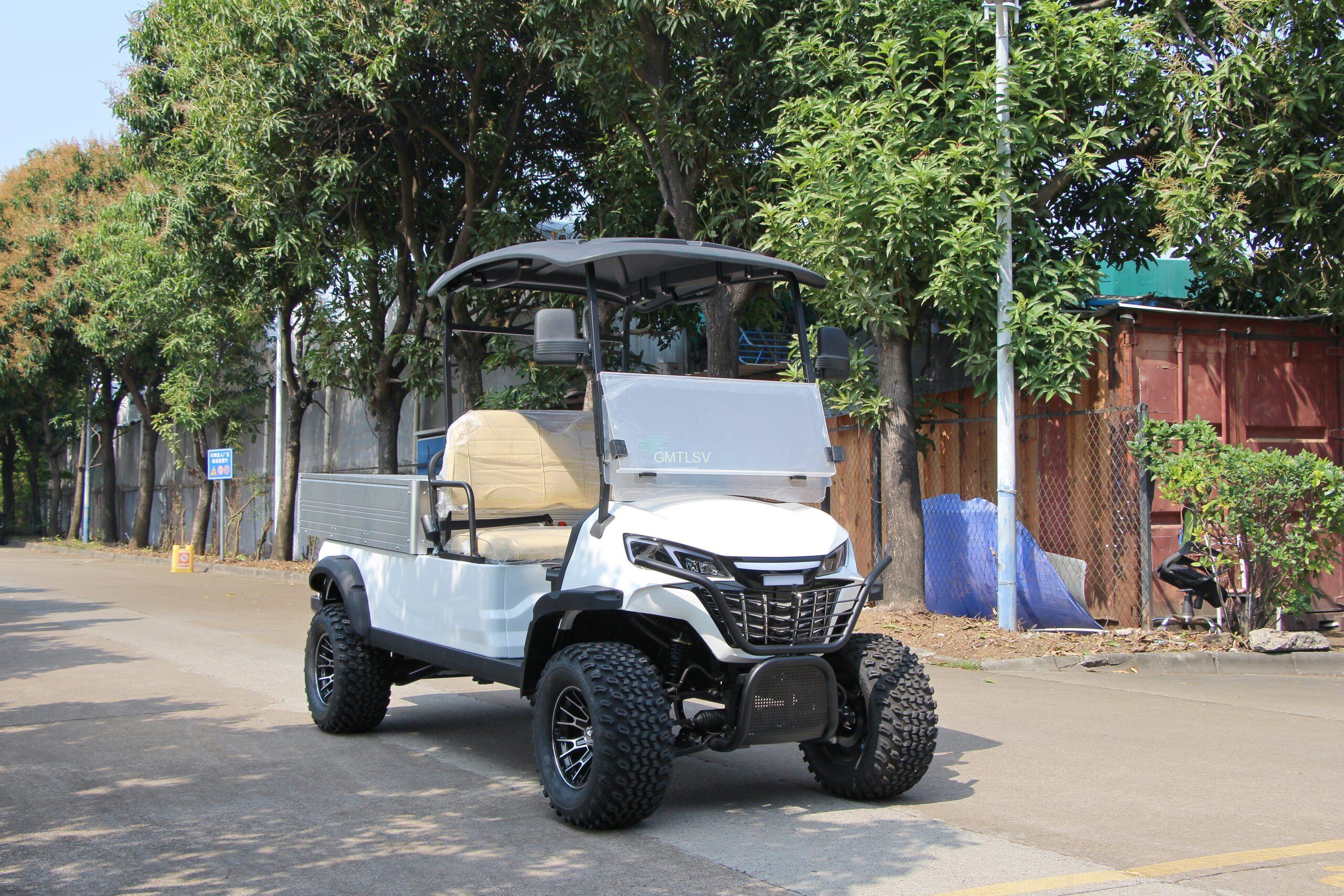
cargo golf cart operating on a paved surface in South Africa
Four Types of Electric Utility Vehicles for Different Work Tasks
Not every utility vehicle is designed for the same purpose. The right choice depends on what you need to carry, where the vehicle will operate and how intensively it will be used.
1. Golf Carts with Cargo Beds
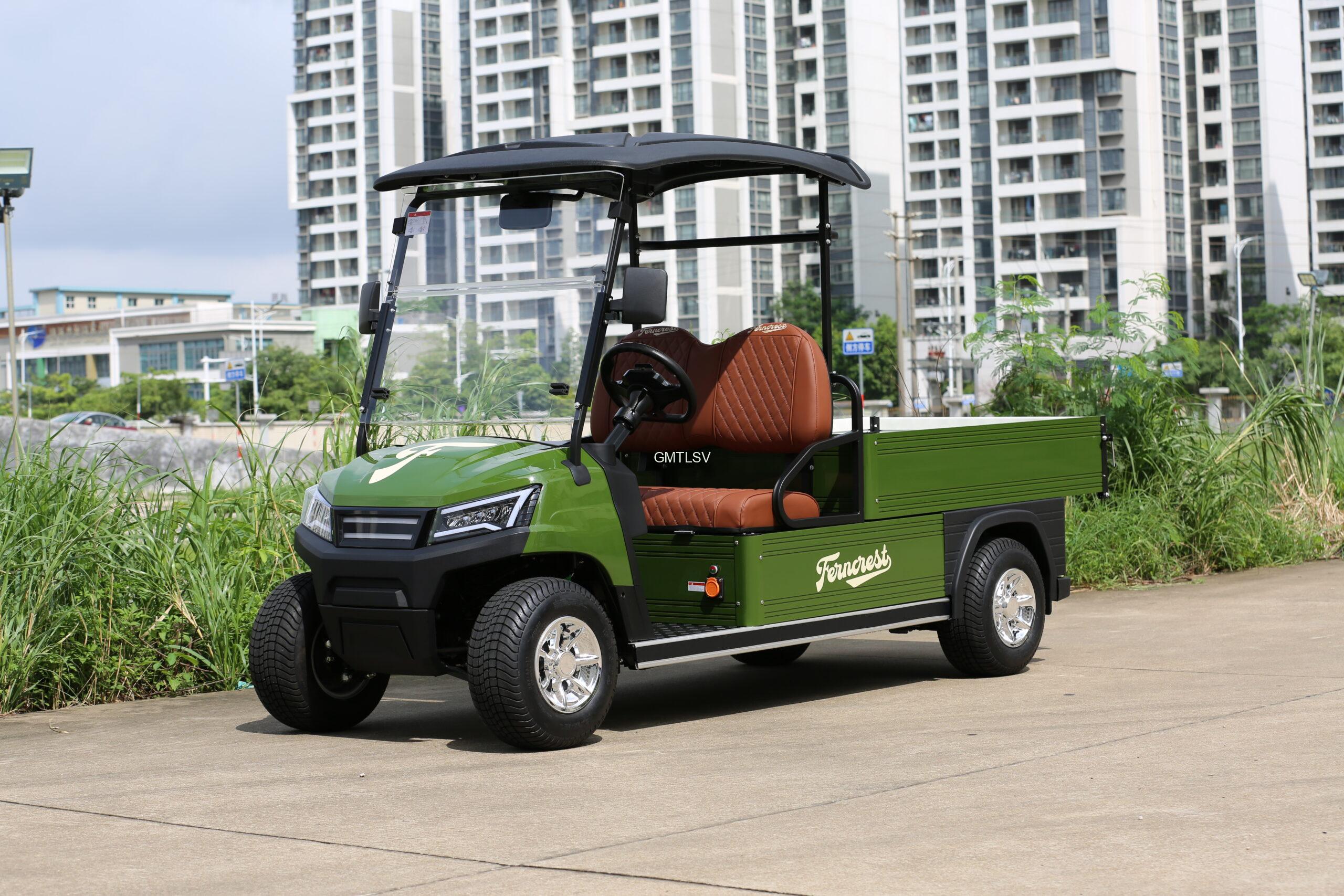
GMTLSV G2-C electric utility vehicle with aluminium cargo hopper for farm use
A golf cart with a cargo bed is a practical option for transporting tools, gardening supplies, maintenance materials and other light-to-medium loads over relatively short distances.
These vehicles retain the compact design of a golf cart while adding a rear cargo bed for practical working applications. Depending on the model, the cargo bed may be made from plastic or aluminium, with different dimensions and load ratings.
For example, GMTLSV’s G2-C electric utility vehicle is available with an aluminium cargo hopper measuring 1,700 × 1,100 × 290 mm and a rated cargo load capacity of 400 kg. This provides a higher rated cargo capacity than many entry-level utility models available locally. Actual specifications should always be checked against the individual model’s technical documentation.
Cargo bed material should also match the type of goods being transported:
- Plastic cargo beds:Suitable for general tools, gardening supplies and lighter materials. They are lightweight and resistant to corrosion.
- Aluminium cargo beds:Useful for applications requiring a metal cargo structure, more durable working surfaces or customised dimensions. They can also be adapted for specific cargo arrangements and securing requirements.
If you regularly transport metal components, building materials or equipment that needs to be secured, an aluminium cargo bed may be a more practical choice.
Explore GMTLSV’s electric utility golf carts or view the G2-C electric utility vehicle with aluminium cargo hopper.
Suggested video: Embed the real-world demonstration of a cargo-equipped golf cart operating on a paved surface here: GMTLSV Facebook Reel.
2. Electric Utility Carts for Farms and Estates
Farm and estate work involves more than moving cargo. Employees may need to travel between different working areas, carry repair tools, inspect fences, check irrigation systems or visit storage facilities. Some applications also require space for one or two additional workers.
When choosing an electric utility cart for farms, consider four factors:
- Seating layout:Does the vehicle need to carry only the driver or additional workers?
- Storage space:Is there enough room for tools, repair materials and daily supplies?
- Terrain:Will it operate on grass, gravel, dirt roads or other unpaved surfaces?
- Vehicle dimensions:Can it manoeuvre through vineyard rows, farm tracks and narrow access routes?
One common misconception is that every farm vehicle needs four-wheel drive. If most work takes place on relatively level ground, a compact two-wheel-drive work vehicle may be sufficient for short-distance inspections and light transport.
However, if the vehicle regularly encounters soft ground, steep gradients or heavy loads, its chassis, tyres, drivetrain and motor performance need to be assessed more carefully. Tyre upgrades alone cannot turn a standard golf cart into a heavy-duty off-road vehicle.
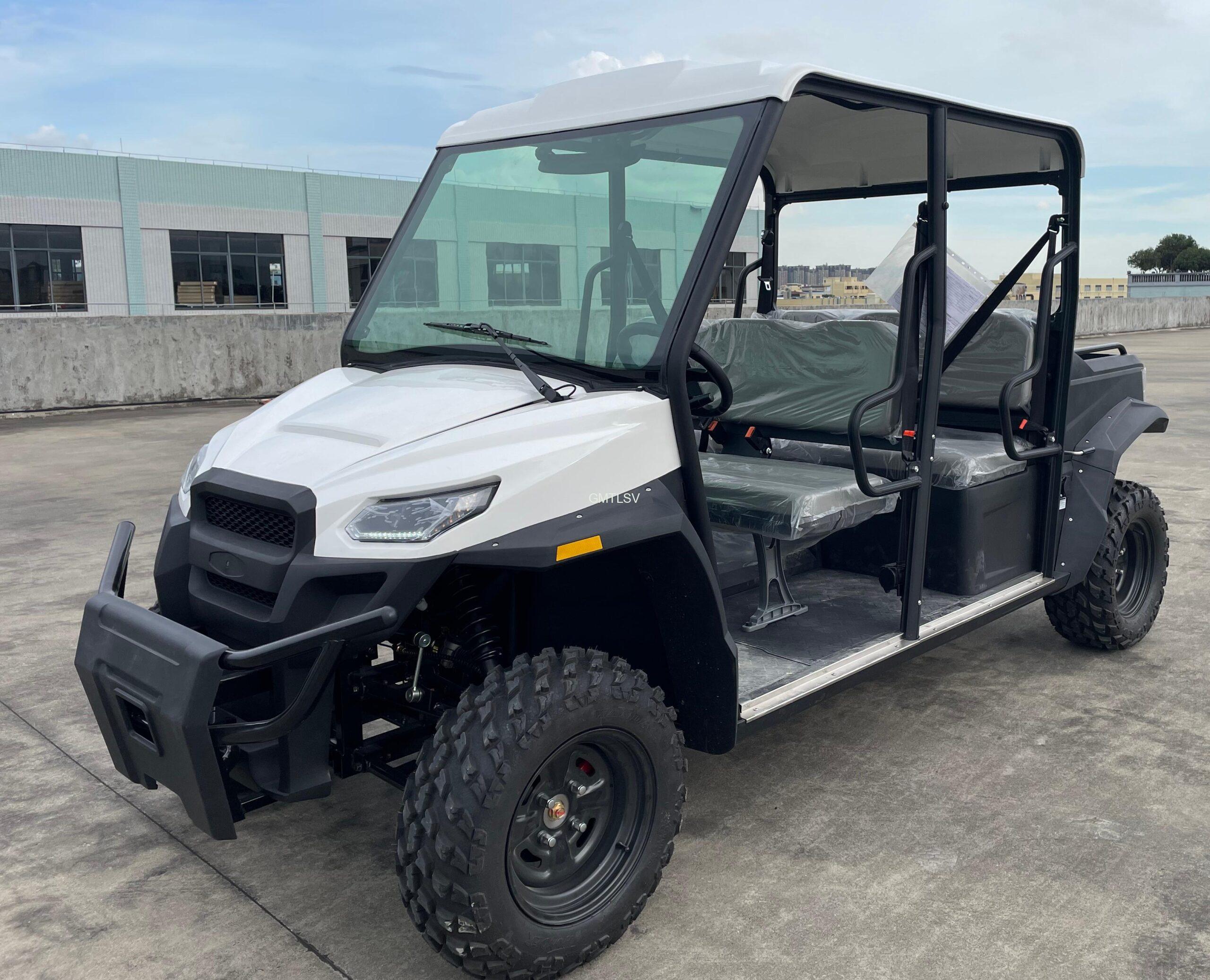
utility golf cart vs heavy-duty UTV comparison for South African buyers
3. Industrial Electric Utility Vehicles
Factories, warehouses and industrial parks have different operating requirements from farms.
Internal roads are often more predictable, but vehicles may need to operate frequently throughout the day. Typical tasks include transporting tools, delivering materials, inspecting equipment and moving maintenance personnel.
Different vehicle configurations can serve different purposes:
- Two-seat work vehicles:Suitable for inspections, maintenance teams and small cargo loads.
- Four-seat work vehicles:Useful when several employees need to travel together around a large facility.
- Enclosed cargo vehicles:Suitable for transporting tools, equipment and materials that need protection from weather and external conditions.
- Specialised industrial vehicles:Designed for specific internal transport, maintenance or operational requirements.
For industrial buyers, working frequency and shift patterns are often more important than motor power or battery capacity alone.
If a vehicle needs to operate for extended periods or across multiple shifts, evaluate the complete powertrain against actual working hours, travel distances and available charging time.
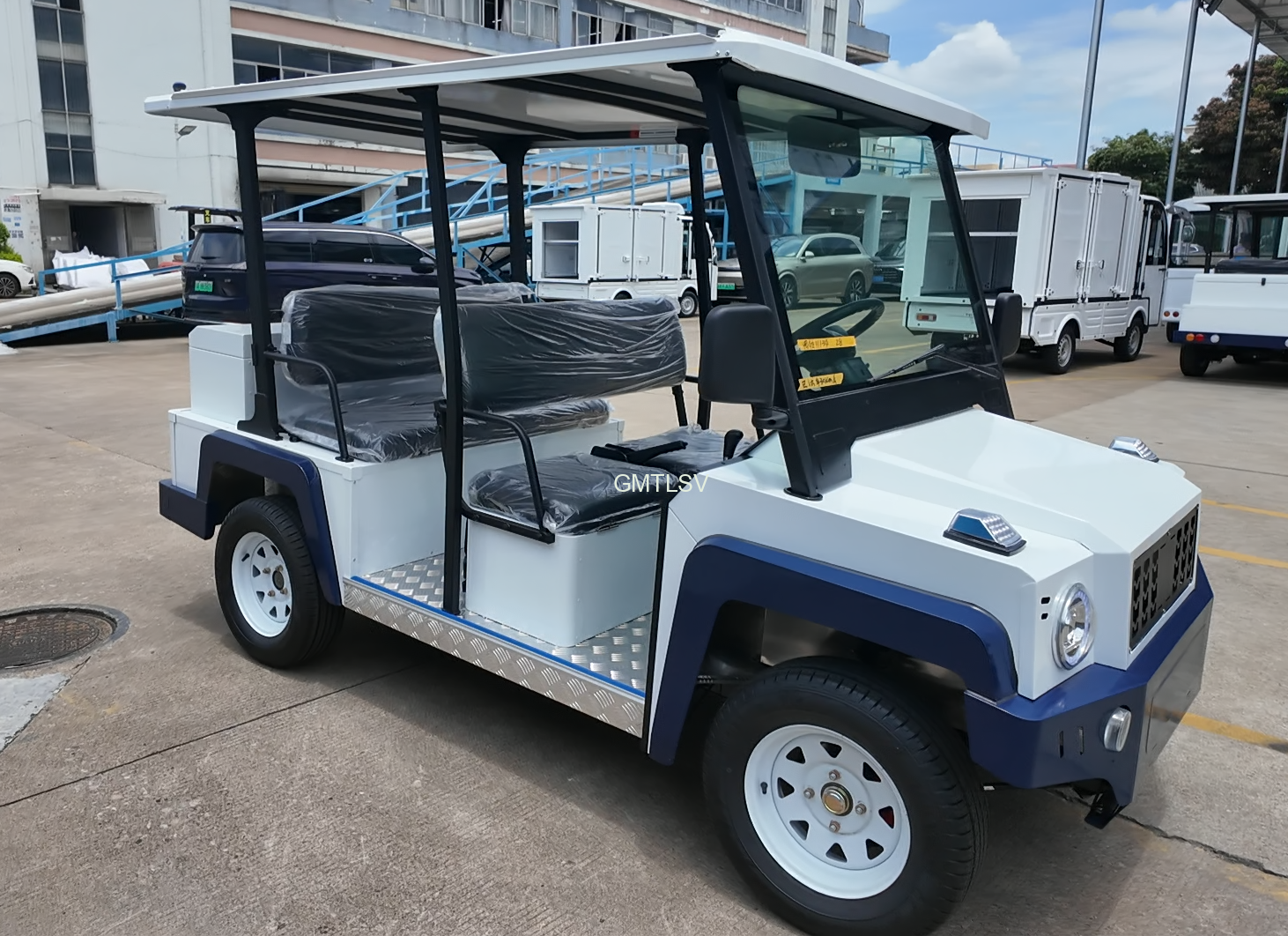
electric utility golf cart for industrial site maintenance
4. Electric Tow Tractors and Special-Purpose Vehicles
Some applications go beyond the capabilities of a standard utility golf cart.
Examples include towing material carts inside factories, moving loads around warehouses, collecting waste across large properties, and supporting specialised security or emergency operations.
These tasks may require dedicated electric tow tractors or special-purpose utility vehicles.
The main considerations are different from those of a cargo golf cart. Tow tractors need to be evaluated for towing capacity, coupling arrangements, braking systems and stability under continuous load. Special-purpose vehicles may require additional equipment and safety systems designed around their specific duties.
If your application falls into this category, define the towing weight, coupling requirements and operating environment before selecting a vehicle platform.
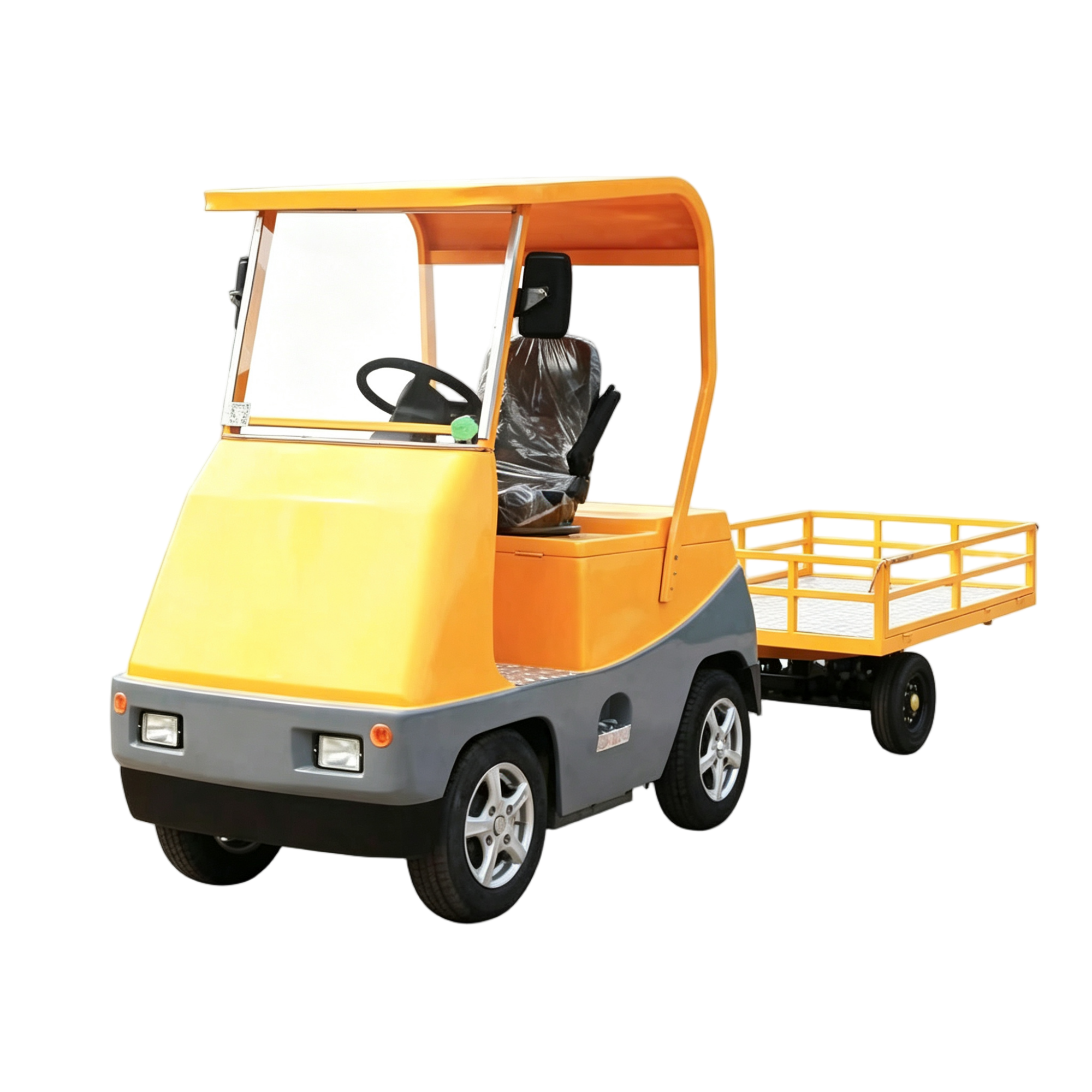
electric tow tractor for warehouse material movement
Utility Golf Cart or Heavy-Duty UTV: Which One Do You Need?
This is one of the most important decisions for South African buyers considering an electric utility vehicle.
Although utility golf carts and UTVs can both be used on farms and industrial properties, they are designed for different operating conditions.
| Comparison | Utility Golf Cart | Heavy-Duty UTV |
| Main applications | Routine inspections and light-to-medium cargo transport | Demanding terrain, intensive work and heavier-duty applications |
| Typical payload | Approximately 150–500 kg, depending on the specific platform | Varies significantly by model |
| Terrain | Paved roads, gravel and relatively light unpaved surfaces | Depending on the model, more challenging terrain such as mud, sand and steep gradients |
| Key considerations | Cargo bed, payload, range and compact dimensions | Drivetrain, chassis, suspension, ground clearance and towing capability |
The distinction is straightforward.
If most of your work takes place within a property, on relatively level surfaces, and your cargo requirements fall within the vehicle’s rated capacity, a utility golf cart may be the more economical and manoeuvrable option.
If the work involves demanding terrain, consistently heavy loads or regular trailer towing, you should evaluate a UTV or a purpose-built work vehicle instead.
The exact capabilities depend on the individual model and its technical configuration. Not every UTV is designed for heavy loads, and not every utility golf cart is restricted to perfectly paved roads.
The right choice should be based on actual working conditions, not simply vehicle size or motor power.
Frequently Asked Questions
Can a cargo golf cart operate on gravel roads on a farm?
Yes, many utility golf carts can operate on compacted gravel roads and relatively firm dirt surfaces. However, tyre selection, suspension, ground clearance and load distribution all affect performance.
For regularly muddy, loose or uneven terrain, consider a vehicle platform specifically designed for more demanding conditions rather than relying on a standard golf cart with upgraded tyres.
Should I choose lead-acid or lithium batteries for daily operation in South Africa?
Both battery types can be suitable, depending on how intensively the vehicle is used.
Lead-acid batteries generally offer a lower initial purchase cost, making them a practical option for occasional use and shorter daily operating periods. In the Vaalbos Trust case, the farm reported that its lead-acid batteries typically lasted around two years. This is an operating example, not a universal battery-life benchmark.
Lithium batteries can offer longer cycle life, faster charging opportunities and less routine battery maintenance. These advantages may become more relevant for vehicles operating multiple shifts or requiring frequent daily use.
Actual battery life depends on charging practices, operating conditions, usage frequency and maintenance. Buyers should compare the total cost of ownership rather than battery purchase price alone.
Who handles customs clearance and local installation when buying from GMTLSV?
GMTLSV is a vehicle manufacturer and direct exporter. South African import customs clearance, inland transportation and local installation are generally arranged by the buyer or its appointed local partner.
GMTLSV can provide English installation manuals, wiring diagrams, controller configuration software and remote technical support. Where the buyer has a local workshop or technical team, technical guidance and relevant documentation can be discussed before delivery.
For more information about importing vehicles from China, see our South Africa golf cart sourcing and supplier guide.
Why Consider GMTLSV for Electric Utility Vehicle Solutions?
GMTLSV offers more than a single cargo golf cart configuration. Its utility vehicle range covers different working applications, from compact utility golf carts to industrial cargo vehicles, electric tow tractors and specialised vehicles.
For South African farm operators, estate managers and industrial buyers, this provides several options when matching vehicle platforms to different work requirements.
Multiple vehicle platforms. Choose from cargo golf carts, property work vehicles, industrial transport vehicles and specialised electric vehicles according to the task.
Cargo bed and body customisation. Cargo bed dimensions, materials and body configurations can be discussed according to cargo size, working processes and operating conditions.
Powertrain configuration. Motor, controller and lithium battery solutions can be matched to payload requirements, terrain and daily operating hours.
OEM and ODM support. Vehicle layouts, cargo structures, enclosed bodies, seating arrangements and powertrain configurations can be developed or adjusted for specific projects.
Vehicle and spare parts support. Technical documentation, remote assistance and relevant spare parts support can be discussed as part of the supply arrangement.
For projects involving several types of work, buyers may also consider combining different vehicle platforms. A cargo golf cart could handle routine tool transport, an industrial work vehicle could support maintenance inspections, and a dedicated tow tractor could move material carts.
This approach can be more practical than expecting one vehicle to perform every task.
Request an Electric Utility Vehicle Solution for Your Project
Before requesting a quotation, prepare a few basic details about your application:
- Application:Farm, vineyard, estate, factory or warehouse.
- Maximum cargo weight:The heaviest load the vehicle needs to carry.
- Terrain:Paved roads, gravel, dirt, mud or gradients.
- Daily operation:Estimated travel distance and working shifts.
- Vehicle configuration:Cargo bed, enclosed cargo box, passenger seats or towing equipment.
- Quantity:Estimated number of vehicles required.
These details will help identify a suitable vehicle platform, payload rating and powertrain configuration.
Explore GMTLSV’s electric utility golf carts and work vehicles, or contact our team with your application details and project requirements.
We can help assess whether a standard utility golf cart, an industrial electric work vehicle or a customised platform is the better match for your operation.