So you’re trying to figure out who actually makes Club Car battery chargers.
Maybe you need a replacement for your Precedent. Maybe you’re a dealer looking for a reliable aftermarket source. Or maybe you’re sourcing for a fleet and wondering if there’s a China manufacturer that can supply compatible chargers at a better price.
Here’s the thing: the answer isn’t as simple as “Club Car makes them.” It depends on what generation of cart you have, what battery system it uses, and whether you’re looking for a factory-original unit or a compatible replacement.
Let’s break it down.
Who Manufactures Club Car Battery Chargers?
Here’s the honest answer: Club Car is the vehicle manufacturer, but not every charger that says “Club Car” on it was built in a Club Car factory.
Club Car designs and specifies the charging system for each vehicle platform. But the actual charging hardware—the transformer, the control board, the connector, the enclosure—often comes from specialized power electronics suppliers.
This is normal. It’s how the automotive industry works too. Ford doesn’t make every alternator. Club Car doesn’t make every charger.
What matters more is this: Club Car uses different chargers for different models, different battery types, and different production years. There is no single “Club Car charger.”
If you have an older electric cart with lead-acid batteries, you might have a PowerDrive system. If you have an Onward, you might have an E.R.I.C. charger. If you have a newer lithium model, you’re looking at something completely different—like a 650W or 900W AC charger, possibly from Delta-Q.
So the question “who manufactures Club Car chargers” really has three answers:
-
For OEM chargers: Club Car specifies them, and various power electronics companies build them.
-
For replacement chargers: Companies like Lester and others make drop-in replacements.
-
For China-made compatible chargers: There’s a growing supply chain of Chinese manufacturers building chargers marketed for Club Car applications.
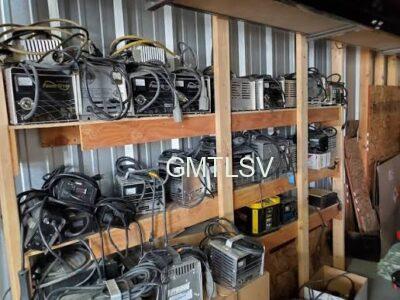
Does Club Car Actually Manufacture Its Own Chargers?
Probably not in the way you’re imagining.
Club Car is a vehicle manufacturer. Their core competency is designing, assembling, and supporting golf carts and low-speed vehicles. The charging system is a critical component, but it’s not something they necessarily build in-house from scratch.
What Club Car does is this: they define the charging requirements for each vehicle platform. They specify voltage, current, charging profile, connector type, communication protocol, and safety requirements. Then they work with power electronics manufacturers to produce chargers that meet those specs.
This is exactly how it works in the EV world. Tesla doesn’t make every component in their wall chargers either. They specify, test, and brand them.
So when you see a charger labeled “Club Car,” that means it’s been approved for use with Club Car vehicles. It doesn’t necessarily mean it came off a Club Car assembly line.
What Battery Chargers Does Club Car Actually Use?
This is where it gets interesting—and where a lot of people get confused.
Club Car has used several different charging systems over the years. Here’s a rough breakdown:
| Club Car System / Model | Battery Type | Charger Example | Notes |
|---|---|---|---|
| Older electric carts (DS, early Precedent) | Lead-acid | PowerDrive, IQ system | Model-specific, 48V |
| Precedent (various years) | Lead-acid | PowerDrive, E.R.I.C. | Depends on year and configuration |
| Onward (lead-acid) | Lead-acid | E.R.I.C. 48V automatic | Automatic charging, 48V |
| Onward (lithium) | Lithium-ion | 650W / 900W AC charger | Lithium-specific charging profile |
| Modern lithium models | Lithium-ion | Smart charging system | Often integrated with BMS communication |
| Some newer models | Lithium-ion | Delta-Q | High-frequency charging |
The key takeaway: you can’t just buy “a Club Car charger.” You need to know:
-
What voltage is your system? (36V, 48V, or something else)
-
What battery chemistry? (Lead-acid, AGM, gel, lithium)
-
What connector type? (3-pin, SB50, etc.)
-
Does your cart have an on-board charger (OBC) or does it use an external charger?
-
Does your lithium system require BMS communication?
Get any of these wrong, and you’re either not charging properly, or you’re risking damage to your batteries.
Can You Use a Third-Party Charger on a Club Car?
Yes—but you have to be careful.
A third-party charger can work perfectly fine on a Club Car if it matches the electrical requirements of your specific cart. That means:
-
Voltage must match. A 48V system needs a 48V charger.
-
Battery chemistry must match. Lead-acid and lithium have completely different charging profiles. You can’t use a lead-acid charger on a lithium pack (unless the lithium system has its own BMS that handles it, which most don’t).
-
Charging current should be appropriate. A 15A charger will charge slower than a 25A charger, but both might be fine depending on your battery capacity.
-
Connector must fit. Club Car uses specific connector types. If the plug doesn’t match, you’re either adapting it (not ideal) or it won’t work.
-
Charging profile must be compatible. This is especially important for lithium. The charger needs to communicate with the BMS—or at least follow the correct CC/CV profile.
Companies like Lester make replacement chargers specifically designed for Club Car applications. They’re not OEM Club Car, but they’re built to work with Club Car systems.
The same goes for Chinese manufacturers. There are chargers out there marketed as “Club Car compatible”—48V, 15A or 18A, 3-pin connector, with options for lead-acid or lithium. Some of them are decent. Some are not.
Can You Buy Club Car-Compatible Chargers From China?
Yes, and this supply chain is growing.
If you search on platforms like Made-in-China or Alibaba, you’ll find Chinese manufacturers openly selling:
-
48V Club Car battery chargers
-
3-pin connector chargers
-
Lithium-compatible chargers
-
OEM/ODM chargers with customizable cables and connectors
For example, there are Shenzhen-based charger manufacturers that list 48V 15A/18A chargers specifically described as Club Car compatible, with customization options for AC/DC cables and connectors.
This tells you something important: there is a real market for China-made Club Car-compatible chargers. It’s not just a few random suppliers. It’s an established supply chain.
But here’s the catch: not all of them are good. Some are excellent—properly engineered, tested, and certified. Others are cheap units that will work for a while and then fail, or worse, damage your batteries.
The difference comes down to the factory, not the country.
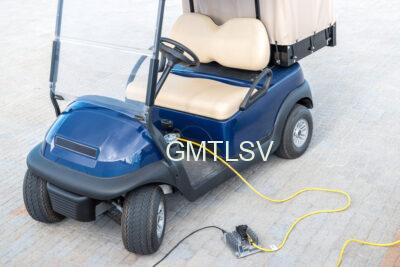
What Should You Ask a Chinese Golf Cart Charger Manufacturer?
If you’re sourcing chargers from China—whether for resale, for a fleet, or for your own use—here’s what you need to check.
1. What voltage and current do you need?
This isn’t just about 48V. It’s about matching the charger to your specific battery pack. A 48V lead-acid pack and a 48V lithium pack may both be “48V,” but they need different charging profiles.
2. What battery chemistry does it support?
Lead-acid, AGM, gel, lithium-ion, LiFePO4—each has different charging requirements. Make sure the charger is designed for your chemistry.
3. What charging profile does it use?
CC/CV? Multi-stage? Does it follow a specific algorithm? For lithium, the charger needs to work with the BMS—or at least not fight against it.
4. Does it communicate with the BMS?
This is huge for lithium systems. Some chargers just “blind charge”—they push current until voltage hits a target. Others communicate with the BMS to adjust charging based on temperature, state of charge, and cell balance. The latter is safer and better for battery life.
5. What connector does it use?
Club Car uses specific connectors. Make sure the charger matches—or that the manufacturer can supply the right connector.
6. Does it need to bypass the OBC?
Some Club Car models have an on-board charger (OBC) that controls charging. If you’re adding an external charger, you may need to bypass the OBC. Not all chargers handle this the same way.
7. What’s the IP rating?
Golf carts live outside. They get rained on. They get hosed down. A charger with a proper IP rating (IP65 or higher) will last longer and be safer.
8. What certifications does it have?
Depending on where you’re importing to: CE, UL, FCC, RCM, etc. A serious manufacturer will have these. A trading company might not.
9. Can they customize?
OEM branding, custom cables, different connectors, specific voltage/current configurations—this is where Chinese manufacturers often shine. If they can’t customize, they’re probably not a real factory.
10. What’s the warranty and after-sales support?
Can they replace a failed unit quickly? Do they have technical support in English? Will they still be around in three years?
Club Car OEM Charger vs. China-Made Compatible Charger
Here’s a fair comparison:
| Factor | Club Car OEM Charger | China-Made Compatible Charger |
|---|---|---|
| Brand | Club Car | Manufacturer’s own brand or OEM |
| Compatibility | Designed for specific Club Car systems | Depends on tested compatibility |
| Customization | Limited, model-specific | Often flexible (voltage, current, connector, branding) |
| Voltage options | Specific to model | Multiple options available |
| Connector | OEM specification | Can be customized |
| OEM/ODM | Not available | Often available |
| MOQ | Dealer channel dependent | Factory dependent |
| Price | Premium | Typically lower |
| Technical support | Club Car dealer network | Manufacturer support |
| Certifications | Well-established | Varies by factory—check |
Neither option is universally better. It depends on what you need.
If you want plug-and-play simplicity and you’re willing to pay for it, an OEM charger from a Club Car dealer is the safest bet. If you’re sourcing for a fleet, a resale business, or a custom build—and you’re willing to do the homework—a Chinese manufacturer can save you money and give you more flexibility.
How Does the Charger Fit Into the Whole Electrical System?
Here’s something most people don’t think about: the charger isn’t an isolated component.
It’s part of a system:
AC Input → Charger → Battery/BMS → Controller → Motor
If any part of that chain is mismatched, you’ve got problems.
For lead-acid systems, it’s relatively simple. The charger pushes current into the batteries, voltage rises, charging tapers off. Not much communication needed.
For lithium systems, it’s more complicated:
-
The BMS monitors cell voltage, temperature, and state of charge.
-
The charger needs to deliver the right voltage and current—and ideally communicate with the BMS.
-
The controller needs to know how much power is available.
-
The motor draws power based on what the controller gives it.
If the charger doesn’t communicate properly with the BMS, you might get:
-
Incomplete charging
-
Overcharging (dangerous)
-
Undercharging (reduced range)
-
Premature battery failure
This is why buying a cheap charger for a lithium cart is risky. It’s not just about voltage. It’s about the whole system working together.
And this is exactly why, if you’re building or sourcing complete golf carts, you should be thinking about the charger as part of the vehicle design—not as an afterthought.

GMTLSV: A China Golf Cart and Low-Speed EV Manufacturer
This is where we come in.
GMTLSV is not a dedicated battery charger manufacturer. We’re a complete electric vehicle manufacturer—golf carts, low-speed EVs, utility vehicles. We’ve been building electric vehicles since 1995.
That means when we design a vehicle, we think about the whole electrical system:
-
Battery — lead-acid or lithium, sized for the application
-
BMS — battery management, safety, cell balancing
-
Charger — matched to the battery and BMS
-
Controller — matched to the motor and battery
-
Motor — matched to the vehicle’s weight and performance requirements
We don’t just drop a generic charger into a cart and hope it works. We match the components so the system works together.
If you’re sourcing complete golf carts or low-speed EVs, that’s the advantage: one manufacturer responsible for the whole system. No finger-pointing between charger supplier, battery supplier, and vehicle assembler.
We offer:
-
Golf carts (2-seat to 8-seat, lifted, utility, custom configurations)
-
Low-speed electric vehicles (LSV)
-
Enclosed electric vehicles for community and resort transport
-
Utility EVs and off-road models
-
OEM/ODM services—custom branding, colors, seating, battery options, and more
-
Export support—documentation, packaging, logistics
If you’re looking for a China-based manufacturer that understands how battery, BMS, charger, controller, and motor work together—and can build a complete vehicle around that understanding—we’re happy to talk.
We’re not Club Car. We don’t claim to be. But if you need a manufacturing partner who can supply complete electric vehicles with properly matched charging systems, that’s what we do.
The Bottom Line
Who manufactures Club Car battery chargers? Club Car specifies them, but various power electronics companies build them—and the exact charger depends on the model, year, and battery system.
Can you buy a replacement from a third party? Yes—if it matches voltage, chemistry, connector, and charging profile.
Can you buy one from China? Yes, and there’s a growing supply chain of Chinese manufacturers building Club Car-compatible chargers.
But here’s the real question: are you just buying a charger, or are you building a vehicle?
If you just need a replacement charger for your personal cart, buy one that matches your specs and comes from a reputable source.
If you’re building or sourcing complete vehicles—especially lithium-powered ones—think about the whole system. Battery, BMS, charger, controller, and motor need to work together. A cheap charger that doesn’t communicate with the BMS isn’t a bargain. It’s a problem waiting to happen.
That’s the difference between buying a component and buying a system. And if you need a system, find a manufacturer who understands the whole picture.