

Golf course management changed when GPS showed up in carts. But Pace Technology took it further than basic yardage displays.
We’re talking full course management. Fleet monitoring from your phone. Two-way communication with every cart on the property. Pace of play tracking that actually works. Food ordering from the 14th fairway.
For golfers, it means accurate yardages without carrying a rangefinder. Real pin positions. Weather alerts before the storm hits. For course operators, it means knowing exactly where every cart is, controlling where they can go, and having data to make better decisions.
The system integrates with E-Z-GO and Cushman vehicles. Factory-installed on newer ELiTE models. Touchscreen displays in 7-inch and 10-inch sizes. Everything connects through cloud-based software that works from the clubhouse or remotely.
Pace Technology sits at the intersection of golfer experience and operational efficiency. It’s not just a GPS. It’s a management platform that happens to include GPS. Big difference when you’re trying to run a course profitably while keeping players happy.
What is Pace Technology Golf Cart GPS?
Pace Technology is an advanced GPS-based golf cart management system built specifically for golf courses. It handles fleet monitoring, golfer communication, and operational optimization through integrated hardware and software.
The system uses satellite positioning to track every cart in real time. Touchscreen displays come in 7-inch and 10-inch versions, mounted in the cart dashboard. Golfers interact with the screen for yardages and ordering. Course staff monitor everything through a management dashboard accessible from any device.
Major vehicle brands have adopted it. E-Z-GO and Cushman, both Textron Specialized Vehicles brands, integrate Pace Technology into their ELiTE electric golf cars and utility vehicles. It’s not a third-party add-on bolted onto whatever cart you have. It’s designed to work with specific vehicles from the start.
Real-time tracking means you know where carts are right now. Not where they were five minutes ago. The system talks to your course management software. Pin positions update automatically. Maintenance staff can be tracked on utility vehicles. Everything connects.
Core Features & Capabilities of Pace Technology
Pace Technology covers both sides of the golf course equation. What golfers need to play better. What operators need to run better.
The feature set takes a 360-degree approach. Navigation for players. Management for staff. Communication between both. Analytics to improve over time.
1. GPS Navigation & Course Information
This is what golfers see and use throughout their round.
Accurate yardage to greens and hazards. No guessing. No hunting for sprinkler heads. The screen shows distances from your current position to front, middle, and back of green. Hazard distances too. Water. Bunkers. Everything marked.
Hole-by-hole layouts give you the visual. See the shape of the hole. Where trouble sits. Where the safe play is. Detailed visuals make shot planning easier, especially on courses you don’t know.
TruPin technology deserves special mention. This isn’t standard GPS accuracy. TruPin uses submeter GPS to show actual pin positions. Under three feet of precision. When the pin is tucked back left, you know it’s tucked back left. Not “somewhere on the green.”
Course flyovers and 3D mapping help with visualization. See the hole from different angles. Understand elevation changes. Figure out that blind approach before you hit it.
All of this builds confidence. You’re not wondering if it’s 150 or 160. You know. Pick your club. Commit to the shot. Play faster and better.
2. Fleet Management & Tracking
This is where course operators live.
Real-time cart location monitoring shows every cart on the property. One screen. Full visibility. You see them all moving around the course. Or not moving when they should be.
Track all carts simultaneously from the clubhouse or remotely. Pull it up on your phone while you’re dealing with something else. The system doesn’t require you to sit in front of a computer all day.
Cart assignment works too. Assign specific carts to specific players or groups. Know who’s in cart 47 when cart 47 is sitting in a restricted area.
Historical route data tells you patterns. Where do carts actually go? Which paths get used? Where do people wander off course? Usage patterns emerge from the data.
Battery levels and maintenance needs get monitored. Know which carts need charging. Which ones are showing issues. Schedule maintenance before breakdowns happen.
Anytime, anywhere monitoring. That’s the pitch. It actually delivers.
3. Speed Control & Geofencing
Enhanced speed control is now standard on most newer E-Z-GO ELiTE and Cushman ELiTE vehicles. This isn’t optional anymore.
Set speed limits in designated areas through geofencing. Cart approaches the parking lot. Cart slows down. Automatically. No relying on golfers to follow signs they ignore.
Create restricted zones around sensitive areas. Lakes. Maintenance buildings. Turf protection areas. Carts physically cannot enter these zones at full speed. Or at all, depending on your settings.
Path enforcement becomes automatic. Cart leaves the path in a cart-path-only area. System knows. Alerts fire. Staff responds.
Speed control per group works on vehicles with 7-inch or 10EX screens. Slow down that group that keeps tearing around corners. Leave the members alone.
Automatic alerts when boundaries get breached. Visual warnings on the cart screen. Audio warnings too. Golfers know when they’re crossing lines. Staff knows when golfers cross lines anyway.
Course turf stays protected. Golfer safety improves. Both happen without rangers constantly patrolling and having awkward conversations.
4. Two-Way Communication System
Communication goes both directions. That’s what makes this useful.
Send messages to individual carts. “Mr. Johnson, your tee time for tomorrow is confirmed.” Or “Cart 23, please return to the clubhouse.” Targeted messaging.
Send to selected groups. All carts on the back nine. All carts in the tournament. All carts with food orders pending.
Send to the entire fleet. Weather warning. Course closing in 30 minutes. Lightning detected.
Receive messages from golfers too. Someone needs assistance. Someone wants to request a ranger. Someone has a question about the course. They send it from the cart screen. Staff receives it.
Automated weather alerts push out instantly when conditions change. No one has to remember to send them. The system handles it.
Pace of play reminders go out automatically to groups falling behind. The system identifies them. The system messages them. No marshal needs to drive out and have an uncomfortable conversation.
Emergency communication keeps everyone connected when it matters most.
5. Pace of Play Management
Slow play kills golf courses. Rounds stretch to five hours. Players stop coming back. Tee sheets can’t be maximized. Revenue suffers.
Pace Technology monitors group positioning in real time. You see where every group is on the course. More importantly, you see the gaps.
Identify slow-playing groups with open space ahead. That’s the key metric. Not just who’s slow. Who’s slow AND creating problems for groups behind them.
Automated alerts go to course marshals. Group on hole 7 has 1.5 holes open ahead. Marshal gets notified. Marshal can address it proactively.
Data-driven insights show round times and bottlenecks. Which holes cause backups? What time of day gets worst? Is the 8:30 tee time wave always slower than the 10:00 wave?
Optimize tee time intervals based on actual historical data. Not guessing. Not industry standards. Your course. Your players. Your optimal gaps.
Proactive management instead of reactive. That’s the shift. Don’t wait until players complain at the turn. Know what’s happening and address it before frustration builds.
6. Food & Beverage Ordering
This feature drives revenue. Directly.
Golfers order food and drinks from the cart screen. Anywhere on the course. Don’t wait until you reach the halfway house to order. Place the order on hole 6. Pick it up when you arrive.
GPS-prompted ordering works too. Cart approaches the snack bar. Screen prompts: “Would you like to place an order?” Subtle. Effective. Increases orders.
Golfers don’t have to leave the course flow to get lunch. No parking the cart. No standing in line. No losing your spot in the pace of play.
Service improves because orders are ready when golfers arrive. Kitchen knows what’s coming. Staff can prepare efficiently.
F&B revenue increases significantly for courses using this feature. Convenience sells. People order who wouldn’t have walked inside.
Turn times improve because players aren’t stopping for 20 minutes at the halfway house. They grab and go. Round keeps moving.
7. Weather Monitoring & Alerts
Safety first. Always.
Automated weather alert system monitors conditions constantly. System connects to weather data sources. Knows when dangerous conditions approach.
Real-time updates push to all carts when conditions change. Lightning detected within 10 miles. All carts get the alert. Simultaneously.
Course operators make informed decisions about closures. Data tells you what’s coming. Not just what’s overhead right now. Prepare accordingly.
When conditions change, Pace Technology keeps your course in control. That’s their messaging. It’s accurate. Storms don’t catch you off guard.
Golfers appreciate the heads-up. Beats getting drenched on the 15th hole wondering why no one warned them.
8. Entertainment & Connectivity
Premium features that differentiate the experience.
Bluetooth music pairing lets golfers connect their phones. Play your playlist during the round. Personal touch that golfers appreciate.
Live tournament leaderboards integrate with the system. Playing in the Saturday scramble? See standings on your cart screen as scores post.
Exclusive partnerships with entertainment providers add content options. What those look like depends on specific course implementations.
Customizable screen content means courses control what appears. Promotions. Events. Local rules. Whatever makes sense for your operation.
These features elevate guest experience beyond basic GPS. They make the round more enjoyable. Differentiate your course from competitors still running basic displays.
Benefits of Pace Technology for Golf Courses
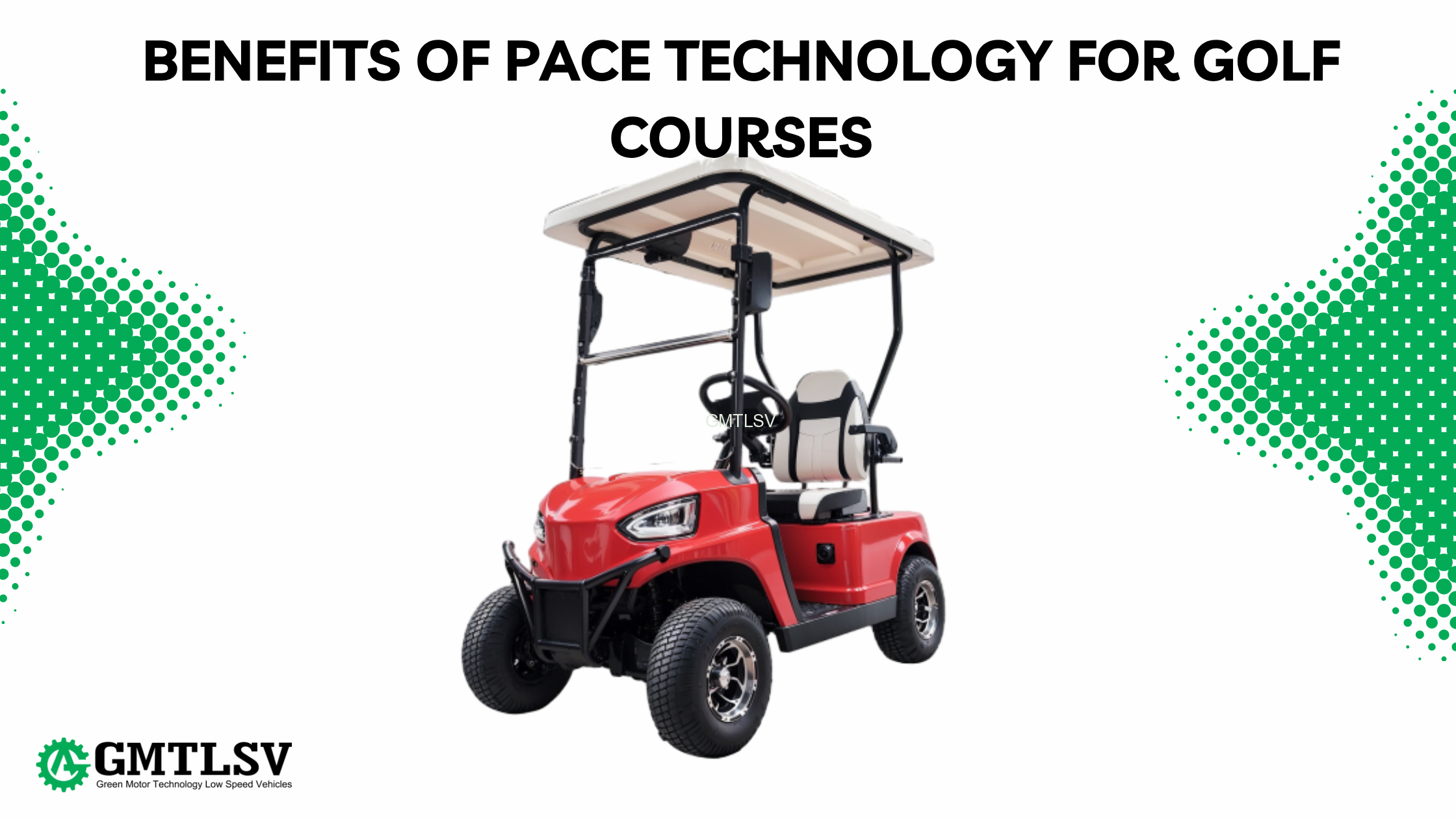
Course operators care about three things. Revenue. Costs. Guest satisfaction. Pace Technology addresses all three.
Operational efficiency improves across multiple areas. Revenue opportunities expand. Course protection happens automatically. Data informs better decisions.
Operational Efficiency & Cost Savings
Automation reduces labor requirements. Not eliminates. Reduces.
Staff deployment optimizes based on real-time data. You know where to send rangers because you know where problems exist. Not patrolling randomly hoping to catch issues.
Manual cart tracking disappears. No more walking the lot counting carts. No more wondering which ones are on course and which ones are behind the maintenance building.
Predictive maintenance prevents surprise breakdowns. Know that cart 34 has been running longer than normal. Check it before it strands someone on the back nine.
Course crew monitoring works too. Assign maintenance staff to utility vehicles. Track where they spend time. Understand how grounds crews use equipment across the property. Productivity gains follow.
Enhanced Revenue Generation
F&B sales increase. We covered the ordering feature. People buy more when buying is easy.
Tee sheet capacity optimizes through better pace management. Tighter intervals become possible when you’re actively managing flow. More rounds per day. More revenue per day.
Dynamic pricing during peak times becomes easier to justify and implement. You have the data showing demand patterns.
Advertising space on cart screens can offset system costs. Course sponsors. Local businesses. Depends on your market and relationships.
Player satisfaction drives repeat visits and referrals. Technology-forward courses attract certain demographics. Younger players. Business groups. Tournament planners.
Premium players seeking technology-enhanced experiences choose your course over competitors. Price sensitivity decreases when experience quality increases.
Improved Course Protection
Geofencing protects sensitive areas automatically. Carts don’t go where they shouldn’t go. Simple as that.
Water features, bunkers, and maintenance zones stay protected. No more finding cart tracks through areas that should be off-limits.
Automated cart-path enforcement during wet conditions. System switches to cart-path-only. Carts comply. Turf stays intact.
Reduced soil compaction and turf damage over time. This adds up. Maintenance costs stay lower. Course condition stays higher.
Fleet protection matters too. Know when carts are being misused. Address it before damage occurs. Vehicles last longer.
Course aesthetics and playability remain intact. Your investment in conditioning pays off because it’s not being undermined by cart damage.
Data-Driven Decision Making
Comprehensive operational analytics show what’s actually happening. Not what you think is happening. What data proves is happening.
Usage patterns reveal peak times. Real peak times. Not assumed peak times.
Round time analysis by time blocks and days shows patterns. Saturday morning rounds run 15 minutes longer than Saturday afternoon. Now you know. Adjust staffing accordingly.
Problematic holes causing delays become visible. Hole 7 backs up consistently. Is it the layout? The distance from hole 6? The difficulty? Data points you toward answers.
Starter accuracy gets measured. Are tee times going off on schedule? Where are gaps forming? Why?
Historical reporting tracks trends over seasons. Getting better or worse? This year versus last year?
Gap interval optimization increases capacity without reducing experience. Data tells you what’s possible.
Simplified Course Management
TruPin updates become seamless. Pin placements change. System reflects it automatically. No manual entry.
Large event coordination improves dramatically. Tournament with 144 players? Communicate with everyone instantly. Track every group. Manage pace across the entire field.
Fleet-wide communication happens immediately. One message reaches everyone. No phone trees. No hoping people see signs.
Manual tasks that consumed staff time disappear. Free people to focus on guest interaction instead of administrative tasks.
Centralized control from single dashboard. Access from PC, tablet, or smartphone. Run operations from anywhere.
Benefits of Pace Technology for Golfers
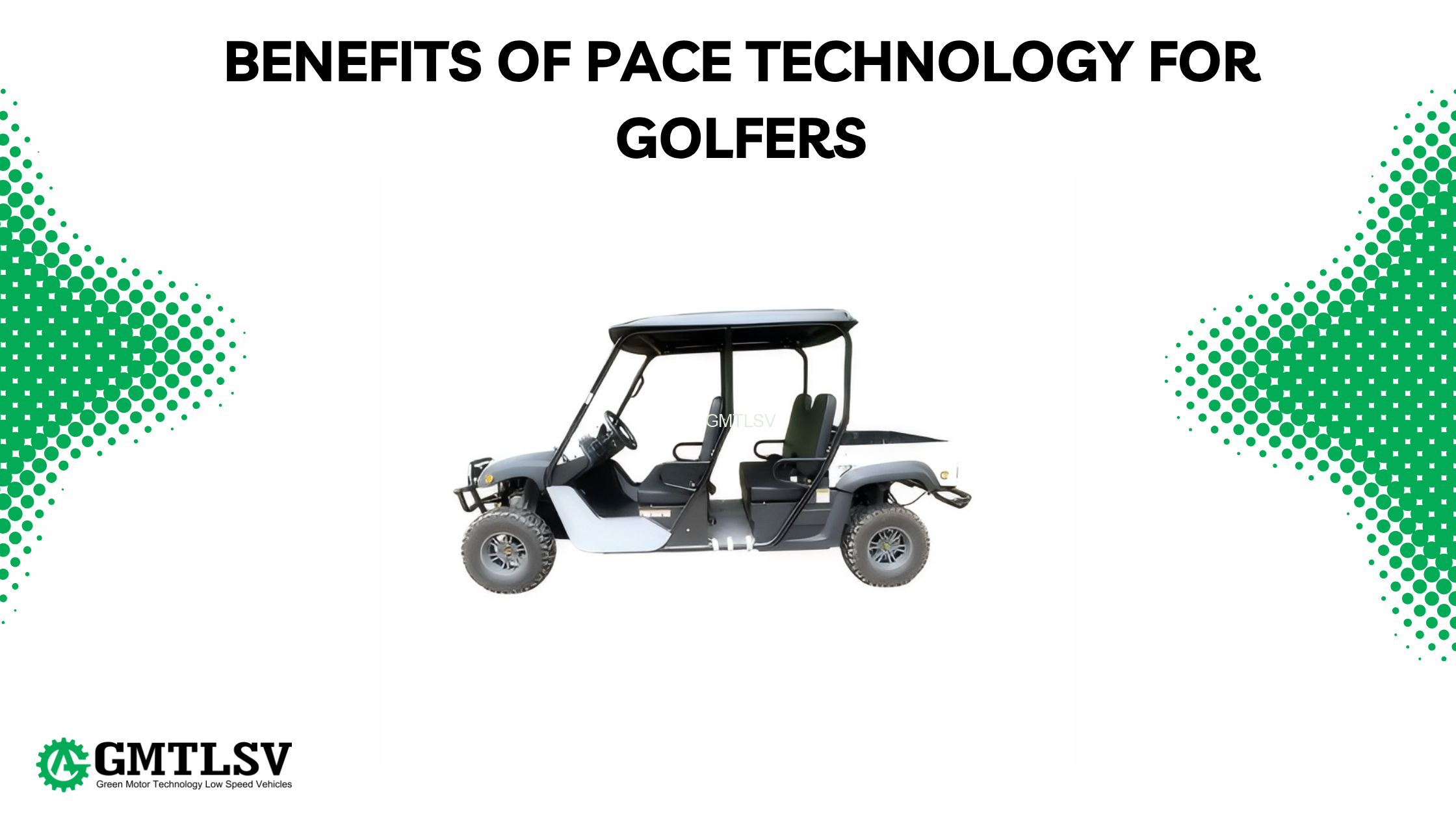
Technology should make the round better. More enjoyable. Less frustrating. Faster when you want it faster.
Pace Technology touches nearly every part of the golfer experience. Navigation. Convenience. Pace. Safety.
Accurate Course Navigation
Precise yardages eliminate guesswork. That’s the foundation.
You’re not pacing off from sprinkler heads. Not trying to find 150 stakes. Not wondering if that marker is accurate. The screen shows your distance. It’s right.
Detailed hole information improves shot strategy. See what you’re dealing with. Make informed decisions. Not guesses.
Club selection confidence increases when you trust the number. Commit to the shot fully. Better results follow.
TruPin provides the most accurate pin positions available in cart GPS systems. Submeter precision. The difference between “middle of the green” and “back right, 6 paces from the edge” matters.
Scores improve over time. Players report lower handicaps. Makes sense. Good information leads to better decisions.
No need to carry a separate rangefinder. No need for a yardage book. Everything’s on the screen in front of you.
Enhanced Convenience & Comfort
Order food and beverages without leaving the course. Hungry on hole 11? Order lunch. Pick it up at 14. Keep playing.
Music entertainment during the round. Connect your phone. Play your playlist. Personal touch.
Communication with clubhouse for any needs. Questions? Requests? Send a message from the cart.
Weather updates keep you informed. Know what’s coming. Plan accordingly.
Touchscreen interface is intuitive. Golfers figure it out quickly. No learning curve to speak of.
More control over your game and overall experience. You’re not just along for the ride. You’re managing your round.
Faster Pace of Play
Instant distance information speeds decisions. Less standing around figuring things out.
Less time searching for yardage markers or using rangefinders. Information’s right there. Always.
Course navigation reduces confusion. Playing an unfamiliar course? Follow the layouts. Know where you’re going.
Better flow means shorter overall round times. When everyone has information quickly, everyone plays faster.
Self-monitoring keeps your group on track. See if you’re falling behind. Adjust without being told.
Frustration from slow play decreases. Both yours and others’. Everyone benefits from improved pace.
Safety & Peace of Mind
Weather alerts keep you safe. Lightning in the area? You know immediately. Get to shelter.
Contact clubhouse in emergencies. Medical issue? Problem with the cart? Get help quickly.
Geofencing prevents accidental entry into hazardous areas. Cart won’t let you drive somewhere dangerous.
GPS tracking ensures help can locate you if needed. Medical emergency on the back nine? They know exactly where to send assistance.
Confidence and security throughout the round. Peace of mind matters.
Pace Technology Integration with E-Z-GO & Cushman Vehicles
Pace Technology works through partnership with Textron Specialized Vehicles. That’s the parent company for E-Z-GO and Cushman brands.
This isn’t a third-party system designed to work with any cart. It’s developed specifically for these vehicles. Factory integration. Designed together. Works together.
ELiTE electric golf cars from both brands support the system. Enhanced speed control is standard on most newer models. Not an upgrade. Not an option. Standard equipment.
Seamless integration means everything connects properly. Electrical systems. Displays. Software. One ecosystem.
Factory-installed options are available on new cart purchases. Get carts ready to go from day one. No retrofitting. No compatibility questions.
The partnership extends to utility vehicles too. Course maintenance operations can use the same tracking and management features. Grounds crews on tracked vehicles. Equipment usage monitoring. Comprehensive fleet visibility.
Pace Technology vs. Other Golf Cart GPS Systems
The golf cart GPS market has multiple players. Tagmarshal. FAIRWAYiQ. iPar GPS. Club Car’s Visage system. Each approaches the problem differently.
Choosing the right system depends on your specific needs, existing fleet, and operational priorities.
What Sets Pace Technology Apart
Several factors differentiate Pace Technology from alternatives.
Exclusive partnerships with major manufacturers matter. E-Z-GO and Cushman integration isn’t available from third-party providers. You get manufacturer-supported hardware and software working together.
Integrated solution versus add-on changes the experience. Systems designed for specific vehicles work better than universal solutions bolted onto whatever you have.
Standard features on newer vehicles reduce costs. Enhanced speed control included. Not a premium upgrade.
Seamless hardware-software integration eliminates compatibility headaches. Everything’s designed to work together.
The 360-degree approach covers both golfer experience and operational efficiency. Some competitors focus heavily on one or the other. Pace Technology prioritizes both equally.
TruPin technology partnership delivers unmatched pin accuracy. Submeter precision that competitors can’t match.
Continuous innovation keeps the system current. Regular feature updates. Ongoing development.
Comparison with Competitors
Tagmarshal focuses heavily on pace optimization. AI-powered analytics. Strong on walking group tracking, which Pace Technology doesn’t address as directly. Popular choice for courses prioritizing pace data above all else.
FAIRWAYiQ emphasizes geofencing and turf protection. Detailed zone management. Good option if course protection is the primary concern.
iPar GPS offers affordability and simpler interface. Lower price point. Fewer features. Works for courses wanting basic GPS without comprehensive management capabilities.
Club Car Visage is proprietary to Club Car vehicles. If you’re a Club Car fleet, it’s your only manufacturer-integrated option. Different ecosystem entirely.
The best choice depends on your situation. What carts do you have? What problems are you solving? What budget are you working with?
Pace Technology’s strengths center on comprehensive integration, golfer experience features, and manufacturer partnership. For E-Z-GO or Cushman fleets wanting full-featured management, it’s hard to beat.
Installation & Implementation Process
Getting started requires planning. Installation. Training. Support. Here’s what to expect.
System Requirements & Compatibility
Pace Technology works primarily with E-Z-GO and Cushman ELiTE series vehicles. That’s the design foundation.
Electrical system requirements exist for installation. Newer electric vehicles have compatible systems. Older gas carts may not be candidates.
Cloud-based features need internet connectivity. Course-wide WiFi or cellular connectivity for full functionality.
Minimum fleet size considerations matter for ROI. Systems make more sense with larger fleets. 20-30+ carts typically justifies the investment.
Existing infrastructure needs assessment. What do you have? What do you need to add?
Retrofitting existing carts has different requirements than new cart purchases with factory installation. Factory-installed systems avoid compatibility questions entirely.
Installation Process
Implementation follows logical steps.
Initial consultation and needs assessment. What are you trying to accomplish? What does your current situation look like?
Course mapping and geofence setup. Professional mapping ensures accuracy. Geofences are configured to your specifications.
Hardware installation on carts. GPS devices. Displays. Wiring. Connections to cart systems.
Software configuration and system setup. Management dashboard. User accounts. Permissions.
Staff training on management dashboard. How to monitor. How to communicate. How to use data.
Golfer-facing system testing. Make sure everything works from the player perspective.
Go-live and support. Launch the system. Address issues as they arise.
Professional installation is recommended for warranty protection. Don’t DIY this.
Timeline varies by fleet size. Larger fleets install in phases. Expect several weeks for complete implementation.
Training & Support
Ongoing support comes with the system.
Comprehensive staff training during installation. Hands-on learning. Not just documentation.
Intuitive interfaces minimize learning curve. Most people figure it out quickly.
Online resources and documentation for reference. Videos. Guides. FAQ materials.
Technical support available for problems. Phone. Email. Depending on support tier.
System updates and feature rollouts happen automatically. New capabilities appear without separate installations.
Dedicated customer success helps optimize usage. Get more from the system over time.
The system is designed for usability. Both operators and golfers can navigate it without extensive training.
Is Pace Technology worth the investment?
For most courses serious about operational excellence and guest experience, yes.
Benefits add up. Improved pace of play means more rounds per day. Increased F&B revenue through convenient ordering. Reduced labor costs from automation. Enhanced course protection from geofencing.
Best fit for courses with 20-30+ carts. Sufficient play volume to generate ROI. Commitment to technology-forward operations.
May not be necessary for small 9-hole courses with minimal traffic. Investment won’t pay back if usage is limited.
Calculate projected ROI for your specific situation. Consider revenue increases. Cost reductions. Course protection value. Guest experience improvements that drive retention.
Can Pace Technology be retrofitted to existing carts?
Depends on what you have.
System is designed primarily for E-Z-GO and Cushman vehicles. Especially newer ELiTE electric models. These work best.
Retrofitting depends on cart age, electrical system, and physical compatibility. Newer carts retrofit more easily. Older carts may have limitations.
Best results come with factory-installed on new cart purchases. Everything’s designed to work together from the start.
Other brands or significantly older carts may not be candidates. System wasn’t designed for universal compatibility.
Consult with Pace Technology representatives to assess your specific fleet. They can tell you what’s possible and what isn’t.
Enhanced speed control requires compatible vehicle electronics. Not every cart supports this feature even with GPS retrofitting.
How accurate is the GPS and yardage information?
Standard GPS accuracy is typically within 3-5 yards. Solid for shot planning.
TruPin technology achieves submeter precision. Under 3 feet for pin positions. This is exceptional accuracy for a cart-mounted system.
Course mapping is professionally done to ensure accuracy. Not crowdsourced or estimated. Measured precisely.
Regular updates maintain accuracy over time. Pin positions change. System reflects changes.
Signal strength remains consistent in most weather conditions. Trees can affect GPS, but impact is usually minimal.
Dual GPS frequency correction enhances reliability. More precise than single-frequency systems.
This accuracy equals or exceeds dedicated handheld rangefinders. Golfers can trust the numbers for club selection.
Does weather affect the GPS system?
GPS signals can be slightly affected by heavy precipitation. Rain. Snow. Impact is minimal in practice.
System is designed for outdoor use in all conditions. Hardware is weather-resistant. Displays work in sunlight.
The bigger benefit is weather alerting. System monitors conditions. Notifies golfers when storms approach.
Automated notifications reach all carts when dangerous conditions develop. Lightning detection. Severe weather warnings.
Real-time monitoring helps operators make informed decisions about course closures and safety.
What happens if a cart GPS malfunctions during play?
Systems are designed for high reliability. Failures are uncommon.
If a device malfunctions, golf continues. Traditional yardage markers still work. Sprinkler heads still show distances. Golfers manage fine.
Other carts in the fleet remain functional. One failure doesn’t affect the rest.
Course staff receives notification through management dashboard. They know there’s an issue.
Technical support can often resolve problems remotely. Many issues are software-related.
Regular maintenance and updates minimize problems. Preventive care keeps systems running.
Most issues resolve quickly. Major failures are rare.
How does Pace Technology handle privacy concerns?
GPS tracking serves operational and safety purposes. Not surveillance.
Data optimizes operations and improves experience. Where do carts go? How long do rounds take? Where do backups form?
Player identification isn’t the focus. Cart location is. The system knows cart 47 is on hole 12. Whether it cares who’s in cart 47 depends on course settings.
Data protection regulations are followed. Privacy policies apply.
Courses should communicate GPS capabilities to guests. Terms of service. Signage. Transparency about what’s tracked and why.
Emphasis on benefits makes sense. Safety. Service. Pace management. These resonate better than “we’re monitoring everything.”
Can golfers override speed controls or geofencing?
No. This is intentional.
Speed controls are enforced automatically. Golfers cannot disable them. Cart slows down in designated areas regardless of driver preference.
Geofencing boundaries are enforced automatically. Cart cannot enter restricted zones at full speed. Or at all, depending on configuration.
Cart Stop feature can immobilize carts if necessary. Remote disabling for serious situations.
Breach alerts notify staff immediately. Someone crossed a boundary. Staff knows.
Course rules get respected without confrontation. No ranger needed to have awkward conversations. System handles enforcement automatically.
Golfers receive on-screen notifications about restrictions. Visual alerts. Audio warnings in some configurations. They know what’s happening and why.
Creates accountability while avoiding the negativity of human enforcement.

