

If you’ve recently seen a small, quiet, car-like vehicle cruising through a gated community, a college campus, or a resort, chances are you were looking at a Low-Speed Vehicle (LSV). But what exactly is an LSV, and how is it different from a regular car or a golf cart? This guide will walk you through everything you need to know.
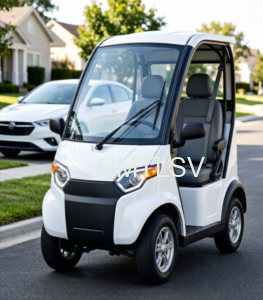
What is a Low-Speed Vehicle (LSV)?
A Low-Speed Vehicle, commonly abbreviated as LSV, is a four-wheeled motor vehicle legally defined by its maximum speed. According to U.S. federal regulations (FMVSS 500), an LSV must have a top speed of at least 20 mph but no more than 25 mph (approximately 32 to 40 km/h). These vehicles are designed for short-distance travel on roads with posted speed limits of 35 mph or less.
LSVs are street-legal in most states, meaning they can be driven on public roads — as long as those roads have reasonable speed limits. They are not allowed on highways or high-speed expressways.
LSV vs. Golf Cart: What’s the Difference?
This is the most common point of confusion. While LSVs and golf carts may look similar, they are fundamentally different in purpose and legality.
A golf cart is designed for golf courses. It typically has a top speed of around 15 mph and is not street-legal in most areas. Golf carts lack many of the safety features required for road use.
An LSV, on the other hand, is built for the road. To be street-legal, an LSV must be equipped with:
- Headlights, taillights, and turn signals
- Side mirrors and a rearview mirror
- Seat belts for all occupants
- A windshield
- A Vehicle Identification Number (VIN)
- Horn and reflectors
Many people convert golf carts into LSVs by adding these features, but factory-built LSVs are generally safer and more reliable.
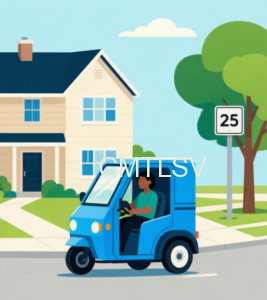
Key Features of Modern LSVs
Today’s LSVs are far more advanced than their early counterparts. Here are some features you can expect:
- Electric Powertrain:Most LSVs are 100% electric, making them eco-friendly and quiet.
- Lithium Batteries:High-end models now use lithium-ion batteries for longer range and faster charging.
- Range:A typical LSV can travel 30 to 60 miles on a single charge, depending on battery capacity and terrain.
- Seating Capacity:LSVs come in 2-seat, 4-seat, and even 6-seat configurations.
- Cargo Options:Many models offer flatbed or enclosed cargo versions for commercial use.
- Smart Features:Some modern LSVs include Bluetooth, GPS tracking, digital dashboards, and app-based controls.
Who Uses LSVs?
LSVs serve a wide range of users and applications:
- Residential Communities:Residents use LSVs for neighborhood trips — visiting friends, going to the clubhouse, or running quick errands.
- Resorts and Hotels:LSVs transport guests between rooms, restaurants, pools, and event spaces.
- College and Corporate Campuses:Security patrols, maintenance crews, and staff use LSVs for efficient campus mobility.
- Retirement Communities:Seniors appreciate the low speed, easy operation, and zero emissions of LSVs.
- Commercial and Industrial:Warehouses, airports, and large factories use LSVs for internal logistics and personnel transport.
- Last-Mile Delivery:Some businesses use enclosed LSVs for local package and food delivery.
Advantages of Using an LSV
Why choose an LSV over a full-sized car or a bicycle? Here are the main benefits:
- Cost-Effective:LSVs are much cheaper to buy and maintain than traditional cars. No expensive engine repairs, oil changes, or transmission issues.
- Low Operating Cost:Charging an LSV costs only a few dollars per week, compared to gasoline costs for a car.
- Eco-Friendly:Zero tailpipe emissions make LSVs a green transportation choice.
- Quiet Operation:LSVs produce minimal noise, making them ideal for noise-sensitive environments.
- Easy to Drive:No complex gear shifting — just accelerate, steer, and brake.
- No License Required (in some areas):Many jurisdictions do not require a driver’s license to operate an LSV, though rules vary.
Limitations to Consider
LSVs are not perfect for every situation. Here are some limitations:
- Speed:With a top speed of 25 mph, LSVs are too slow for highways or busy arterial roads.
- Range:Most LSVs have a limited range, making them unsuitable for long-distance travel.
- Weather Protection:While some models have enclosures, many LSVs offer limited protection from rain, cold, or extreme heat.
- Cargo Space:LSVs have limited storage compared to full-sized vehicles.
- Safety:In a collision with a full-sized car, LSV occupants are at greater risk due to the vehicle’s lighter weight and lower speed.

The Future of Low-Speed Vehicles
The LSV market is growing rapidly. According to industry reports, the global LSV market is expected to reach billions of dollars in the coming years. Key trends include:
- Battery Technology:Lithium-ion batteries are becoming standard, offering longer range and faster charging.
- Smart Connectivity:LSVs are increasingly equipped with IoT features for fleet management and remote monitoring.
- Autonomous Driving:Some manufacturers are testing self-driving LSVs for controlled environments like campuses and retirement communities.
- Shared Mobility:LSV-sharing programs are emerging in planned communities and tourist destinations.
Conclusion
Low-Speed Vehicles occupy a unique and valuable niche in the transportation ecosystem. They are not meant to replace cars for highway travel, but they excel in the environments where they are designed to operate — neighborhoods, campuses, resorts, and commercial facilities. With their low cost, zero emissions, and growing feature set, LSVs are becoming an increasingly popular choice for short-distance mobility.
Whether you are a community manager looking for a sustainable transport solution, a business owner seeking efficient on-site mobility, or an individual wanting a convenient neighborhood runabout, an LSV might be the perfect fit.


