

When many engineers encounter DC/DC fault alarm, the first reaction is to directly replace the DC/DC body or all-in-one assembly (all-in-one includes integration with OBC, PDU or MCU, etc.), and the owner is also easily advised to directly replace the parts.
Comparing with the FTA fault tree of DC/DC faults, many faults are not rooted in the DC/DC itself, and blind replacement will only increase the maintenance cost.
DCDC action
The high-voltage voltage of the power battery on the vehicle cannot be directly supplied to the low-voltage electrical appliances such as lights, central control, instruments, etc. The DC/DC converter is responsible for reducing the high-voltage DC voltage and converting it into 12 V low-voltage voltage, and charging the battery at the same time, which is equivalent to the “power adapter” of the low-voltage system of the vehicle. Once the DCDC is abnormal, there will be battery power loss, instrument black screen, abnormal lights, vehicle power down, which is the core component of low-voltage power supply for new energy vehicles, and its position is very critical. Daily maintenance ignores DCDC circuit inspection, which is easy to leave a hidden danger of breaking down halfway.
DC/DC Fault FTA
DC/DC faults are divided into two directions: external faults of the whole vehicle and DC/DC body faults. Troubleshooting follows the principle of from outside to inside and from periphery to body.
The first type is the external fault of the vehicle side, which is also the high incidence area of intermittent faults.
First, the battery is abnormal, the internal plate of the battery is short-circuited, leaking, and the low-voltage load is abnormal, which induces the DCDC to report an error;
Second, the DC/DC low-voltage wiring harness of the whole vehicle is faulty, the connector is loose, the pin is virtually connected, the enable/wake-up signal is unstable, and the occasional shutdown alarm occurs;
Third, the high voltage input of the power battery is undervoltage, lacking high voltage power supply, DC/DC can not complete the work of high voltage to low voltage;
Fourth, the whole vehicle command is abnormal, and the VCU issues the wrong start-stop command to trigger the protection;
Fifth, the DC/DC output harness plug and grounding point are loose, and the terminal or bolt connected with the battery is in poor contact.
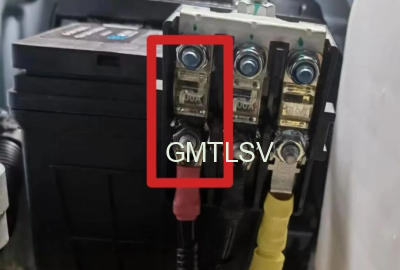
First read the fault code of the whole vehicle, check the state of the battery and the voltage of the high-voltage battery, visually check the low-voltage connectors, and deal with the peripheral problems first.
The second type is DC/DC body failure, which is divided into software and hardware problems.
Software fault: most of them are startup logic BUG, and power-on self-test fails, so you can try to restart verification first;
Hardware failure: including input end fuse fusing (mostly arranged on the PDU board), primary side power circuit damage (MOS tube failure, transformer short circuit, drive abnormality), secondary side power device failure, DSP main control circuit failure.
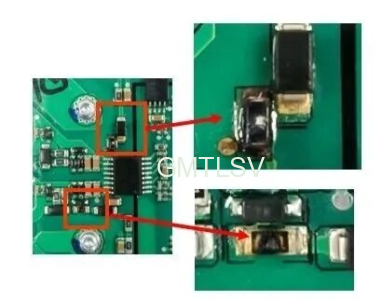
Whether the DC/DC output positive and negative poles are short-circuited to the ground can be detected by a multimeter, whether the insulation is qualified can be detected by an insulation meter, and whether the terminals are ablated can be detected to determine whether the hardware is damaged; Or by ABA interchange verification.
Standardize troubleshooting steps
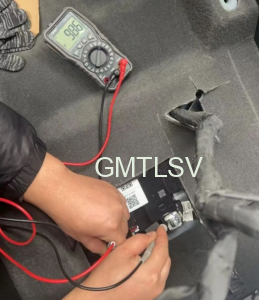
Check the periphery: battery, high voltage battery voltage, low voltage harness, output connector and grounding;
Analyze the fault code and eliminate the abnormal command of the vehicle controller;
If the whole vehicle is normal, try to refresh the DC/DC body program or restart after power failure to eliminate the software BUG;
If the fault still exists, repair or replace it by checking whether the appearance is abnormal or by ABA interchange verification.
If DC/DC fault is reported occasionally, turn off the engine, lock the vehicle and let it stand for a few minutes, and then turn on the power and try again; Do not directly agree to replace the DC/DC body or the all-in-one with integrated DC function. Check the battery and harness first.


