

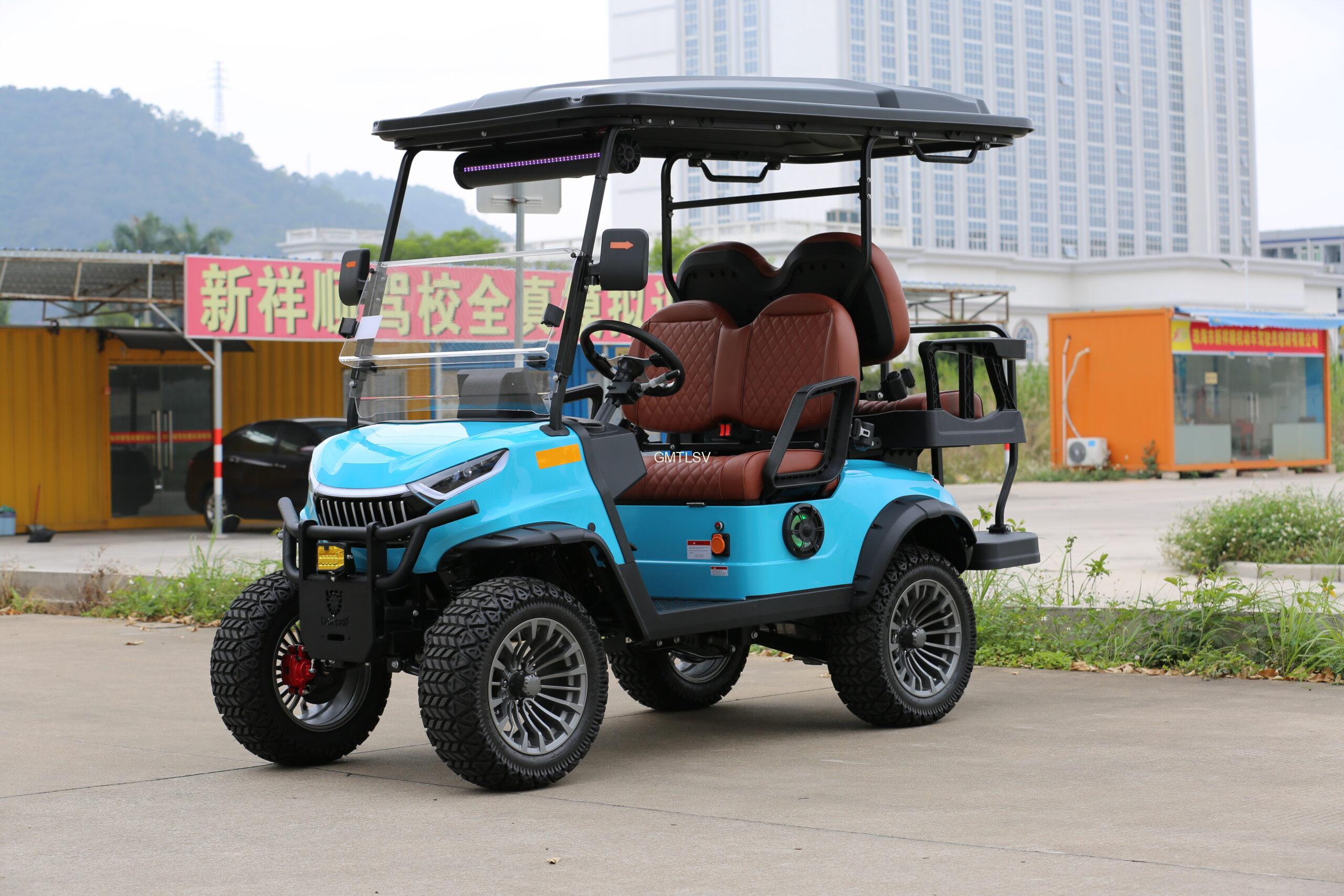
Rainy weather can create additional challenges for electric golf carts. Wet roads, slippery surfaces, and reduced visibility all affect how a vehicle should be operated. For golf courses, resorts, residential communities, and other commercial locations, choosing a golf cart that offers stable handling and practical all-terrain capability is important.
But how does a lifted four-seater electric golf cart perform when the weather turns rainy?
In this article, we take a closer look at the GMT GFHC 2+2 Lifted Electric Golf Cart through a rainy-weather performance test. We will explore the vehicle’s key design features, including its all-terrain tires, suspension system, ground clearance, and electric powertrain, while discussing what buyers should consider when using electric golf carts in wet conditions.
1. Why Rain Performance Matters for Electric Golf Carts
Electric golf carts are widely used in golf courses, resorts, hotels, gated communities, campuses, and other low-speed transportation environments. Many of these vehicles operate outdoors throughout the day, which means they may encounter changing weather conditions.
Rain can influence several aspects of vehicle operation.
Wet Road Surfaces
Water on asphalt, concrete, grass, or paved pathways can reduce tire grip. The actual level of traction depends on the road surface, tire condition, water depth, and driving speed.
A golf cart designed for outdoor use should have a suitable tire configuration and stable handling characteristics for its intended operating environment.
Vehicle Stability
When a vehicle travels on wet or uneven ground, suspension design and tire contact with the road become especially important.
A stable vehicle setup can help provide a more controlled driving experience, although drivers should always reduce speed and avoid sudden steering or braking on slippery surfaces.
Electrical System Protection
Electric golf carts rely on batteries, controllers, motors, wiring, and other electrical components. Rain exposure makes proper electrical protection and maintenance particularly important.
Water resistance should never be confused with complete waterproofing. Operators should follow the manufacturer’s instructions and avoid driving through deep water or exposing electrical components to direct high-pressure water.
2. Meet the GFHC 2+2 Lifted Electric Golf Cart
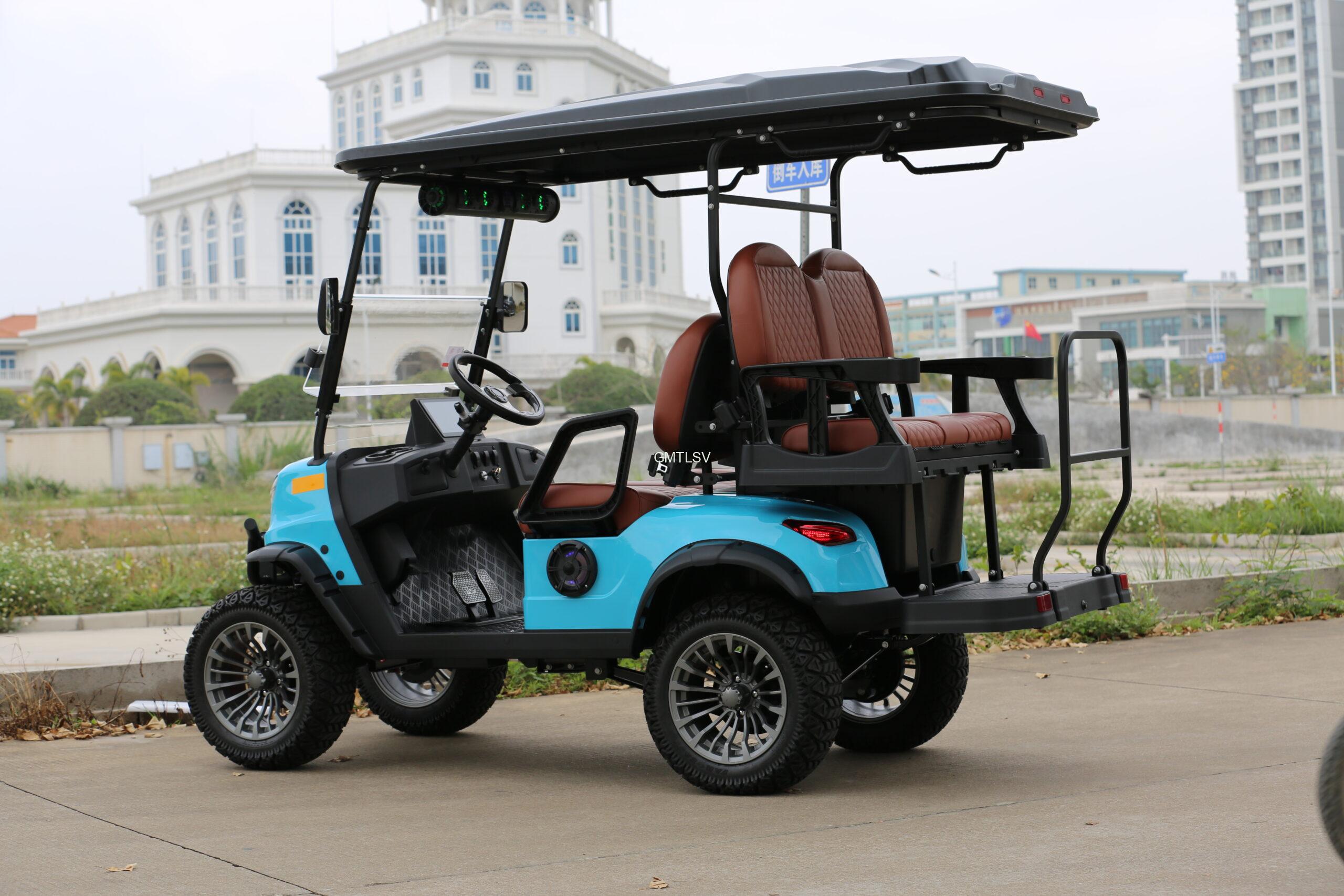
The GMT GFHC 2+2 is a four-seater lifted electric golf cart designed for outdoor transportation and recreational applications.
Compared with conventional golf carts, its lifted configuration, larger tires, and increased ground clearance make it suitable for a broader range of outdoor environments.
The model combines a 5kW AC induction motor with a 51.2V 150Ah lithium iron phosphate battery. It also features 14-inch all-terrain tires and a MacPherson suspension system.
These features form the basis of the vehicle’s outdoor-oriented design.
Key specifications:
| Configuration | GFHC 2+2 |
|---|---|
| Seating Capacity | 4 Passengers |
| Motor | 48V AC Induction Motor |
| Motor Power | 5kW |
| Battery | 51.2V 150Ah LFP |
| Maximum Speed | 40 km/h |
| Tires | 14-inch Off-Road Tires |
| Wheels | 14-inch Aluminum Alloy Wheels |
| Ground Clearance | 182 mm |
| Suspension | MacPherson Suspension |
| Gradeability | 30% (listed specification) |
For complete product information, visit the GFHC 2+2 Lifted Electric Golf Cart product page.
3. Rainy Performance Test: Seeing the Vehicle in Real Conditions
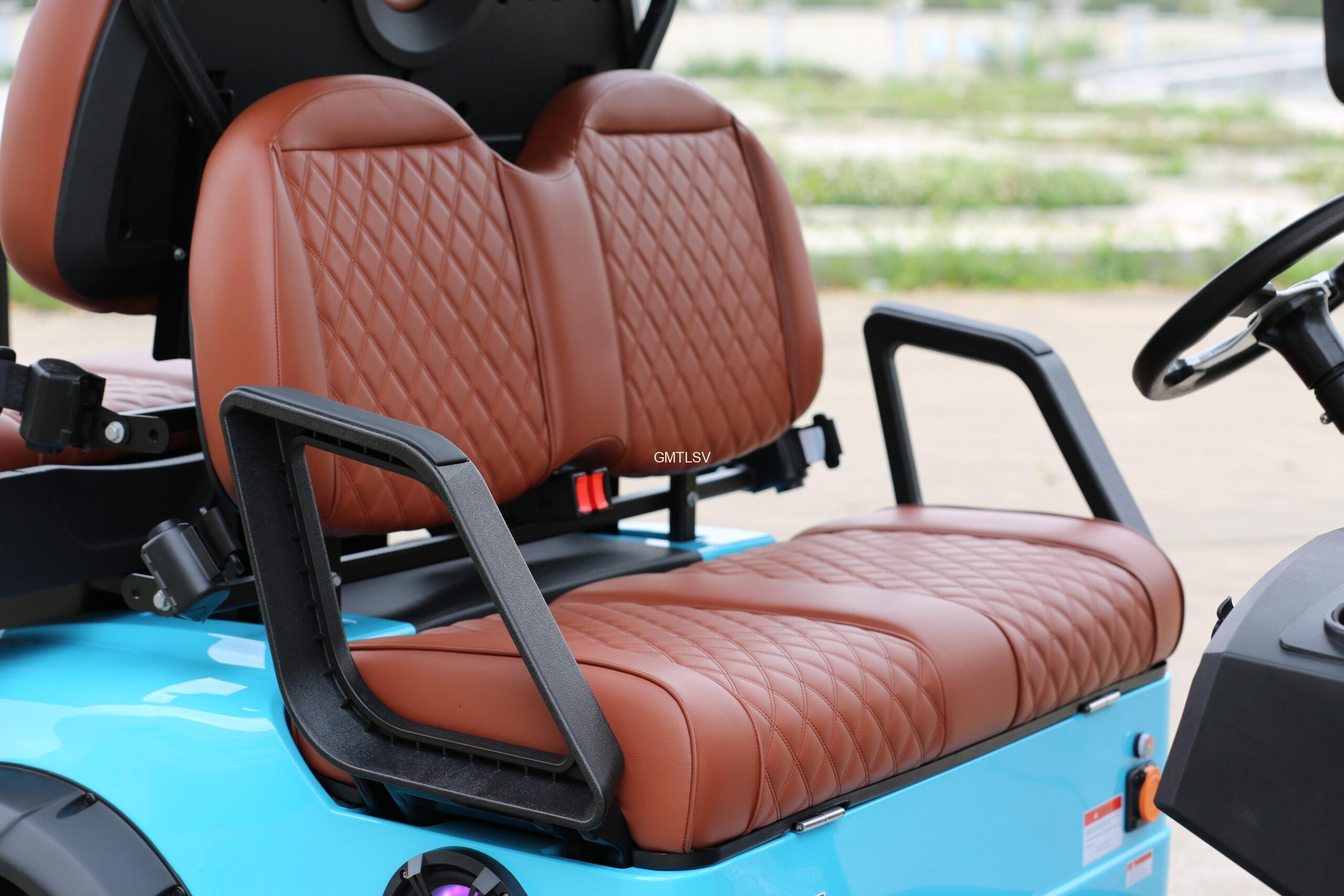
Specifications provide useful information, but real-world demonstrations help buyers better understand how a vehicle looks and behaves during operation.
In this rainy-weather test, the GFHC 2+2 is demonstrated in wet outdoor conditions. The video offers a closer look at the vehicle while it is operating in a rainy environment.
Watch the GFHC 2+2 rainy performance test:
4-Seater Electric Golf Cart Rainy Performance Test – Watch on Facebook
When evaluating a golf cart in rainy conditions, several details deserve attention:
- Tire contact: Observe how the tires interact with the wet driving surface.
- Driving stability: Look at the vehicle’s movement and handling during normal operation.
- Suspension response: Notice how the vehicle responds to minor surface variations.
- Driving conditions: Consider the road surface, rainfall intensity, and visibility during the test.
A video demonstration can provide useful visual reference, but it should not be treated as a certified waterproof test or proof of performance under every possible weather condition.
4. Design Features That Support Outdoor Driving
The GFHC 2+2 includes several features designed for outdoor applications. While no single component guarantees safe driving in the rain, the overall vehicle configuration plays an important role in its operating characteristics.
4.1 14-Inch All-Terrain Tires
Tires are one of the most important factors affecting a vehicle’s contact with the road.
The GFHC 2+2 uses 14-inch off-road tires paired with aluminum alloy wheels. This larger tire configuration is intended for outdoor and mixed-surface applications.
For wet-weather operation, tire condition and tread condition matter just as much as tire size. Drivers should regularly check tire pressure, tread wear, and visible damage.
4.2 MacPherson Suspension System
The GFHC 2+2 features a MacPherson suspension system.
Suspension helps manage wheel movement and road irregularities, contributing to ride comfort and vehicle control. This is particularly relevant when the cart operates on outdoor pathways or uneven surfaces.
However, suspension design alone does not determine wet-road traction. Tire grip, speed, road conditions, and driver input remain important.
4.3 182 mm Ground Clearance
With 182 mm of listed ground clearance, the GFHC 2+2 has a lifted design compared with many conventional golf carts.
Higher ground clearance can provide additional space between the vehicle’s underside and uneven terrain. It may be useful on outdoor routes where minor surface irregularities are common.
It does not mean the vehicle is designed to drive through deep standing water. Water depth and the location of electrical components must always be considered.
4.4 AC Motor and Lithium Battery
The vehicle is equipped with a 5kW AC induction motor and a 51.2V 150Ah LFP battery.
The electric powertrain provides the driving power required for passenger transportation in golf courses, resorts, communities, and similar environments.
For rainy-weather operation, buyers should also consider the protection level of electrical connectors, battery enclosures, controllers, and other components. These details should be confirmed with the manufacturer according to the intended operating conditions.
5. Where Can a Four-Seater Lifted Electric Golf Cart Be Used?
The GFHC 2+2 is designed for applications that require convenient transportation for small groups.
Golf Courses
Four seats allow the vehicle to transport multiple passengers around a golf course. Its lifted configuration and outdoor-oriented tires may also be useful on suitable course pathways.
Resorts and Hotels
Resorts often need flexible transportation between guest rooms, reception areas, restaurants, and recreational facilities.
A four-seater electric golf cart provides a compact transportation option for guest transfers and internal mobility.
Residential Communities
Gated communities and private residential areas can use four-seater golf carts for short-distance transportation, property management, and daily mobility.
Outdoor Venues and Recreational Areas
Parks, event venues, and other outdoor facilities may use lifted golf carts for passenger transportation where the route and operating conditions are appropriate.
For these applications, buyers should evaluate road conditions, passenger requirements, operating hours, charging arrangements, and local vehicle regulations before selecting a model.
6. Important Tips for Driving an Electric Golf Cart in the Rain
Even a vehicle designed for outdoor use requires careful operation in wet weather.
Here are several practical recommendations for operators and fleet managers.
Reduce driving speed. Wet surfaces can reduce traction. Avoid sudden acceleration, sharp turns, and abrupt braking.
Maintain a safe following distance. Allow more room for stopping, especially on slopes or slippery surfaces.
Avoid deep standing water. Do not assume that a lifted electric golf cart is waterproof or suitable for flooding conditions.
Check the tires regularly. Inspect tread depth, tire pressure, and visible damage to maintain appropriate road contact.
Inspect electrical components. Follow the manufacturer’s maintenance guidance for battery enclosures, connectors, wiring, and charging equipment.
Dry and inspect the vehicle after use. Pay attention to areas where water may collect, and follow the recommended cleaning and storage procedures.
Charge in a suitable environment. Keep charging equipment and electrical connections dry, and follow the battery and charger manufacturer’s instructions.
These precautions help operators manage the risks associated with wet-weather driving and maintain the vehicle properly.
7. Choosing the Right Four-Seater Electric Golf Cart
When selecting a four-seater electric golf cart, buyers should look beyond seating capacity and maximum speed.
The following factors deserve consideration:
- Passenger capacity: Confirm that the vehicle meets the number of passengers required for each trip.
- Motor and battery configuration: Match power output and battery capacity to the expected route and daily operating schedule.
- Tire and suspension design: Consider whether the vehicle will mainly operate on paved roads, golf course paths, or mixed outdoor surfaces.
- Ground clearance: Evaluate the terrain and obstacles along the intended routes.
- Electrical protection: Ask the manufacturer about the protection of key electrical components under the expected weather conditions.
- Maintenance and after-sales support: Confirm the availability of spare parts, technical assistance, and maintenance guidance.
The best configuration depends on the actual application. A golf course with mostly paved paths may have different requirements from a resort with sloped roads and mixed outdoor terrain.
8. Explore GMT’s Lifted Electric Golf Cart Solutions
GMT provides electric golf carts and low-speed electric vehicles for golf courses, resorts, hospitality facilities, communities, and other commercial applications.
The GFHC 2+2 Lifted Electric Golf Cart is one option for buyers looking for a four-passenger vehicle with a lifted design, all-terrain tires, and a lithium battery powertrain.
If you are evaluating golf carts for your business or project, GMT can help you review vehicle configurations and discuss customization requirements based on your intended application.
Explore more options:
- GMT Lifted Golf Cart Collection
- GMT Electric Golf Cart and LSV Products
- GMT Electric Utility Vehicles
Frequently Asked Questions
1. Can an electric golf cart be driven in the rain?
Some electric golf carts can operate in light rain when used according to the manufacturer’s instructions. However, water resistance varies by model. Operators should avoid deep water and confirm the protection level of electrical components before regular wet-weather use.
2. Is the GFHC 2+2 suitable for outdoor driving?
The GFHC 2+2 features a lifted design, 14-inch off-road tires, 182 mm ground clearance, and MacPherson suspension. These features make it an option for suitable outdoor applications, including golf courses, resorts, and residential communities. The actual operating environment should be evaluated before use.
3. How many passengers can the GFHC 2+2 carry?
The GFHC 2+2 is a four-seater electric golf cart designed to accommodate four passengers, subject to the manufacturer’s rated capacity and applicable safety requirements.
4. What battery does the GFHC 2+2 use?
The listed configuration includes a 51.2V 150Ah lithium iron phosphate (LFP) battery.
5. Does a lifted golf cart perform better on wet roads?
A lifted design can provide additional ground clearance, while suitable tires can support outdoor use. However, increased ground clearance does not automatically improve wet-road traction. Tire condition, tread design, road surface, speed, and driving behavior all affect performance.
6. Is the GFHC 2+2 waterproof?
A vehicle’s ability to operate in rainy conditions does not mean it is completely waterproof. Buyers should request the manufacturer’s electrical protection specifications and follow the recommended operating and maintenance guidelines.
Final Thoughts
Rainy-weather operation is an important consideration when choosing an electric golf cart for outdoor applications. Tire configuration, suspension, ground clearance, electrical protection, and proper driving practices all contribute to the overall operating experience.
The GMT GFHC 2+2 combines a 5kW AC induction motor, a 51.2V 150Ah LFP battery, 14-inch all-terrain tires, and a lifted chassis design in a four-seater configuration.
The rainy performance test provides a useful visual reference for buyers who want to learn more about this model. For detailed specifications, customization options, or application advice, contact GMT to discuss your requirements.


