

Moving materials around a factory, warehouse, or large campus does not always require a full-size commercial truck. Many businesses handle frequent short-distance transportation tasks, such as moving components, tools, supplies, and packaged goods between buildings or work areas.
For these applications, a compact electric cargo vehicle can be a practical alternative. It offers a smaller operating footprint, electric drive, and a cargo area designed for everyday material transportation.
The GMTLSV G2-C Electric Low-Speed Cargo Truck is designed for this type of work. Featuring a 4kW AC motor, a lithium iron phosphate battery, and an all-aluminum cargo hopper, it combines passenger transportation and cargo handling in one compact vehicle.
With a listed cargo capacity of 500kg and a driving range of 80–100km on flat roads, the G2-C is suitable for various internal transportation tasks in factories, warehouses, campuses, and other controlled operating environments.
In this article, we explore the G2-C’s main features, technical specifications, practical applications, and the advantages of using an electric low-speed cargo truck for daily delivery operations.
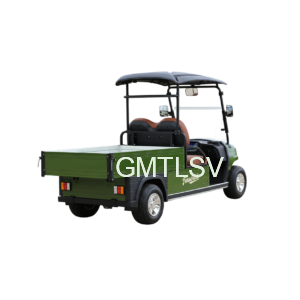
1. Introducing the GMTLSV G2-C Electric Cargo Truck
The G2-C is a two-seat electric utility vehicle designed to transport people and materials over short distances.
Unlike a conventional passenger golf cart, its configuration includes a dedicated rear cargo hopper, allowing operators to carry tools, equipment, supplies, and other materials around a working site.
Its main features include:
- 4kW AC electric motor
- 51.2V 105Ah lithium iron phosphate battery
- All-aluminum cargo hopper
- 500kg rated cargo load capacity
- 80–100km listed range on flat roads
- Maximum driving speed of 28km/h
- Two-seat configuration
- 10-inch LCD display
The G2-C is designed for applications where compact dimensions, practical cargo capacity, and convenient short-distance transportation are more important than high road speed.
For businesses that need to move materials regularly within a defined property, this type of vehicle can help simplify everyday logistics.
Explore the product: GMTLSV G2-C Electric Utility Vehicle with Aluminum Hopper
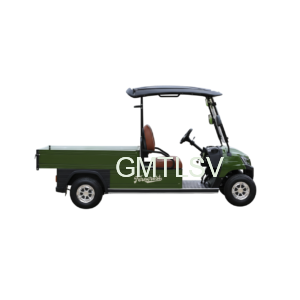
2. All-Aluminum Cargo Hopper: Designed for Practical Material Handling
The cargo area is one of the most important features of a utility vehicle.
For the G2-C, GMTLSV uses an all-aluminum cargo hopper with listed dimensions of 1800 × 1100 × 290mm and a rated cargo load capacity of 500kg.
This configuration provides a practical loading space for everyday work materials.
Lightweight Aluminum Construction
An aluminum cargo body offers several practical characteristics.
Compared with many conventional steel cargo structures, aluminum can provide a favorable strength-to-weight ratio and good corrosion resistance.
This can be useful for vehicles that operate frequently in outdoor or semi-outdoor environments.
The cargo hopper is designed to support the transportation of items such as:
- Factory components and production materials
- Warehouse supplies
- Maintenance tools and equipment
- Packaged goods
- Landscaping materials
- General-purpose work supplies
The actual suitability depends on the dimensions, weight, and distribution of the cargo.
Convenient Loading and Unloading
An open cargo hopper makes it easier to access materials from the cargo area.
For operations involving frequent loading and unloading, this design can be more convenient than an enclosed cargo compartment.
Workers can load supplies, transport them to another work area, and unload them without opening a separate cargo box.
The G2-C is therefore worth considering for businesses that regularly move materials between production areas, storage locations, and maintenance zones.
500kg Cargo Capacity
The G2-C has a listed cargo load capacity of 500kg.
This gives it the ability to support a range of light-to-medium internal transportation tasks, provided the cargo remains within the rated limit.
When planning a load, operators should also consider how the weight is distributed, whether the cargo is properly secured, and whether the operating surface is suitable.
The rated payload should never be exceeded.
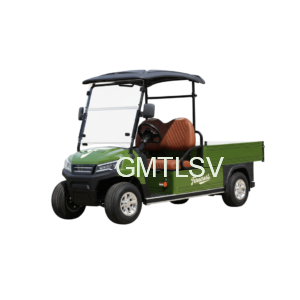
3. 4kW AC Motor and Lithium Battery System
The electric drivetrain determines how the vehicle moves and how effectively it handles its intended workload.
The G2-C uses a 4kW AC motor paired with a 51.2V 105Ah lithium iron phosphate battery.
4kW AC Electric Motor
The 4kW AC motor provides the electric drive for the vehicle.
For a compact low-speed cargo truck, the motor configuration is intended to support short-distance transportation within factories, campuses, warehouses, and similar locations.
Motor power should always be evaluated together with vehicle weight, cargo load, road conditions, and operating speed.
The G2-C has a listed maximum driving speed of 28km/h, making it more appropriate for controlled internal transportation than high-speed road delivery.
Lithium Iron Phosphate Battery
The G2-C uses a 51.2V 105Ah lithium iron phosphate battery.
LiFePO4 batteries are commonly used in electric vehicles and industrial equipment because of their thermal stability, cycle-life characteristics, and suitability for repeated charging and discharging.
For daily commercial operation, battery selection should consider:
- Expected daily travel distance
- Operating hours
- Typical cargo load
- Charging frequency
- Available charging facilities
- Ambient temperature and working conditions
A suitable battery configuration helps ensure that the vehicle can support its intended daily transportation tasks.
80–100km Listed Driving Range
GMTLSV lists a driving range of 80–100km on flat roads for the G2-C.
This provides a useful reference when evaluating the vehicle for internal delivery and material transportation.
However, actual range can vary according to cargo weight, terrain, driving habits, temperature, tire condition, and operating frequency.
Businesses should evaluate their own daily routes and workload rather than assuming that the listed range will remain the same under every operating condition.
4. Smart Features for Everyday Operation
A utility vehicle should be practical to operate throughout the working day.
The G2-C includes a 10-inch LCD display, providing a modern dashboard interface for the driver.
A clear display can make it easier to monitor vehicle information while operating the vehicle.
The product description also lists McPherson independent suspension, a design intended to support driving comfort and handling.
For a vehicle that may travel repeatedly across a factory campus or warehouse property, these features contribute to its overall operating experience.
The most important consideration, however, remains whether the vehicle’s configuration matches the actual working environment.
5. Where Can the G2-C Electric Cargo Truck Be Used?
The G2-C is designed for internal transportation and light-to-medium cargo handling. Its combination of a compact electric drivetrain and open aluminum cargo hopper makes it relevant to several commercial applications.
Factory and Manufacturing Facilities
Factories often need to move materials between production lines, storage areas, workshops, and loading zones.
A compact electric cargo truck can support these tasks without requiring a full-size delivery vehicle for every short-distance movement.
Typical applications include:
- Moving production components
- Transporting tools and maintenance supplies
- Delivering materials between workshops
- Moving packaged products
- Supporting daily facility operations
For factories with multiple buildings or large internal work areas, a dedicated cargo vehicle can help organize routine material transportation.
Warehouses and Distribution Centers
Warehouses frequently involve repeated short-distance movements between storage areas, workstations, and dispatch points.
The G2-C can be considered for transporting smaller batches of materials, tools, and supplies around a site.
Its open cargo hopper allows workers to access the transported items conveniently.
However, it should be selected according to the warehouse layout, aisle width, floor condition, load requirements, and traffic-management rules.
Industrial Parks
Industrial parks may contain workshops, warehouses, offices, and service facilities spread across a large property.
Employees often need to move equipment and supplies between these locations.
A low-speed electric cargo vehicle can support internal logistics while operating at a speed appropriate for controlled site transportation.
Campuses and Large Properties
Universities, commercial campuses, resorts, and large private properties also have routine transportation requirements.
The G2-C can be used to move maintenance tools, cleaning supplies, landscaping materials, and other operational items.
Its two-seat configuration also allows an operator and another worker to travel together when the task requires additional assistance.
For more vehicle options designed for different site requirements, explore GMTLSV’s Industrial Utility Vehicles and Low-Speed Electric Vehicle Collection.
6. Why Choose an Electric Low-Speed Cargo Truck for Internal Delivery?
Businesses do not always need a large truck for every transportation task.
When the majority of daily movements take place within a factory, warehouse, or private property, a compact electric cargo vehicle can offer several practical benefits.
Quiet Electric Operation
Electric drivetrains generally produce less operating noise than conventional combustion-engine vehicles.
This can be useful in warehouses, campuses, resorts, and industrial facilities where frequent vehicle movement takes place near employees or visitors.
No Tailpipe Exhaust During Operation
A battery-powered electric vehicle produces no tailpipe exhaust emissions while driving.
This can help improve local air quality in indoor or semi-enclosed operating environments, provided the vehicle is used in an area suitable for its operation.
The overall environmental impact still depends on electricity generation, battery production, and the vehicle’s full lifecycle.
Practical for Repeated Short-Distance Trips
Many internal logistics tasks involve relatively short routes and frequent stops.
A compact electric cargo truck can be a practical option for these operations, especially when its cargo capacity and range match the daily workload.
Compact Vehicle Configuration
Compared with full-size commercial trucks, compact utility vehicles can be easier to maneuver around designated internal roads and work areas.
This may be useful in properties where space is limited or transportation routes involve frequent turns and stops.
Lower Routine Engine Maintenance Requirements
Electric vehicles do not require conventional engine oil changes, fuel-system maintenance, or exhaust-system servicing.
However, they still require routine inspection of the battery, electrical connections, brakes, tires, suspension, and other vehicle components.
7. G2-C Technical Specifications at a Glance
Before choosing a cargo vehicle, it is useful to compare its specifications with the actual requirements of the operating site.
The following table summarizes the published G2-C configuration.
| Specification | G2-C Configuration |
|---|---|
| Vehicle Type | Electric Utility Cargo Vehicle |
| Seating Capacity | 2 Seats |
| Motor | 4kW AC Motor |
| Battery | 51.2V / 105Ah LiFePO4 |
| Cargo Box Material | Aluminum |
| Cargo Dimensions | 1800 × 1100 × 290mm |
| Cargo Load Capacity | 500kg |
| Maximum Speed | 28km/h |
| Driving Range | 80–100km on flat roads |
| Climbing Ability | 10% |
| Vehicle Weight | 550kg |
| Display | 10-inch LCD |
These are the specifications published on the G2-C product page. Actual operating performance depends on vehicle load, road conditions, battery condition, and other operating factors.
For the latest configuration and project requirements, refer to the official G2-C product page.
8. How to Choose the Right Electric Cargo Vehicle for Your Business
The G2-C is one option within the broader electric utility vehicle category. Before purchasing a vehicle for internal logistics, businesses should evaluate several important factors.
Cargo Weight and Dimensions
Start by identifying the typical materials the vehicle will transport.
Consider both maximum cargo weight and the dimensions of individual items.
A vehicle with sufficient payload capacity may still be unsuitable if the cargo does not fit properly within its loading area.
Daily Travel Distance
Estimate the total distance the vehicle travels during a normal working day.
Consider the number of trips, average route length, operating hours, and available charging time.
This helps determine whether the vehicle’s listed range is suitable for the intended operation.
Operating Environment
Evaluate the surface conditions and layout of the site.
Important factors include:
- Indoor or outdoor operation
- Flat or sloped roads
- Narrow passages and turning areas
- Pedestrian traffic
- Loading and unloading locations
- Weather exposure
These conditions influence the required vehicle dimensions, speed, suspension, and operating configuration.
Vehicle Speed
The G2-C has a listed maximum speed of 28km/h.
This is intended for low-speed transportation rather than highway delivery.
Businesses should also establish suitable operating-speed limits within their facilities and comply with relevant local regulations.
Battery and Charging Requirements
Check whether the battery configuration and charging arrangements can support the vehicle’s daily workload.
A vehicle that operates for extended periods may need a clearly planned charging schedule.
The charger should always be compatible with the battery chemistry and specified charging parameters.
9. Explore GMTLSV Electric Utility Vehicles
GMTLSV supplies a range of low-speed electric vehicles for commercial, industrial, tourism, campus, and other applications.
The product range includes passenger golf carts, sightseeing vehicles, electric utility vehicles, cargo trucks, enclosed electric vehicles, and UTVs.
The G2-C is designed for customers who need a compact cargo vehicle with an open loading area for regular internal transportation.
Other applications may require different configurations, such as enclosed cargo compartments, refrigerated cargo bodies, larger flatbeds, or passenger seating.
GMTLSV’s approach is to match vehicle design and configuration with the intended application rather than treating every low-speed electric vehicle as the same product.
You can also read our guide to Electric Utility Vehicles: A Practical Guide for Farms, Warehouses and Industrial Sites to compare different work-oriented vehicle types.
Looking for an electric cargo truck for your factory, warehouse, or campus?
Share your cargo requirements, daily operating distance, working environment, and expected vehicle quantity with GMTLSV.
Our team can help you identify a suitable low-speed electric vehicle configuration for your application.
Contact GMTLSV for an Electric Cargo Vehicle Solution
Frequently Asked Questions
1. What is the maximum cargo capacity of the GMTLSV G2-C?
The G2-C has a listed cargo load capacity of 500kg. The cargo should be distributed evenly and secured properly, and the rated payload should not be exceeded.
2. What type of battery does the G2-C electric cargo truck use?
The G2-C is listed with a 51.2V 105Ah lithium iron phosphate (LiFePO4) battery.
3. What is the driving range of the G2-C?
GMTLSV lists a driving range of 80–100km on flat roads. Actual range varies according to cargo weight, terrain, driving conditions, temperature, and battery condition.
4. How fast can the G2-C electric cargo truck travel?
The listed maximum driving speed is 28km/h. It is designed for low-speed transportation within factories, warehouses, campuses, and other suitable operating areas.
5. What are the dimensions of the G2-C cargo hopper?
The listed cargo dimensions are 1800 × 1100 × 290mm. This open aluminum cargo area is designed for transporting tools, supplies, components, and other work materials.
6. Why use an aluminum cargo hopper?
An aluminum cargo hopper offers a favorable strength-to-weight ratio and good corrosion resistance. Its open design also allows convenient access when loading and unloading materials.
7. Is the G2-C suitable for factory and warehouse transportation?
Yes. Its 500kg cargo capacity, low-speed electric drivetrain, and open cargo hopper make it suitable for many internal transportation tasks. Buyers should still evaluate the site layout, cargo dimensions, surface conditions, and operating requirements.
8. Can the G2-C replace a conventional delivery truck?
It can handle certain short-distance internal transportation tasks that might otherwise use a larger vehicle. However, it is not designed to replace heavy-duty trucks for highway driving, long-distance deliveries, or heavy commercial hauling.
Final Thoughts
For factories, warehouses, campuses, and industrial properties, efficient transportation is not always about moving the largest possible load at the highest speed.
Many daily logistics tasks involve transporting smaller quantities of materials across relatively short distances.
The GMTLSV G2-C Electric Low-Speed Cargo Truck addresses these requirements with a 4kW AC motor, 51.2V lithium iron phosphate battery, 500kg cargo capacity, and an all-aluminum cargo hopper.
Its compact low-speed configuration makes it a practical option for businesses looking to organize internal material transportation and reduce reliance on larger vehicles for routine site operations.
If your business needs a compact electric cargo vehicle for factory, warehouse, or campus delivery, explore the G2-C and contact GMTLSV to discuss your application requirements.

