

So you’re trying to figure out where Club Car golf carts are actually made. Maybe you’re comparing brands. Maybe you’re wondering if “American-made” is worth the premium. Or maybe you just want to know what you’re really buying before you drop five figures on a cart.
Let’s get straight to it!
Where Are Club Car Golf Carts Made?
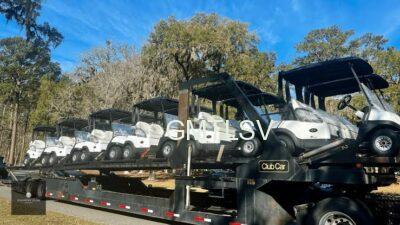
Here’s the short version, straight from Club Car’s own FAQ:
Club Car LLC is headquartered in Evans, Georgia, USA. Most vehicles are assembled at the Club Car headquarters. They also manufacture some vehicles in Wujiang, China, for sale in the Asia-Pacific market.
That’s it. That’s the answer most people are looking for.
But here’s the thing—that one sentence doesn’t tell you the whole story.
Are All Club Cars Made in the USA?
No! And this is where things get interesting.
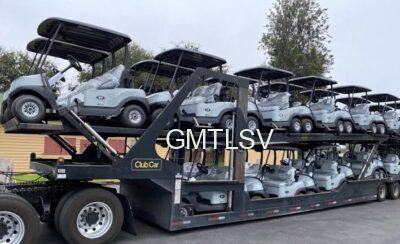
Most Club Car vehicles sold in the US are assembled in Georgia. The company has been in the Augusta area for over sixty years, and they’re still expanding. In 2024, Club Car opened a new 105,000-square-foot manufacturing facility in Appling, Georgia—about $8 million in capital investment. That facility currently runs one production line with 13 stations and can crank out up to 20 vehicles per day.
But Club Car also has manufacturing operations in Wujiang, China, specifically for the Asia-Pacific market.
So if you see someone online saying “Club Car is 100% American-made,” that’s not accurate. It’s mostly American-assembled, but not entirely.
Does “Made in USA” Mean Every Single Part Is American?
This is the question nobody asks, but everybody should.
Here’s the reality: final assembly location doesn’t tell you where the components come from.
According to CNBC, both Club Car and E-Z-Go—the two biggest names in the game, controlling over a third of the market—assemble their vehicles in the US but source components from China, Taiwan, India, Malaysia, Turkey, and Europe. Drive axles from Japan. Transaxles from Singapore. Lithium-ion cells from South Korea. Brake rotors from Germany, Turkey, Egypt, Sri Lanka, and India.
So when you buy an “American-made” golf cart, you’re buying a globally sourced vehicle that happens to be put together on American soil.
Does that make it bad? Not at all. But it does mean the “Made in USA” label is a lot more complicated than it sounds.
So Does Manufacturing Location Actually Affect Quality?
This is the real question, and the honest answer is: it’s not that simple.
You’ll find plenty of articles saying “American-made carts are better” and just as many saying “Chinese-made carts are just as good.” The truth is somewhere in the middle, and it depends on the factory, not the country.
Here’s what actually determines whether a golf cart is any good:
-
Engineering capability — Does the factory design its own vehicles, or just assemble kits?
-
Production processes — Are there real assembly lines, welding stations, paint booths, and testing equipment?
-
Quality control — Is there incoming material inspection, in-process checks, and end-of-line testing?
-
Component quality — Are they using name-brand motors, controllers, and batteries, or no-name parts?
-
Battery system — Lithium vs. lead-acid, cell quality, BMS design, thermal management
-
Testing — Do they actually road-test every vehicle before it ships?
-
After-sales support — Can they get you spare parts in two weeks or two months?
A well-run factory in China can absolutely produce a better cart than a poorly-run factory in the US. And vice versa. The country label is a shortcut, not a guarantee.
USA-Made vs. China-Made Golf Carts: An Honest Comparison
Let’s break it down without the hype.
| Factor | U.S. Manufacturers | Chinese Manufacturers |
|---|---|---|
| Assembly location | Mostly U.S. | China |
| Component sourcing | Global (China, Taiwan, Japan, Europe, etc.) | Mostly domestic + some imported |
| Factory cost | Higher | Typically more competitive |
| Customization / OEM | Brand-dependent, often limited | Often very flexible |
| MOQ (minimum order) | Usually higher | Often lower for direct orders |
| Lead time | Faster for domestic delivery | Longer due to shipping |
| Certifications | Well-established | Varies by factory—check CE, DOT, etc. |
| After-sales | Dealer network | Direct factory support or local partners |
| Price | Premium | Often 30–50% lower |
Here’s what this means practically:
If you need a cart next week and you want someone local to service it, a U.S. brand and a local dealer make sense. You pay more, but you get convenience and peace of mind.
If you’re buying multiple carts, need custom branding, or you’re willing to handle shipping and coordinate directly with a factory, a Chinese manufacturer can save you serious money—without necessarily sacrificing quality.
The better choice depends on your application, budget, order volume, and how much hands-on management you want to do.
What to Look for in a Golf Cart Manufacturer (No Matter Where They Are)
If you’re buying direct from a manufacturer, here’s what actually matters—whether they’re in Georgia or Guangdong.
1. Do they actually own a factory?
There are hundreds of “manufacturers” online that are really just trading companies. Ask for a factory video tour. Look for real assembly lines, not a warehouse full of finished carts.
2. What does their QC process look like?
Incoming material inspection. In-process checks. End-of-line road testing. Ask for inspection reports. A good factory will have them ready.
3. What components are they using?
Brand-name motor? Brand-name controller? What battery cells? A factory that’s proud of its component choices will tell you exactly what’s inside.
4. Can they customize?
OEM logo, custom colors, different seating configurations, battery options—a capable factory can do this without much hassle. If they can’t, they’re probably not a real manufacturer.
5. What about certifications?
Depending on where you’re importing to, you’ll need CE, DOT, EEC, or other compliance marks. A reliable factory understands this and can provide the right documentation.
6. What happens after the sale?
This is where cheap suppliers fall apart. Can they ship you a replacement controller in two weeks? Do they have English-speaking technical support? Do they stock spare parts for models they sold three years ago?
7. Do they have export experience?
Shipping golf carts across oceans isn’t like shipping T-shirts. A factory that regularly exports to your region will understand packaging, documentation, customs, and delivery timelines.
What About Chinese Golf Cart Manufacturers?
China has become a major manufacturing base for golf carts and low-speed electric vehicles. Over the past decade, the country has built one of the world’s most complete EV supply chains—motors, controllers, batteries, frames, and electronics are all sourced within a mature industrial ecosystem.
This means shorter production cycles, broader customization options, and competitive pricing. Many Chinese manufacturers are now export-oriented, serving markets in North America, Europe, Southeast Asia, and the Middle East.
But scale alone doesn’t guarantee quality. The key is finding a factory that actually invests in engineering, quality control, and after-sales support—not just one that churns out the cheapest possible cart.
A Real Example: What a Capable Factory Looks Like
This is where we come in. GMTLSV is a China-based manufacturer of golf carts, low-speed electric vehicles, and utility EVs. We’ve been in the business since 1995, and we’ve seen every kind of buyer—from individuals who want one cart to fleet operators who need fifty.
Here’s what we bring to the table:
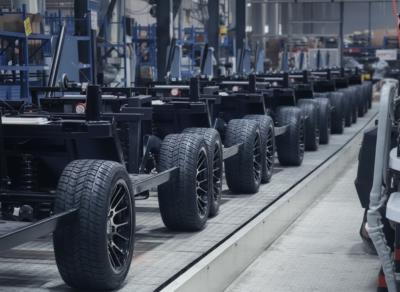
Real manufacturing, not trading. We design and assemble our own vehicles. Our production includes metal stamping, frame welding, battery pack assembly, and full vehicle testing. We’re not reselling someone else’s carts.
In-house powertrain expertise. We manufacture and integrate motors, controllers, batteries, and complete drivetrains. That means when something goes wrong, we know exactly how to fix it—and we can get you the right part fast.
OEM and ODM capability. Custom logos, colors, seating configurations, battery options, accessory packages—we can build to your spec.
Global export experience. We ship worldwide and handle the documentation, packaging, and logistics that come with it.
After-sales that actually works. English-speaking technical support. Remote diagnostics. Fast spare parts supply. Clear wiring diagrams and service manuals. We’re not here for a one-time sale—we support distributors and fleet operators as long-term partners.
Our product range covers 2-seat to 8-seat golf carts, LSV models, utility vehicles, and more. All built to order, all backed by real factory support.
The Bottom Line
Where are Club Car golf carts manufactured? Mostly in Evans, Georgia, with some production in China for the Asia-Pacific market.
But here’s the bigger takeaway: the manufacturing location is just one data point—and honestly, it’s not even the most important one.
If you’re evaluating manufacturers, don’t stop at the country of origin. Look at the factory. Look at the quality control. Look at the component list. Look at the after-sales support.
That’s how you end up with a golf cart that actually holds up—whether it was made in Georgia or Guangdong.


