

Background
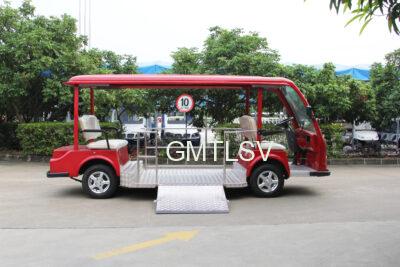
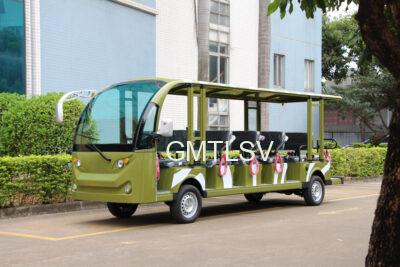
Following the success of the sightseeing shuttle project in South Africa, we deployed another 96V 15kW PMSM motor drive system in the Middle East. This time, the system was installed in a 20-seat electric shuttle bus used for resort transfers. The regional terrain is diverse, featuring both smooth asphalt roads and undulating slopes. During the initial commissioning phase, the customer was generally satisfied with the power response. However, they frequently complained about a specific scenario: the vehicle lurched forward aggressively at launch, yet exhibited a harsh “dragging” sensation when coasting after throttle release—resulting in a poor passenger experience.
This was no longer an issue of throttle mapping; it was a classic challenge involving torque transition and energy recuperation.
Issue 1: “Launch Jerk” on Takeoff & “Drag” on Throttle Release
Symptom Description
The customer’s feedback was highly specific:
- Initial Launch: A light tap on the accelerator caused the vehicle to surge forward violently (commonly known as “launch jerk”), risking passenger falls if they were standing.
- Throttle Release: Upon fully releasing the pedal to coast or prepare for braking, the vehicle would decelerate abruptly, feeling as if the brakes had been partially applied (known as “drag” or “regen jerk”).
Combined, these issues made low-speed driving in stop-and-go traffic extremely difficult. The customer described the ride quality as a constant “head-nodding” motion.
Troubleshooting Approach
Since the overall power response was functional, the motor output itself was valid. The problem lay at the boundaries of output characteristics. We focused on two critical transition zones:
- Zero Torque Transition: How smoothly torque ramps up from 0 Nm to the target torque during launch.
- Regenerative Braking (Regen): Whether the controller engaged energy recovery upon throttle release, and how aggressively it did so.
Optimization Plan
We performed fine-grained calibration targeting these areas:
① Implementing a “Soft Start” Slew Rate Limiter
The default factory settings prioritized the fastest dynamic response, allowing torque to build instantaneously. We significantly lowered the Torque Slew Rate. This ensured that torque increased linearly and slowly over the first few hundred milliseconds rather than spiking to its peak instantly. Much like slipping a clutch in a manual transmission, this eliminated the initial shock.
② Optimizing “Offset” and “Deadzone” Coordination
Previously, a slight positive torque offset might have been maintained to prevent rolling. We adjusted this to: Static Zero Offset + Minimal Dynamic Deadzone. This ensures torque only begins to build once the pedal registers actual movement, and that build-up is constrained by the slew rate limit.
③ Adjusting Regen Intensity and Ramp-down Slope
The “drag” sensation stemmed from overly aggressive regenerative braking engagement. We reduced the Maximum Regen Current by 30% and implemented a Regen Exit Slope. This made the energy recovery process gradual and gentle, mimicking the mild engine braking of a combustion engine vehicle rather than a hard brake application.
Results
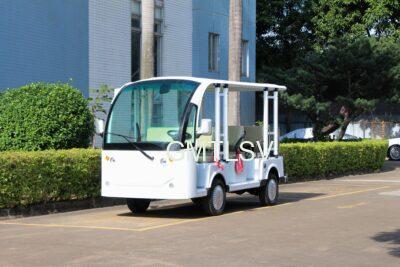
After the adjustments, the customer sent over a test drive video. In the footage, the shuttle executed frequent stops and starts in traffic, maintaining a very stable posture; a bottle of water placed upright in the rear seat remained perfectly still. The customer reported: “The launch is smooth now, and there’s no pulling sensation when I lift off the pedal. The passengers have stopped complaining.”
Issue 2: Rolling Back on Hills & Lack of Braking Confidence
New Symptom
Having solved the flat-road launch issue, a new challenge emerged. While testing on a long downhill grade, the customer observed:
“When I release the throttle on a slope, the bus still rolls forward slowly; it doesn’t feel like there’s any holding force. I want the vehicle to maintain a steady speed or even slow down slightly when coasting downhill.”
This was essentially a side effect of the previous fix. To eliminate the dragging sensation, we had softened the regen, leaving it insufficient to counteract the force of gravity on the slope.
Root Cause Analysis
This brought us to another core concept in motor control: Hill Hold (Anti-Rollback) and Hill Descent Control (HDC).
In standard flat-road mode, throttle release implies “coasting” or “gentle deceleration.” On a slope, however, the physics change entirely:
- Flat Road: Resistance ≈ Rolling resistance + Wind resistance
- Incline: Resistance = Rolling resistance + Wind resistance ± Gravity Component
If the controller cannot identify the slope angle, it cannot automatically compensate for this gravitational component, leading to rollback or uncontrolled downhill creep.
Solution
We enabled the controller’s Anti-Rollback Function and optimized its associated parameters:
- Enabling Slope Detection Algorithm: The controller utilized subtle changes in motor speed (acceleration) and torque output to calculate the incline in real-time.
- Dynamic Torque Compensation: Once a downhill condition was detected, the controller automatically applied a Holding Torque upon throttle release to balance the downward sliding force.
- Shallow slope→ Minimal compensation
- Steep slope→ Significant compensation
- Mode Switching Logic: This feature activates only when vehicle speed is below 10 km/h and a slope is detected. During high-speed cruising, the controller reverts to the previously optimized mild regen logic to ensure ride comfort.
Results
During retesting, the vehicle performed excellently on grades. When the driver released the throttle, the vehicle held its position firmly (static anti-rollback) or descended steep slopes at a constant, controlled speed (dynamic hill descent). The customer was highly satisfied, stating: “I don’t have to keep my foot on the brake going downhill anymore. It feels much safer now.”
Lessons Learned
The tuning process for this Middle Eastern shuttle reinforced our understanding that “comfort is calibrated in”:
- The “Slope” of Torque Matters More Than Its “Magnitude”
During low-speed crawling and launch, drivers and passengers are extremely sensitive to Jerk (the rate of change of acceleration). Even a large torque, if applied linearly and gradually, feels comfortable. Conversely, even a tiny torque, if applied step-wise, creates a jarring impact.
- Regenerative Braking Is a Double-Edged Sword
- Strong Regen: Increases range but degrades comfort and induces motion sickness.
- Weak Regen: Improves comfort but risks rolling back on hills and reduces range slightly.
The optimal strategy involves dynamically adjusting regen intensity based on speed and slope.
3. Scenario-Based Calibration Is the Future
The era of “one setting fits all” is over. Advanced drive systems require scene recognition capabilities:
- Flat Road vs. Slope
- Low-Speed Creep vs. High-Speed Cruising
- Unladen vs. Laden
By leveraging sensor fusion and algorithm optimization, controllers can automatically switch to optimal parameters for different scenarios—this is the source of a premium driving feel.


